


Paradigm Premier 220B V2 Bookshelf Speaker Review: Best Under $1,100?
Paradigm Premier 220B v2 Standmount Speaker
- Product Name: Premier 220B V2 Standmount Speaker
- Manufacturer: Paradigm
- Performance Rating:

- Value Rating:
- Review Date: August 24, 2026 15:00
- MSRP: $ 1,100/pair
- Frequency Response: 58Hz - 23kHz (±3dB)
- Sensitivity: 88dB
- Suitable Amplifier Power Range: 15 - 130 Watts
- Impedance: Compatible with 8 ohms
- Dimensions: 14.6” x 8.3” x 12.9”
- Weight: 20.1 lbs each
Pros
- Superb technical performance
- Best-in-class soundstaging
- High build quality
Cons
- Slightly dry midrange
- Quality of finish is good, not great
Paradigm Premier 220b V2 Introduction
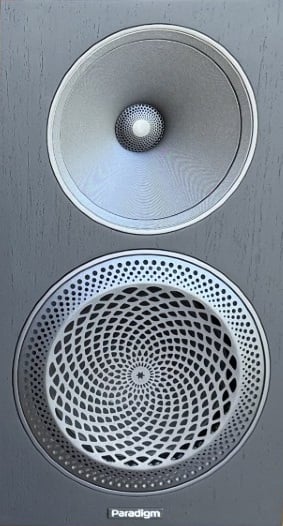
I’ve long admired Paradigm’s engineering chops, but had never lived with one of the Canadian company’s products before receiving the Premier 220B v2 bookshelf speakers ($1,100/pair) for review. This ostensibly simple 2-way ported standmount speaker uses a 1-inch dome tweeter and a 6-inch metal cone mid-woofer, with a 2nd-order electroacoustic crossover centered at 1.1kHz. It’s reasonably large but not unusually so, measuring 14.6 inches tall, by 8.3 inches wide, by 12.9 inches deep. Each speaker weighs 20.1 pounds. The 220B v2 is the larger of two standmount designs in the new Paradigm Premier Series v2, which also includes two floorstanders, a large dedicated center-channel speaker, and a smaller LCR speaker that can do double-duty as a center or left/right speaker. Prices range from $800 per pair for the smaller standmounts to $2,600 per pair for the large floorstanders. As you might expect from an engineering-focused company like Paradigm, the Premier Series v2 is packed with proprietary technology, much of which has trickled down from more expensive designs. That partially explains how Paradigm can offer so much speaker for what I consider to be very reasonable prices.
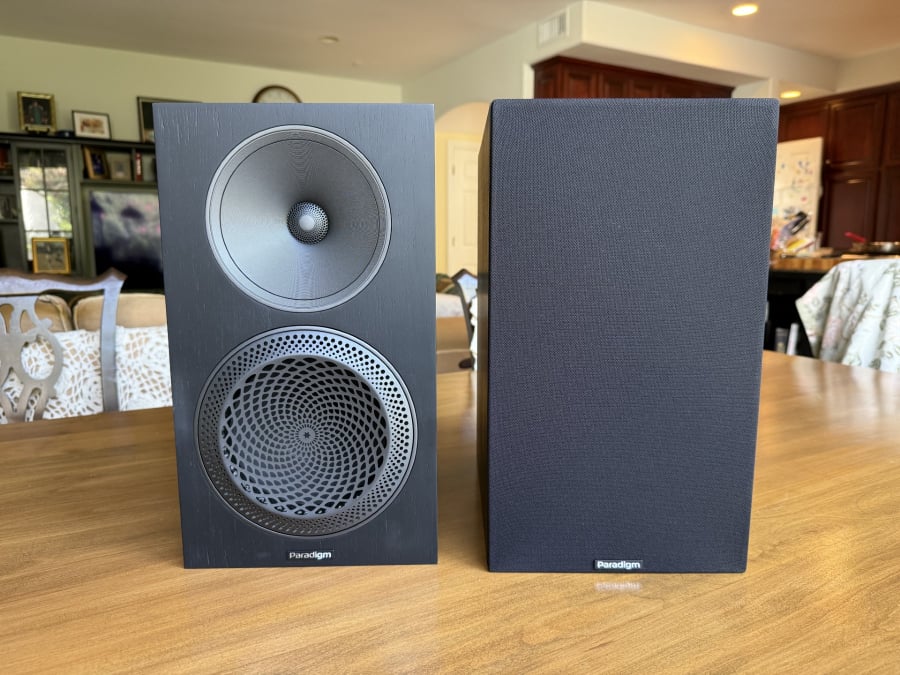
The company has also moved production of these new speakers to Indonesia; the original Premier speakers were built in Canada. As I discussed in my overview of the Premier Series v2, this is a departure for Paradigm — for decades the company has stressed the value of its “made in Canada” pedigree, building as many products as possible in its own massive facility in Mississauga, Ontario, just outside of Toronto. Some fans of the brand might be disappointed by the move to overseas production, for reasons ranging from Canadian patriotism, to global politics, to geographical biases about quality, to downright racism. It’s a complicated issue to be sure, and I expect that Paradigm thought long and hard before making the decision, but there is no doubt that moving production to Indonesia has allowed the company to sell the Premier Series v2 at very competitive prices.
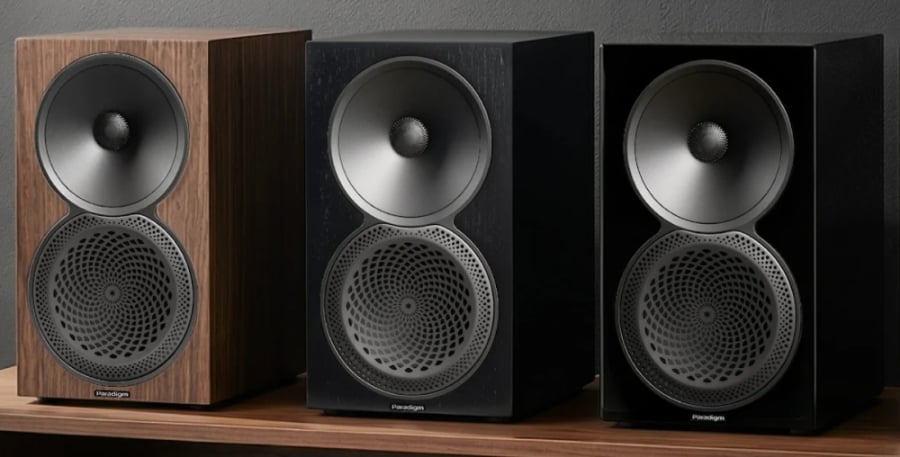
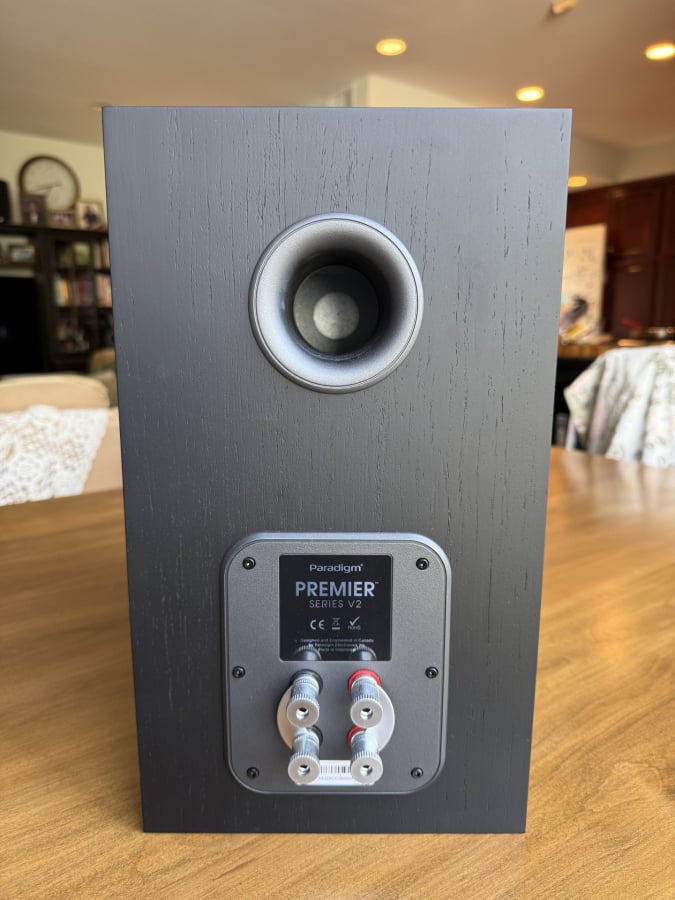
The build quality of my review units, finished in Black Walnut real wood veneer, is truly excellent for the price — right down to the reassuringly-hefty binding posts. I’d say the finish quality is good rather than great. The real walnut veneer on the Fyne Audio F500S ($1,299/pair) looks and feels more luxurious, but I doubt Paradigm will receive any complaints, especially when some competing products in this price category use imitation-wood vinyl (I’m looking at you, DALI SONIK 3). The Paradigms’ Black Walnut is more subtle than the very-nice high-gloss paint on the SVS Ultra Evolution Bookshelf ($1,200/pair), and certainly less high-maintenance. The 220B v2 is also offered in a natural Walnut finish, and in Piano Black paint, though for some reason, the Satin White finish is only available on the smaller 120B v2 and the LCR model.
Paradigm Premier 220B V2: Driver Technology
 A few paragraphs back, I described the 220B v2 as
ostensibly simple. While it is indeed a 2-way bookshelf speaker like so many
others, it contains a surprising amount of technology that is unique to
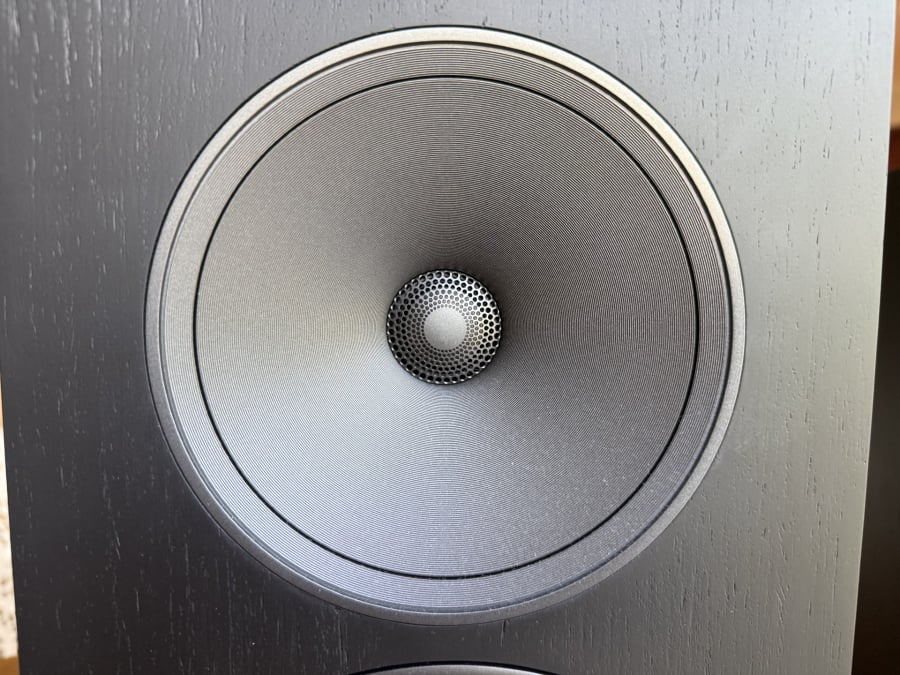
Paradigm, and which deserves (and requires) some explication. The 1-inch AL-MAC Ceramic Dome tweeter uses
a blend of aluminum, magnesium, and ceramic that is reportedly lightweight,
rigid, and resistant to resonance, resulting in detailed, lifelike high
frequencies, according to Paradigm. It is ferro-fluid damped and cooled. The
tweeter is installed within an Oblate Spheroid Waveguide (OSW) and behind a
Perforated Phase-Aligning (PPA) Tweeter Lens. The OSW is designed to precisely
shape the tweeter’s output, focusing sound on the listening area while reducing
unwanted room reflections, according to Paradigm. By focusing the sound
directly on the sweet-spot and minimizing ceiling and wall reflections, the OSW
reportedly contributes to a clear, focused image, regardless of your room’s acoustics. For an
explanation of the PPA lens, see below.
A few paragraphs back, I described the 220B v2 as
ostensibly simple. While it is indeed a 2-way bookshelf speaker like so many
others, it contains a surprising amount of technology that is unique to
Paradigm, and which deserves (and requires) some explication. The 1-inch AL-MAC Ceramic Dome tweeter uses
a blend of aluminum, magnesium, and ceramic that is reportedly lightweight,
rigid, and resistant to resonance, resulting in detailed, lifelike high
frequencies, according to Paradigm. It is ferro-fluid damped and cooled. The
tweeter is installed within an Oblate Spheroid Waveguide (OSW) and behind a
Perforated Phase-Aligning (PPA) Tweeter Lens. The OSW is designed to precisely
shape the tweeter’s output, focusing sound on the listening area while reducing
unwanted room reflections, according to Paradigm. By focusing the sound
directly on the sweet-spot and minimizing ceiling and wall reflections, the OSW
reportedly contributes to a clear, focused image, regardless of your room’s acoustics. For an
explanation of the PPA lens, see below.
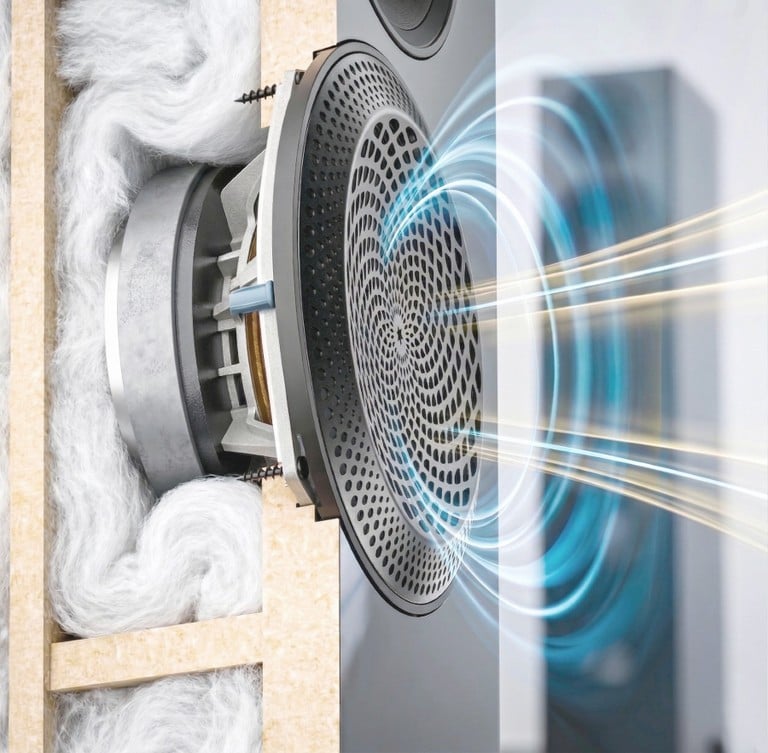
The 6-inch Ultra-High-Excursion AL-MAG mid-woofer is crafted from aluminum and magnesium. This combination is said to provide the “agility and precision required for natural vocals and instruments,” according to Paradigm. The driver also sits behind a non-removable Perforated Phase-Aligning Lens, and features Gen3 Active Ridge Technology (ART) with Vertical Mounting System, and a 1-inch multi-layered voice coil built around a ventilated Apical former. The Apical material’s high heat tolerance and structural stiffness should prevent warping, even during loud, high-power playback.
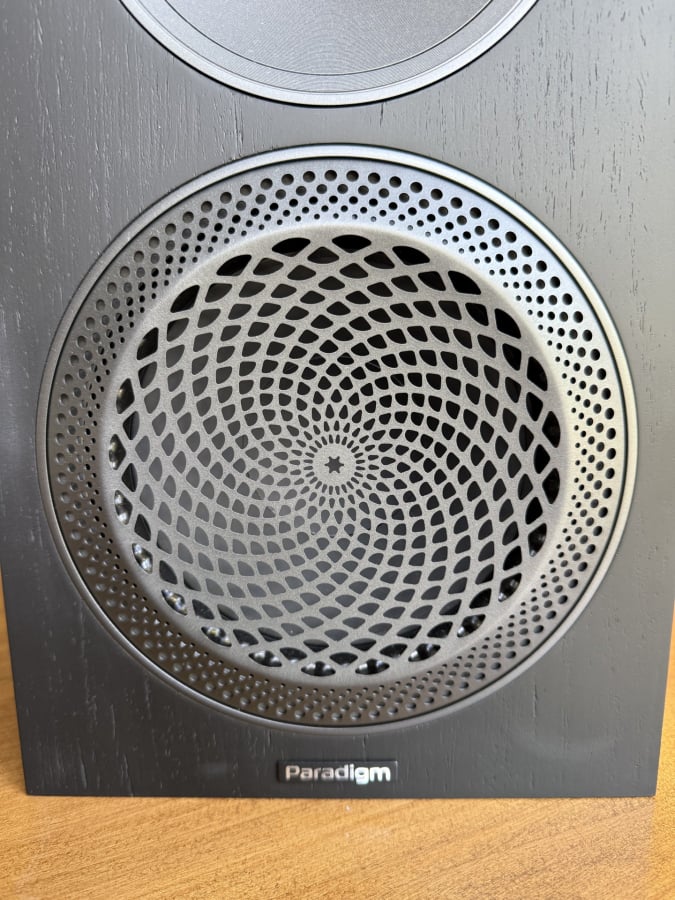
Paradigm’s patented PPA Perforated Phase-Aligning Lens “ensures all frequencies reach your ears simultaneously, significantly improving realism and detail,” according to the company. It reportedly acts as a physical shield and an acoustic filter, blocking out-of-phase frequencies. Paradigm says you’ll notice a “significant leap in the three-dimensionality of the soundstage.”
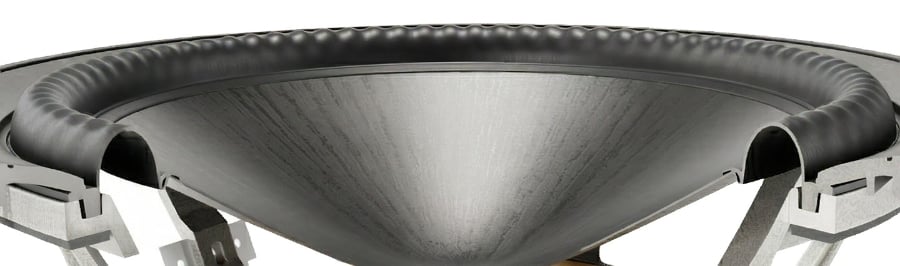
The company’s patented Active Ridge Technology (ART) surrounds are “over-molded” directly onto the driver cones, and made of “audiophile-grade injection-molded thermoplastic elastomer.” This reportedly provides a more durable union between driver and chassis, allowing for much greater excursion and a longer product life. Paradigm also says that drivers attached via ART Surrounds achieve a measurable 3dB gain in output and a 50% reduction in distortion. The aforementioned Vertical Mounting System is a proprietary driver design that maximizes the usable surface area of a woofer cone to produce deeper bass and higher output without increasing the overall footprint of the speaker, according to Paradigm.
All of this driver tech is built into what appears to be a fairly typical MDF cabinet, which Paradigm has strategically braced to be as acoustically inert as possible. Paradigm calls the enclosure “rock-solid,” and says it is designed to “eliminate cabinet colorations, leaving the drivers free to deliver the performance exactly as the artist intended.”
Paradigm Premier 220B V2: Setup and System Details
 I don’t tend to comment much on product packaging
unless I notice something untoward or insufficient, which is not the case here.
But I do want to point out that each speaker comes packaged separately, making
the 220B v2 much easier to move around and unpack than some other speakers — even
some smaller ones. I tested the Paradigm 220B v2 with all three integrated
amplifiers that are currently in residence: the NAD M10 V3 ($3,199), the QUAD 3
($1,895), and the Rotel DX-5 ($1,699). Although the 220B v2 worked fine
with all of the above, I quickly found that the warmer-sounding QUAD 3 was the
best match tonally, so I used it for the bulk of my listening.
I don’t tend to comment much on product packaging
unless I notice something untoward or insufficient, which is not the case here.
But I do want to point out that each speaker comes packaged separately, making
the 220B v2 much easier to move around and unpack than some other speakers — even
some smaller ones. I tested the Paradigm 220B v2 with all three integrated
amplifiers that are currently in residence: the NAD M10 V3 ($3,199), the QUAD 3
($1,895), and the Rotel DX-5 ($1,699). Although the 220B v2 worked fine
with all of the above, I quickly found that the warmer-sounding QUAD 3 was the
best match tonally, so I used it for the bulk of my listening.
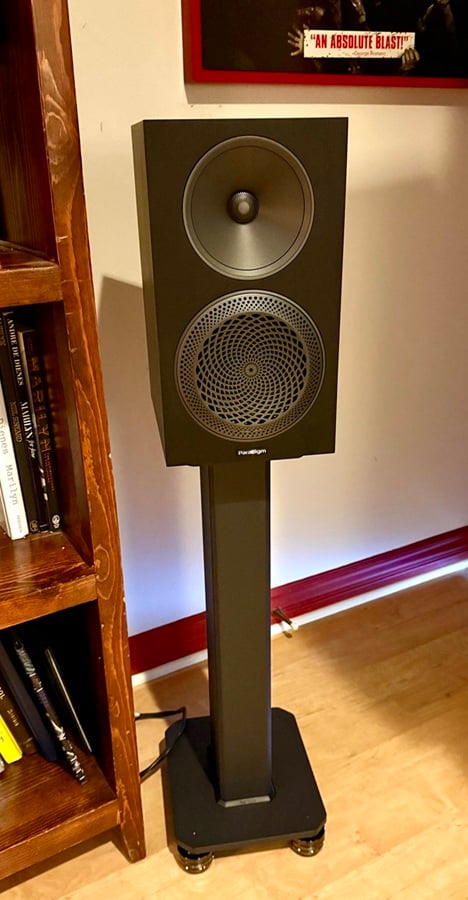
I streamed Qobuz using the Cambridge Audio MXN10 streamer, which fed a digital signal via optical Toslink to the Chord Hugo 2 DAC that I had on loan from The Sound Organisation. The Hugo was then connected via RCA cables to the amp. The speakers were placed on a pair of Kanto SX26 speaker stands, filled with kitty litter and supported by a set of IsoAcoustics GAIA Neo isolation feet, which replaced the spikes that came with the Kanto stands. In my room, I ended up with the speakers two feet out from the front wall, 87 inches from my face, and 83 inches apart (measured from tweeter to tweeter). The right speaker was 47 inches from the right sidewall, and the left speaker was 37 inches from the partial left wall. Right at the plane of the speaker baffles, a deep rectangular window bay on the left wall added another 49 inches of horizontal breathing room. After some experimentation, I toed in the speakers until I could see just a sliver of their interior side panels from the listening position.
Paradigm Premier 220B V2: Sound Quality Vs SVS & Fyne
Paradigm describes its relatively affordable Premier Series v2 speakers as “a sophisticated gateway to near-reference quality sound.” But before I could really dig into the 220B’s sound, I put the speakers through my normal, very unscientific speaker break-in process. I don’t usually mention this part of the review process, mostly because speaker break-in remains bizarrely controversial, and I really can’t be bothered to engage in debate about it. (If you don’t believe speaker break-in is a real phenomenon, I know plenty of material scientists and loudspeaker engineers who would disagree, but suit yourself.)
 When I received a loaner pair of the Fyne Audio F500S from Harmonia
Distribution, my contact Alex warned me that those speakers undergo a shocking
amount of sonic change throughout the break-in process. Then he very kindly
offered to break them in before sending them to me — a level of service I didn’t
expect and certainly don’t take for granted! My review samples of the Paradigm
Premier 220B v2 came with no such warning, but also with no such
break-in service, so I did what I always do with new speakers: I swapped them
in for the front left and right speakers in my mom’s 5-channel living-room
system, powered by a 17-year-old Denon receiver. There they would get at least
a few hours of use every day for a few weeks, including a nightly movie.
However you feel about speaker break-in, I think we can agree that this process
does no harm. My reason for discussing it here is as follows: when I fired up
the system after the removing the 3-way NHT Classic 3 loudspeakers and swapping
in the Paradigms, the front stage suddenly had BASS. I was not prepared for
this level of bass output — the NHT subwoofer that used to be in the system
died some years ago and has not been replaced — and none of the other speakers
that I’ve recently dropped into the system delivered such a powerful first
impression down low. (Disclaimer: the recently-reviewed SVS Ultra Evolution
Bookshelf speakers were broken in elsewhere.) On paper, the 220B v2 doesn’t have
a remarkable bass response; Paradigm rates it as down 3dB at 58Hz. But that’s
an anechoic rating, and the company reckons you’ll get down to about 36Hz (-3dB) in a typical
room. Shoved into the bookcase in my mom’s living room, and fed a relatively
modest diet of Denon wattage, these speakers made it clear that they mean
business.
When I received a loaner pair of the Fyne Audio F500S from Harmonia
Distribution, my contact Alex warned me that those speakers undergo a shocking
amount of sonic change throughout the break-in process. Then he very kindly
offered to break them in before sending them to me — a level of service I didn’t
expect and certainly don’t take for granted! My review samples of the Paradigm
Premier 220B v2 came with no such warning, but also with no such
break-in service, so I did what I always do with new speakers: I swapped them
in for the front left and right speakers in my mom’s 5-channel living-room
system, powered by a 17-year-old Denon receiver. There they would get at least
a few hours of use every day for a few weeks, including a nightly movie.
However you feel about speaker break-in, I think we can agree that this process
does no harm. My reason for discussing it here is as follows: when I fired up
the system after the removing the 3-way NHT Classic 3 loudspeakers and swapping
in the Paradigms, the front stage suddenly had BASS. I was not prepared for
this level of bass output — the NHT subwoofer that used to be in the system
died some years ago and has not been replaced — and none of the other speakers
that I’ve recently dropped into the system delivered such a powerful first
impression down low. (Disclaimer: the recently-reviewed SVS Ultra Evolution
Bookshelf speakers were broken in elsewhere.) On paper, the 220B v2 doesn’t have
a remarkable bass response; Paradigm rates it as down 3dB at 58Hz. But that’s
an anechoic rating, and the company reckons you’ll get down to about 36Hz (-3dB) in a typical
room. Shoved into the bookcase in my mom’s living room, and fed a relatively
modest diet of Denon wattage, these speakers made it clear that they mean
business.
Once they had been installed and tweaked in my system, I began my serious listening. It did not take long to come to the conclusion that, in several respects, the Paradigm Premier 220B v2 is the most technically impressive speaker in its price class that I have heard in my system. If you are chasing resolution, clarity, dynamics, and soundstaging in a standmount speaker under $2K, you must audition the 220B v2. That’s the kind of thing that one might expect to read at the end of a review, but I think such statements are more valuable when accompanied by some context and specific descriptions. The speaker’s remarkable transparency would make it an invaluable reviewer’s tool, but that same quality might also reveal issues with upstream equipment or recording quality — issues that some listeners would just as soon not worry about. Still, I was mightily impressed with the Paradigms’ ability to magnify the differences among amplifiers and source components. Switching from the $400 Cambridge Audio DacMagic 200M to the $2,600 Chord Hugo 2 might seem like an indulgence via less resolving speakers, but the 220B v2 made it unmistakably obvious that the Chord DAC delivers a vast amount of resolution, tonal shading, and dynamic range that the Cambridge leaves in the digital ether. If you like to fine-tune the sound of your system by experimenting with different DACs, phono stages, phono cartridges, or — dare I even say it? — cables and audio tweaks, the 220B v2 will reward this spirit of sonic exploration by amplifying these sometimes small differences.
Because of its unusually high levels of transparency, the Paradigm Premier 220B v2 initially gave the impression of imparting less of its own tonal character compared to other speakers, instead highlighting the differences among recordings. For example, the SVS Ultra Evolution Bookshelf speakers serve up big bass, a warm midrange, and a smooth treble. The Fyne Audio F500S is more midrange-forward, with loads of upper midrange detail and a controlled but light-sounding bottom end. The Paradigm 220B v2 was a bit harder to pin down at first. But one trait that was consistent across all of my listening sessions was excellent vocal clarity, which went hand-in-hand with a slightly cool but crystal-clear midrange and an articulate top-end that could lean bright at times. As I continued to listen, however, I became increasingly convinced that the hints of brightness that I sometimes sensed had more to do with the recordings themselves than with the Paradigms.
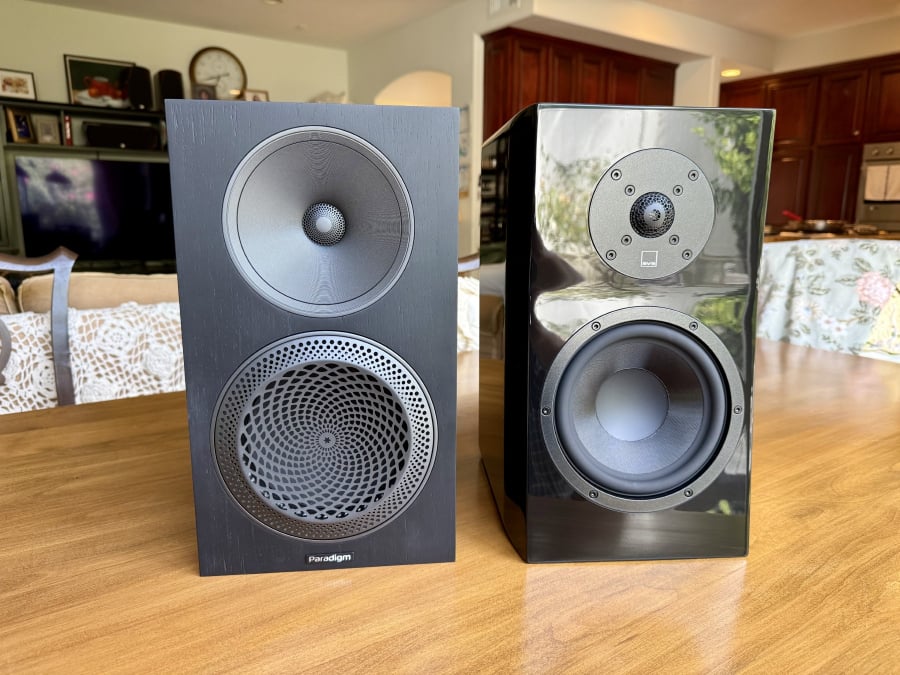
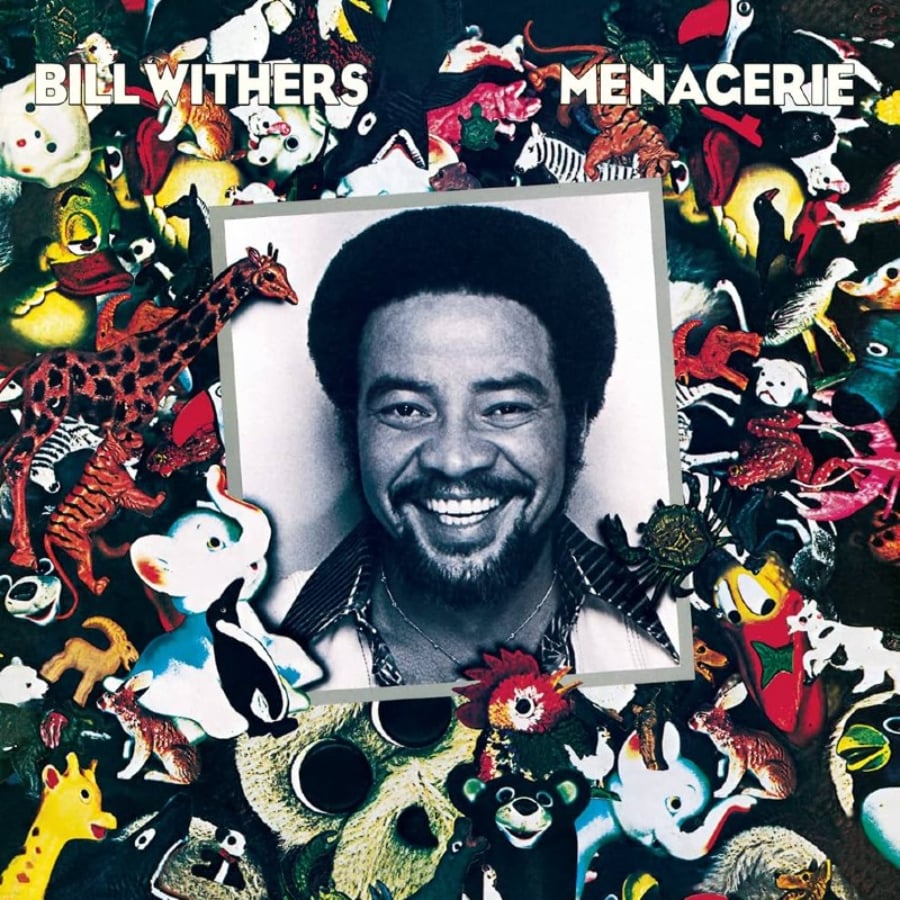
I was quite taken with the Paradigms’ bass performance, but the 220B v2 does not draw any extra attention to the bass — not so as to overshadow or distract from other parts of the sound. Kick drums, bass guitars, and synth bass sounded just as extended and potent via the 220B v2 as on the mighty SVS Ultra Evolution Bookshelf speakers, but with even greater definition. For example, on the 2023 mix of “Michelle” from the 24-bit/96kHz rerelease of The Beatles 1962-1966, Paul McCartney’s Rickenbacker 4001 sounded pluckier through the Paradigms, which emphasized the pick-on-string transients more than the SVS speakers. They gave the instrument more fullness and bloom, but less attack. Both speakers allowed the Rickenbacker’s core tonal qualities to come through, but the 220B v2 sounded more detailed down low. Still, I didn’t always prefer the Paradigms’ pinpoint precision in the bottom octaves. On Bill Withers’s 1977 album Menagerie (24-bit/96kHz), the funky bass line in “Lovely Day” positively strutted out of the SVS speakers with groove and attitude that made me hit repeat. The Paradigms presented a more measured confidence — nothing felt missing, but the sound from the SVS Ultra Evolution Bookshelf speakers was just more fun, even if it lacked the last degree of texture.

In terms of spatial presentation, the Paradigm Premier 220B v2 is simply without equal among the speakers I have heard in my system in this price range. It provided the most specific image placement and by far the most convincing “disappearing act” I’ve heard for this kind of money. The latter was pretty dazzling. I usually attribute much of a speaker’s ability to disappear to its cabinet materials and/or construction. When engineers can throw a lot of money at the cabinet, it’s easier to minimize vibration, diffraction, and other colorations that cause the cabinet to make its presence known during playback. When a cabinet is truly silent, the speakers appear sit there doing nothing while the music just emerges from nowhere. Paradigm’s engineers have achieved something approaching this using a seemingly pedestrian rectangular box made of MDF, and that is darn impressive. Perhaps I was hearing the Perforated Phase-Aligning Lens in action? The effect was in full force on Jon Batiste’s “Drink Water,” from his 2023 album World Music Radio (24-bit/48kHz). This is a high-energy, complex production, and the 220B v2 brought it to life in a way that was exciting and engaging, all while delivering the image specificity of a good studio monitor. Meanwhile, a simpler acoustic recording like “The Touch of Your Lips” from 1960’s Ben Webster Meets Oscar Peterson (24-bit/192kHz) showed that a jazz quartet could sound composed, delicately textured, tonally colorful, and surprisingly powerful through the 220B v2, which pulled off its best vanishing act on this album. It was as if the room itself were playing the music.


“Working for the Man” by Roy Orbison was originally released as a double A-side single with “Hey Leah” in 1962. Both songs later appeared on the 1964 album Oh! Pretty Woman, which was remastered in 24-bit/96kHz resolution in 2014. It is this fabulous-sounding version that is available on Qobuz. In addition to exemplifying the 220B v2’s soundstaging bona fides, “Working for the Man” is a great test track for macro-dynamics; the intro is marked by loud bursts on vocals and drums, which some speakers can’t help but compress. The Paradigms’ sensitivity on paper is roughly average at 88dB, though Paradigm says it’s closer to 91dB in-room. Dynamics proved to be another real strength of these speakers, which sounded almost hornlike in their dynamic vitality, allowing the impact and intensity of those quick acoustic surges and sudden sforzandos to come through more than I expected from a pair of 2-way standmount speakers. Micro-dynamic flicker was equally impressive, allowing the subtle shifts in Orbison’s soaring tenor tone to come through even as the groove of the rhythm section was absolutely cooking. If you’re in the habit of testing audio gear, it’s more of a pleasure than a chore when you find test tracks that you simply never tire of, and “Working for the Man” is just such a track for me. The only problem is that every time I pull it up, I end up listening to the whole album.


I next compared the Paradigms to the Fyne Audio F500S, which also excels at imaging, and has an enchanting way of reproducing vocals with unusual vivacity. I started these comparisons by listening to a bunch of Dolly Parton albums on repeat for about two weeks, until other members of my household showed up at my listening-room door with torches, pitchforks, and at least one shotgun. What can I say? I will always love you, Dolly. She is such a gifted songwriter that it’s easy to forget how many phenomenal covers she has done throughout her career. Check out the 2001 album Little Sparrow (16-bit/44.1kHz), which features Alison Krauss and the members of Nickel Creek among the backing musicians. Highlights for me include a cover of “Shine” by Collective Soul, smooth harmonies on “Seven Bridges Road,” and Dolly’s take on Cole Porter’s “I Get a Kick Out of You.”

More recently, the 2023 album Rockstar (24-bit/96kHz) has an all-star roster of guest performers, including Sting on “Every Breath You Take,” Linda Perry on “What’s Up?” by 4 Non Blondes, and both Paul and Ringo on “Let It Be.” Not too shabby! Listening to these recordings on both the Paradigms and the Fyne Audio speakers yielded some interesting findings. The Paradigms drew sharper outlines around voices and instruments, as if the individual performers were etched into the soundstage with a needle. The Fyne speakers still placed the performers in specific locations, but their outlines were drawn in slightly broader strokes, as with a felt-tipped pen. The Paradigms also did the aforementioned disappearing act slightly better than the Fyne speakers, which sometimes called attention to themselves at the far edges of the soundstage. But the Fyne speakers threw a deeper soundstage, and each performer had a more 3D quality — the kind of sound often associated with tube amps (I was still using the solid-state QUAD amplifier). On the Paradigms, singers and instruments were somewhat flattened, as if they were hyper-realistic paper dolls. The Fyne Audio speakers recreated Dolly’s voice with more depth — as if it were made of clay rather than paper.
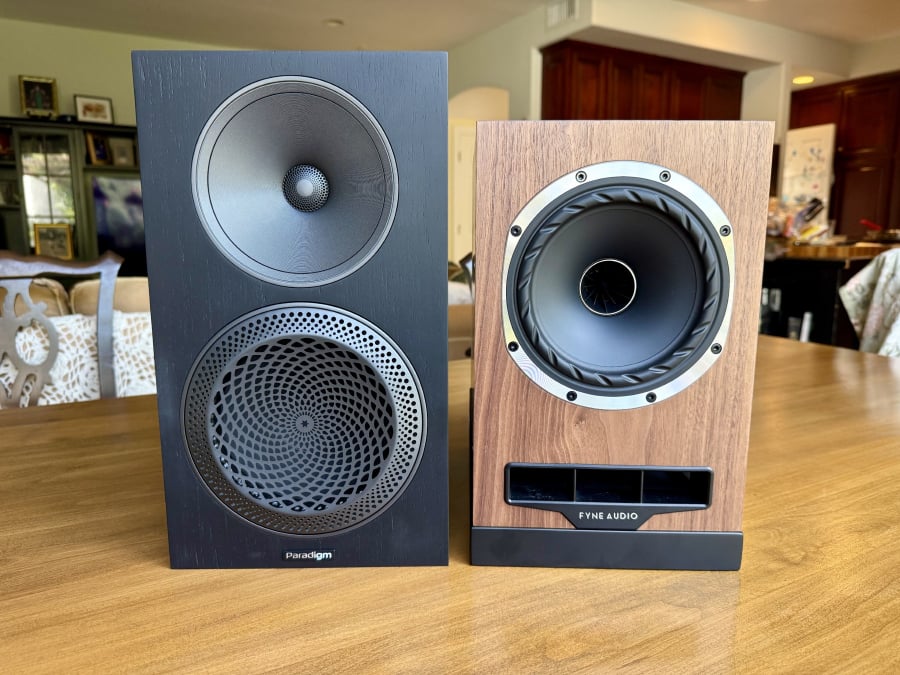
Tonally, the Paradigms and Fyne speakers are quite different, as evidenced by Canadian indie-folk singer Adina V’s 2022 cover of “Your Love” by the English pop-rock band The Outfield (24-bit/48kHz). This sparse recording starts with a single centered vocal and two mandolin tracks, one in each channel. Both speakers offered excellent treble extension, giving the leading edges of strummed strings a good measure of bite and twang. The top end on the Fyne Audio speakers was slightly more polished-sounding, and the liquid quality of the midrange gave Adina’s vocal more body and a natural sense of flow. This song lives in the midrange, which sounded a touch dry and thin on the Paradigm speakers. And because there’s no bass to speak of on this track, the Fyne speakers’ relative lack of bass extension and power wasn’t an issue. I preferred the Fyne Audio speaker’s presentation on this track.


The tables turned, however, when listening to Sierra Ferrell’s wonderful 2021 album Long Time Coming (24-bit/96kHz), which asks a speaker to perform a more full-range workout. If you aren’t familiar with Ferrell, she blends folk, country, blues, and jazz manouche. She also performs with an enthralling and intoxicating joie de vivre, and wears the most insane dresses I’ve ever seen. Go see her live if you can! On tracks like “The Sea” and “West Virginia Waltz,” the Fyne speakers served up bass that was too small and too restrained; a good subwoofer would have been welcome. The Paradigms offered a more neutral tonal balance, which served this excellent recording more faithfully than the midrange-forward Fyne speakers. The 220B v2 also had a bigger, more authoritative sound over all. Both speakers opened a squeaky-clean, crystal clear window into the music, but they provided different views. The Paradigms presented a panoramic view of each recording on a cool, dry, autumn day. The Fyne Audio speakers opened a much smaller window, but they showed a colorful spring day with warmth in the air and dew drops on each singer’s eyelashes.
Paradigm Premier 220B V2 vs the Competition
 I have immense appreciation for the Paradigm Premier 220B v2’s ability to
highlight the differences among amplifiers, DACs, and different masters of the
same recording. This quality alone would make the 220B v2 an invaluable
tool for the reviewer, and a highly attractive option for the system-tweakers,
source-swappers, and cable-curious listeners out there. I have not heard a more
transparent speaker at this price. Competition is fierce in this price range,
however. There have never been more good options available to the thrifty
audiophile shopping for standmount speakers under $1,500. In addition to the
speakers I used for points of comparison here, potential Paradigm buyers might
be considering the 3-way KEF Q Concerto Meta ($1,400/pair), the 3-way ELAC
Uni-Fi Reference UBR62 ($1,300/pair), or the DALI SONIK 3
($1,200/pair), which is a 2-way with a larger 7-inch mid-woofer. (It’s worth
pointing out, however, that none of these boasts a real wood veneer, and I am
not a fan of wood-effect vinyl. Are you?) The Wharfedale EVO 5.2 ($1,300/pair) does offer a real
wood finish, in addition to a 3-way design with a dome midrange driver and an
AMT tweeter. Monitor Audio’s
Silver 7G range is due for a refresh
sometime soon, which is probably why it’s on sale right now. The Silver 100 7G is currently
selling for a tempting $1,049/pair, and it has an 8-inch mid-woofer and the
nicest real-wood finish of the bunch. This list is hardly exhaustive; my point
is that there are many great speakers out there. And make no mistake: the Paradigm Premier 220B v2 is a great
speaker. It should be on any must-audition list alongside the above contenders.
I have immense appreciation for the Paradigm Premier 220B v2’s ability to
highlight the differences among amplifiers, DACs, and different masters of the
same recording. This quality alone would make the 220B v2 an invaluable
tool for the reviewer, and a highly attractive option for the system-tweakers,
source-swappers, and cable-curious listeners out there. I have not heard a more
transparent speaker at this price. Competition is fierce in this price range,
however. There have never been more good options available to the thrifty
audiophile shopping for standmount speakers under $1,500. In addition to the
speakers I used for points of comparison here, potential Paradigm buyers might
be considering the 3-way KEF Q Concerto Meta ($1,400/pair), the 3-way ELAC
Uni-Fi Reference UBR62 ($1,300/pair), or the DALI SONIK 3
($1,200/pair), which is a 2-way with a larger 7-inch mid-woofer. (It’s worth
pointing out, however, that none of these boasts a real wood veneer, and I am
not a fan of wood-effect vinyl. Are you?) The Wharfedale EVO 5.2 ($1,300/pair) does offer a real
wood finish, in addition to a 3-way design with a dome midrange driver and an
AMT tweeter. Monitor Audio’s
Silver 7G range is due for a refresh
sometime soon, which is probably why it’s on sale right now. The Silver 100 7G is currently
selling for a tempting $1,049/pair, and it has an 8-inch mid-woofer and the
nicest real-wood finish of the bunch. This list is hardly exhaustive; my point
is that there are many great speakers out there. And make no mistake: the Paradigm Premier 220B v2 is a great
speaker. It should be on any must-audition list alongside the above contenders.
Paradigm Premier 220B V2 Conclusion
 The Paradigm
Premier 220B v2 speakers never failed to impress on a technical
level, and often knocked me out with their clarity, resolution, dynamics, and
soundstaging. Their bass performance is among the best I have heard from a
standmount speaker at this price. Though they don’t always match the SVS Ultra
Evolution Bookshelf speakers for swagger, the Paradigms sound just as powerful
and are built just as well. The 220B v2 has a commendably neutral tonal balance that rewards
good-quality recordings but does little to smooth over the gnarly-sounding
edges on lesser recordings. The Fyne Audio F500S has a more liquid and
dimensional midrange, and the Paradigm’s slightly dry, slightly thin midrange
is one of very few shortcomings compared to similarly-priced rivals that I have
heard. The word “slightly” is also doing a lot of heavy-lifting in that
previous sentence — the 220B v2’s voicing will undoubtedly be preferred by some
listeners over the more forward-sounding Fyne speakers and the warmer-sounding
SVS. The 220B v2 also vanishes into the soundstage better than these
rivals, neither of which is a slouch in that department. All three speakers
provide a 5-star experience for the right listener. If at all possible, you
should listen to speakers in your own home before making a final decision.
Luckily, this is relatively easy to do with so many retailers offering free
returns.
The Paradigm
Premier 220B v2 speakers never failed to impress on a technical
level, and often knocked me out with their clarity, resolution, dynamics, and
soundstaging. Their bass performance is among the best I have heard from a
standmount speaker at this price. Though they don’t always match the SVS Ultra
Evolution Bookshelf speakers for swagger, the Paradigms sound just as powerful
and are built just as well. The 220B v2 has a commendably neutral tonal balance that rewards
good-quality recordings but does little to smooth over the gnarly-sounding
edges on lesser recordings. The Fyne Audio F500S has a more liquid and
dimensional midrange, and the Paradigm’s slightly dry, slightly thin midrange
is one of very few shortcomings compared to similarly-priced rivals that I have
heard. The word “slightly” is also doing a lot of heavy-lifting in that
previous sentence — the 220B v2’s voicing will undoubtedly be preferred by some
listeners over the more forward-sounding Fyne speakers and the warmer-sounding
SVS. The 220B v2 also vanishes into the soundstage better than these
rivals, neither of which is a slouch in that department. All three speakers
provide a 5-star experience for the right listener. If at all possible, you
should listen to speakers in your own home before making a final decision.
Luckily, this is relatively easy to do with so many retailers offering free
returns.
I found the 220B v2 paired best with amplification that leans toward the warm side, and the QUAD 3 integrated amp was a very fine match. The Cambridge Audio EXA100 ($2,400) and Marantz Model 30 ($3,500) integrated amps are both quite a bit more expensive than the 220B v2, but I would not hesitate to spend the cash for a great amp — the 220B v2 speakers are more than up to the challenge of giving you your money’s worth. They’re also relatively easy to drive, and would probably sound killer with a good tube amp from Prima Luna or Rogue Audio. The Paradigm Premier 220B v2 speakers offer a clean, powerful sound with a judicious tuning and a superb spatial presentation. They are also very well-built, good-looking, and less expensive than virtually all of their likely rivals. An unqualified success, and an easy recommendation.
The Score Card
The scoring below is based on each piece of equipment doing the duty it is designed for. The numbers are weighed heavily with respect to the individual cost of each unit, thus giving a rating roughly equal to:
Performance × Price Factor/Value = Rating
Audioholics.com note: The ratings indicated below are based on subjective listening and objective testing of the product in question. The rating scale is based on performance/value ratio. If you notice better performing products in future reviews that have lower numbers in certain areas, be aware that the value factor is most likely the culprit. Other Audioholics reviewers may rate products solely based on performance, and each reviewer has his/her own system for ratings.
Audioholics Rating Scale
 — Excellent
- — Very Good
- — Good
- — Fair
- — Poor
| Metric | Rating |
|---|---|
| Build Quality | |
| Treble Extension | |
| Treble Smoothness | |
| Midrange Accuracy | |
| Bass Extension | |
| Bass Accuracy | |
| Imaging | |
| Dynamic Range | |
| Fit and Finish | |
| Performance | |
| Value | |
Jacob is a music-lover and audiophile who enjoys convincing his friends to buy audio gear that they can't afford. He's also a freelance writer and editor based in Los Angeles.
View full profile Subscribe to our newsletter