


Hisense U7SG Review: Best Mini-LED Gaming TV Under $1,500?
U7SG 65" MiniLED TV
- Product Name: U7SG 65" MiniLED TV
- Manufacturer: Hisense
- Performance Rating:


- Value Rating:
- Review Date: July 26, 2026 00:35
- MSRP: $ 1,499
-

- Display: 65" MiniLED LCD
- Resolution: 4K UHD
- Refresh Rate: Native 165Hz
- HDR: Dolby Vision IQ, HDR10+, HLG
- Audio: 2.1.2 Dolby Atmos
- Smart Platform: Google TV
- HDMI: 4 × HDMI 2.1
Pros
- MiniLED Contrast
- 2.1.2 Audio
- Bright Room Performance
Cons
- No Wireless Subwoofer
Hisense U7SG Introduction
Our hands-on Hisense U7SG review evaluates whether this MiniLED Pro 4K TV delivers the premium picture quality, native 165Hz gaming, Dolby Vision IQ HDR, and immersive Dolby Atmos performance needed to compete with the best midrange televisions under $1,500. In this review, we put the 65-inch model through extensive testing to determine whether Hisense has successfully combined flagship-level features with the value-oriented pricing that has made the company one of the fastest-growing TV brands in North America.
While Audioholics has built its reputation over the past two and a half decades by providing in-depth reviews of loudspeakers, AV receivers, amplifiers, and home theater electronics, the display is every bit as important as the components driving the sound. After all, what is a home theater without a great screen? The most immersive Dolby Atmos soundtrack or carefully calibrated surround sound system can only go so far if the picture lacks contrast, color accuracy, or HDR impact. As home theater enthusiasts ourselves, evaluating the visual side of the experience is a natural extension of our mission to help readers build the best entertainment systems possible.
Although we've reviewed displays from companies including LG, Sony, Samsung, Vizio, and TCL over the years, this marks our first in-depth review of a modern Hisense television. Our first exposure to the company's display strategy came at CES in 2022, where Hisense outlined its commitment to MiniLED technology and bringing premium home theater performance to more affordable price points. Fast forward to today, and that strategy has paid off. Hisense has become one of the fastest-growing television manufacturers in North America, earning a reputation for delivering picture quality and gaming performance that often exceed expectations for the price, making the U7SG an especially compelling TV to evaluate.
The Hisense U7SG is positioned as the company's "Professional Game-Changing TV," targeting enthusiasts who want flagship-level features without flagship pricing. On paper, it checks nearly every box. It combines a Hi-QLED MiniLED Pro technology with thousands of MiniLEDs for precise local dimming, a native 165Hz panel aimed at serious gamers, an anti-reflective display for bright rooms, Pantone Validated color accuracy, Dolby Vision IQ, HDR10+ Adaptive, IMAX Enhanced certification, and Hisense's latest Hi-View AI Engine Pro processor to optimize picture quality in real time.
Of course, impressive specifications don't always translate into impressive real-world performance. To find out whether the U7SG lives up to its promises, we put the 65-inch model through a series of picture quality, gaming, and usability tests in our home theater.
Setup and First Impressions
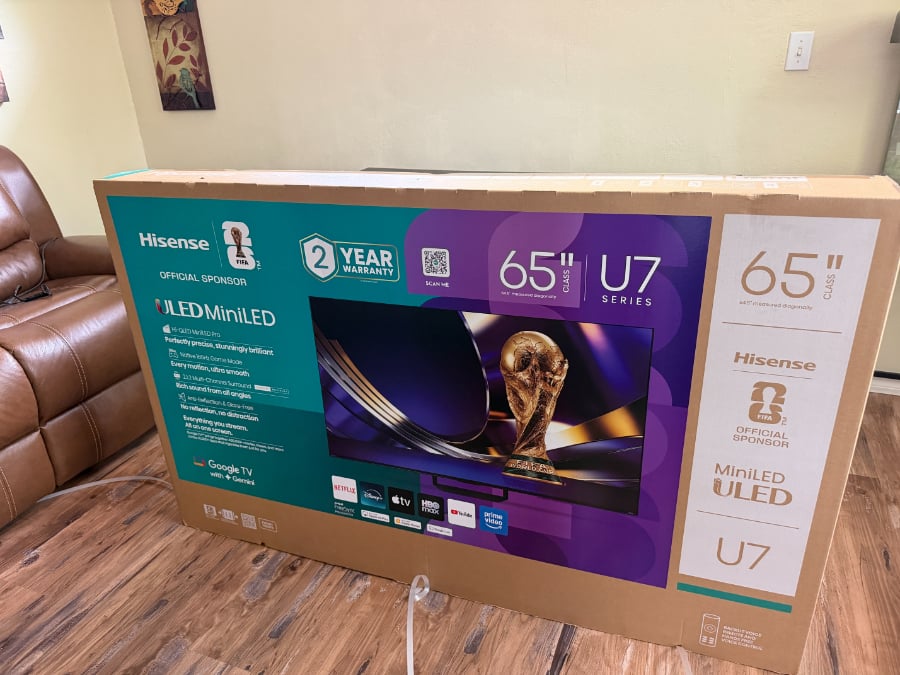
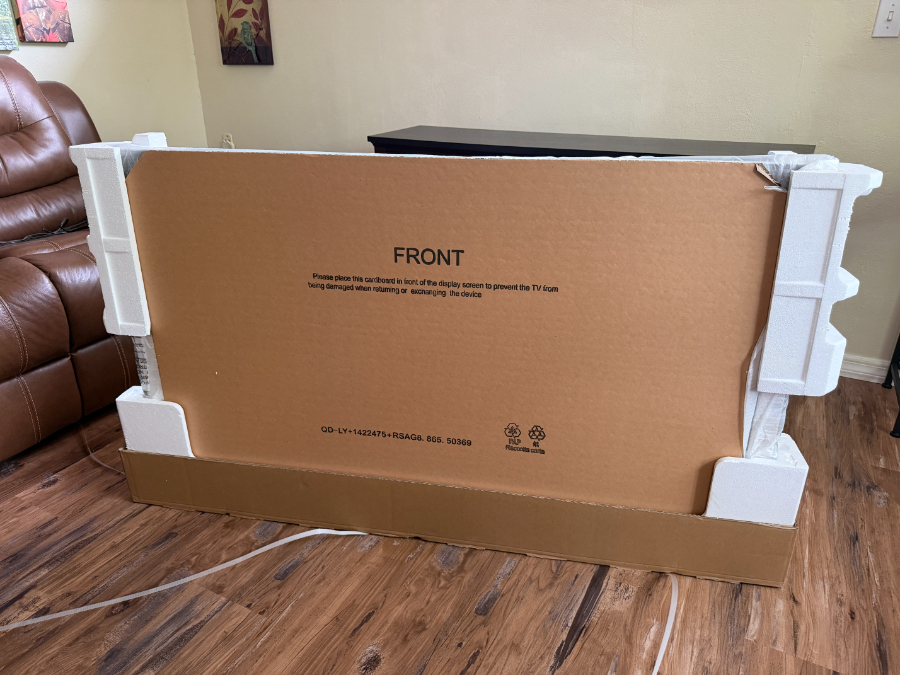
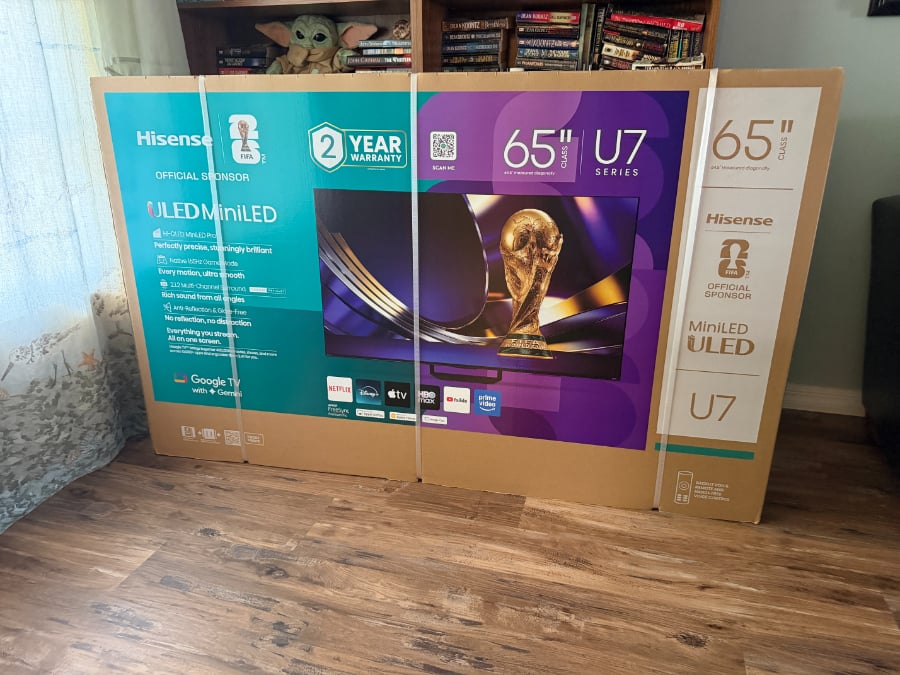
Hisense made one of the easiest televisions we've ever unboxed. Instead of the traditional cardboard carton that requires cutting tape around the entire perimeter before wrestling the TV out, the U7SG uses a lift-off box design. Simply cut the three plastic shipping straps and lift the entire upper portion of the box straight up. The television remains securely supported in the lower tray, making it much easier and safer to remove than many competing designs.
We left the TV resting in the lower portion of the box while carrying the large cardboard shell to the garage for disposal. It also provided a stable platform for attaching the stand before lifting the television onto our media console.
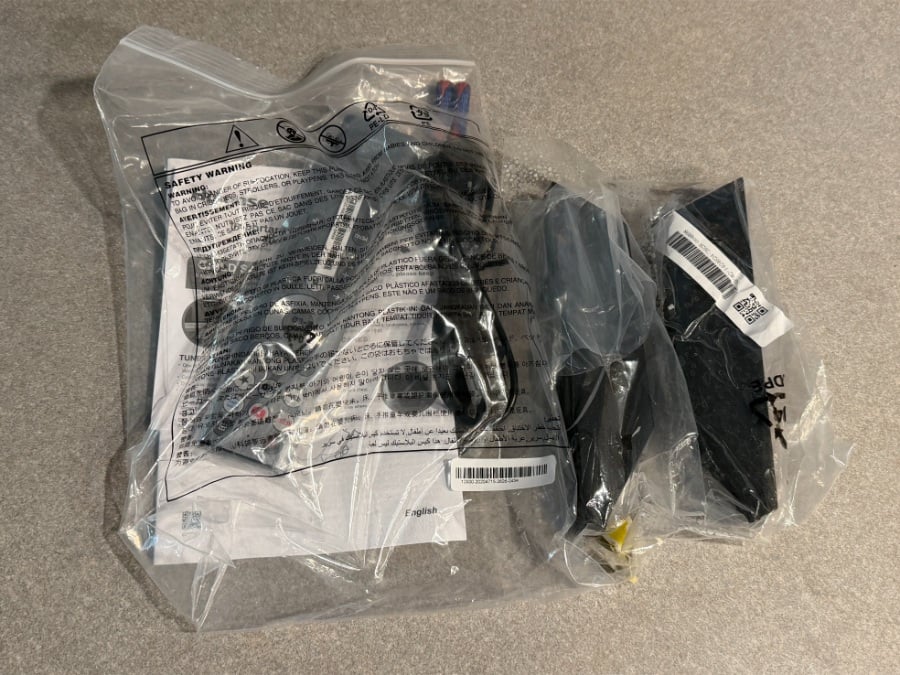
There was one small moment of confusion during setup. The heavy metal stand base was stored in the bottom section of the packaging exactly where we expected, but the remote control, documentation, power cord, and accessories initially appeared to be missing. After a few minutes of searching, we discovered that Hisense cleverly hides the accessory box above the Styrofoam inserts in the top portion of the carton. Once we knew where to look it made perfect sense, but first-time owners may briefly think something was forgotten.
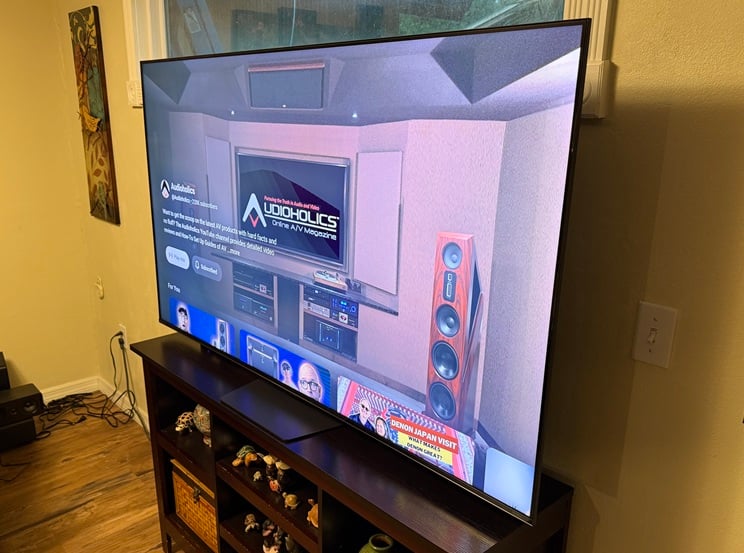
Assembly of the stand was refreshingly straightforward. The solid metal base that attaches using eight machine screws, while two alignment tabs help position the stand before everything is tightened down. Once assembled, the stand feels exceptionally stable with very little wobble. Considering the size of the 65-inch panel, we appreciated the heavy base, which gave the television a reassuringly stable footprint on our media console.
Connections and Setup
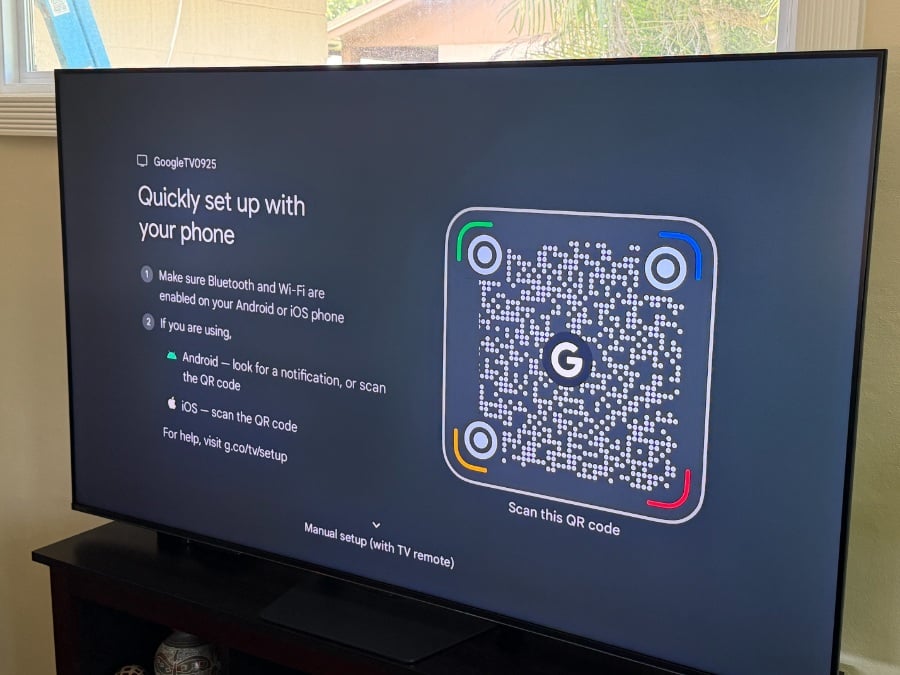
Although the U7SG is a fully featured Google TV, our review system is built around an Apple TV 4K, so that's what we used for the majority of our evaluation. Initial setup through Google TV was quick, intuitive, and easy to follow, but most of our viewing was performed through the Apple TV to keep our testing consistent with previous display reviews.
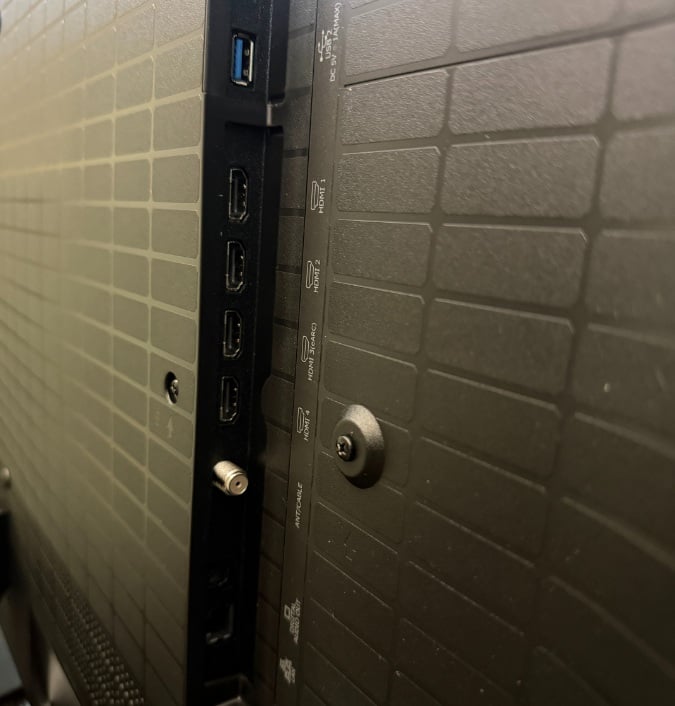
Hisense also deserves credit for its side panel layout. The HDMI inputs are clearly labeled and mounted along the left side of the television where they're easy to see and reach, even after the TV has been placed on a stand. The power connection is located on the opposite side, making cable routing neat and straightforward.
U7SG Remote Control
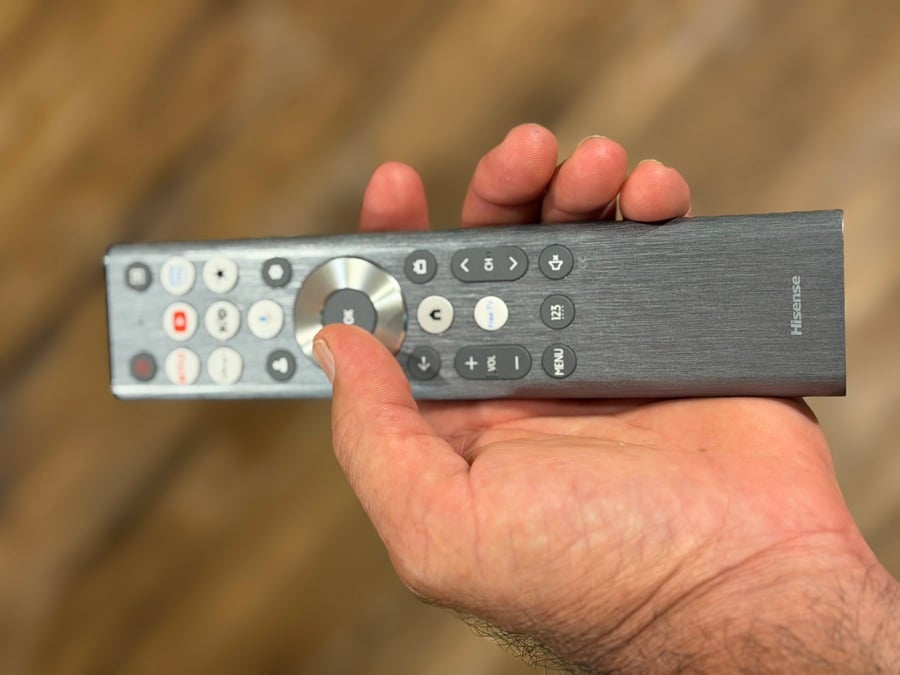 The included backlit remote quickly became one of our
favorite surprises.
The included backlit remote quickly became one of our
favorite surprises.
Several recent premium televisions I’ve used have adopted minimalist remotes that replace traditional buttons with small rocker-style tabs for volume and channel control. While visually sleek, we've found these controls can be frustrating to operate, particularly for older users or anyone who prefers tactile buttons.
Hisense took a more conventional approach, and we're glad they did. The buttons are well spaced, easy to locate by feel, and the backlighting makes nighttime operation effortless. It's one of those small touches that significantly improves the day-to-day user experience.
U7SG Built-In Speaker Design
One feature that often gets overlooked on televisions is the built-in sound system. Most modern TVs are so thin that audio quality has become an afterthought, forcing buyers toward an external soundbar almost immediately.
The Hisense U7SG is one of the exceptions.
Instead of a basic pair of downward-firing speakers, the U7SG features a 2.1.2 multi-channel speaker system complete with dedicated height channels for Dolby Atmos playback. Hisense says the system “projects sound from multiple directions to create a much larger and more immersive soundstage than conventional television speakers.”
As home theater enthusiasts, we'll almost always recommend pairing a television with a dedicated AV receiver and speaker system. No television speaker package can compete with a properly configured surround system. However, not everyone has the space or budget for separate speakers. If you're planning to rely on the TV's built-in audio, the U7SG delivers a performance that rivals the sound quality of many entry-level $200 to $300 soundbars.
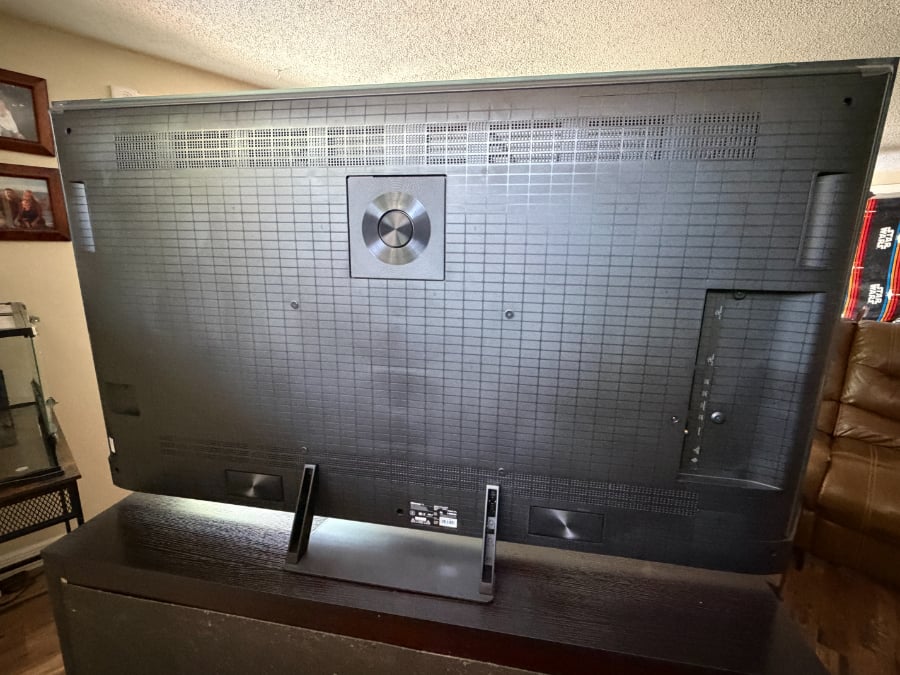
Looking behind the television, it's immediately apparent that Hisense devoted more internal space to audio than many competing televisions. The upward-firing drivers responsible for the height channels are clearly visible, as are the side-firing drivers that help widen the soundstage.
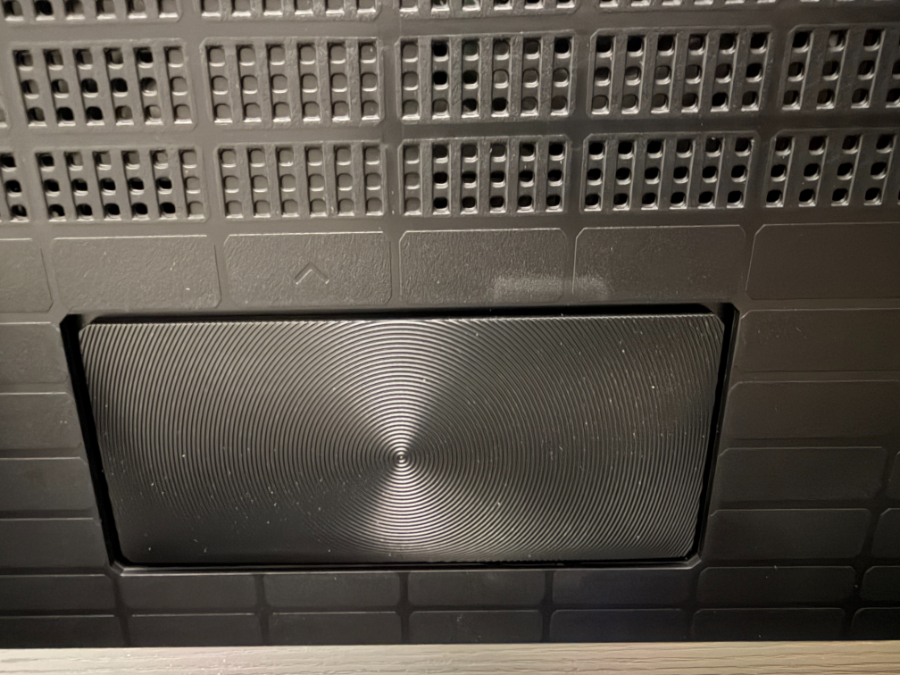
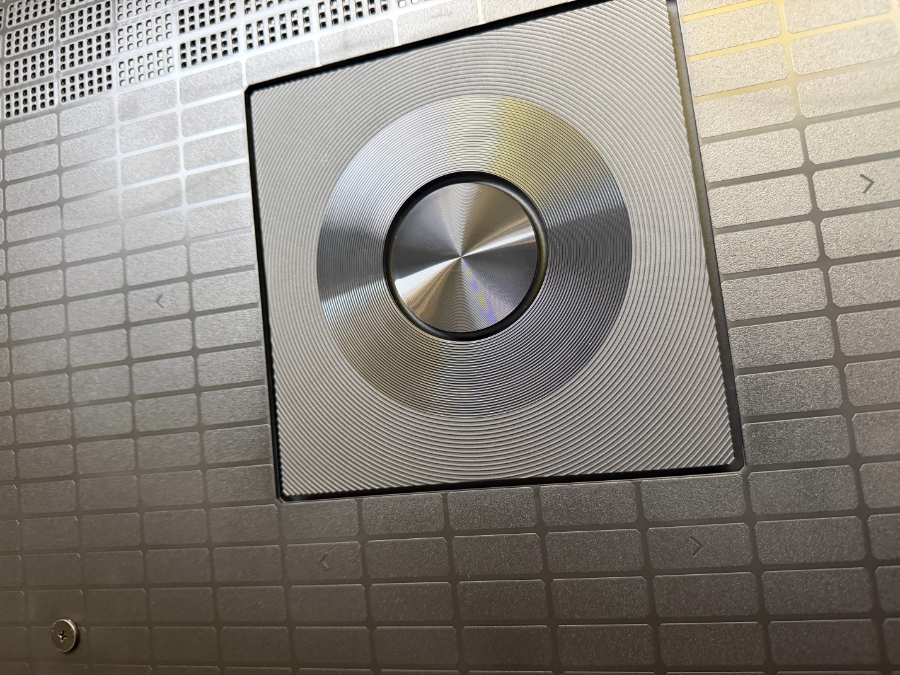
Main left and right speakers Dolby Atmos upfiring speaker
The system produced a surprisingly full and spacious presentation for a television. Dialogue remained clear, bass output was noticeably fuller than we've come to expect from a television of this thickness, and the Atmos processing created a noticeably larger soundstage than we typically expect from built-in TV speakers. Hisense rates the integrated 2.1.2 Multi-channel Dolby Atmos system at 50 watts, considerably more power than many televisions in this price category.
That said, there is one feature we'd like to see Hisense borrow from a few competitors. Several manufacturers now offer 2.1.2 systems with optional wireless subwoofers that pair directly with the television while preserving the simplicity of an all-in-one system. Although the U7SG's internal woofer performs admirably, we'd love to see Hisense offer an optional wireless subwoofer that pairs directly with the television. It would extend low-frequency performance without sacrificing the simplicity that makes an all-in-one TV solution so appealing.
Hisense U7SG 65-inch MiniLED TV Features
Hi-QLED MiniLED Pro
At the heart of the U7SG is Hisense's latest Hi-QLED MiniLED Pro technology. Rather than relying on a conventional LED backlight, the U7SG uses thousands of individually controlled MiniLEDs that allow the television to precisely manage brightness across the entire screen. This level of control produces deeper black levels, brighter highlights, and significantly improved HDR performance compared to traditional full-array LED televisions. According to Hisense, its proprietary local dimming system dynamically analyzes each scene while adjusting brightness across thousands of lighting zones to maximize contrast and preserve fine shadow detail.
For movie lovers, this translates into better-looking HDR with less blooming around bright objects, while daytime viewing benefits from higher overall brightness that helps maintain image quality even in sunlit rooms.
Native 165Hz Gaming Performance
The U7SG arrives with one of the fastest native refresh rates currently available. The native 165Hz panel, combined with Variable Refresh Rate (VRR), Auto Low Latency Mode (ALLM), HDMI 2.1 connectivity, and AI-assisted motion processing, is designed to deliver exceptionally smooth gameplay with minimal blur or input lag.
While most console gamers will still be limited by the output capabilities of the PlayStation 5 and Xbox Series X, PC gamers with high-end graphics cards can take advantage of the panel's full refresh rate for incredibly fluid motion.
Hisense U7SG Real-World Viewing Performance
Manufacturer specifications can tell you how bright a television gets, how many local dimming zones it has, or how fast its panel refreshes, but they don't always tell you what it's actually like to watch movies, television shows, and live sports. Rather than relying solely on test patterns, we spent several days using the Hisense U7SG as our primary display, evaluating everything from challenging HDR content to live ATSC 3.0 broadcasts and some of our favorite movie reference scenes.
Game of Thrones: House of the Dragon
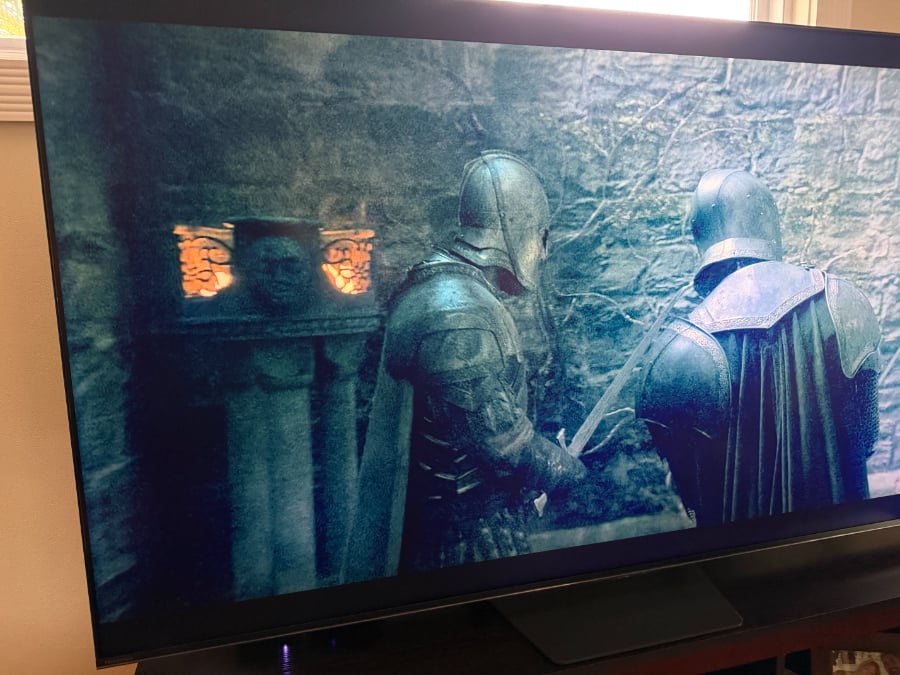
One of the first programs we reached for was HBO's House of the Dragon, specifically Episode 4. Anyone who has watched the series knows many scenes take place inside dimly lit castles illuminated by little more than torches and moonlight. These sequences have become something of a torture test for modern televisions because they expose weaknesses in black level performance, local dimming, shadow detail, and video processing.
The scenes inside Harrenhal proved particularly revealing.
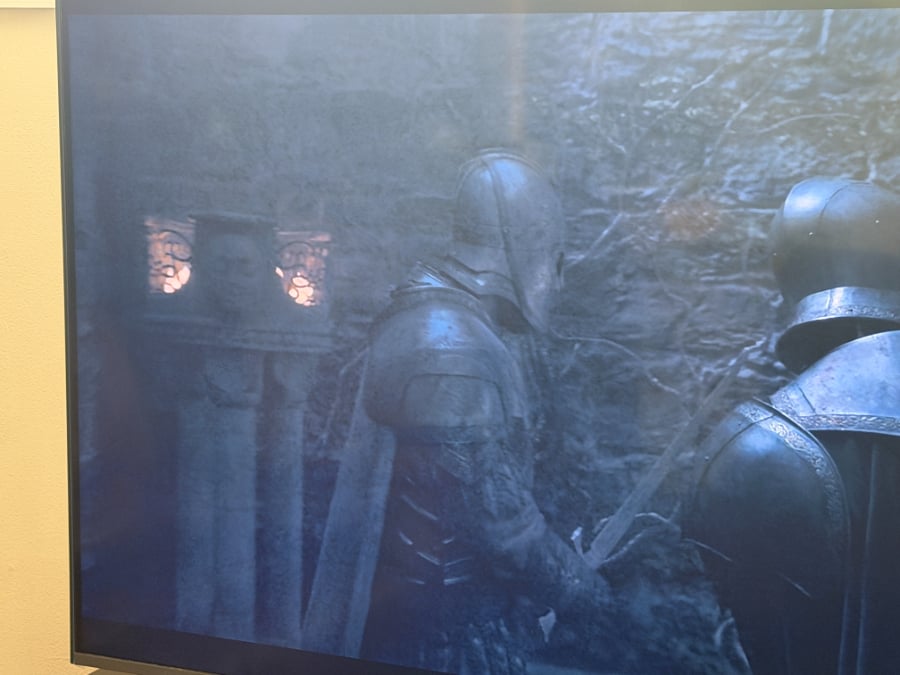
Our previous entry-level television struggled badly here. Instead of smooth transitions between shades of gray and black, darker portions of the image frequently broke apart into blocky patches and visible compression artifacts. Fine shadow detail often disappeared into a muddy mess of dark gray pixels, making these already dark scenes even more difficult to follow.
The Hisense U7SG handled the same material significantly better. Shadow transitions appeared much smoother, textures in the stone walls, costumes, and castle interiors remained visible, and the distracting macroblocking we had become accustomed to seeing on our older television was dramatically reduced. Blacks appeared deeper without crushing fine shadow detail, allowing subtle highlights from candles and torches to stand out naturally against the surrounding darkness.
Perhaps the biggest compliment we can give the U7SG is that we stopped thinking about the television altogether. Instead of noticing picture flaws, we simply became immersed in the story.
Live Sports
Next, we turned to one of the best real-world tests for any television: live sports.
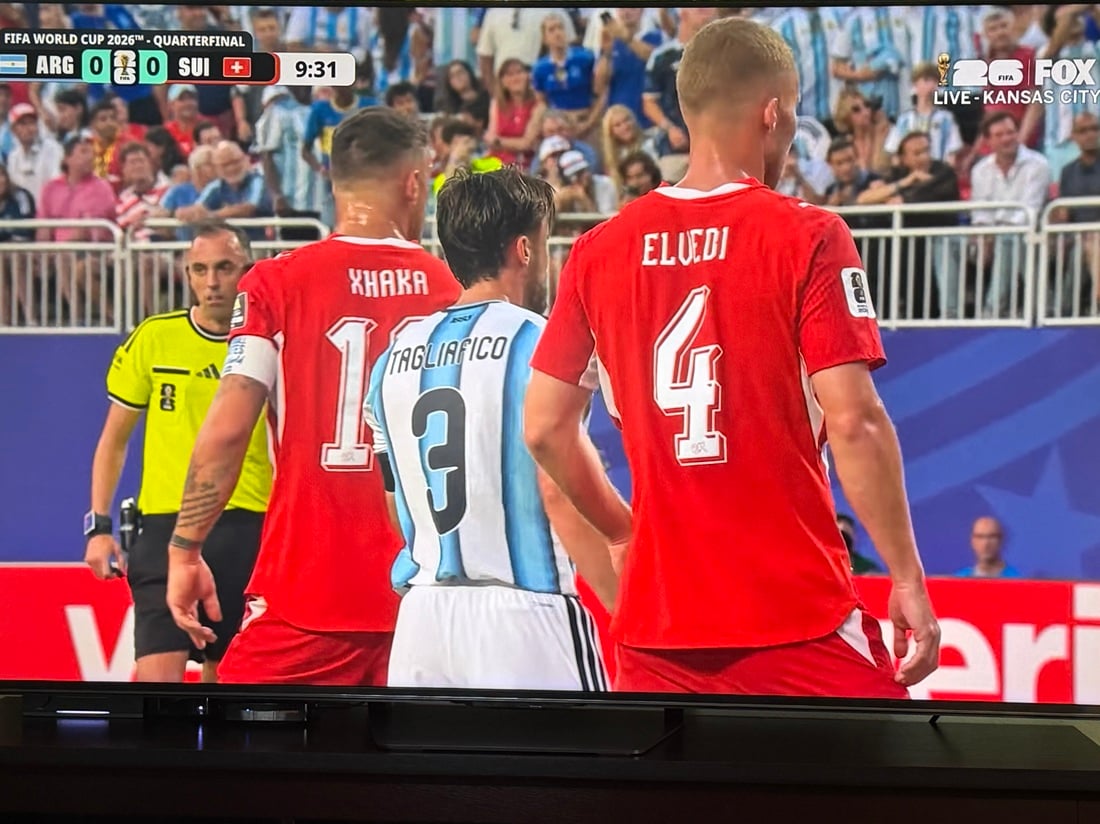
For this evaluation, we watched the highly anticipated Argentina versus Switzerland match using a ZapperBox receiver that decodes over-the-air ATSC 3.0 broadcasts. The signal was delivered in native 4K with Dolby Atmos audio, providing an excellent opportunity to evaluate motion handling, color reproduction, and overall image quality.
Soccer is particularly demanding because the camera is constantly panning across a field of nearly uniform green grass. Displays with poor panel uniformity often reveal dirty screen effect, vertical banding, or inconsistent brightness during these sweeping camera movements.
Fortunately, the U7SG exhibited excellent screen uniformity throughout the match. The grass remained consistent across the entire field with no distracting streaks or blotchy patches, while player movement appeared smooth and well controlled. Fast passes and long camera pans remained sharp without introducing excessive blur or obvious motion artifacts.
Color reproduction was equally impressive. Team uniforms appeared vibrant without looking oversaturated, and the MiniLED backlight provided enough brightness to maintain excellent image punch even during brightly lit daytime scenes. Combined with the crisp ATSC 3.0 broadcast, the overall presentation was among the best we've experienced from an over-the-air sporting event.
Top Gun: Maverick
Finally, we revisited one of our favorite Dolby Atmos demonstration scenes: the canyon flight sequence from Top Gun: Maverick.

The sequence combines breathtaking HDR cinematography with rapid camera movement, dramatic lighting changes, and one of the most dynamic Dolby Atmos soundtracks available, making it an outstanding demonstration of both picture and audio performance.
Having watched this scene literally hundreds of times over the years in demonstration rooms at CES, CEDIA, and numerous manufacturer events including the outstanding Maximum AV Trinnov & RBH Sound Audio Listening Event, we have a very good idea of what reference-quality audio and video should look and sound like.
Using nothing more than an Apple TV 4K as our source, the U7SG delivered an engaging cinematic presentation that exceeded our expectations. HDR highlights had excellent impact, the sunlit canyon walls displayed convincing depth and texture, and the television maintained outstanding contrast throughout the sequence.
The biggest surprise, however, was the audio.
Even without connecting an external receiver or soundbar, the U7SG's built-in 2.1.2 Multi-channel speaker system produced a presentation that was noticeably fuller and more spacious than we expected. Jet flyovers extended beyond the physical boundaries of the television, dialogue remained clear during the film's most demanding action scenes, and the height channels added a subtle but convincing sense of vertical space that's rarely found in integrated television speakers.
Would we still recommend pairing the U7SG with a dedicated surround sound system? Absolutely. Nothing replaces a quality AVR and separate speakers.
However, if you purchase the U7SG and don't immediately invest in external audio, we think you'll be pleasantly surprised by just how capable its built-in speaker system really is.
Hisense U7SG 65-inch MiniLED TV Measurements and Analysis
If you have ever wondered what the difference is between a $400 TV and a $1,500 TV of the same size is we decided to do some real world comparisons and simple testing that you can do at home. We often rely on expensive meters and calibration equipment to evaluate televisions. While those measurements are invaluable, the following series of simple visual tests that any home theater enthusiast can recreate using nothing more than YouTube test patterns. To provide additional context, we compared the results directly against an entry-level $400 television. These simple tests clearly illustrate many of the improvements modern MiniLED technology brings to real-world viewing.
Black Level and Shadow Detail
If there was one test that immediately demonstrated the advantages of the U7SG's MiniLED backlight, it was our black level evaluation of horseback riders in a dark forest carrying torches because it combines deep shadows, bright torchlight, and subtle details that can quickly expose the weaknesses of a television.
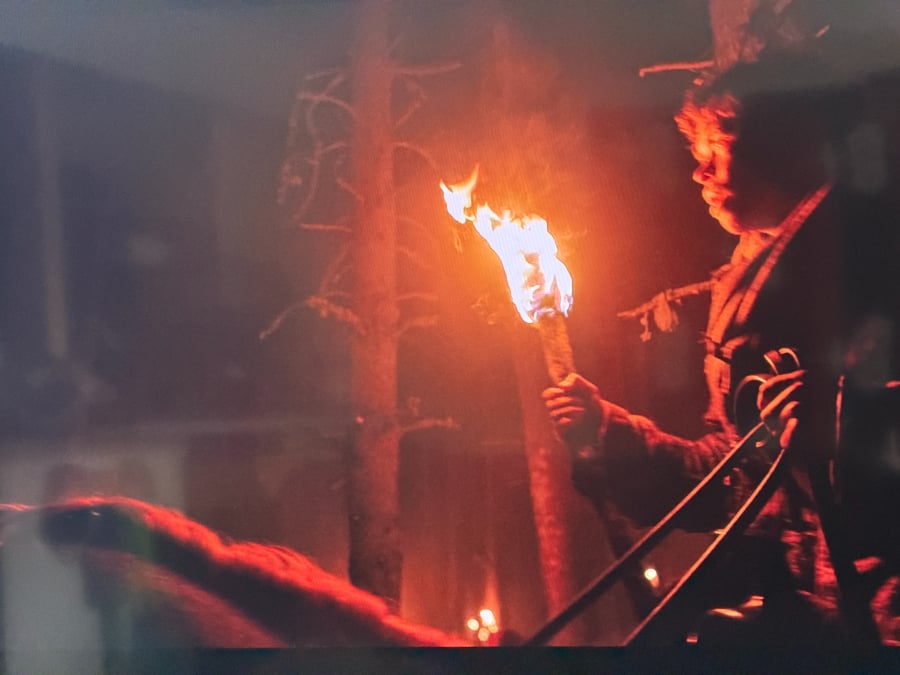
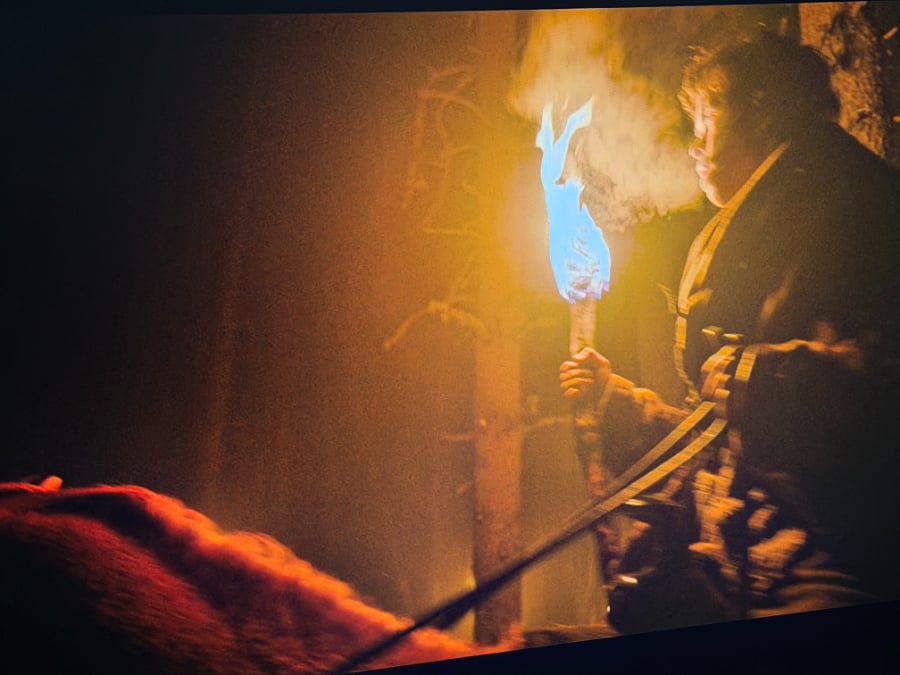
Entry-level TV (Left) Hisense U7SG (Right)
On our previous entry-level television, the scene suffered from visible macroblocking and large patches of gray where smooth shadow transitions should have been. Fine textures in the stone walls and clothing were often obscured, making the already dark sequence appear muddy and flat. While some of these artifacts originate from the streaming source itself, the television's limited contrast performance made them much more obvious.
The Hisense U7SG handled the same scene far more gracefully. Blacks appeared significantly deeper while preserving subtle shadow detail, allowing textures in the castle walls and costumes to remain visible without crushing dark areas into a solid black mass. Compression artifacts were still present in the source material, but they became far less distracting thanks to the television's superior local dimming and near-black performance. The result was a noticeably more cinematic presentation that allowed us to focus on the story instead of the display.
Peak HDR Brightness
High Dynamic Range isn't simply about making the picture brighter, it's about reproducing the full range between the darkest shadows and the brightest highlights while maintaining detail throughout the image.
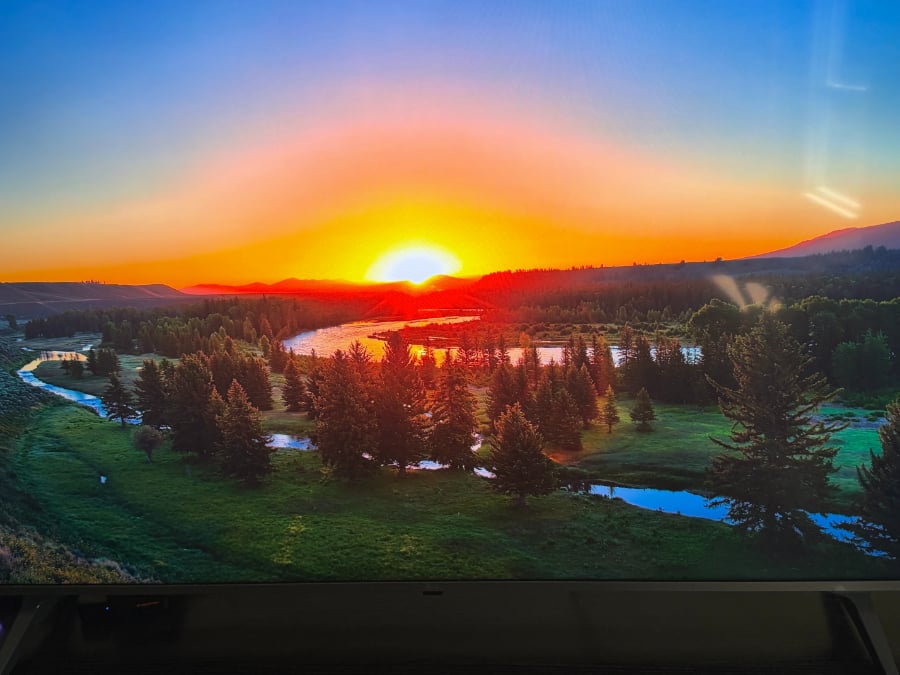
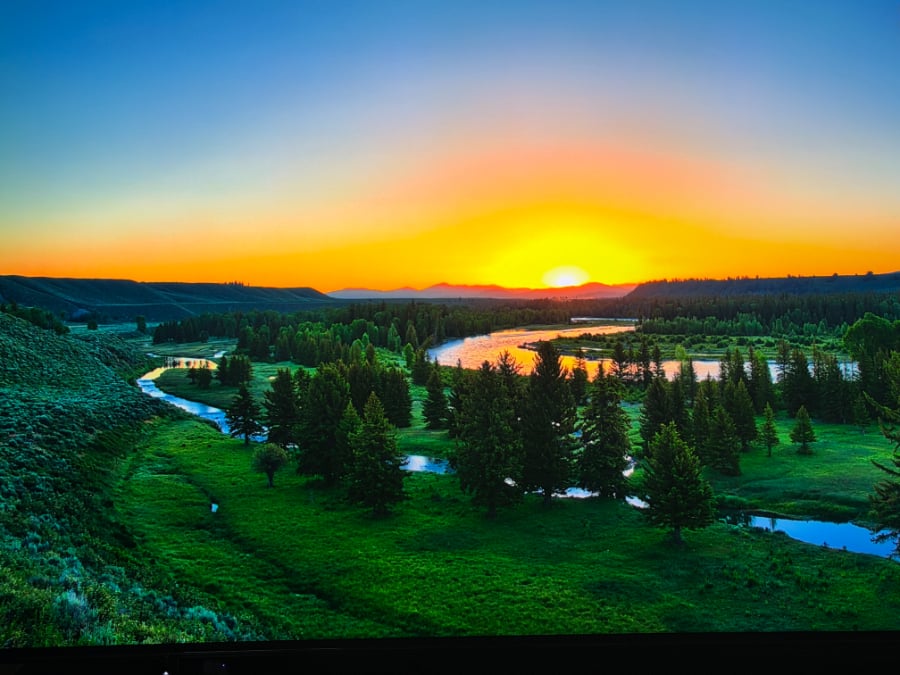
Entry-level TV (Left) Hisense U7SG (Right)
Using a bright sunrise HDR test pattern, the differences between the two televisions became immediately apparent. The entry-level TV rendered the sun as a large, nearly featureless white blob that overwhelmed the surrounding sky. Fine gradations between yellow, orange, and blue were largely lost, reducing the overall sense of depth and realism.
The Hisense U7SG delivered a much more refined HDR presentation. The sun retained noticeably better separation from the surrounding sky, color gradients appeared smoother, and highlights exhibited substantially more impact without washing out nearby detail. Combined with the television's higher peak brightness, the scene simply looked more lifelike. This was one of the clearest demonstrations of the advantages MiniLED technology offers over entry-level LED televisions.
Gray Uniformity
Gray uniformity is rarely discussed outside of professional reviews, yet it has a significant impact on everyday viewing—particularly during sporting events, where large areas of the screen display nearly identical colors.
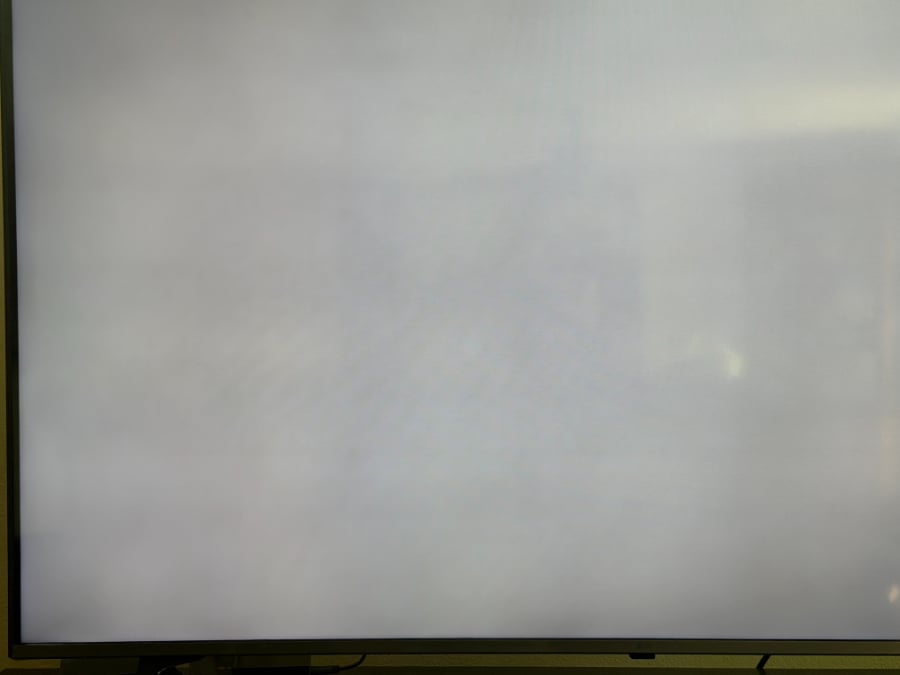
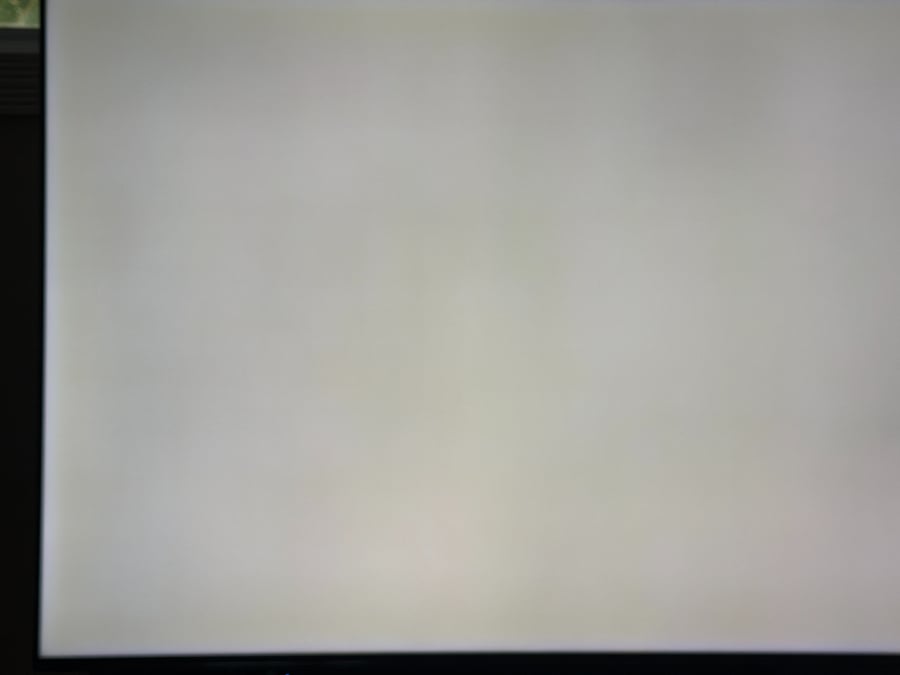
Entry-level TV (Left) Hisense U7SG (Right)
Our previous entry-level exhibited obvious dirty screen effect, with visible blotches and uneven brightness spread across the panel. These imperfections become especially noticeable during slow camera pans over football fields, hockey rinks, or soccer pitches.
The U7SG showed a dramatic improvement. The gray test pattern appeared remarkably clean, with only a very subtle warmth visible along one edge of the screen. More importantly, none of these minor variations were noticeable during normal viewing. Throughout our sports evaluations, the field remained consistent across the display without distracting streaks or patchy areas pulling our attention away from the action.
Motion Handling
Motion performance is one of the easiest areas to overlook until it becomes distracting. To evaluate the panel's ability to resolve moving detail, we used a simple high-contrast diagonal line test that quickly reveals motion blur, edge definition, and processing artifacts.
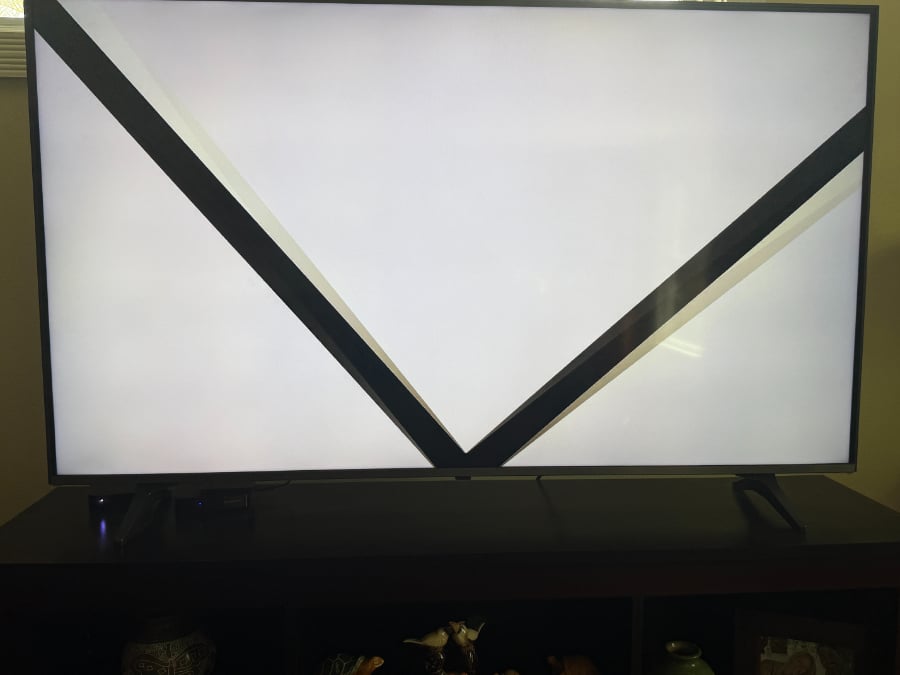
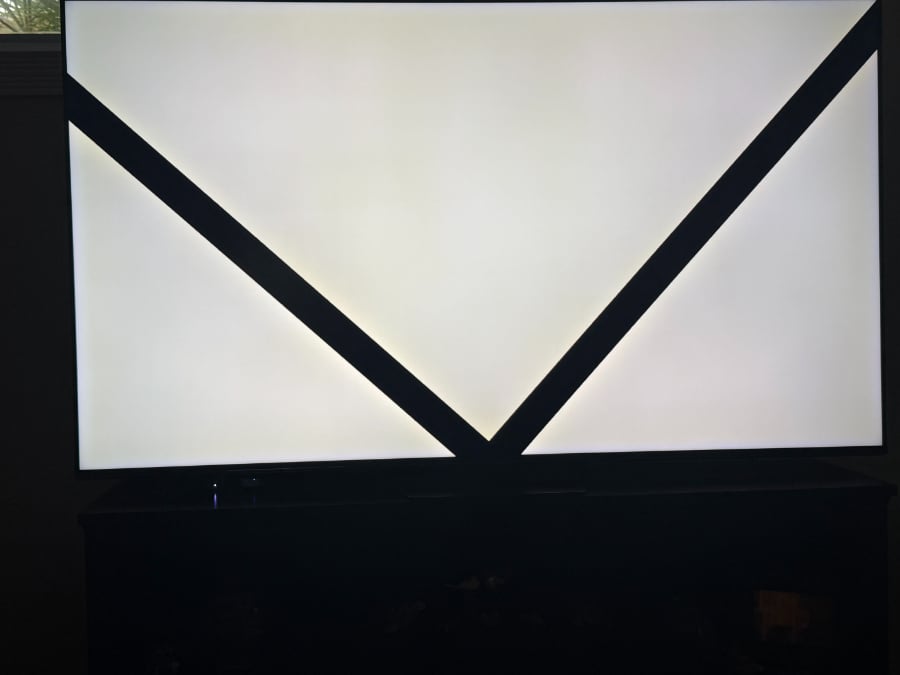
Entry-level TV (Left) Hisense U7SG (Right)
The previous entry-level TV produced a noticeably smeared image with jagged edges and softened fine detail as the pattern moved across the screen. Fast-moving objects lacked crisp definition, reducing the overall sense of clarity.
The U7SG's native 165Hz panel and improved video processing produced a visibly cleaner result. The diagonal line remained sharper, edge definition improved considerably, and motion artifacts were greatly reduced. While no consumer display is completely free from aliasing on challenging test patterns, the Hisense delivered a noticeably smoother and more refined presentation that carried over into real-world sports and movie viewing.
Color Accuracy
Our final comparison focused on color reproduction using a highly saturated test image of a red-eyed tree frog. This pattern is particularly useful because it contains intense reds, vibrant greens, and subtle textures that quickly reveal oversaturation or poor color handling.
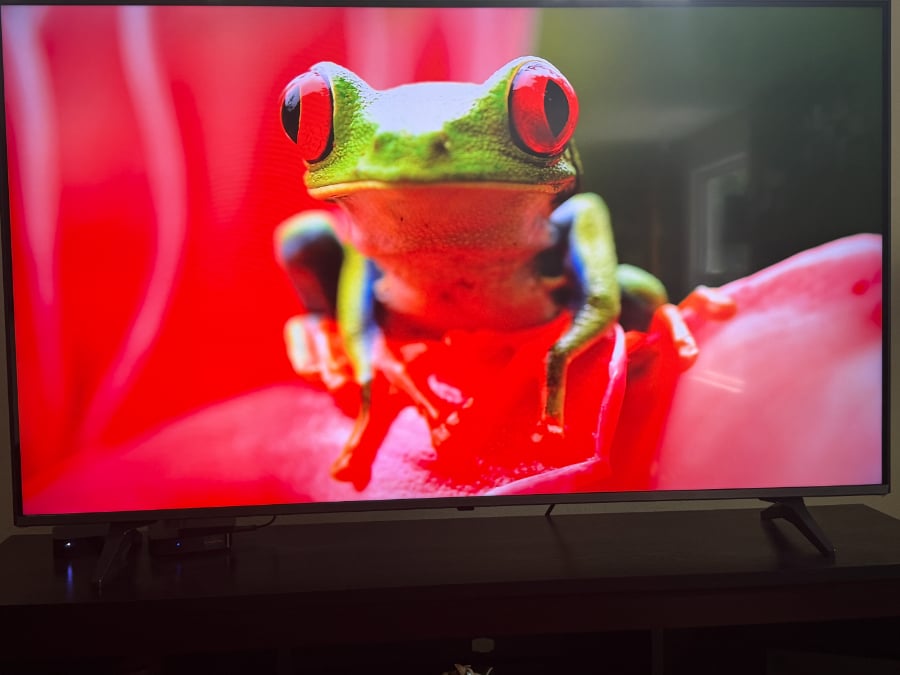
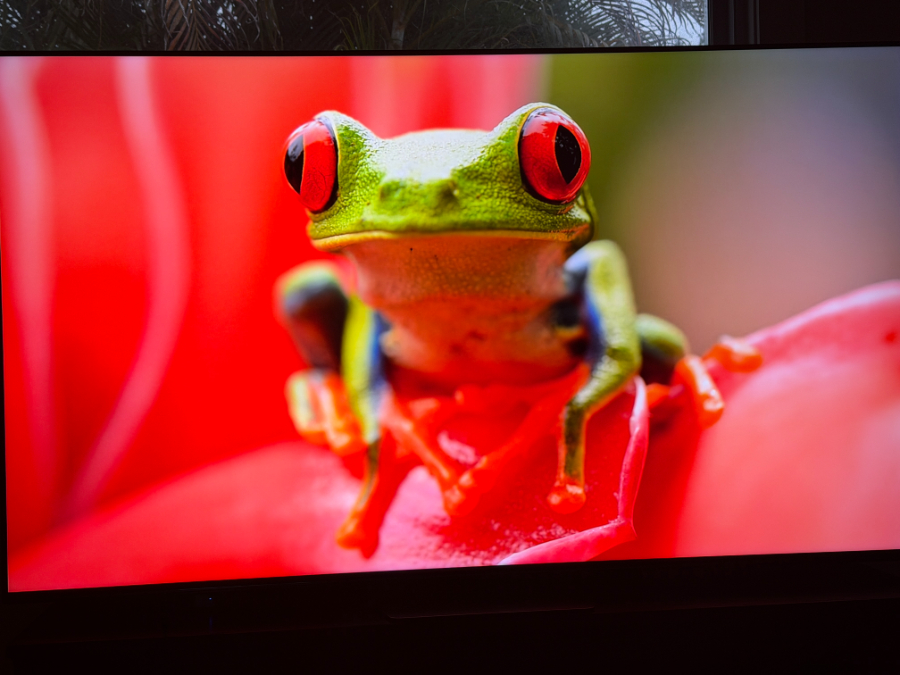
Entry-level TV (Left) Hisense U7SG (Right)
The entry-level TV pushed the reds beyond their natural limits, causing portions of the frog's skin to lose texture as the brightest colors blended together. The overall image appeared overly saturated, sacrificing realism for visual intensity.
The Hisense U7SG demonstrated much better color control. Reds remained vivid without overpowering the image, subtle textures became visible once again, and the surrounding greens appeared richer and more natural. Rather than simply producing brighter colors, the U7SG delivered a more balanced and believable image that closely matched what we'd expect from a modern premium MiniLED display. This result aligns well with Hisense's emphasis on Pantone Validated color performance.
After completing these five visual evaluations, one trend became clear. The U7SG didn't just produce a brighter picture than our previous television—it consistently delivered better contrast, cleaner shadow detail, improved panel uniformity, more accurate color reproduction, and sharper motion. While laboratory measurements remain the gold standard for objective analysis, these simple at-home tests clearly demonstrated just how far television technology has progressed over the past several years.
Hisense U7SG 65-inch MiniLED TV Conclusion
Several years ago, Hisense set out to prove that flagship-level television performance didn't have to come with a flagship price tag. After spending considerable time with the 65-inch U7SG, it's clear the company has come remarkably close to achieving that goal.
Throughout our evaluation, the U7SG consistently impressed us where it mattered most. MiniLED technology delivered deep blacks and outstanding HDR performance, color reproduction was vibrant without appearing exaggerated, motion handling remained smooth during sports and action movies, and the integrated 2.1.2 Multi-channel Dolby Atmos speaker system proved capable enough that many buyers may choose to postpone, or even skip, the purchase of a separate soundbar. While we'd still recommend a dedicated surround sound system for the best home theater experience, Hisense has produced one of the most satisfying built-in television audio systems we've heard in this price class.
Our five at-home picture tests reinforced those impressions. Compared directly with our previous entry-level television, the U7SG consistently delivered better contrast, cleaner shadow detail, improved panel uniformity, more natural color reproduction, and sharper motion. None of those improvements required specialized calibration equipment to appreciate—they were immediately visible during everyday viewing.
Perhaps the biggest surprise came in the environment where many televisions struggle the most: a bright Florida living room.
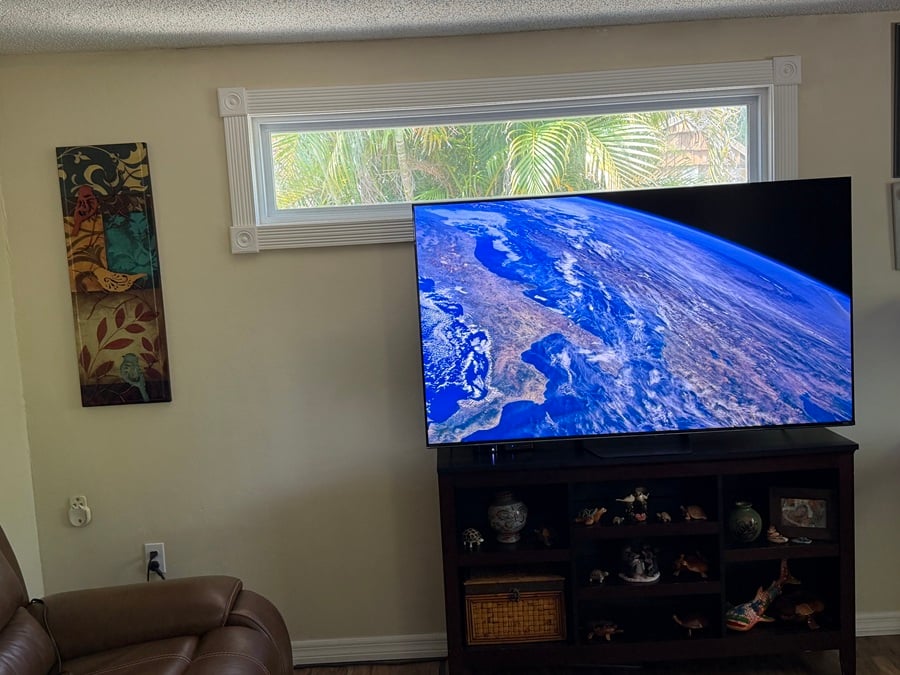
The photo above wasn't staged in a dark home theater or captured under carefully controlled lighting conditions. It was taken during the middle of the day with sunlight pouring through the large window directly behind the television while Apple TV displayed one of its familiar aerial screen savers. Despite the challenging conditions, the U7SG maintained deep-looking blacks, vibrant blues, and excellent overall contrast without appearing washed out. Coming from an entry-level television that often fought against the room's ambient light, the difference was immediately obvious. In everyday use, this may be one of the U7SG's greatest strengths.
No product is perfect. We'd still like to see Hisense offer an optional wireless subwoofer to complement its already impressive 2.1.2 Multi-channel audio system, and videophiles who demand absolute reference accuracy will still benefit from professional calibration. But those are relatively minor criticisms in what is otherwise an exceptionally well-rounded television.
The U7SG succeeds because it doesn't excel in just one area, it performs well across the board. Whether you're streaming movies through an Apple TV 4K, watching live ATSC 3.0 sports, enjoying late-night HDR movies, or connecting a next-generation gaming console, Hisense has built a television that delivers a premium experience without demanding a premium price.
Sometimes the best compliment you can give a television is that you stop evaluating it and simply enjoy watching it. That's exactly what happened with the Hisense U7SG.
The Score Card
The scoring below is based on each piece of equipment doing the duty it is designed for. The numbers are weighed heavily with respect to the individual cost of each unit, thus giving a rating roughly equal to:
Performance × Price Factor/Value = Rating
Audioholics.com note: The ratings indicated below are based on subjective listening and objective testing of the product in question. The rating scale is based on performance/value ratio. If you notice better performing products in future reviews that have lower numbers in certain areas, be aware that the value factor is most likely the culprit. Other Audioholics reviewers may rate products solely based on performance, and each reviewer has his/her own system for ratings.
Audioholics Rating Scale
 — Excellent
- — Very Good
- — Good
- — Fair
- — Poor
| Metric | Rating |
|---|---|
| Detail and Resolution | |
| Contrast and Black Levels | |
| Color Reproduction | |
| Noise Reduction | |
| Build Quality | |
| Ergonomics & Usability | |
| Ease of Setup | |
| Remote Control | |
| Fit and Finish | |
| Performance |  |
| Value | |
Tony is our resident expert for lifestyle and wireless products including soundbars. He does most of the reviews for wireless and streaming loudspeakers and often compares soundbars in round ups and helps us cover the trade shows.
View full profile Subscribe to our newsletter