


Emotiva X-Ref 12 Subwoofer Review
- Product Name: X-Ref 12 Subwoofer
- Manufacturer: Emotiva
- Performance Rating:

- Value Rating:

- Review Date: October 31, 2006 08:25
- MSRP: $ 699
Emotiva X-Ref 12 Specifications:
- 12” forward firing long throw woofer
- Sealed 1” HDF cross braced enclosure
- Amplifier: 600 watts rms, high efficiency, switch mode
- Frequency Response: 20-200Hz typical in room (No tolerance given)
- Typical in room maximum SPL: 115-118dB
- Finishes: Studio Black Satin
- Dimensions (H/W/D): 15.625” x 14.625” x 15.5”
- Weight: 44 lbs.
- Warranty: 5 years (Bumper to bumper)
Driver features:
- Butyl rubber surround
- Para-aramid blended fiber cone
- Woven tinsel leads
- Die-cast aluminum frame
- Bumped back plate
- Vented pole piece
- Double stacked ferrite magnets
- 3” diameter voice coil
Additional Features:
- DSP control with push button rotary knob
- Variable low pass filter, 40-150Hz in 1Hz increments (Defeatable)
- Phase: Variable from 0 to 315 degrees in 45 degree steps
- Selectable EQ Presets: Flat, Movie
- 2 bands of parametric EQ: 25-150Hz center, -12dB to +3dB gain, Q variable from 0.5-5.0
- Selectable power mode: On, Auto-On, Standby
- AC mains voltage switch: 120 / 240V (Auto)
- Detachable floor spikes
Inputs/Outputs
- Stereo unbalanced (RCA) inputs
- XLR balanced input
- XLR balanced output
- 1/8” trigger input for Movie EQ
Pros
- Well put together
- Good looking
- Bulletproof performance
- Lengthy warranty
- Built in DSP control with 2 bands of PEQ
Cons
- Limited low frequency extension
- Limited output headroom
Emotiva X-Ref 12 Subwoofer Introduction
 Emotiva is an audio
company operating with an internet direct only sales structure that is commonly
known for providing affordable, high power, multi-channel amplifiers, pre-amplifier / processors and speakers.
Emotiva has relatively recently developed their own line of powered subwoofers
and brought them to the market. Their original “Ultra” models have lately been
replaced by their second generation of subwoofers the X-Ref line, which boasts
a number of improvements over the original Ultra line including: A upgraded
amplifier platform with more power, built in DSP and user adjustable EQ and
also a heavier duty more powerful line of drivers to make use of the extra
amplifier power available. Like the
original Ultra series of subwoofers the X-Ref line are also sealed subwoofers
offering a small form factor. Their $599
X-Ref 12 model in particular is the subject of this review. It comes packing a
12” driver and 600 watt continuous rated amplifier in a small sealed enclosure.
(Approximately a 15” cube.)
Emotiva is an audio
company operating with an internet direct only sales structure that is commonly
known for providing affordable, high power, multi-channel amplifiers, pre-amplifier / processors and speakers.
Emotiva has relatively recently developed their own line of powered subwoofers
and brought them to the market. Their original “Ultra” models have lately been
replaced by their second generation of subwoofers the X-Ref line, which boasts
a number of improvements over the original Ultra line including: A upgraded
amplifier platform with more power, built in DSP and user adjustable EQ and
also a heavier duty more powerful line of drivers to make use of the extra
amplifier power available. Like the
original Ultra series of subwoofers the X-Ref line are also sealed subwoofers
offering a small form factor. Their $599
X-Ref 12 model in particular is the subject of this review. It comes packing a
12” driver and 600 watt continuous rated amplifier in a small sealed enclosure.
(Approximately a 15” cube.)
Unpacking and Initial Thoughts
The X-Ref 12 arrived in a moderate sized cardboard shipping box and was double boxed for extra protection. There were form fitted, high density Styrofoam top and bottom panels that enclosed most of the X-Ref 12 protecting the top, bottom and corners. There were also 2 smaller cardboard sleeves packed into the top and bottom Styrofoam panels that contained the grill, power cord, warranty card, rubber feet and carpet spikes. The X-Ref 12 itself was covered within a cloth bag for further protection. Unpacking of the X-Ref 12 was an easy one person job.
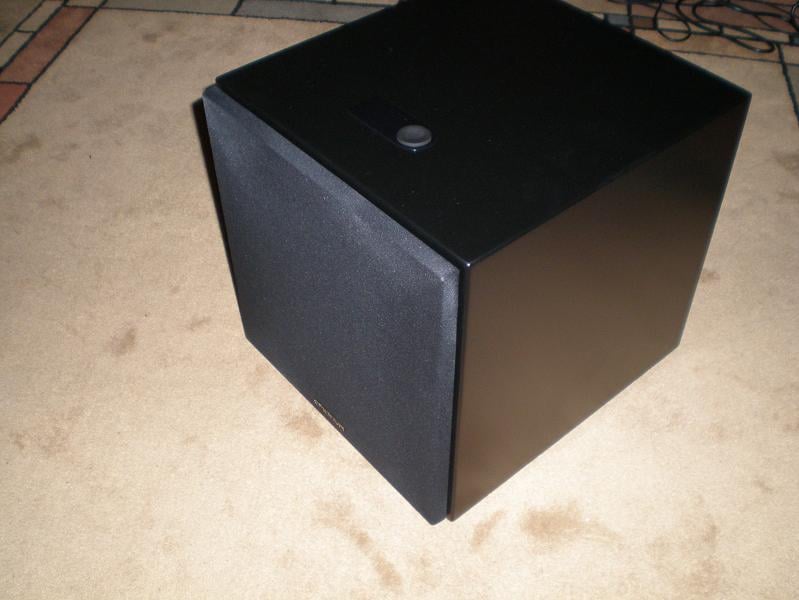
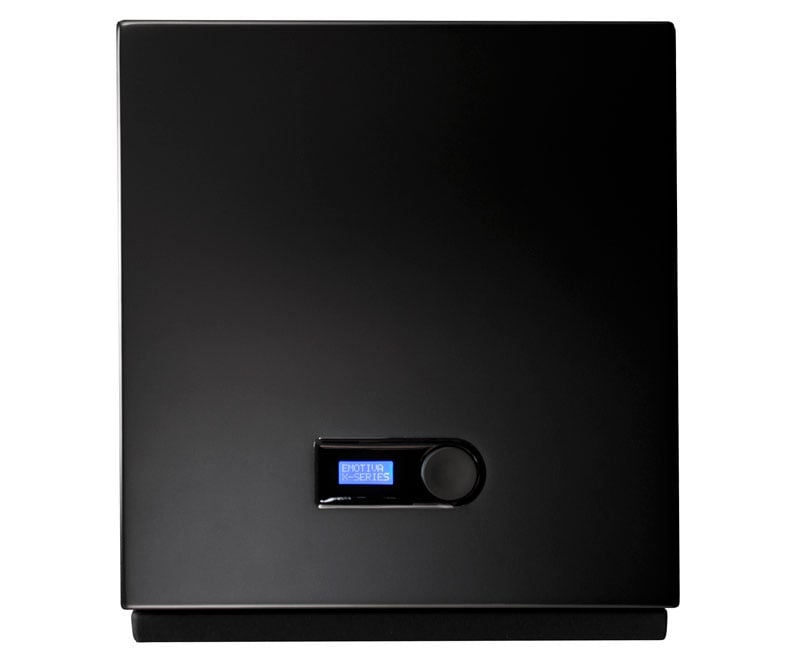
My initial thoughts on the X-Ref 12 are that it looks to be of high quality and well built. It is what I would consider a small subwoofer. The weight of the X-Ref 12 at 44lbs unpacked is light enough for one person to easily move it without worrying about giving oneself a hernia. The finish was a smooth and uniform black that looked classy and understated. One thing that I would’ve preferred is a grill that is rounded or blends into the cabinet profile better. Still with that minor caveat aside the overall product is well finished, small and good looking.
Design Overview
The Emotiva X-Ref 12 is a small sealed alignment utilizing a 12” nominal driver and a 600 watt rated amplifier with DSP control of its settings via a top mounted back lit LCD screen and rotary knob and offering two bands of user adjustable parametric EQ. The DSP and parametric EQ in particular is rare in this price range.
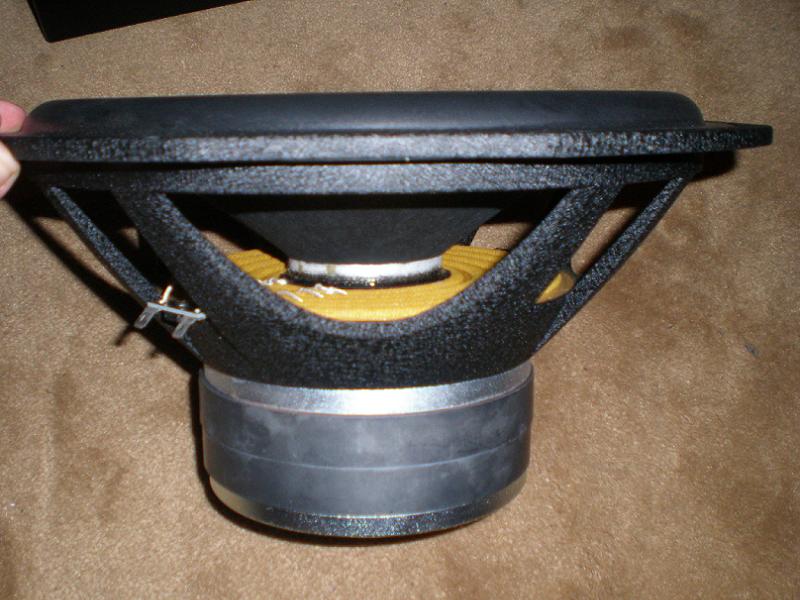
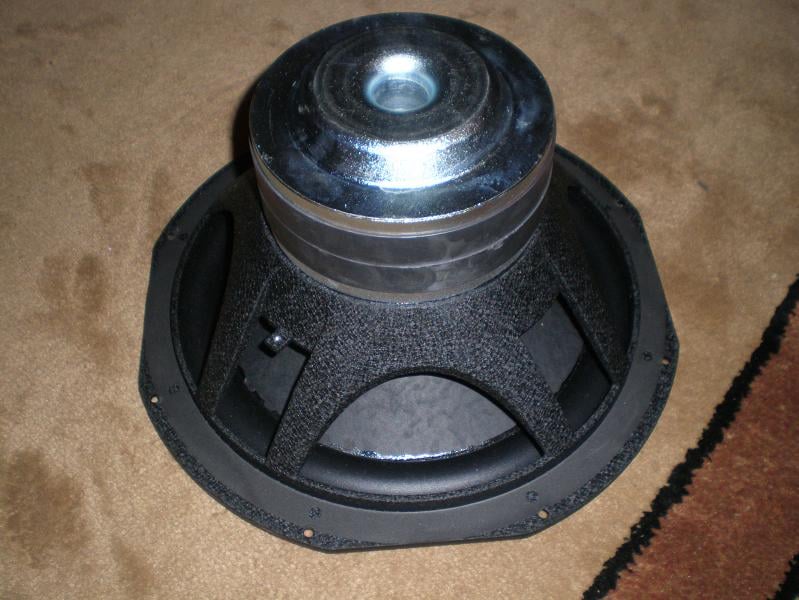
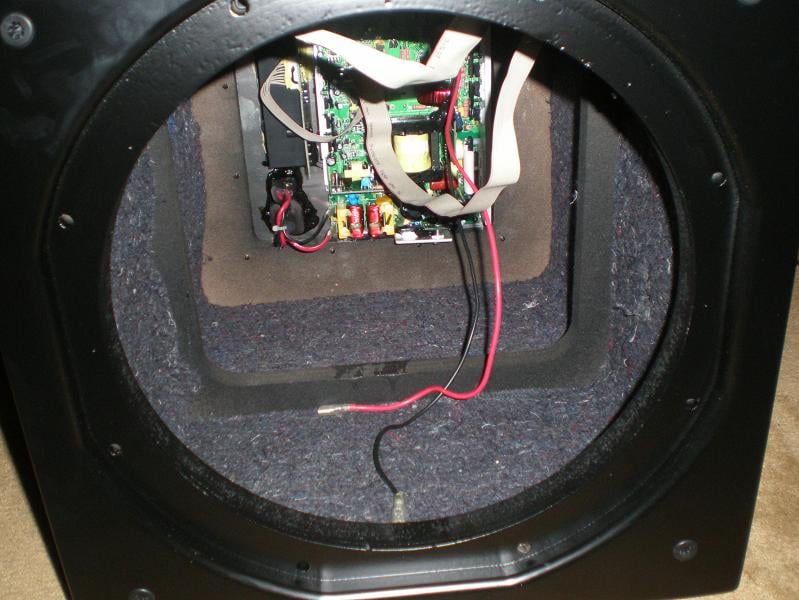
Removing the X-Ref 12 driver from the cabinet was a straightforward affair and revealed a robust looking driver especially for this price class of subwoofer. The driver is built on a heavy duty, powder coated, square flanged, cast aluminum basket. The surround is a large rubber half roll and it is attached to what Emotiva labels as a para-aramid fiber cone. This is in turn attached to what appears to be a 3” diameter voice coil centered by a roughly 7” spider with the leads to the voice coil sewn into the spider. All of this is motivated and controlled by a motor utilizing two, approximately 1” thick, double stacked ferrite magnets, of roughly 6” diameter. The motor also exhibits a bumped back plate to provide clearance from bottoming the voice coil during high excursions and a generously sized pole vent with a screen to prevent debris from entering the gap.
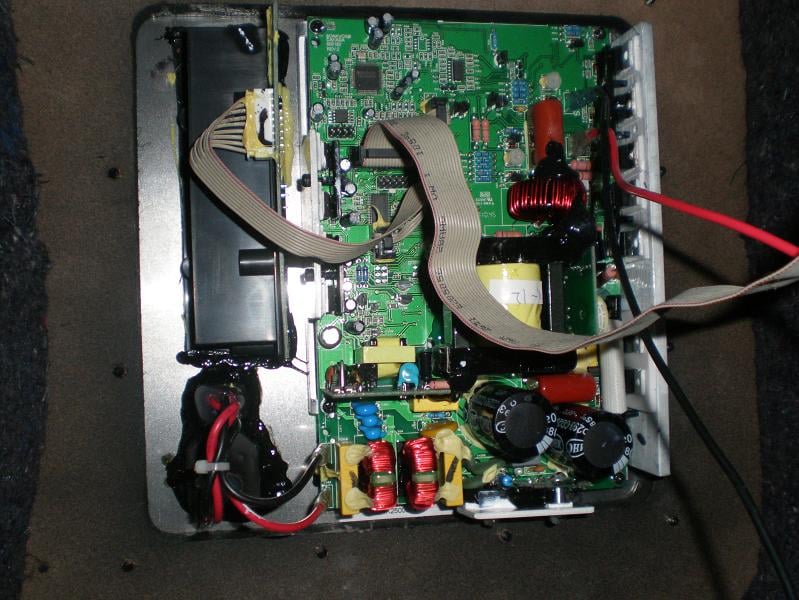
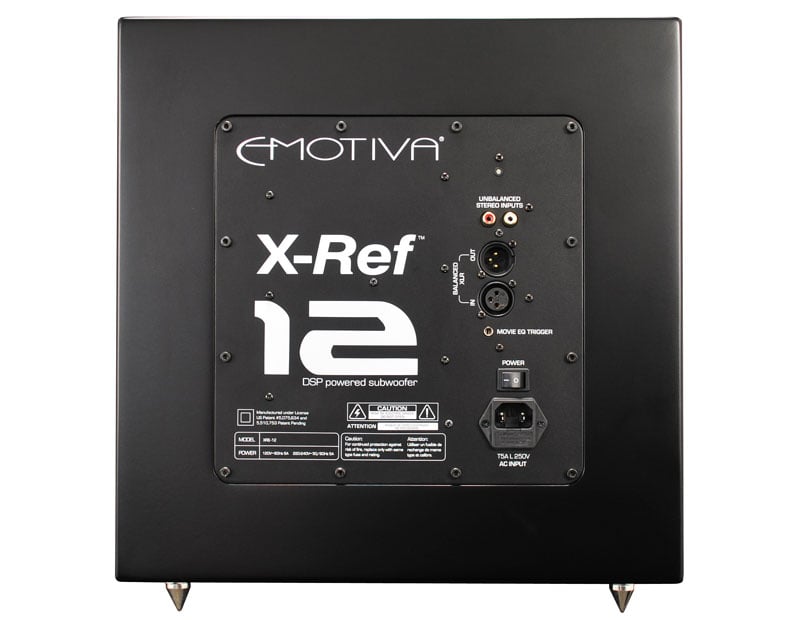
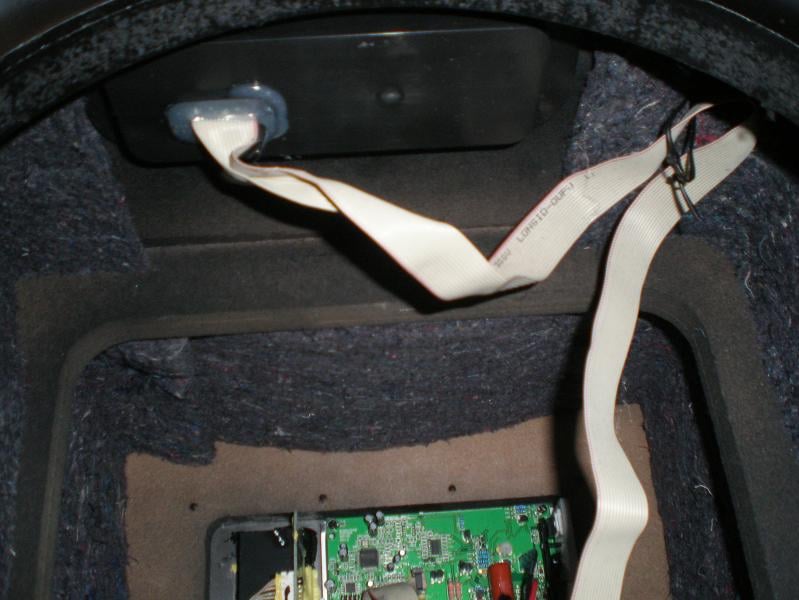
The amplifier powering the system is a highly efficient switch mode design which is connected to the top mounted DSP controls via a small ribbon cable. The amplifier not only offers the DSP controls but also balanced XLR input and output which is a welcome addition and rare to find in this price bracket. Examining the amplifier board itself reveals that it has 2 large storage capacitors and a thick aluminum heat sink on the right side. The amplifier itself never got more than warm to the touch even during the high power outdoor testing.
The X-Ref 12 enclosure itself appears to be constructed from high density fiberboard of 1” thick variety. There is a one piece, 1” thick, window brace that is about 2” tall that runs the center of the top, bottom, and both side panels. With the small enclosure, small panel sizes and subsequently high stiffness this should be plenty of bracing. Additionally there is also ¾” thick mineral wool damping material on each internal panel. In use I noted no audible noise or vibration from the enclosure itself whatsoever.
Emotiva X-Ref 12 Subwoofer Listening Session
For
all of the listening sessions the Emotiva X-REF12 was placed in the front right
corner of the room firing into the corner about 4 inches from the walls. This
places the subwoofer a little over 4 meters from the primary listening
position. I have determined this to be the best available single subwoofer placement
in the room for most units. Audyssey was run on the system to allow it to
integrate the X-REF12, which was then followed by a check and recalibration of
the subwoofer and speaker levels prior to the listening sessions. The X-REF12
had the low  pass filter disabled the EQ defeated and the flat preset enabled
for the listening session.
pass filter disabled the EQ defeated and the flat preset enabled
for the listening session.
Blu-ray: Queen - Rock Montreal & Live Aid
This concert performance captures Queen when they were near their peak performing nearly all of their classic hits. The audio here has been re-mastered and while somewhat limited by the recording technology of the time the result is still a very engaging and full mix. The X-Ref 12 seemed to be well at home here providing the underpinnings of the drum set, bass guitar and even the low register of the piano when called for. There is nothing of much depth on this Blu-ray disc but what is there is ample, smooth and has a nice old school analog, “round” tone to it, in other words, plenty of information to gauge the subwoofers abilities with well crafted musical compositions. The X-Ref 12 deftly followed the bass lines and provided a hearty kick drum thump throughout. During the sections involving the piano the X-ref 12 lent the right amount of support to the sound to flesh out the bottom range but without calling undue attention to itself. When I cranked the volume up a bit the Emotiva was able to keep pace and maintain its composure with this concert performance.
Blu-ray: Ironman
Ever since seeing
this movie at the theater I have been a fan of it for its action packed and
entertaining mix of comedy, eye candy and general fun.
The overall  audio track
is not quite at what I would consider as the pinnacle of sound engineering, but
there is plenty of red meat during the action sequences for any subwoofer to
get a workout. The master playback volume was set to -15 as is usual for new
subwoofer evaluations. The movie starts off with AC/DC jamming in the
background followed quickly by small arms fire and a loud explosion. The X-Ref
12 did well here providing the short percussive blasts of the small arms and
the big rumbling explosion of the IED without distress but the large explosion
seemed less impressive than I remember from watching the movie on my reference
system. During the Jericho missile sequence the X-ref 12 provided a nice
presentation but it seemed to have less rumble or room shake than usual. ( I
have heard this scene used as a demo on a ton of systems.) Later on when Stark
emerges from the cave in the prototype Ironman suit I heard what sounded a
slight overload from the X-Ref 12. Not anything
distressing but an extra doubling to the sound like it was heavily limited.
During this part there is little to no masking content and there is very loud
bass in the 25-35Hz range. It is a tough test for any subwoofer system. Throughout
the rest of the movie the X-Ref 12 provided the various rumbles, booms and
ominous drones where appropriate with gusto. Some of the loudest parts probably
engaged the limiting on the X-Ref 12 and seemed like they were missing the very
deepest bass. The X-Ref 12’s limiting and compressor circuits are very
effective at preventing it from making any offensive noises so even if the
X-Ref 12 had run out of headroom it simply produced the bass to the best of its
abilities and without calling attention to itself. The large >4200cubic foot
room size involved and the output volume
asked for are very taxing to smaller subwoofers so that being the case adequate
protections and overload limiting are a strong plus as is seen in the X-Ref 12.
A single X-Ref 12 could not quite provide the deep extension and “scare” factor
that I am used to from my reference system in such a large room but it
acquitted itself well providing an enjoyable experience and a strong effort from
such a tiny subwoofer.
audio track
is not quite at what I would consider as the pinnacle of sound engineering, but
there is plenty of red meat during the action sequences for any subwoofer to
get a workout. The master playback volume was set to -15 as is usual for new
subwoofer evaluations. The movie starts off with AC/DC jamming in the
background followed quickly by small arms fire and a loud explosion. The X-Ref
12 did well here providing the short percussive blasts of the small arms and
the big rumbling explosion of the IED without distress but the large explosion
seemed less impressive than I remember from watching the movie on my reference
system. During the Jericho missile sequence the X-ref 12 provided a nice
presentation but it seemed to have less rumble or room shake than usual. ( I
have heard this scene used as a demo on a ton of systems.) Later on when Stark
emerges from the cave in the prototype Ironman suit I heard what sounded a
slight overload from the X-Ref 12. Not anything
distressing but an extra doubling to the sound like it was heavily limited.
During this part there is little to no masking content and there is very loud
bass in the 25-35Hz range. It is a tough test for any subwoofer system. Throughout
the rest of the movie the X-Ref 12 provided the various rumbles, booms and
ominous drones where appropriate with gusto. Some of the loudest parts probably
engaged the limiting on the X-Ref 12 and seemed like they were missing the very
deepest bass. The X-Ref 12’s limiting and compressor circuits are very
effective at preventing it from making any offensive noises so even if the
X-Ref 12 had run out of headroom it simply produced the bass to the best of its
abilities and without calling attention to itself. The large >4200cubic foot
room size involved and the output volume
asked for are very taxing to smaller subwoofers so that being the case adequate
protections and overload limiting are a strong plus as is seen in the X-Ref 12.
A single X-Ref 12 could not quite provide the deep extension and “scare” factor
that I am used to from my reference system in such a large room but it
acquitted itself well providing an enjoyable experience and a strong effort from
such a tiny subwoofer.
I always suggest using multiple subwoofers whenever possible to even out the response and provide more headroom anyway and with the small size and the as delivered price of $599, multiple X-Ref 12’s should fit into many subwoofer shoppers rooms and budgets.
Emotiva X-Ref 12 Subwoofer Measurements and Analysis
The Emotiva X-REF12 subwoofer was measured outdoors sitting on the ground with the microphone placed 2 meters from the front lip of the cabinet. The driver was facing directly at the microphone. The low pass filter was disabled and the subwoofer volume was set to maximum for all testing, except for those tests purposely conducted to examine the effects of the built in functions or different operational modes.
The overall approach to this testing along with
the equipment and software used is outlined in the article here: Powered
Subwoofer Testing Outline and Procedures Overview
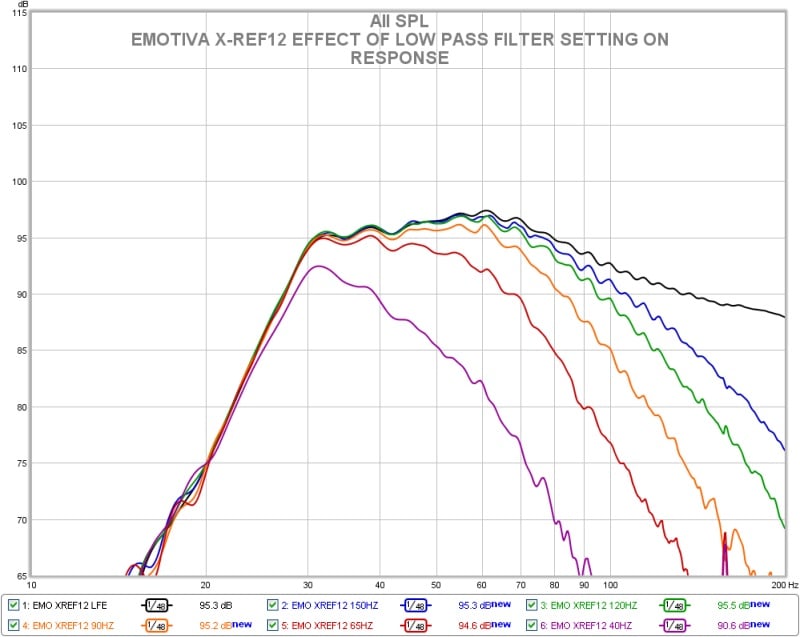
Emotiva X-REF 12: Effect of Low Pass Filter Settings
Above is the effect of the low pass filter on the Emotiva X-Ref 12’s response. It exhibits a textbook 24dB octave roll off and corresponds quite closely to the indicated value specified in the DSP unit.
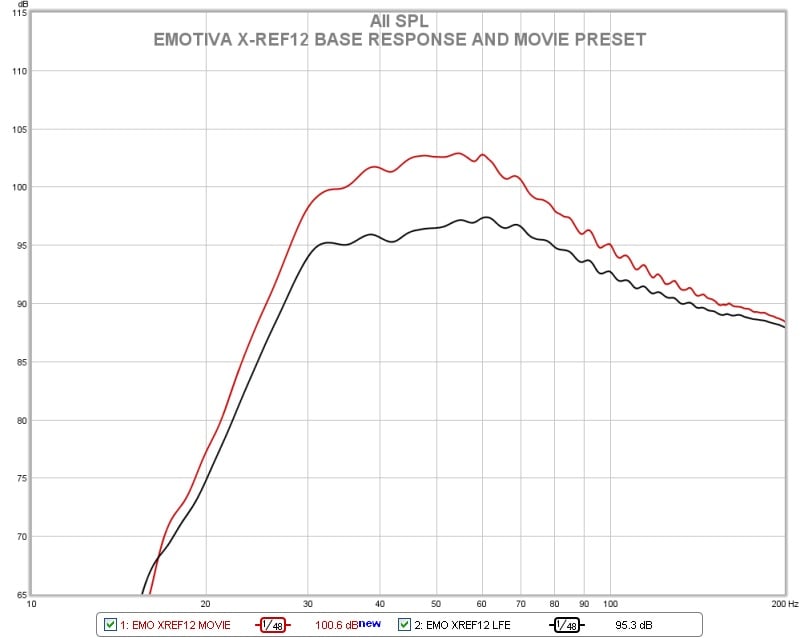
Emotiva X-REF 12: Effect of Movie EQ Preset
Above is the effect that engaging the movie EQ preset on the X-REF 12 has on the overall response. It provides a roughly 5 to 6dB overall level boost centered at what looks like 45-50Hz.
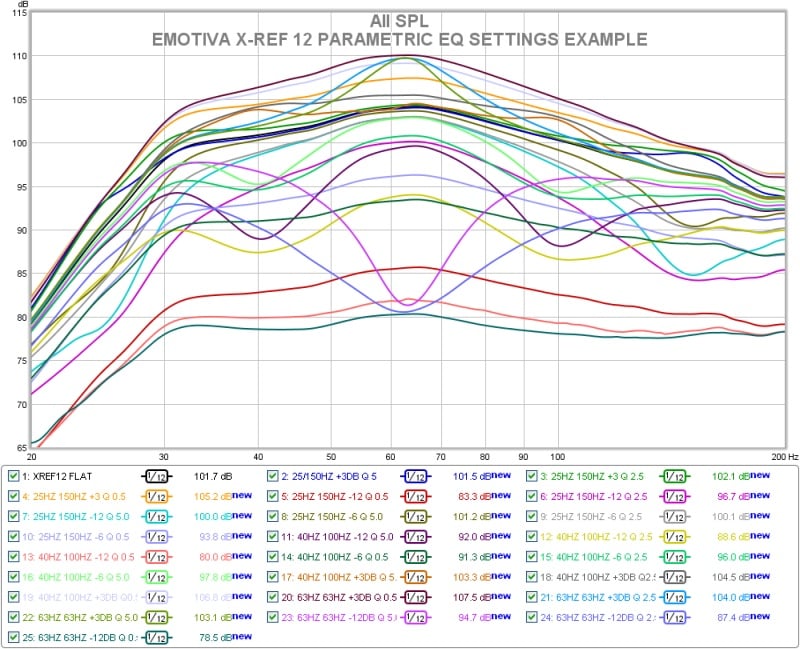
Emotiva X-REF 12: Parametric EQ Settings Example
Above is a rather large sample of the settings available with the two built in parametric EQ’s provided by the DSP unit. There is a large range of flexibility offered and these should help address problem room acoustics or adjust the sound to a particular listeners taste. I would’ve liked to have seen a little bit sharper notches available though. Still 2 bands of PEQ on a product in this price range are out of the ordinary already. Most subwoofers in this price range will have little to no internal adjustable EQ let alone 2 bands and built in DSP.
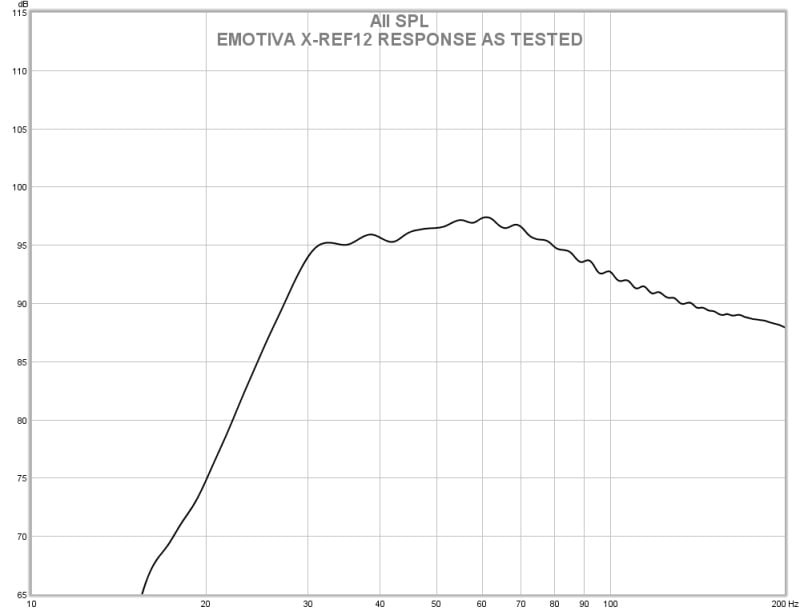
Emotiva X-REF 12: Basic Frequency Response as Tested
The basic response of the X-Ref 12 as tested is shown above. This is with the unit set to the Flat EQ preset and with the low pass filter defeated. The unit is sharply filtered below 30Hz and also exhibits a notable upper range roll off as well probably due to inductance in the driver motor system. Emotiva states the typical in room response of the X-Ref 12 as 20-200Hz with no tolerance given. As measured the X-Ref 12 fits within a 6dB total window from 28-109Hz. The -10dB point from the peak at 60Hz occurs at about 200Hz on the top end and right below 26Hz on the low end. The response is down over 20dB by 20Hz. The roll off of the X-Ref 12 appears to be about 30dB an octave acoustically which indicates that there is an 18dB and octave high pass filter used in addition to the natural 12dB an octave roll off of the sealed alignment. The natural roll off likely starts near 45 or 50Hz but boost EQ is used to extend and flatten the response till 30Hz.
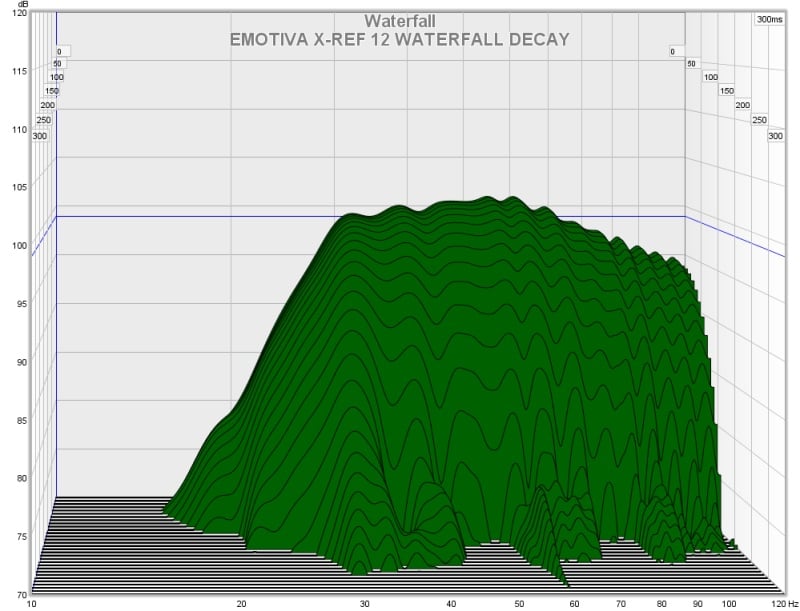
Emotiva X-REF 12: Waterfall Decay
Emotiva X-REF 12: Group Delay
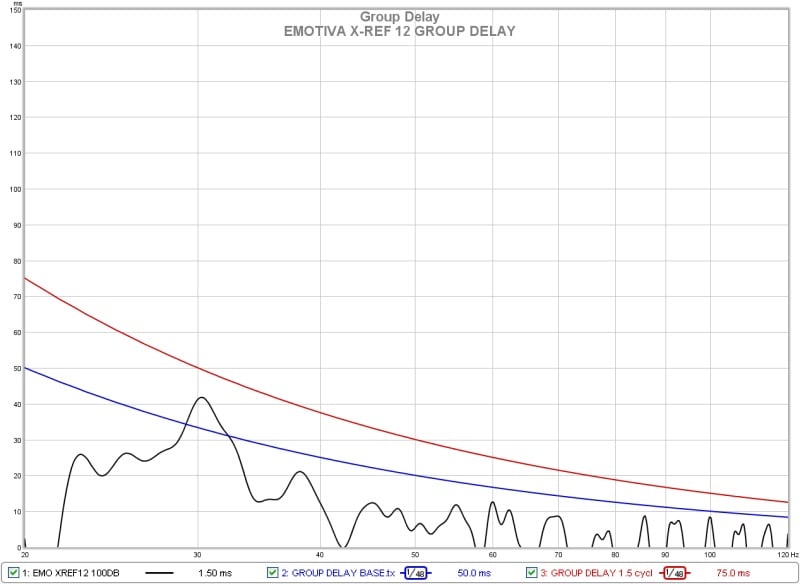
The waterfall decay and group delay charts are well behaved overall and indicate only a moderate amount of delayed energy near 30Hz which should correspond to the high pass filter and EQ boosting to extend the X-Ref 12’s response.
Emotiva X-REF 12: Long Term Output Compression
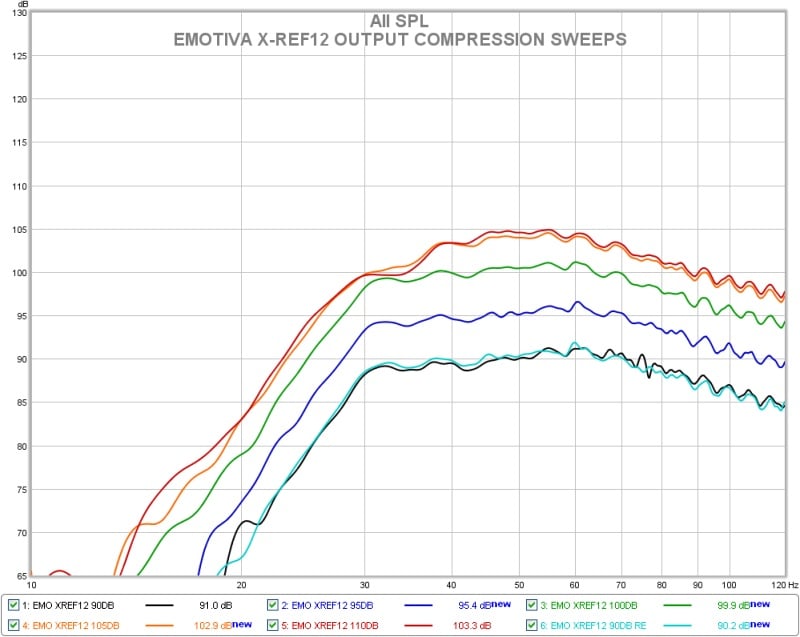
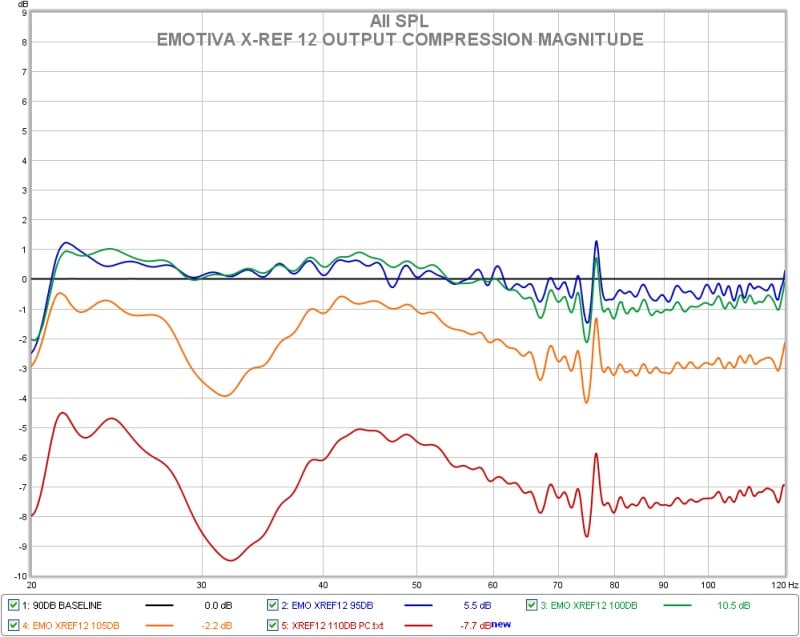
The X-Ref 12 maintains its response shape and accurately tracks the increased volume of the input signal up until the 100dB nominal sweep level. At the 105dB sweep level some compression was in evidence between 25-35Hz where its response is EQ boosted. Increasing the level another 5dB to a nominally 110dB sweep produce barely 1dB of extra output over much of the range indicating that the X-Ref 12’s limiter was interceding heavily at that point. During this the X-Ref 12 maintained its composure very well and barely emitted more than a slight roughening or distortion of the sound near 30Hz.
Emotiva X-REF 12: Output Compression Magnitude
In the measurement above is the same information from the previous output compression measurement but shown in a way that only indicates the amount of compression that is occurring.
Emotiva X-REF 12: Maximum Long Term Output Level
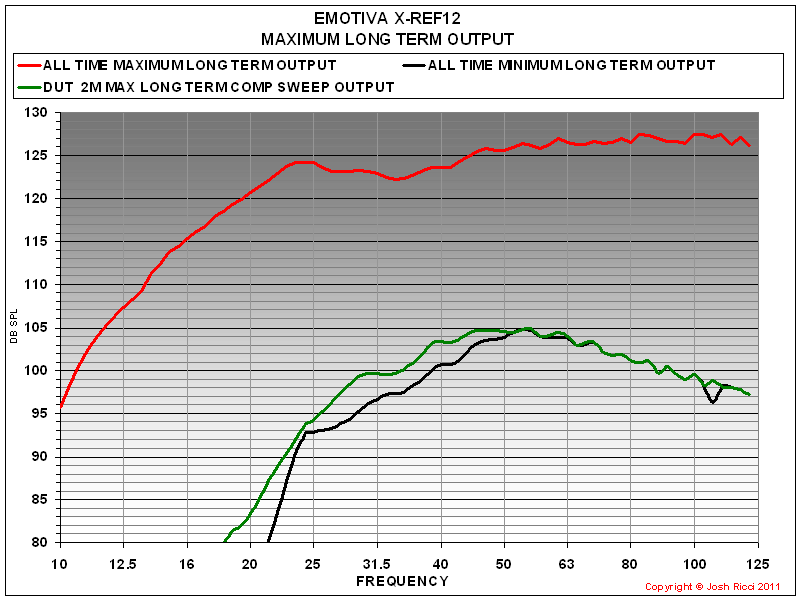
Looking at the maximum long term output achieved by the X-Ref 12 during the output compression testing reveal that it maintains its basic response shape pretty well but the maximum output level reached is modest. This is unsurprising since the X-Ref 12 is such a small unit overall.
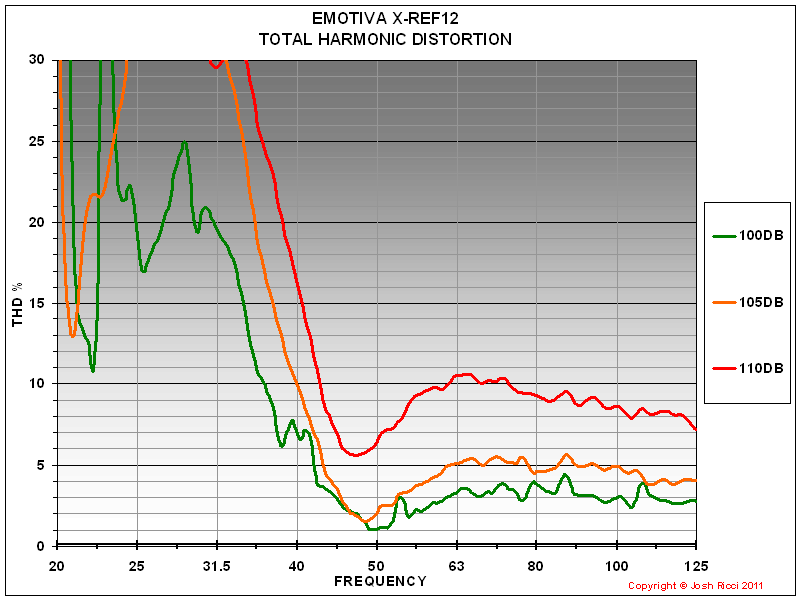
Emotiva X-REF 12: Total Harmonic Distortion
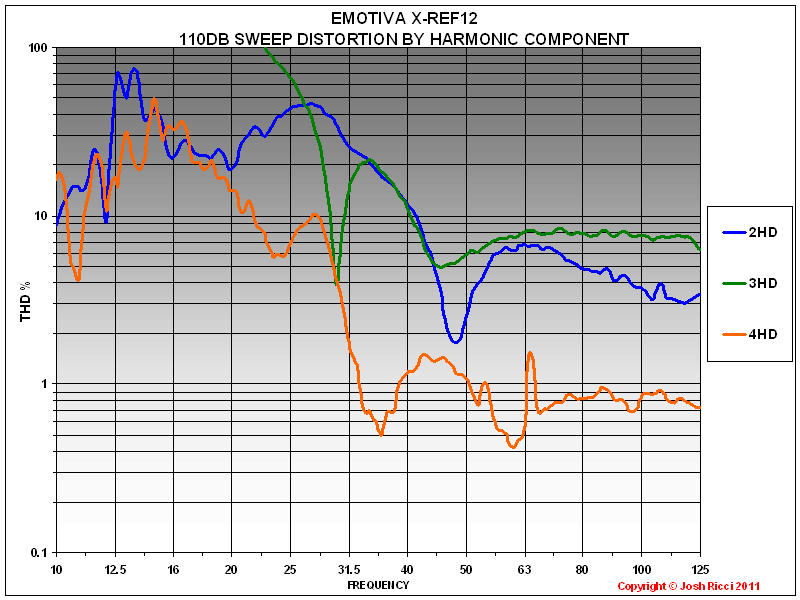
Emotiva X-REF 12: 110dB Sweep Distortion by Component
The distortion results for the Emotiva X-Ref 12 are good and follow the usual trends for a sealed alignment. At the maximum output level reached during testing the distortion is below 10% everywhere above about 43Hz and the distortion is dominated by the second harmonic which is good since the second harmonic is generally held as the least audible and inoffensive. Below 40Hz where the excursion increases so does the distortion and it quickly exceeds 30% THD below 30Hz. Again this is not unusual for a small sealed subwoofer alignment.
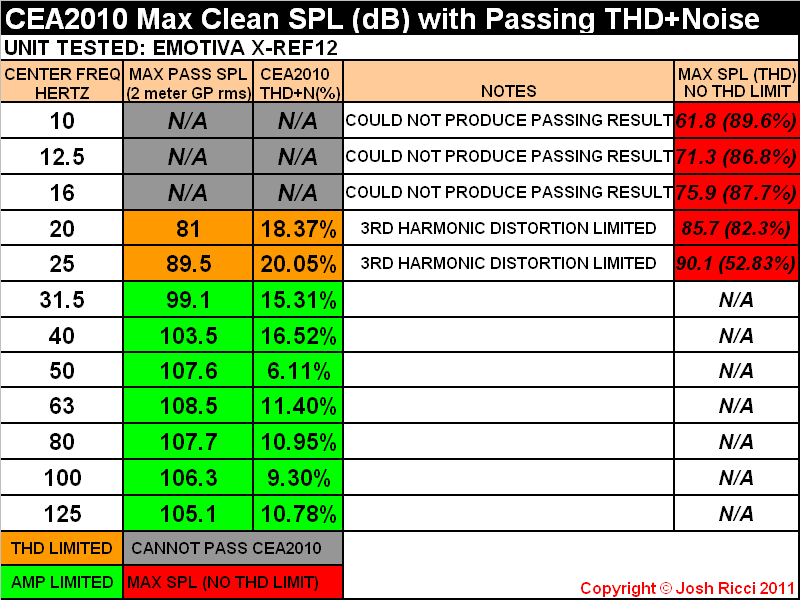
Emotiva X-REF 12: CEA2010 2 Meter Groundplane RMS Results
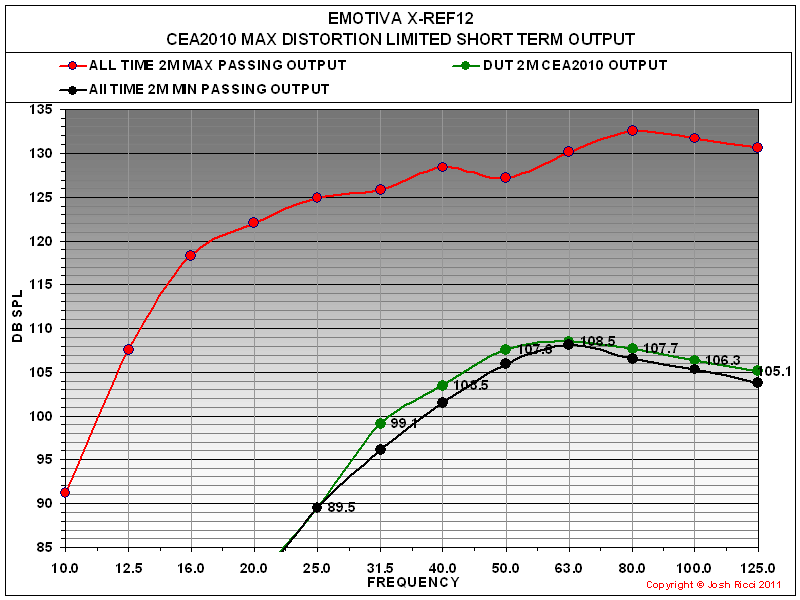
Emotiva X-REF 12: CEA2010 2 Meter Groundplane RMS Comparison
CEA2010 Results
Looking at the results for CEA-2010 testing presented above we again see that the X-Ref 12 can produce more than 105dB at the 50hz band and above with a gradual decline below that point. This is typical of sealed subwoofers. At the 31.5Hz band and above the X-Ref 12 is amplifier limited and produces output levels commensurate with its size and price. I could not obtain a passing result below the 20Hz band where a maximum passing output of 81dB was recorded. The very steep roll off of the X-Ref 12 below 30Hz prevents useful output much below 25Hz in any case.
For comparative purposes, I took Gene’s reverse sine-wave rms sweep data from his Ultra 12 review, scaled it to 2 meters and charted it next to my max long term output tests of the X-Ref 12. Although both of our test rigs are different, our testing results are calibrated and consistent so this is a fairly accurate apples to apples comparison.
| Frequency | X-Ref 12 | Ultra 12 |
| 20 Hz | 83 dB | 84 dB |
| 25 Hz | 95 dB | 92 dB |
| 30 Hz | 100 dB | 96.5 dB |
| 40 Hz | 103 dB | 101 dB |
| 50 Hz | 105 dB | 106 dB |
2 Meter RMS Reverse Sine Sweep Data Comparison
As you can see the X-Ref 12 has a significant output advantage (between 3-4dB) from 25-30Hz but does give up a couple of dB above that due to the X-Ref 12’s less efficient driver.
Emotiva X-Ref 12 Subwoofer Conclusion
Emotiva has produced a polished and affordable sealed subwoofer with the X-Ref 12. At the reasonable price point of $599 with free shipping to your door, it offers a lot of features that are rare in this price bracket including: XLR input and output, DSP control and 2 bands of fully adjustable parametric equalization. The finishing and parts quality is very nice as well with a robust amplifier and driver combined inside of a solidly built, inert enclosure. The warranty is also very generous and the protection circuitry prevents any possibility of damage or even making the X-Ref 12 emit an obviously “bad” noise.
 There are a few misses here as well.
The response rolls off very rapidly below 30Hz and the option to cross the
X-Ref 12 over higher than about 100Hz is limited by the upper frequency roll
off. The result is a somewhat limited effective bandwidth. Being a small sealed
subwoofer it also has very real limits on how much output it can provide. The
protections and limiting that Emotiva has dialed into the X-Ref 12 keep it safe
and under control no matter the situation though. Certainly the driver itself
never seemed to be near or past its limits even during outdoor testing of
maximum output which is far more strenuous than typical use.
There are a few misses here as well.
The response rolls off very rapidly below 30Hz and the option to cross the
X-Ref 12 over higher than about 100Hz is limited by the upper frequency roll
off. The result is a somewhat limited effective bandwidth. Being a small sealed
subwoofer it also has very real limits on how much output it can provide. The
protections and limiting that Emotiva has dialed into the X-Ref 12 keep it safe
and under control no matter the situation though. Certainly the driver itself
never seemed to be near or past its limits even during outdoor testing of
maximum output which is far more strenuous than typical use.
The X-Ref 12 does many things very well and chief among them is fit into most spaces, decors and many budgets. The built in DSP, 2 parametric EQ's and LCD screen are rather upscale features at this price point and can provide some added flexibility for taming issues with room acoustics or adapting it to fit with a listeners tastes. I am also a big fan of XLR balanced connections which are also not a usual occurrence on a subwoofer in this price bracket and utilize them whenever possible. The finishing and build quality were very good as well. I was a fan of the rotary encoder knob to control the DSP settings which made changes in the settings a breeze, though the one on the unit sent for review did stick a little at times. The main areas that the X-Ref 12 lacks are deep extension and overall output so if you are looking for a subwoofer that will make it sound like the space shuttle has just launched in your large man cave this is probably not the right subwoofer you. For that you want to look at something much larger and probably more expensive as well. The X-Ref 12 excels at bass reproduction in smaller spaces, with music, or with less need for 20Hz bass at room shaking levels. The very small size and low cost mean that one or a few can be fit into many spaces and budgets. The protections built in are very effective and ensure that if or when you do hit its limits it will not call attention to itself with distress or other obvious overload noises, you probably won’t even notice at all. To sum up the Emotiva X-Ref 12 offers a lot of upscale features in a very solid, bulletproof package for a very reasonable price.
The Emotiva X-REF12 receives the Audioholics Bassaholic Small Room rating, which means that this sub is recommended as maintaining adequate headroom in rooms or spaces of 1,500 cubic feet or less and/or for users who usually listen at moderate to low volume levels. For further information in how we make these recommendations see the full article here.
See: Audioholics Subwoofer Room Size Rating Protocol

Emotiva X-REF12
Review
www.emotiva.com
Phone: 615-790-6754 |
877-EMO-TECH
(877-366-8324)
MSRP:
$599 (Free Shipping)
The Score Card
The scoring below is based on each piece of equipment doing the duty it is designed for. The numbers are weighed heavily with respect to the individual cost of each unit, thus giving a rating roughly equal to:
Performance × Price Factor/Value = Rating
Audioholics.com note: The ratings indicated below are based on subjective listening and objective testing of the product in question. The rating scale is based on performance/value ratio. If you notice better performing products in future reviews that have lower numbers in certain areas, be aware that the value factor is most likely the culprit. Other Audioholics reviewers may rate products solely based on performance, and each reviewer has his/her own system for ratings.
Audioholics Rating Scale
 — Excellent
- — Very Good
- — Good
- — Fair
- — Poor
| Metric | Rating |
|---|---|
| Bass Extension | |
| Bass Accuracy | |
| Build Quality | |
| Fit and Finish | |
| Ergonomics & Usability | |
| Dynamic Range | |
| Performance | |
| Value |  |
 Subscribe to our newsletter