


Klipsch SW-311 Subwoofer Review
- Product Name: SW-311 Subwoofer
- Manufacturer: Klipsch
- Performance Rating:

- Value Rating:
- Review Date: October 31, 2006 08:25
- MSRP: $ 1,599
Klipsch SW-311 Specifications
- 10” forward-firing driver
- Dual 10” side-firing passive radiators
- Amplifier: BASH® Digital Hybrid, FTC Rated Power: 500w continuous @ <2% THD / Dynamic Power: 1200w
- Frequency Response: 22-120Hz +/-3dB
- Maximum Acoustic Output: 118dB @ 30Hz 1/8th space, 1 meter
- Finishes: Black satin
- Dimensions (H/W/D): 13” x 13” x 14”
- Weight: 37 lbs.
- Warranty: 2 years (Bumper to bumper)
Driver features
- Die-cast aluminum frame
- 4 layer copper voice coil
- Aluminum former
- Highly damped, non-resonant woven fiberglass driver and passive radiator cones
- Inverted rubber surround on driver and passive radiators
- Vented pole piece
- Dual stacked ferrite magnets
Additional Features
- Patented Adaptive Room Correction II (ARC) with 12 active filters
- DCS: Digital Control System with built in LCD screen and adjustable DSP controls
- 5 system setting presets
- 3 EQ settings: Flat, Depth and Punch
- 1 watt power consumption in standby mode
- Universal voltage: 100-120V / 220-240V~50/60Hz 5A (Auto-voltage switching)
- Volume level: -60-+10 in 1dB increments
- Low Pass X-over: 40-150Hz with selectable: 12, 18, 24, 36 and 48dB octave slope (Can be disabled)
- Phase: 0 to 180 degrees
- Selectable power mode: On, Auto-On, external trigger
Inputs/Outputs
- Unbalanced (RCA) left (LFE) and right inputs
- Unbalanced (RCA) mono subwoofer output for daisy chaining
- 12v trigger
- Microphone input (ARC II)
- USB input for advanced ARC II management (Not typically utilized by user contact Klipsch)
- IR sensor for control via AV remote
Pros
- Very compact
- High WAF
- Easy to set-up and use
- "Bulletproof" design
Cons
- No grills for passive radiators
- Limited low frequency extension
- A.R.C. corrects one listening position only
- Expensive
Klipsch SW-311 Introduction
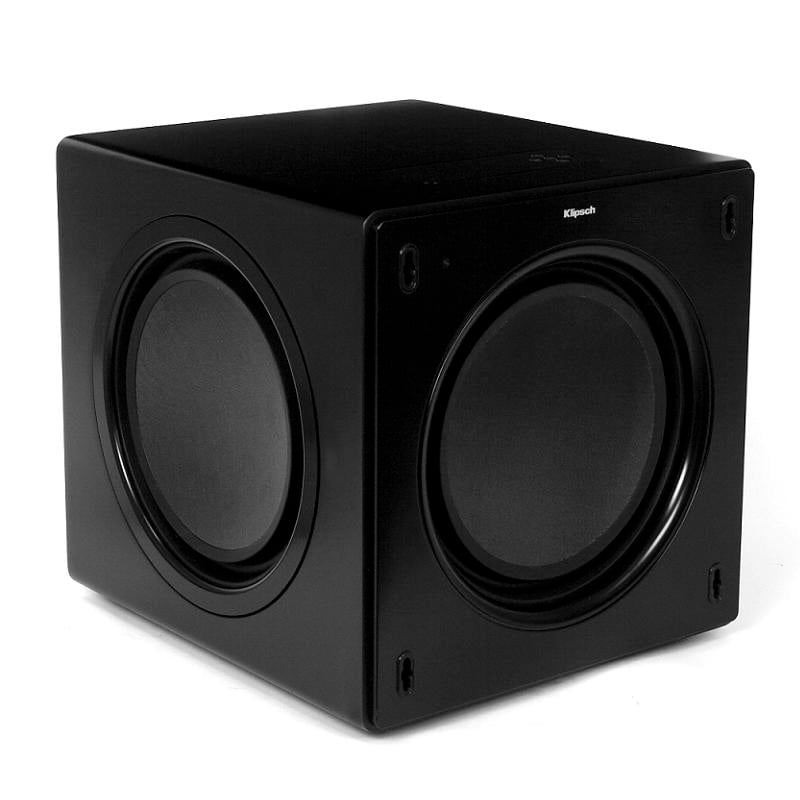 Klipsch is a brand that should be
familiar to most audio enthusiasts and is commonly equated with highly
efficient and dynamic speakers utilizing horns in some form or another. Klipsch
has been in official operation since founded by its namesake Paul W. Klipsch
way back in 1946 and is one of the longest operating American speaker companies.
65 years later the outfit has gone from handmade batches in a small garage to
being a large global company with products in what seems like every conceivable
market niche. They have developed a large and dedicated community of owners and
fans over the years, with a lively discussion forum and yearly pilgrimages for
Klipsch users. I myself have been using Klipsch main speakers in my HT system
for the last 3 years or so, (Two pairs of CF-4’s and a KV-4 center channel.).
However the subject of this review is not any of their current model speakers,
but is instead their SW-311 subwoofer which sits at the top of their current
Reference line of subwoofers.
Klipsch is a brand that should be
familiar to most audio enthusiasts and is commonly equated with highly
efficient and dynamic speakers utilizing horns in some form or another. Klipsch
has been in official operation since founded by its namesake Paul W. Klipsch
way back in 1946 and is one of the longest operating American speaker companies.
65 years later the outfit has gone from handmade batches in a small garage to
being a large global company with products in what seems like every conceivable
market niche. They have developed a large and dedicated community of owners and
fans over the years, with a lively discussion forum and yearly pilgrimages for
Klipsch users. I myself have been using Klipsch main speakers in my HT system
for the last 3 years or so, (Two pairs of CF-4’s and a KV-4 center channel.).
However the subject of this review is not any of their current model speakers,
but is instead their SW-311 subwoofer which sits at the top of their current
Reference line of subwoofers.
Unpacking and Initial Thoughts
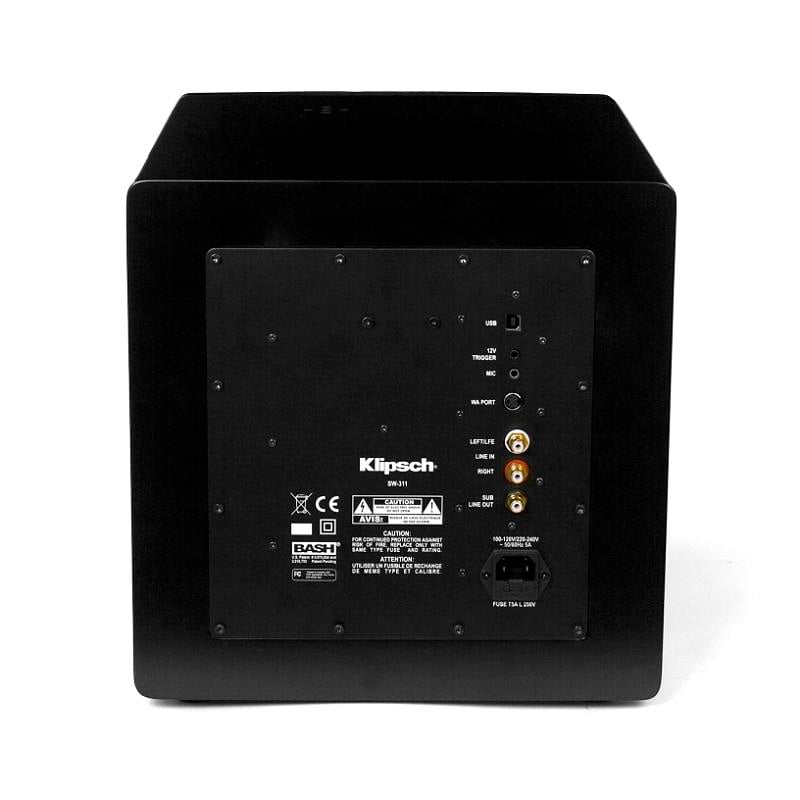 After receiving the SVS PB13-Ultra and
having to deal with its 180lb weight as shipped I was grateful when the box
containing the SW-311 showed up weighing in at about 45lbs and roughly a 6th of
the size. Unpacking the subwoofer was uneventful and straightforward. The
SW-311 came is a heavy gauge single layered box, with reinforced corners and
cardboard corner inserts. There is the usual large recessed top and bottom foam
pieces which fit the subwoofer like a glove. The subwoofer itself was enclosed
in a cloth bag also. The rest of the contents consisted of the detachable power
cord, owner’s manual, ARC II microphone and grill. The packaging is not the
heaviest or most protective that I have seen but in light of the small size and
relatively modest weight of the unit it should be more than adequate. Once I
had the SW-311 unpacked the first thing that struck me was that this was a
seriously small subwoofer. It comes in under 1.4 cubic feet in total external volume
taken up. That is smaller than some bookshelf speakers and smaller than my KV-4
center channel! It is very compact as far as home theater subwoofers go and is
more akin in size to what you might usually see coupled with a 2.1 computer
audio setup. You should be able to fit the SW-311 in just about anywhere. The
SW-311 only comes in one finish apparently, which is the satin black proudly
worn by the review unit. It is a classy and understated appearance that should
not call attention to its self, but looks nice when, or if it does happen to
become the focal point of attention. The fit and finish is good and the DCS
control system sporting its blue LCD screen, along with the textured slightly
reflective surface of the 3 10” cones, give it a high tech look.
After receiving the SVS PB13-Ultra and
having to deal with its 180lb weight as shipped I was grateful when the box
containing the SW-311 showed up weighing in at about 45lbs and roughly a 6th of
the size. Unpacking the subwoofer was uneventful and straightforward. The
SW-311 came is a heavy gauge single layered box, with reinforced corners and
cardboard corner inserts. There is the usual large recessed top and bottom foam
pieces which fit the subwoofer like a glove. The subwoofer itself was enclosed
in a cloth bag also. The rest of the contents consisted of the detachable power
cord, owner’s manual, ARC II microphone and grill. The packaging is not the
heaviest or most protective that I have seen but in light of the small size and
relatively modest weight of the unit it should be more than adequate. Once I
had the SW-311 unpacked the first thing that struck me was that this was a
seriously small subwoofer. It comes in under 1.4 cubic feet in total external volume
taken up. That is smaller than some bookshelf speakers and smaller than my KV-4
center channel! It is very compact as far as home theater subwoofers go and is
more akin in size to what you might usually see coupled with a 2.1 computer
audio setup. You should be able to fit the SW-311 in just about anywhere. The
SW-311 only comes in one finish apparently, which is the satin black proudly
worn by the review unit. It is a classy and understated appearance that should
not call attention to its self, but looks nice when, or if it does happen to
become the focal point of attention. The fit and finish is good and the DCS
control system sporting its blue LCD screen, along with the textured slightly
reflective surface of the 3 10” cones, give it a high tech look.

Klipsch SW-311 Subwoofer Design Overview
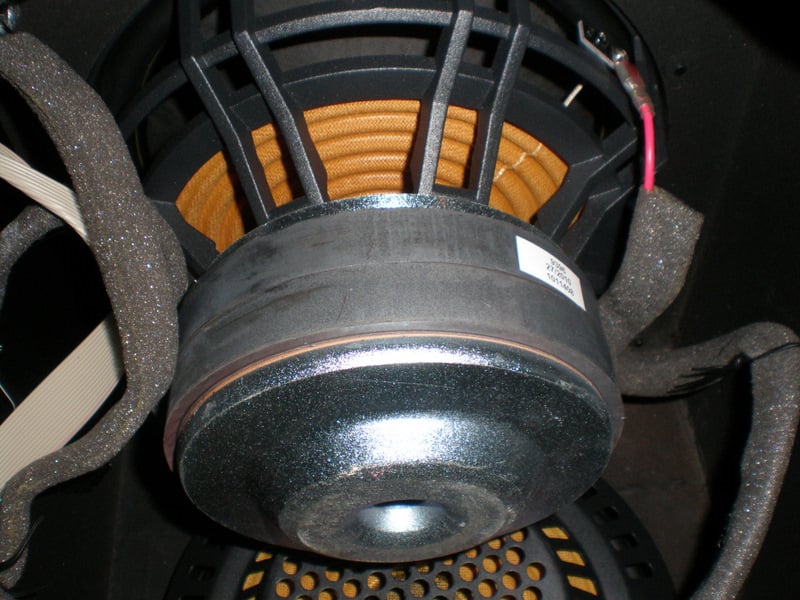 The SW-311 utilizes a single 10” active driver coupled to two 10”
opposed firing passive radiators in a bass reflex alignment. After removing the
trim ring and popping out on of the passive radiators I could see that the
active driver looks like a good quality unit with a lot of upscale features.
The cone is a light but strong woven fiberglass. The motor structure is a
rather generous size for a 10” driver with what I would guess to be 2 roughly
6” diameter, 1” thick ferrite slugs, a bumped back plate and a vented pole
piece. The surround appears to be rubber and it is an inverted roll. The frame
is a nice cast aluminum design which is very open. The leads are stitched into
the roughly 7” spider. The voice coil is listed as a 4 layer copper clad wind on
aluminum former. Klipsch claims by using copper clad they were able to reduce cone mass by 100 grams as opposed to using copper. It appears to be a
nominally 2” diameter. The passive radiators have the same cosmetics, surround and cone
composition as the active driver. They utilize a very shallow, perforated
stamped steel frame instead of the cast aluminum design of the active driver.
The mounting depth of these is probably only about 3” or so.
The SW-311 utilizes a single 10” active driver coupled to two 10”
opposed firing passive radiators in a bass reflex alignment. After removing the
trim ring and popping out on of the passive radiators I could see that the
active driver looks like a good quality unit with a lot of upscale features.
The cone is a light but strong woven fiberglass. The motor structure is a
rather generous size for a 10” driver with what I would guess to be 2 roughly
6” diameter, 1” thick ferrite slugs, a bumped back plate and a vented pole
piece. The surround appears to be rubber and it is an inverted roll. The frame
is a nice cast aluminum design which is very open. The leads are stitched into
the roughly 7” spider. The voice coil is listed as a 4 layer copper clad wind on
aluminum former. Klipsch claims by using copper clad they were able to reduce cone mass by 100 grams as opposed to using copper. It appears to be a
nominally 2” diameter. The passive radiators have the same cosmetics, surround and cone
composition as the active driver. They utilize a very shallow, perforated
stamped steel frame instead of the cast aluminum design of the active driver.
The mounting depth of these is probably only about 3” or so.


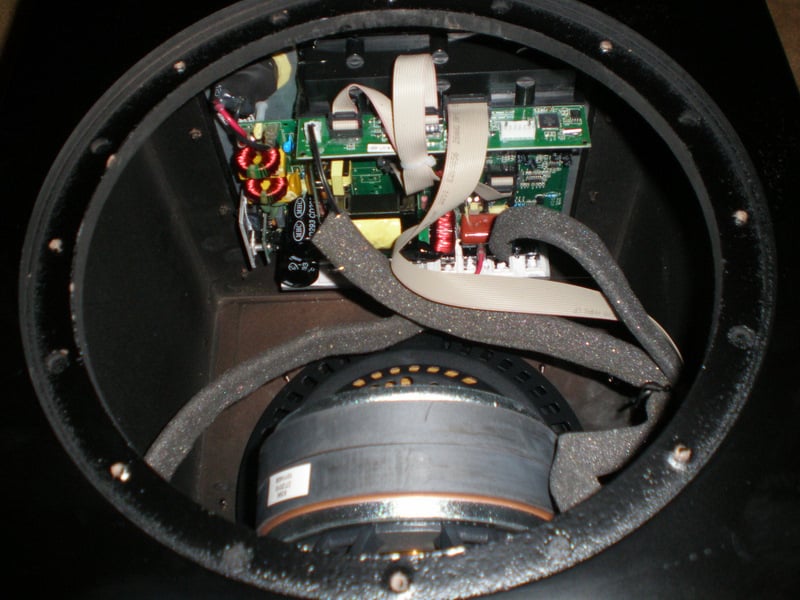
The digital Bash amplifier is rated at 500w with short term peaks of up to 1200w said to be possible. The amplifier takes up the back panel of the tiny enclosure almost entirely. There only appeared to be two moderate sized reserve capacitors. No internal heat sink for the amplifier is seen other than the amplifier face plate itself. I checked the amplifier to see how hot it would get during testing, which can be brutal and it never got more than warm. This points to the amplifier being a very efficient design. A ribbon cable runs from the amplifier board up to the DCS interface which is mounted into the top of the subwoofer. The enclosure is built from what looks like ¾” MDF (medium density fiber) wood. There is no bracing seen in the enclosure, which does not concern me with this particular subwoofer because the panels here are very small and relatively rigid. Any internal standing waves or panel resonances should be high enough in frequency to be well out of the bass range. Once factoring in that the little cabinet has to contain the active driver, the 2 passive radiators, plus the amplifier and the DCS control module there is not a lot of room to place any functional bracing to begin with and it would only further diminish the internal cabinet volume seen by the driver and passives.
All of the aforementioned items mounted in the cabinet are nicely countersunk and the driver and passives have a trim ring that snaps in place and hides the mounting screws, a nice touch. The grill is of the black cloth covered, molded plastic variety. There is no grill for the 2 passive radiators, which might be of concern to those with curious animals, small children, or the occasional bumbling idiot house guest. There is a small round over to the cabinet corners. Build and parts quality overall appears to be very good. The satin black finish is understated and good looking. With its small size and unobtrusive looks the SW-311 should be able to fit in, if not completely disappear into most decors.

Klipsch SW-311 Subwoofer Sound Quality Tests
For
all of the listening sessions the SW-311 was placed in the front right corner
of the room firing into the corner about 6 inches from the wall. I have
determined this to be the best available single subwoofer placement in my room.
Audyssey was run on the system to allow it to integrate the SW-311. Afterwards
I ran Klipsch’s ARC II automatic equalization to allow it to further smooth any
major res ponse issues at the listening position. This was followed by a check
and recalibration of the subwoofer and speaker levels.
ponse issues at the listening position. This was followed by a check
and recalibration of the subwoofer and speaker levels.
Blu-ray: Rush – R30 30th Anniversary World Tour
I have always been a fan of the bass guitar tone that Gedee Lee produces out of his Fender for the simple fact that he is quite the accomplished player and virtually every note that he plays is clearly distinguishable. On this disc it is as prominent in the mix as ever and the SW-311 easily reproduced it with clarity and proper tone. It also remained punchy and provided the proper weight to Neil Peart’s kick drums and toms. At first I was concerned that the small size of this sub might cause it to struggle to produce proper volume in my room, but after it cruised through a couple of songs I started turning up the overall system volume to see how it would react. I ended up at a fairly loud volume and the SW-311 seemed unperturbed, as it still sounded great and was pumping out the bass without missing a beat. I was impressed at the quality and amount of bass emanating from such a tiny cube. The SW-311 definitely exceeded my expectations here and was able to maintain a clean and coherent sound even while being asked to put out a lot of energy.
Blu-ray: Kung Fu Panda
For the  movie listening session I
decided on Kung Fu Panda as it is a fun movie that I have seen many times,
which nonetheless packs a great surround mix and a large amount of bass
information. After the SW-311 performance on the Rush R30 concert disc, I was
interested to see how it would handle the much deeper, louder transients of
this movie. I set the master volume to -15 from reference level which is a
pretty typical listening volume for me. During the opening sequences where Po
is daydreaming about kung fu and during the dragon warrior ceremony where Po
ignites the fireworks under his chair in an attempt to make it into the stadium,
the SW-311 did a good job of providing bass presence in the room, but it seemed
to lack the depth and extension that I am used to hearing, particularly when Po
is skittering along the wall strapped to the chair. Later on in the movie there
is a sequence where Thai Lung escapes from his imprisonment, which is a demo
worthy section. The SW-311 did well at reproducing the various rumbles, thumps
and groans present during this part, but I did detect what seemed to be some
squashing of the overall dynamics on the loudest effects. The little Klipsch
may have been at the end of its rope a few times during this section. Also
there is one point when Thai Lung is racing up the falling rock slabs and on
the final rock he gathers himself for a great leap. When he springs off there
is a very low frequency pulse, without a lot of upper frequency masking content.
The SW-311 largely missed this bit of information, probably due to the sound
effect being below its effective range. Towards the end of the film there is
the infamous “ska-doosh” during the final battle scene between Thai Lung and
Po, which is the loudest bass effect in the entire movie. If I remember right
it is centered at roughly 25Hz. The SW-311 gave a valiant attempt at
reproducing this, but I could tell that it was missing a little of the bottom
range of the effect and it was clearly at its limits. It did not produce scary
overload noises or anything like that and I probably wouldn’t even have noted a
difference in the reproduction of this part if I hadn’t heard it many times
with much larger, more powerful subwoofers. I don’t want you to think that the
SW-311 did badly here, quite the contrary it did rather better than I thought
possible. Any subwoofer this size will struggle at loud home theater play back
levels in a big room such as mine.
movie listening session I
decided on Kung Fu Panda as it is a fun movie that I have seen many times,
which nonetheless packs a great surround mix and a large amount of bass
information. After the SW-311 performance on the Rush R30 concert disc, I was
interested to see how it would handle the much deeper, louder transients of
this movie. I set the master volume to -15 from reference level which is a
pretty typical listening volume for me. During the opening sequences where Po
is daydreaming about kung fu and during the dragon warrior ceremony where Po
ignites the fireworks under his chair in an attempt to make it into the stadium,
the SW-311 did a good job of providing bass presence in the room, but it seemed
to lack the depth and extension that I am used to hearing, particularly when Po
is skittering along the wall strapped to the chair. Later on in the movie there
is a sequence where Thai Lung escapes from his imprisonment, which is a demo
worthy section. The SW-311 did well at reproducing the various rumbles, thumps
and groans present during this part, but I did detect what seemed to be some
squashing of the overall dynamics on the loudest effects. The little Klipsch
may have been at the end of its rope a few times during this section. Also
there is one point when Thai Lung is racing up the falling rock slabs and on
the final rock he gathers himself for a great leap. When he springs off there
is a very low frequency pulse, without a lot of upper frequency masking content.
The SW-311 largely missed this bit of information, probably due to the sound
effect being below its effective range. Towards the end of the film there is
the infamous “ska-doosh” during the final battle scene between Thai Lung and
Po, which is the loudest bass effect in the entire movie. If I remember right
it is centered at roughly 25Hz. The SW-311 gave a valiant attempt at
reproducing this, but I could tell that it was missing a little of the bottom
range of the effect and it was clearly at its limits. It did not produce scary
overload noises or anything like that and I probably wouldn’t even have noted a
difference in the reproduction of this part if I hadn’t heard it many times
with much larger, more powerful subwoofers. I don’t want you to think that the
SW-311 did badly here, quite the contrary it did rather better than I thought
possible. Any subwoofer this size will struggle at loud home theater play back
levels in a big room such as mine.
Klipsch SW-311 Subwoofer Measurements and Analysis
The Klipsch SW-311 was measured outdoors sitting on the ground with the microphone placed 2 meters from the front lip of the cabinet pointing at the main driver which was forward firing and with the passive radiators side firing. The low pass filter and ARC II processing were both disabled and the subwoofer volume was set to 0 for all testing, except for those tests purposely conducted to examine the effects of the built in DSP functions.
The overall approach to this testing along with the equipment and software used is outlined in the article here:
Powered
Subwoofer Testing Outline and Procedures Overview

Klipsch SW-311:
Effect of Low Pass Filter Settings
The effect of the low pass filter settings on the SW-311 top end response can be seen in the graph above. The Klipsch has a wide variety of available settings with the frequency selectable from 40-150Hz and the roll off rate variable between 12, 18, 24, 36 and 48dB octave slopes. I recorded the frequency response with the low pass filter set to 40, 65, 90, 120 and 150Hz settings along with the response with the filter bypassed. I used the 24dB / octave slope setting. The depth EQ setting was engaged during these measurements.

Klipsch SW-311: Effect of Flat, Depth and Punch EQ Settings
The effect of the SW-311’s built in EQ presets was rather mild and mostly consists of slightly boosting the overall output level or a slight adjustment in low frequency strength relative to the top end. I ran through them briefly listening to some music and the differences were noticeable but not huge. The punch setting seemed to boost the overall sub level while the depth setting also boosted the level but was most apparent in the lower bass register of music. The overall changes appear to be no more than about 3dB at most. None of them should have a profound effect on the performance of the SW-311 at the limit which is good.

Klipsch SW-311: Basic Frequency Response as Tested
I decided to use the punch response setting for the rest of the SW-311 measurements due to it rolling off just slightly towards the low end. In most rooms this setting with a very gradual roll off towards the deeper bass would probably complement the natural boost given to the lower bass region by the room acoustics better than the settings that are flatter or have a more exaggerated low end. Also subwoofers almost always run into their output limitations in the low bass frequencies first and the small roll off of the low frequencies will allow just a bit more of the upper bass headroom to be used before the low end limits the output. Either way the differences in the EQ settings for the SW-311 are not drastic to begin with. With the punch EQ setting and the low pass filter defeated the SW-311 fits within a +/-3dB window from 28-180Hz. With the depth setting engaged the response is within +/-3dB from 27-185Hz. In flat mode the SW-311 stays within the same window from 28-194Hz. Klipsch rates the response at 22-120Hz +/-3dB. The measured SW-311 response is fairly close to that. It easily exceeds the 120Hz spec on the top end and could probably crossover to other speakers in the 150-180Hz region successfully. I see no way that it will meet the 22Hz extension spec though. As you can see from all of the measurements, at about 28 or 29Hz it starts what appears to ultimately be a 48dB/octave roll off, which is a function of the standard 24dB/octave roll off of a bass reflex alignment below tuning, plus what is likely a 24db octave rumble filter applied just below tune as well. This type of thing is standard with most bass reflex alignments to prevent unwanted cone excursion below the system tuning. The SW-311 is down over 24dB by 22Hz already. The effective useful extension of the SW-311 in room appears to be somewhere in the 25-30Hz range.

Klipsch SW-311: Waterfall Decay

Klipsch SW-311: Group Delay
Looking at the waterfall and group delay plots for the SW-311 shows that it is well behaved. There is nothing of note until down near 30Hz where the energy begins hang around a little until it peaks at 25Hz. It does exceed 1.5 cycles for a bit on the group delay chart but this is not an uncommon occurrence for bass reflex alignments with steep high pass filters applied at tuning. Both the reflex tuning of the system and the filter will contribute to this.

Klipsch SW-311: Long Term Power Compression
In the chart above we have the response of the SW-311 as it is driven increasingly louder with a long duration sine wave sweep. The base level is referenced to 90dB at 50Hz at 2 meters ground plane and each sweep is increased by 5dB in level until the subwoofer exhibits severe compression or distress. Afterwards another nominally 90dB sweep is taken to observe the long term heating effects on the system. The SW-311 exhibited negligible after effects on the repeat 90dB measurement.

Klipsch SW-311: Power Compression Comparison
This graph is another way of presenting the data collected during the long term power compression test. It references the data to the 90dB sweep which is the flat black trace in the graph and shows only the amount of variation in output from the input signal increase. Ideally each other sweep would fall right along the black line up until as high an output level for the subwoofer as possible. The SW-311 performs excellently up until the 105dB sweep where it exhibits clear compression and barely manages any increase in level at 30Hz. The 110dB sweep produced little extra output except above 60Hz indicating that the SW-311 was being limited heavily at that point. Through out the power compression testing the SW-311 never made a distress noise or had issue. Even with the final sweep which caused the SW-311 to be heavily limited it simply coasted through still sounding clean. The protection circuitry is very good on this sub.

Klipsch SW-311: Maximum Long Term Output Level
The maximum sweep level attained by the SW-311 falls into the lower range of all subwoofers I have ever tested below 50Hz, but above there it does better and manages to make it to middle of the pack. That is a pretty good result considering that this is a miniature subwoofer that takes up less than 1.4 cubic foot of space and weighs below 40lbs. Most other subwoofers I have tested are at least two or three times the size of the SW-311.

Klipsch SW-311: 95, 100, 105, 110dB Sweep THD Comparison
The distortion performance of the SW-311 during a few of the power compression sweeps is presented above. I’d give the SW-311 an A rating here. It is well below 5% THD for the 100dB sweep and even during the 110dB sweep the THD is still well under 10% for the majority of its entire effective range of operation. The distortion does get out of control below 25Hz but as we have already covered previously that is below the passive radiator tuning and outside of the SW-311’s effective envelope of operation anyway.

Klipsch SW-311: CEA2010 2 meter Groundplane RMS Results

Klipsch SW-311: CEA2010 2 Meter Groundplane RMS Comparison
CEA2010 Results
Looking at the CEA2010 test results for the SW-311 we can see that at the 25Hz band and above are all amplifier limited and that the maximum output is in the lower middle range of all units that have been tested. At 50Hz and above the output was commendably strong for a unit of this size. At 20Hz the SW-311 could just eke out a passing result of 84.2dB. With the restriction on distortion removed the maximum output at 20Hz jumps to 90.6dB but with very high THD. Below 20Hz the SW-311 could not produce a passing result or any meaningful output for that matter. The distortion from the SW-311 was dominated by the 3rd harmonic for the most part. The SW-311 did exhibit good bandwidth uniformity of maximum output over its range of effective operation, staying within a +/-5db window 31.5-125Hz.
ARC II Overview
T he SW-311
comes with a built in auto room correction system developed by Klipsch called
ARC II. The supplied microphone has a small aperture for the element at the top
of a small dome that is roughly the size and shape of a cookie. Unfortunately I
forgot to take pictures of the microphone for the review. The mic is simply
placed where your head would normally be at the listening position and plugged
into the 1/8th inch port on the back of the SW-311. Using the on
board DSC interface you tell it to run the routine, which consists of a slow
frequency sweep, a quite loud one I might add, followed by a few seconds of EQ
calculations and that is it. The whole process takes a matter of maybe three
minutes or so in total. I decided to see how effective ARC II is by placing the
SW-311 at a random spot in a room that I don’t normally use for audio and
running the auto EQ routine with the microphone placed at three random positions
that could potentially be listening positions in the room. Luckily out of these
three random microphone placements one of them turned out to have a good
natural response, one was a little worse and one was really bad, which is what
I was looking for. I was then able to measure the before and after of the
SW-311’s response at each position. The results for the position with the worst
response are shown in the chart below. The other 2 positions had much better
basic responses requiring far less EQ correction. The results for the worst
position more clearly show the corrections made by ARC II when faced with a
less than ideal scenario.
he SW-311
comes with a built in auto room correction system developed by Klipsch called
ARC II. The supplied microphone has a small aperture for the element at the top
of a small dome that is roughly the size and shape of a cookie. Unfortunately I
forgot to take pictures of the microphone for the review. The mic is simply
placed where your head would normally be at the listening position and plugged
into the 1/8th inch port on the back of the SW-311. Using the on
board DSC interface you tell it to run the routine, which consists of a slow
frequency sweep, a quite loud one I might add, followed by a few seconds of EQ
calculations and that is it. The whole process takes a matter of maybe three
minutes or so in total. I decided to see how effective ARC II is by placing the
SW-311 at a random spot in a room that I don’t normally use for audio and
running the auto EQ routine with the microphone placed at three random positions
that could potentially be listening positions in the room. Luckily out of these
three random microphone placements one of them turned out to have a good
natural response, one was a little worse and one was really bad, which is what
I was looking for. I was then able to measure the before and after of the
SW-311’s response at each position. The results for the position with the worst
response are shown in the chart below. The other 2 positions had much better
basic responses requiring far less EQ correction. The results for the worst
position more clearly show the corrections made by ARC II when faced with a
less than ideal scenario.

Klipsch SW-311: ARC II Auto EQ Results for 3 Random Listening Positions
ARC II appears to do a very nice job of addressing the biggest response issues without overdoing it. It does not EQ below 30Hz where the SW-311 isn’t strong and deep high Q nulls are left alone. Any big peaks in response are what are addressed primarily. It didn’t make a silk purse out of this sow’s ear but the response afterward would be a large improvement in quality. It is always a good idea to find the best available placement for the subwoofer to begin with so that the amount of EQ correction needed is minimized, but if you are stuck with less than ideal placement and response, ARC II will help improve the situation. Unfortunately ARC II’s auto EQ correction only applies to a single listening position. I think this limits its usefulness overall. You could account for multiple listening positions or at least the general area where your ears will be located, instead of a single isolated point in room, if averaging of multiple measurements were possible. Then there is the fact that most modern home theaters will have some sort of auto equalization built into the processor or receiver already which will use spatial averaging of multiple measurements.
Klipsch SW-311 Subwoofer Review Conclusion
This
Kli psch subwoofer was a bit of a departure from the usual for me. Having
designed, studied and built many subwoofers over the years I know that the
physics behind bass production dictate that any subwoofer this small has a lot
going against it from the standpoint of dynamics, distortion, extension,
efficiency and headroom. Let’s face it people like their bass and if there is
one part of the frequency spectrum that many can’t seem to get enough of, it is
the bass. I am just as guilty as the next person. The current trend toward ever
smaller subwoofers and speakers in order to better blend them into the décor is
directly at odds with producing pants flapping deep bass. This is a tough
position for speaker companies and designers who must attempt to somehow
provide both at once and also for consumers, many of whom want to “feel” that
explosion during the latest blockbuster action movie but also don’t want a
subwoofer the size of a refrigerator in their living room. Klipsch has done an
admirable balancing act and made some educated design choices which result in a
very good small subwoofer in the form of the SW-311. They went with a passive
radiator set-up which eliminates port noises and resonances plus the volume
taken up by the port, so that the enclosure can be as small as possible while
still maintaining the advantages of a bass reflex alignment down to the tuning.
They also opted to keep the tuning near 30Hz instead of going for lower
extension which would’ve sacrificed overall output which
is at a premium in a subwoofer this size. In my opinion it is better to give
the upper bass some extra oomph rather than going for low bass extension
without the headroom needed to make it meaningful. The amount of output that
they did manage to squeeze out of this tiny subwoofer was rather impressive to
me as was the very good distortion performance all of the way up to its maximum
output. So it won’t rattle the kitchen dishes out of the cabinets with dinosaur
foot stomps. Expecting big 20Hz power out of a subwoofer this small is simply
unrealistic. This little guy is surprising with what it will do and on music in
particular, which doesn’t do much below 30 or even 40Hz to begin with, I
thought it was great.
psch subwoofer was a bit of a departure from the usual for me. Having
designed, studied and built many subwoofers over the years I know that the
physics behind bass production dictate that any subwoofer this small has a lot
going against it from the standpoint of dynamics, distortion, extension,
efficiency and headroom. Let’s face it people like their bass and if there is
one part of the frequency spectrum that many can’t seem to get enough of, it is
the bass. I am just as guilty as the next person. The current trend toward ever
smaller subwoofers and speakers in order to better blend them into the décor is
directly at odds with producing pants flapping deep bass. This is a tough
position for speaker companies and designers who must attempt to somehow
provide both at once and also for consumers, many of whom want to “feel” that
explosion during the latest blockbuster action movie but also don’t want a
subwoofer the size of a refrigerator in their living room. Klipsch has done an
admirable balancing act and made some educated design choices which result in a
very good small subwoofer in the form of the SW-311. They went with a passive
radiator set-up which eliminates port noises and resonances plus the volume
taken up by the port, so that the enclosure can be as small as possible while
still maintaining the advantages of a bass reflex alignment down to the tuning.
They also opted to keep the tuning near 30Hz instead of going for lower
extension which would’ve sacrificed overall output which
is at a premium in a subwoofer this size. In my opinion it is better to give
the upper bass some extra oomph rather than going for low bass extension
without the headroom needed to make it meaningful. The amount of output that
they did manage to squeeze out of this tiny subwoofer was rather impressive to
me as was the very good distortion performance all of the way up to its maximum
output. So it won’t rattle the kitchen dishes out of the cabinets with dinosaur
foot stomps. Expecting big 20Hz power out of a subwoofer this small is simply
unrealistic. This little guy is surprising with what it will do and on music in
particular, which doesn’t do much below 30 or even 40Hz to begin with, I
thought it was great.
They have also put some very effective protection circuits into this subwoofer. I could not get it into any trouble no matter what signal it was presented with. At most it would simply refuse to go any louder and start to sound a little bit warm when overdriven. This is probably even more important on a mini-subwoofer like the SW-311 than a bigger more powerful one, because it is more likely to be overdriven more often due to the inherently lower headroom available. The SW-311’s behavior in that regard was exemplary.
I found the SW-311 to be very easy to use with the built in DCS control system. I thought that the ability to save a couple of preset configurations in the SW-311 was interesting but I can’t honestly imagine a time when I would use this function. The built in ARC II auto room correction worked quite well, but the fact that it only accounts for a single microphone location limits its usefulness. Perhaps they will upgrade this to include multiple positions in the future.
The SW-311 achieves the Audioholics Bassoholic Medium room rating, which means that this sub is recommended as maintaining adequate headroom in medium sized spaces of between 2,000 and 3,000 cubic feet and/or users who usually listen at a moderate volume level. For further information in how we make these recommendations see the full article here.
See: Audioholics Subwoofer Room Size Rating Protocol
At $1,599 MSRP this is not what would be considered a budget subwoofer by most people, but Klipsch has managed to pack a lot of power and equipment into a very small package with the SW-311. If you desire high performance bass but have little space to devote to the achieving of that goal then this might be the right subwoofer for you. I could easily see using the SW-311 in a near field application perhaps as part of a project studio. If you are looking for a subwoofer to rattle the cobwebs out of the rafters in a big space and size is not of concern to you, the SW-311 is not the type of subwoofer that you should be looking at. For you other people out there who might have limited placement options, a smaller room, more reserved listening habits, a difficult to please significant other, or are primarily listening to music, the Klipsch SW-311 is worthy of your consideration and a very well put together package.

Klipsch SW-311 Review
MSRP: $1,599
TollFree1-888-250-8561
E-mail: onlineorders@klipsch.com
The Score Card
The scoring below is based on each piece of equipment doing the duty it is designed for. The numbers are weighed heavily with respect to the individual cost of each unit, thus giving a rating roughly equal to:
Performance × Price Factor/Value = Rating
Audioholics.com note: The ratings indicated below are based on subjective listening and objective testing of the product in question. The rating scale is based on performance/value ratio. If you notice better performing products in future reviews that have lower numbers in certain areas, be aware that the value factor is most likely the culprit. Other Audioholics reviewers may rate products solely based on performance, and each reviewer has his/her own system for ratings.
Audioholics Rating Scale
 — Excellent
- — Very Good
- — Good
- — Fair
- — Poor
| Metric | Rating |
|---|---|
| Bass Extension | |
| Bass Accuracy | |
| Build Quality | |
| Fit and Finish | |
| Ergonomics & Usability | |
| Features | |
| Dynamic Range | |
| Performance | |
| Value | |
 Subscribe to our newsletter