


Whole House Wiring Basics Part 3
Courtesy of
Impact
Acoustics
In part one of Whole House Wiring Basics we explored various aspects of multi-room and/or multi-zone media design and implementation. Part two expanded our examination to include quality transport of analog video signals such as component, s-video and composite from point-to-point. There are three more disciplines we must master if we are to be able to create a useful, high-performance audio/video installation; digital video distribution, control system infrastructure and MATV/CATV design and installation. Let’s save the best for last, shall we? In this installment we’ll focus on the burgeoning need for digital video signal distribution.
There aren’t a whole lot of digital video signals we need to be concerned with. In fact, there are only two. Of the two, both are such close cousins that the same infrastructure can accommodate either. With proper planning and forethought, digital multi-media transportation can provide the cleanest, clearest, most impressive A/V experience imaginable!
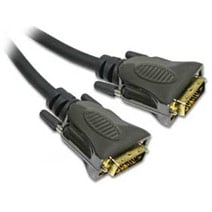 We are referring to DVI and HDMI, of
course. Both are TMDS (Transmission
Minimized Differential Signaling), a technology used for transmitting
high-speed serial data. HDMI and
single-link DVI deliver a bandwidth of more than 165 Megapixels per second
(165MHz), which is capable of supporting 1080 X 1920 images at a 60Hz refresh
rate (1080p). A properly implemented digital
distribution infrastructure will allow you to access this level of
performance. It will ensure
compatibility with High-Bandwidth Digital Copy Protection (HDCP). It will handle a DVI-D single link or HDMI
interface with equal aplomb. A good
digital video distribution system will be isolated from RFI and EMI, will meet
NEC code and will allow for future growth with minimal additional
investment. Finally, the right digital
video distribution system is the one you can install now, because tomorrow it
may be too late!
We are referring to DVI and HDMI, of
course. Both are TMDS (Transmission
Minimized Differential Signaling), a technology used for transmitting
high-speed serial data. HDMI and
single-link DVI deliver a bandwidth of more than 165 Megapixels per second
(165MHz), which is capable of supporting 1080 X 1920 images at a 60Hz refresh
rate (1080p). A properly implemented digital
distribution infrastructure will allow you to access this level of
performance. It will ensure
compatibility with High-Bandwidth Digital Copy Protection (HDCP). It will handle a DVI-D single link or HDMI
interface with equal aplomb. A good
digital video distribution system will be isolated from RFI and EMI, will meet
NEC code and will allow for future growth with minimal additional
investment. Finally, the right digital
video distribution system is the one you can install now, because tomorrow it
may be too late!
With today’s technology there are three ways to handle the distribution of digital video; UTP, copper, and fiber. Let’s look at each in turn.
HDMI/DVI-D over Cat5e
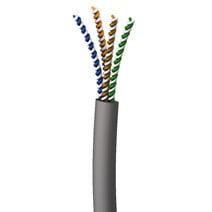 There is nothing especially new about
transporting audio and video signals over a UTP cable. Companies like Gefen and Intelix have
manufactured solutions using this technology to transmit analog S-Video and
Component Video for nearly a decade. UTP
stands for Unshielded Twisted Pair and is engineering “shorthand” for Cat5E
(amongst others). Signals run over UTP
use a Balun (Balanced to Un-Balanced transformer loading) to
create a differential signal. Due to the
unique nature of a transformer, the signal is induced on the secondary windings
and completely isolates the conduction path from the equipment at either end.
This delivers an important benefit – freedom from ground loops. A second benefit can be extended length –
transformers can easily increase voltage at the expense of current. Since a signal is transmitted through the
change in voltage, decreasing signal current is seldom critical. This property
of a Baluns makes them especially good for bandwidth limited low-voltage AC signals. HDMI and DVI-D signals carried on UTP based
infrastructure can often be run for 150 feet or more!
There is nothing especially new about
transporting audio and video signals over a UTP cable. Companies like Gefen and Intelix have
manufactured solutions using this technology to transmit analog S-Video and
Component Video for nearly a decade. UTP
stands for Unshielded Twisted Pair and is engineering “shorthand” for Cat5E
(amongst others). Signals run over UTP
use a Balun (Balanced to Un-Balanced transformer loading) to
create a differential signal. Due to the
unique nature of a transformer, the signal is induced on the secondary windings
and completely isolates the conduction path from the equipment at either end.
This delivers an important benefit – freedom from ground loops. A second benefit can be extended length –
transformers can easily increase voltage at the expense of current. Since a signal is transmitted through the
change in voltage, decreasing signal current is seldom critical. This property
of a Baluns makes them especially good for bandwidth limited low-voltage AC signals. HDMI and DVI-D signals carried on UTP based
infrastructure can often be run for 150 feet or more!
A digital video distribution system based on UTP technology has many advantages and attributes which make such a design a popular solution. First, Cat5e cable is smaller than coaxial cables, making the cable runs easier to execute. Because a Balun driven system is, ultimately, a passive circuit, HDCP compliance is seldom affected. The cable itself is often less expensive and in the context of a very large installation this can quickly add up to hundreds of dollars just for the wire. Cat5e is easy to terminate; nearly any technician can masters the intricacies of the punch-down block during their first weeks on the job. Cheaper, easier and it runs longer distances without fear of ground-loops. And the UTP is inherently resistant to RFI common-mode noise. This sounds like a great solution!
All is not rosy in the world of the Balun, however. Baluns are not the ideal solution for every application. The actual resolution and in-use performance of an installation is directly proportional to the quality of the transformer used to power the system. And good transformers can be expensive! HDMI-to-Cat5e and DVI-to-Cat5 systems typically sell for $500 or more.
Balun-based systems also suffer length related degradation. For instance, one primary manufacturer of HDMI Balun solutions specifies 1080i performance to 200 feet but cautions that 1080p performance is only attainable to 150 feet. A further caveat states that performance may be compromised in facilities with excessive RF interference.
While twisted pair cables are easy to run, there are a lot of environmental issues that must be observed to ensure proper operation. Twisted pair cabling carrying an audio-visual signal should not be run within one foot of fluorescent lights or more than three feet parallel to high voltage lines. Twisted pair cabling, such as Cat 5, carrying an audio-visual signal should not be passively split or routed through a hub or switcher. Finally, you cannot transmit data and digital A/V over the same length of Cat5e.
One final issue detracts from the Cat5e solution. Due to the extreme bandwidth requirements of HDMI and DVI digital video these transformer-driven systems require two runs of Cat5e, one of which must be a shielded Cat5e. If the project is taking place in a retrofit situation you cannot use a single run or an unshielded dual run. At least one cable – the cable used for the actual image information – must be shielded. The chances of finding shielded Cat5e run in a building are only slightly better than the odds of winning the Irish Sweepstakes! Still, Cat5e is small and easy to route. And it is ultimately the least expensive solution if you must install a run of more than 100’.
An additional benefit of a Balun-based installation exists in commercial buildings where Plenum CMP-rated cabling is demanded by the National Electrical Code. At this time there are no HDMI cables made that are CMP-rated. Plenum Cat5e and Cat6, however, are readily available.
HDMI/DVI-D over Copper
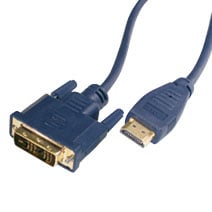 HDMI LLC doesn’t specify any length
limitations to an HDMI interconnect. Neither does the Digital Display Working
Group, the founders of the DVI-D standards. As with all cables, signal
attenuation becomes too high at a certain length. Instead, HDMI specifies a
minimum performance standard. Any cable meeting that specification is
compliant. Different construction quality and materials will enable cables of
different lengths to be manufactured. In
practice the maximum reliable length for a DVI-D or HDMI connection running a
1080 X 1920 signal (1080p) is about 75 feet.
The use of active devices may
extend that run to 100 feet or slightly more.
Performance at these lengths is directly proportional to the quality of
the driving and receiving electronics in the source and load components.
HDMI LLC doesn’t specify any length
limitations to an HDMI interconnect. Neither does the Digital Display Working
Group, the founders of the DVI-D standards. As with all cables, signal
attenuation becomes too high at a certain length. Instead, HDMI specifies a
minimum performance standard. Any cable meeting that specification is
compliant. Different construction quality and materials will enable cables of
different lengths to be manufactured. In
practice the maximum reliable length for a DVI-D or HDMI connection running a
1080 X 1920 signal (1080p) is about 75 feet.
The use of active devices may
extend that run to 100 feet or slightly more.
Performance at these lengths is directly proportional to the quality of
the driving and receiving electronics in the source and load components.
Copper HDMI and DVI-D cables are complex and expensive pieces of wire. An HDMI interconnect has 19 conductors set in a specific geometric arrangement to hold the characteristic impedance stable. Setting cable impedance on a twisted pair is a very difficult undertaking as the twists-per-inch and the diameter of the conductor and dielectric work together to form this important electrical characteristic. Changing the shape of the cable through tight bends, or changing the twists-per-inch through inadvertently stretching the cable under tension can easily and adversely affect signal propagation. In short, HDMI and DVI cables are delicate!
Because of this complex construction, HDMI interconnects can be seen as an expensive solution when compared to a Cat5e-based Balun solution. For instance, a quality 10 meter HDMI interconnect might have a retail point of $150.00 or more, compared with $12.00 for shielded Cat5e. If that is the only number one were to consider then there is no competition. However, the HDMI interconnect is complete and ready to install. The Cat5e-based Balun solution requires the transformers and short jumper cables to connect to the source and load components. A 10 meter Cat5e solution really costs $12.00 (bulk Cat5e) + $500.00 (Baluns) + $50.00 (2each 1meter HDMI interconnects) = $562.00. Now the $150.00 cost of the manufactured HDMI interconnects look like a bargain!
If a copper based solution has a price advantage, it also has a performance advantage. While the frequency response of any conductor will drop in direct proportion to the square of the length of the cable, the high frequency attenuation in an HDMI environment doesn’t impinge on its ability to deliver a full 1080p image out to the maximum practical length. For example, the RapidRun Digital system can support a 480p HDMI signal at 65 feet. It will also pass 720p, 1080i and 1080p at that same length.
HDMI copper has its drawbacks, too. HDMI interconnect technology is delicate and must be installed with care. Wire runs should observe best installation practices and avoid sharp turns that will exceed the minimum bend radius of the cable. Wire ties and cable stringers must not compress the diameter of the cable or otherwise disturb the geometric relationship of the various conductors. Finally, this is a larger cable to pull. And HDMI connector will not fit into a conduit smaller than 1.25-inches. A DVI connector requires at least 1.75-inches. And these diameters don’t allow for tight bends, so no 90 degree elbows allowed! The RapidRun Digital system from Impact Acoustics allows a run to be placed in a .75-inch with up to a 90 degree manufactured sweep. It is currently the most compact solution available.
Copper HDMI and DVI solutions can also be difficult if compliance with NEC standards is imperative for the installation. Most manufacturers don’t make a CL2 rated HDMI or DVI interconnect (all Impact Acoustics SonicWave product is CL2 rated for in-wall use). At this time no manufacturer is making a CMP rated HDMI interconnect. This means that, even though these are low voltage solutions, they must be housed in conduit if they are installed in a plenum air-space in a commercial installation. Further and unlike the Cat5e solution, HDMI and DVI-D interconnects are not field-terminable. You cannot cut to fit! This requires careful planning before the components are placed and the cable is pulled. Two-feet too long can be a challenge, and two-feet too short can be a nightmare!
Finally, copper-based solutions don’t do anything to address ground loops. This isn’t a huge problem in most quality digital video installations, but it can be an issue if ceiling-mounted projectors or wall-mounted plasma displays are powered from a different A/C mains circuit. Copper-based solutions ensure compliance with HDCP, though.
An important characteristic of longer length HDMI solutions is found in the wire gauge. The longer the cable, the thicker the copper must be to ensure performance. The two variables of copper-based HDMI solutions are the quality of the source and load electronics and the stability of the copper assembly in terms of impedance and resistance. These can be calculated and compensated, but forethought is required.
HDMI/DVI-D over Fiber Optics
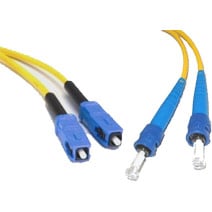 When maximum length runs are necessary, fiber fills the
bill. There are two methods for using a
fiber in an HDMI/DVI environment. For
runs up to 300-feet there are multi-mode fiber cables that incorporate
fiber-optic converters in each connector which convert HDMI signals into light
pulses, and then back again at the display.
These cables use a plastic-clad glass fiber, which offers a high degree
of ruggedness and flexibility. A
multi-mode fiber solution is available in Plenum-rated CMP and in CL2 versions
for residential installations. Using
fiber you will have no problems meeting electrical codes. Further, the very nature of a fiber connection
eliminates any possibility of a ground loop, RFI or EMI. After all, the signal is light and it can’t
be affected by magnetic interference or noisy light switches! Fiber is a powerful solution.
When maximum length runs are necessary, fiber fills the
bill. There are two methods for using a
fiber in an HDMI/DVI environment. For
runs up to 300-feet there are multi-mode fiber cables that incorporate
fiber-optic converters in each connector which convert HDMI signals into light
pulses, and then back again at the display.
These cables use a plastic-clad glass fiber, which offers a high degree
of ruggedness and flexibility. A
multi-mode fiber solution is available in Plenum-rated CMP and in CL2 versions
for residential installations. Using
fiber you will have no problems meeting electrical codes. Further, the very nature of a fiber connection
eliminates any possibility of a ground loop, RFI or EMI. After all, the signal is light and it can’t
be affected by magnetic interference or noisy light switches! Fiber is a powerful solution.
In digital signage there is sometimes a need for distances beyond 350-feet with DVI-D and HDMI signals. In such applications a single-mode fiber solution can be used. Single-mode fiber can deliver a 1080p signal up to 1500 feet without loss!
There is a cost to using fiber – maybe there are a few costs. First is the price… A 10 meter solution would not cost the $150.00 of a copper-based interconnect as detailed above. And it won’t cost the $562.00 of the dual Cat5e solution. A typical fiber solution would have a price tag closer to $850 for a 10 meter run! Of course the price per foot comes down as the length goes up. If copper costs $4 per foot (at its maximum run of 75 feet), and dual Cat5e costs about $4 per foot at its maximum of 150 feet, fiber tips the scales at only $5 per foot for a 350 foot run. If you use the technology at its maximum limitation, the prices are equitable. With the typical runs encountered in home theater or presentation/conference room installations the difference in price becomes significant indeed. Often this price differential doesn’t reflect a performance difference.
Another cost of using a fiber solution is in the HDCP “handshake”. Bluntly put, fiber optic doesn’t shake hands! Typically a separate Cat5e must be run to ensure compliance with HDCP protocols. Of course the minute you add copper to a fiber-based system you re-introduce the possibility of a ground loop problem.
HDMI/DVI-D Splitters and Distribution Amps and Summary
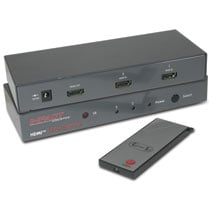 We have already established that HDMI
and DVI TMDS signals can’t be “amplified” in the traditional sense. They can be conditioned to work in a specific
environment through careful active control of impedance and frequency response,
however. Where the TMDS digital video signal
really loses out to analog is in its ability to run to multiple locations. Unlike analog solutions, digital distribution
is always an active proposition that
requires a carefully engineered component.
And digital distribution is limited in the typical installation. A single source can feed as many as four
display devices in the digital domain, but cheap and reliable analog
distribution amplifiers allow a component signal from a single source to be fed
to 4, 8 or more display devices with virtually no penalty!
We have already established that HDMI
and DVI TMDS signals can’t be “amplified” in the traditional sense. They can be conditioned to work in a specific
environment through careful active control of impedance and frequency response,
however. Where the TMDS digital video signal
really loses out to analog is in its ability to run to multiple locations. Unlike analog solutions, digital distribution
is always an active proposition that
requires a carefully engineered component.
And digital distribution is limited in the typical installation. A single source can feed as many as four
display devices in the digital domain, but cheap and reliable analog
distribution amplifiers allow a component signal from a single source to be fed
to 4, 8 or more display devices with virtually no penalty!
Another idiosyncrasy of the digital video domain is the necessity of the source and load to work as a system. Because of this, digital video DVI-D and HDMI “splitters” always require a master, or primary, source to lock onto the sync. This means that you can have two plasma displays hooked up to a single HDMI enabled device, but one of those displays will always have to be in use. In other words, you can have TV1 on and TV2 off, or TV1 on and TV2 on. But you can never have TV1 off and TV2 on!
Summary
When planning for, designing and installing a sophisticated media system it is vital to consider the environment and distribution of signals. Music and antenna signals are easy to distribute with a little planning. Baseband video and audio signals deliver a bigger challenge, but are still surmountable with careful analysis. Digital distribution makes demands that challenge even the most experienced integration specialists. Yet even with their varying levels of challenge, it’s incredibly important to get the wiring right. With the right infrastructure you have options and opportunities that might not be attainable once the drywall goes up and the first phase of the installation is done. Distributing HDMI and DVI-D signals expands the efficacy of a high performance multimedia system investment. It’s a big challenge, but one that we can face if we take time to understand the technology.
In our next article – MATV, SATV and RF Infrastructure!
Many thanks to Impact Acoustics for contributing this article
A sales and marketing professional, Joe holds degrees in Electrical Engineering and in Applied Business. He has been honored several times within the consumer electronics industry, being selected to serve as a judge for the prestigious Consumer Electronics Association "Mark of Excellence Awards" and having served on the Board of Directors of the Satellite Broadcasting and Communications Association.
View full profile Subscribe to our newsletter