


HSU Research VTF-1 Subwoofer Review
- Product Name: HSU Research VTF-1 Subwoofer
- Manufacturer: Hsu Research, Inc.
- Performance Rating:

- Value Rating:
- Review Date: July 09, 2007 19:44
- MSRP: $499 MSRP/$399 Direct
Enclosure: Down firing dual ported
Amplifier
Type: Bridged Amplifier Switching
Hybrid (BASH)
Amplifier
Power (RMS): 200 Watts
Peak Amplifier
Power: 600 Watts
Bass
Extension (-3dB): 32 Hz (Max SPL)
(-3dB): 25 Hz (max extension)
Woofer: 10" polymer treated paper cone
Crossover
Frequency: 30 Hz to 90 Hz
Crossover
type: Continuous variable low pass
filter with bypass
Crossover
Slope: -24db/octave Linkwitz-Riley
Phase: 0/180 degree switch
Dimensions:
(HxWxD): 19.5" x 14" x
18"
Weight
(lbs): 56 lbs.
Pros
- Musical
- Actual deep bass for a budget
- Performed well to its limits
- A lot of sub for the price
Cons
- Excursion limits at high SPL in extension mode
- Pedestrian finish
Introduction
After having spent some time with another Hsu subwoofer, the STF-1, I was asked to spend some time with another, the VTF-1. During the review of the STF-1, I spoke with Dr. Hsu on several occasions about his design philosophy and approach to product engineering. The approach, as I gathered, seemed to focus on balance, which has allowed Hsu Research to develop a reputation for engineering and manufacturing high quality, value oriented subwoofers that consider a broad range of performance parameters and are widely considered very competitive against similarly priced products.
 The VTF product
designation is an acronym for Variable Tuning Frequency, which differs from
their other subwoofer line, Single Tuning Frequency, by using a dual ported
cabinet tuned to two different resonant frequencies. Within both of these product lines, Hsu uses
a simple naming convention to distinguish between models of increasing quality
and capability with increasing numbering, and with the occasional Mark number,
to indicate when significant improvements to the product design have been
applied to a particular model.
The VTF product
designation is an acronym for Variable Tuning Frequency, which differs from
their other subwoofer line, Single Tuning Frequency, by using a dual ported
cabinet tuned to two different resonant frequencies. Within both of these product lines, Hsu uses
a simple naming convention to distinguish between models of increasing quality
and capability with increasing numbering, and with the occasional Mark number,
to indicate when significant improvements to the product design have been
applied to a particular model.
The design intent of the VTF series is to provide a flexible product that puts the decision for the trade off between louder or deeper, inherent in a budget subwoofer, into the hands of the user. Depending on the application and demand, the owner can decide what is preferred. For example, Hsu suggests one possibility is to use the higher SPL configuration for LFE and the lower extension configuration with dedicated music listening, where peak output demands are typically lower, to maintain bottom end fidelity. Another alternative, perhaps the owner is throwing a party and wants to crank it up and does not need to approach pipe organ lows, just switch the sub around; handy.
Design and Construction
The VTF-1 is a moderately sized powered subwoofer that is slightly wider but noticeably heavier than the STF-1 I reviewed previously, with the latter weighing in at 35 pounds verses the former at 56 pounds. The cabinet is the standard sub rectangle but features radiused corners with reveal lines just below and above the top and bottom panel and the unit is adorned on the front at the bottom with a badge bearing the Hsu logo. The bottom of the unit has metal threaded inserts at the corners to accept either plastic cones or rubber feat, both of which are provided to support the unit on either carpet or hard flooring.
The VTF-1 is available with
two vinyl finishes. I was sent the matte
black version of the sub for the evaluation but the 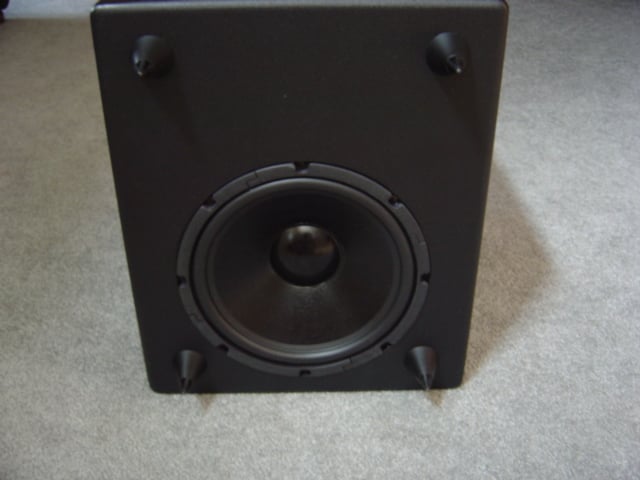 VTF-1 is also available in
a ‘woodish’ Maple finish. The vinyl
finish is plain but competently applied; Hsu’s budget minded subs spend money
on performance rather than flashy appearance.
Remember, most people stuff subs behind or beneath other furniture
anyways. For those who are décor conscious,
the best bet is to buy something nice for camouflage. This will serve double duty for WAF when she
gets something nice with the new sub.
VTF-1 is also available in
a ‘woodish’ Maple finish. The vinyl
finish is plain but competently applied; Hsu’s budget minded subs spend money
on performance rather than flashy appearance.
Remember, most people stuff subs behind or beneath other furniture
anyways. For those who are décor conscious,
the best bet is to buy something nice for camouflage. This will serve double duty for WAF when she
gets something nice with the new sub.
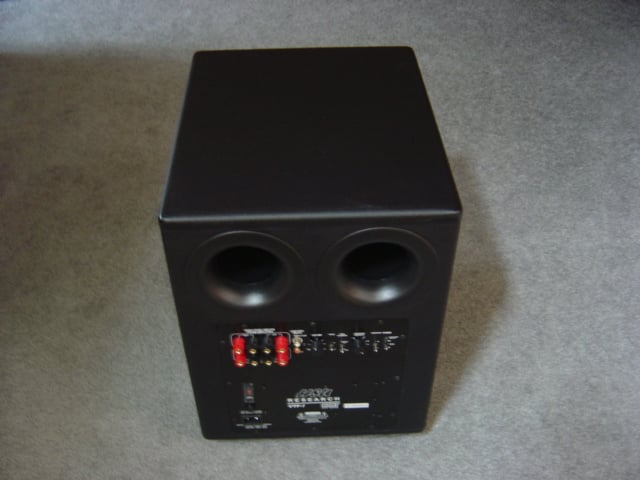
The subwoofer design is downward firing with dual rear tuning ports that
utilizes a 10 inch cone driver with a video shielded motor. The dual tuning port comes with a low
permeability foam plug that, when placed in or removed from one of the ports,
will alter the cabinet tuning, allowing the owner to adjust between a higher
SPL or a deeper frequency extension configuration. With one port sealed, the VTF-1 is said to
reach 25 Hz at the –3 dB point. When
both ports open, the sub is said to be able to develop higher 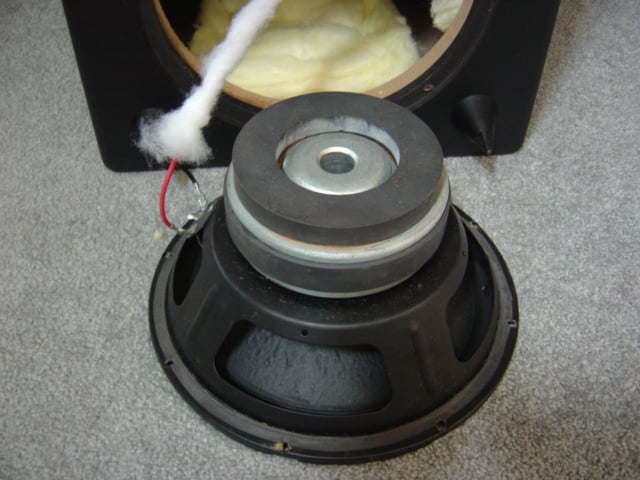 output but can
only reach down to 32 Hz before roll off becomes significant.
output but can
only reach down to 32 Hz before roll off becomes significant.
The 10” driver used for the VTF-1 is custom manufactured for Hsu using a polymer treated paper cone, butyl rubber surround, and a poly-cotton spider. In speaking with Dr. Hsu, he has said that this driver design was chosen to provide a long, reliable service life while maintaining cost. When applying a philosophy of high performance/high value, Dr. Hsu has said that he has not found a significant enough advantage in using drivers made from exotic materials to justify the added cost to his designs.
The various controls, connections, and the internal
amplifier are plate mounted at the back of the VTF-1, as is standard 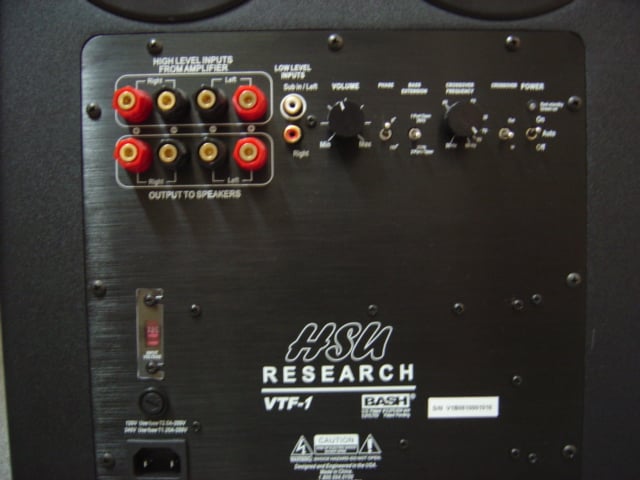 for most
subwoofers. Towards the top of the back
plate, the user will find toggle switches provided for power with off/auto/on
settings, a phase switch that provides 0/180 degree settings, a switch for one
or two port operation, and a crossover bypass switch. Volume and crossover frequency knobs provide
continuously variable settings for system balance with the crossover frequency
variable between 30 and 90 Hz using a 24 dB/octave Linkwitz-Riley low pass
filter. Line level connections can be
made using stereo RCA type line-in or at speaker level with binding posts that
include speaker in/out connections.
for most
subwoofers. Towards the top of the back
plate, the user will find toggle switches provided for power with off/auto/on
settings, a phase switch that provides 0/180 degree settings, a switch for one
or two port operation, and a crossover bypass switch. Volume and crossover frequency knobs provide
continuously variable settings for system balance with the crossover frequency
variable between 30 and 90 Hz using a 24 dB/octave Linkwitz-Riley low pass
filter. Line level connections can be
made using stereo RCA type line-in or at speaker level with binding posts that
include speaker in/out connections.
At the bottom of the plate are the input voltage selection switch, a grounded power input, and access to the main fuse. The input voltage switch is protected behind a clear plastic cover attached with Phillips screws and the fuse is externally accessible with a standard screw mounting. The power input will accept any standard grounded computer power plug in addition to the supplied power cord.
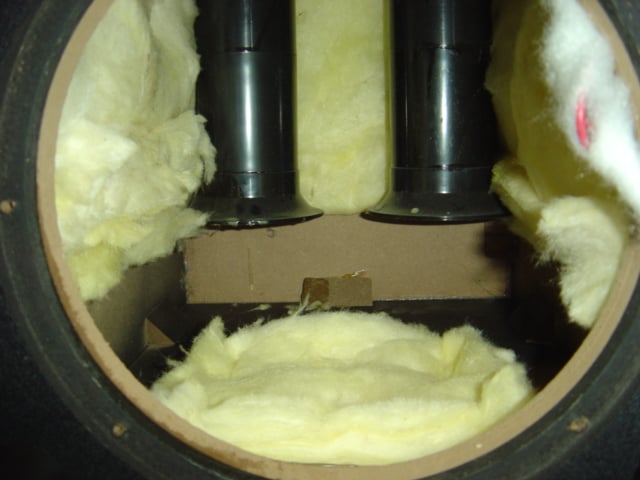 After some disassembly, I found the cabinet construction
consisted of 3/4” MDF panels with fiber glass damping material adhered to five
sides on the interior. The tuning ports
are run nearly the full depth of the cabinet and are flared at both ends. The driver assemble is built on a stamped
metal frame that supports a decent sized motor structure. The frame struts are embossed at the center,
which improves their stiffness and the motor has a perforated metal disc at its
center apparently to improve thermal venting.
After some disassembly, I found the cabinet construction
consisted of 3/4” MDF panels with fiber glass damping material adhered to five
sides on the interior. The tuning ports
are run nearly the full depth of the cabinet and are flared at both ends. The driver assemble is built on a stamped
metal frame that supports a decent sized motor structure. The frame struts are embossed at the center,
which improves their stiffness and the motor has a perforated metal disc at its
center apparently to improve thermal venting.
Amplifier section is
mounted to the back plate on two separate circuit boards. The upper board serves as the preamplifier
stage, with all the input, volume, and signal processing functions
correspondingly 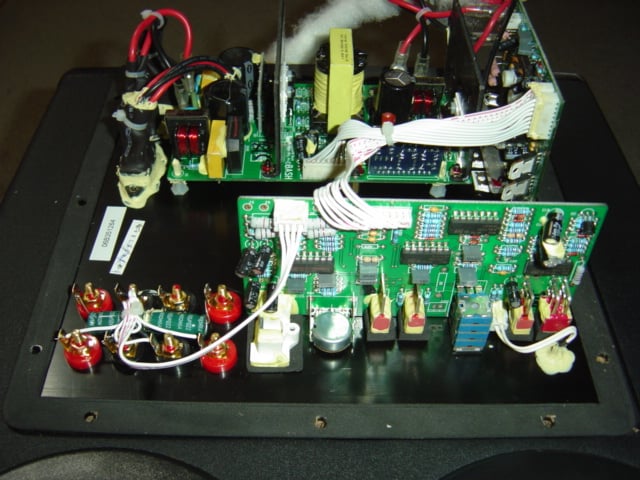 located with the external controls. The board for the power amplifier stage is
mounted at the bottom of the plate near the external power input.
located with the external controls. The board for the power amplifier stage is
mounted at the bottom of the plate near the external power input.
The power amplifier is based on a BASH design (Bridged Amplifier Switching Hybrid), a patented amplifier topology licensed from Indigo Manufacturing, Incorporated. BASH amplifier designs are intended to be a compromise between class A/B amplifier fidelity and class D amplifier efficiency, capable of high current output. The amplifier section of the VTF-1 is rated at 200 watts RMS, slightly higher than the STF-1 at 150 watts, and 600 watts of dynamic power.
VTF-1 Listening Tests
System Setup
Setup of the VTF-1 itself will be straightforward for anyone who has owned a subwoofer before. On the presumption that an acoustically acceptable location has been preselected, place the sub and adjust the controls. Set the sub for either crossover bypass, for use as an LFE channel, or active and dial in a frequency appropriate to the roll off point of the accompanying main speakers. Next, using a full range source signal, flip the phase switch to the setting that produces higher output and finally adjust the level to balance the overall volume. If one likes to be more fancy, an SPL meter, or perhaps more sophisticated test gear, can be involved in the process, but this is, of course, up to user discretion.
Listening Evaluation
During the evaluation, I listened to the VTF-1 primarily using my A/V setup with the Toshiba HD-A2 as source, Rotel RSX-1067, and Infinity Beta speakers. For both film and dedicated music source material, the Rotel was used to provide bass management at a 60 Hz crossover point. Source material was reproduced in its native format, either multi-channel or stereo, with the Rotel set to two channel mode with stereo material and the Beta 40 towers engaged for the upper frequencies.
I was sent only a single VTF-1 for evaluation, which unfortunately allows more room acoustics issues to come into play than with the dual sub setup that I normally use. Locating the sub in a familiar position is the best way to minimize and accommodate this difference.
Editorial Note on Multiple Subwoofers
Multiple subwoofers are a good choice to smooth frequency response by minimizing room modal behavior through cancellation. Strategic placement of the subs at opposing nodal points for frequencies that trouble the listening area can be used to nullify the worst dips and peaks from the room modes. This is a distinct advantage over equalization, which can only trim peaks but not fill dips.
My own experience with running multiple subs has been a stark improvement with smoother frequency response, improved detail, and increased depth at the bottom beyond what a single well placed sub can muster.
I am including several links where this topic is discussed in greater detail and also an excel based room mode calculation spreadsheet:
I found the sonic character of the VTF-1 to be familiar based on previous experience with the STF-1. All of the sonic characteristics were similar but with a little more power, and when used in extension mode, notably more depth. Overall, the sound of the VTF-1 was musical, favoring a warm, rather than a lean, rendition of the bass output across its frequency response and able to provide a good level of resolution and inner detail. When comparing the sonic character with my reference gear, as with the STF-1, I would again describe a slight hollowness/looseness to the sound, but the VTF-1 was by no means boomy as the subwoofer maintained quick transient response and easily blended into the system with stable timbral characteristics of the instruments conveyed through the crossover point.
Unlike the STF-1, I did not encounter any port chaffing, but I did encounter the apparent excursion limits for the driver during some of the more intense sequences with movie soundtrack LFE when played at levels that I have become accustomed to with my reference subs. When used in the extension mode and subjected to the most demanding bass effects at high SPL, there would be an occasional, audible bottoming out of the cone. This limitation manifested itself as an audible pop(s), but when past the offending sound effects, the sub would continue on about its business.
To be fair with the context surrounding such events, the VTF-1 costs as much as the difference between the finish options of my reference sub.
Also in defense of the real world performance of the VTF-1, more recently, on Hsu’s website, they have started to provide a qualitative rating scale for subwoofer models relative to room size. The VTF-1 is considered adequate for moderate sized rooms according to this scale. While the area of the room where I evaluated the VTF-1 is not overly large, the open floor plan between rooms effectively shifts the requirements for subwoofer output into a range more consistent with a large area where one of the more powerful models might be appropriate.
Under the majority of circumstances, the driver fared well, playing deeper than typical of price competitive subs, with the VTF-1 giving little sign of distress up to the aforementioned limit; it stayed clean and gave no other audible signs of distress. A switch to high SPL mode, by simply pulling the plug and a flip of the switch, significantly alleviates the issue. Also, consider that this is the configuration that the manufacturer recommends, trading off extension when SPL demand is high such as with movie sound effects.
Do not mistake the apparent extension limit as a significant shortcoming when considering the price for which the VTF-1 is available and its’ likely competition. The difference with the Hsu sub is that the owner can choose the tradeoff as best suits taste and circumstance.
Batman
Begins (HD-DVD)
Editorial Note on the Format War
I have made the leap of faith required by the format war and thrown in my lot with HD-DVD. The HD-DVD format, supported by the DVD Forum which incidentally was created to stave off the last format war that loomed before the dawn of DVD, is the only optical HD format released with a completed specification before hardware and software release, which foreshadows compatibility issues.
I dislike proprietary formats and certain unnamed companies have a long history of attempting to foist formats on consumers, hence: the format war. Despite the hype, the other format has certain omissions and shortcomings that I dislike such as additional layers of DRM to complicate functionality, annoying region codes, and a lack of mandatory support for HD audio formats.
For the readers who may disagree or who have chosen otherwise, I hope your gear still works correctly with new releases after the next specification update; good luck with that.
As Dolby Digital compression goes, I’ve found the audio quality of ‘Batman Begins’ to be of fairly good quality on the DVD release, but it is noticeably better on HD-DVD. Keeping in mind that few currently available processors have the capabilities for high definition/lossless digital audio transfer yet, even when mixed down from Dolby TrueHD to high bit rate DTS via SPDIF by the HD-A2, there is clear improvement in the spaciousness, the amount of detail, and the naturalness of the audio reproduction. Transcending the superhero genre, dramatically, ‘Batman Begins’ features a cleanly recorded score with potent deep sound effects and taut bass transients; a good subwoofer will allow one to fully appreciate what this film has to offer by way of audio.
I found that the VTF-1 was up to the task and made for enjoyable listening with this film. The VTF-1 portrayed the bottom end musically, giving depth and warmth to the intermingled strings and synthesizer parts used in the score. The theme, with its allegretto violins churning away martelé over a swelling of chords with a rich bottom end was always rendered tightly and with depth. I found that bass transients in various sound effects, percussion, and synthesizer parts were reproduced cleanly while still provided with weight, and when called upon by the score, this sub was capable of a solid bit of room rumbling.
Starting from the very beginning, the VTF-1 delivered tight orchestral bass transients as the picture opened and transients in the bass effects during flashback scenes of the well and bats throughout the movie were also crisp using this sub. Bruce Wayne’s trek up the mountain to the League of Shadows was provided with a controlled bottom end as the storm swirled around and the door to the compound opened and closed with audible weight. The various instances of driving percussion, used during the first fight and throughout the film, were allowed to generate a nice rumble through the VTF-1, which gave depth and solidity to the percussion part. While it did stumble with the loudest peaks at high SPL, the VTF-1 put up a good showing of the destruction of the compound, providing a good bit of meat and depth to the explosions. I also noted that the VTF-1 was able to provide the bat mobile with a satisfying engine throb as well as real weight to the monorail, which rumbled nicely as it passed. The score during the end credits again displayed the well balanced, musical capabilities of the sub, which kept the low orchestral and synthesizer parts distinguishable, revealing the inner workings of the music at the lowest octaves while still keeping character and warmth.
Babylon 5: Thirdspace (DVD)
With the DVD release of Babylon 5, I’ve found a surprising amount of deep bass in the remastered soundtracks, in both score and sound effects, which were not evident when I first watched on television. One of several movies interwoven into various subplots in the series, ‘Thirdspace’ considers the consequences of hubris when an ancient artifact is rediscovered in what has been likened to a space opera with overtones reminiscent of H.P. Lovecraft. As with the series, the score was written by Christopher Franke (Tangerine Dream) and performed by Franke on an array of enormous analogue synthesizers accompanied by the Berlin Philharmonic. For Babylon 5, Franke created a rich, definitive score that sustained mood for these stories about the price of struggle.
At the bottom end, the VTF-1 did justice to the soundtrack, conveying the depth and character of the synthesizer/orchestra combination while rumbling through the effects. Chords built and swelled, well founded on the VTF-1, which presented a warm, musical rendering at the lowest octaves of the score while dealing with the nearly continuous bass effects, and at all times remaining well connected with the main channels. From starship engines to the ever present low rumble of machinery on the station, the VTF-1 did its job well with few exceptions.
Throughout various scenes, the VTF-1 rumbled the room such as with the discovery of the artifact where deep, ominous chords built over the top of starship engines and currents of hyperspace, with each remaining distinct. The VTF-1 did well with the musical swells, delivering solid crescendos and decrescendos to my seat as well as my ears while maintaining depth and keeping the audio clean. Scenes of growing insanity and dark dreams were portrayed with weight and musically dark, with this sub capable of providing the right amount of heft in support. The sub also provided solidity to the subtle low frequency machinery that pervaded all the station scenes. Weapons fire was suitably staccato at the bottom and exploding starships shook the room as the climactic battle ensued. At the culmination, the sub did lose some composure under the demand of a nuclear detonation, but otherwise it put out a substantial amount of clean output during the battle. The closing score was musically solid and deep with the VTF-1 resolving and separating the low frequency string and synthesizer parts.
David Torn,
Mick Karn, Terry Bozzio: Polytown
The result of a one time collaboration, ‘Polytown’ features the efforts of three notable rock musicians all with histories of delving into more experimental musical forms. Featuring guitarist David Torn, bassist Mick Karn, and drummer Terry Bozzio, it is a powerhouse of instrumental performance and musical talent. As challenging listen, these compositions are the type of unique and rewarding musical experience that is lost on music industry executives who are befuddled by anything that does not fit the prefabricated mould they are accustomed to hearing and that they think they can sell to the minions who support top forty styled music.
Throughout reproducing this album, the VTF-1 did a good job punching out Bozzio’s tight percussion, handling transitions with the mains, and putting meat on grinding fretless bass. On rare occasions, some of the percussion sounded slightly stressed, but to be fair, Terry Bozzio is not known for a particularly light touch on the drums and any hint of trouble only occurred when he was really belting it out. Bozzio can do an amazing amount of playing simultaneously, and with considerable zeal, but the VTF-1 was always able to keep up with the pace of the complex percussion. Other than the few aforementioned occasions, timbral character was well reproduced with low frequency ambience making its way out of the recording through the VTF-1.
Opening with ‘Honey Sweating’ the VTF-1 maintained the punch of the drums and percussion and the sub also kept the fretless bass taught, but still smooth, through transitions while maintaining accurate character. With ‘Open Letter to the Heart of Diaphora’, the VTF-1 pulled off a nice representation of the timbre of the low pitched toms opening the piece. The moving bass line was clean and well supported with a nice bit of rumble as the bass, drums, and guitars repeatedly converged and diverged through the undulating melody line. ‘Bandaged by Dreams’ again displayed good bass/bass drum punch, avoiding what easily can become one note-ism while still presenting the low end ambience captured in the recording. Some of the percussion did get a little heavy for the VTF-1 at volume during Karn’s bass clarinet solo, but Bozzio is doing some substantial pounding here. The VTF-1 also kept up with the torrent of percussion as ‘Warrior Horsemen of the Spirit Thundering over Hills of Doubt to a Place of Hope’ got underway. Throughout, the VTF-1 provided good punch and rumble at the bottom end and also managed to keep up with the triplet motifs superimposed over the bass drum pounding out the beat. Bass guitar on ‘Red Sleep’ was allowed to rumble throughout the piece with the VTF-1. Here, I found the sound through the VTF-1 to be clean, meaty, and well blended with the mains but still able to present low frequency ambient cues.
Peter Murphy: Dust
With the Middle Eastern laden ‘Dust’, Peter Murphy takes an experimental turn to explore a path conceptually reminiscent of certain other Peters (i.e. Peter Gabriel’s ‘Passion’). Placing general observation aside, Peter Murphy’s album stands on its own as a substantive work within the rock genera. ‘Dust’ is a musically dark, layered album full of various flavors of low instrumentation and percussion and seasoned with some tasty dissonance. The album provides many fine opportunities to expose the limits of a subwoofer’s capabilities.
Throughout, the VTF-1 was able to hold its own and get at the subterranean depths present in this recording, rumble the room, and still keep bottom end detail from collapsing into shapeless amorphism. When the recording called for bass weight, the VTF-1 was still able to keep the textures and layers at the bottom audible and integration with the main speakers stable.
The VTF-1 presented solid bass guitar and percussion on ‘Things to Remember’, deep enough to rumble the room but still clean and unstrained. The cello used in ’Fake Sparkle or Gold Dust’ was warm and detailed on the VTF-1 with a nice throaty bottom. ‘Just for Love’ was conveyed by the VTF-1 with the layered electronics and didgeridoo well separated and clean behind the tabla. As the song moves to a close, the sub continued to keep the increasing multi layered percussion separate from the drone at the bottom with the bass drum part presented as solid. Ambling percussion and bass opening ‘Girlchild Aglow’ showed off the integration maintained by the VTF-1 at the crossover. Bass chords were light, but were filled in by the sub, becoming meatier, as the song crescendos through this complex, arrhythmic part that plays counterpoint against the other instrumentation.
VTF-1 Measurments and Analysis
Measurements were performed using the Sample Champion program developed by Paolo Guidorzi of Purebits. The program is a Maximum Length Sequence (MLS) program that generates a time domain impulse response from this pseudorandom signal. Fast Fourier Transformation is applied to the impulse response to generate the system frequency response. The operating principle is the same as that of the well known MLSSA program.
Test samples were taken using 16 bit resolution with a 48 kHz sampling frequency. Fast Fourier Transformations were performed at 64K allowing for a frequency resolution of .73 Hz, which is more refined than even 1/24th octave resolution at the lowest octave; the A0 key on the piano has a fundamental frequency of 27.5 Hz.
All measurements of the driver and ports were taken nearfield and summed in the time domain. Measurements were referenced to a simultaneous, independent SPL measurement taken at 1 meter from the subwoofer.
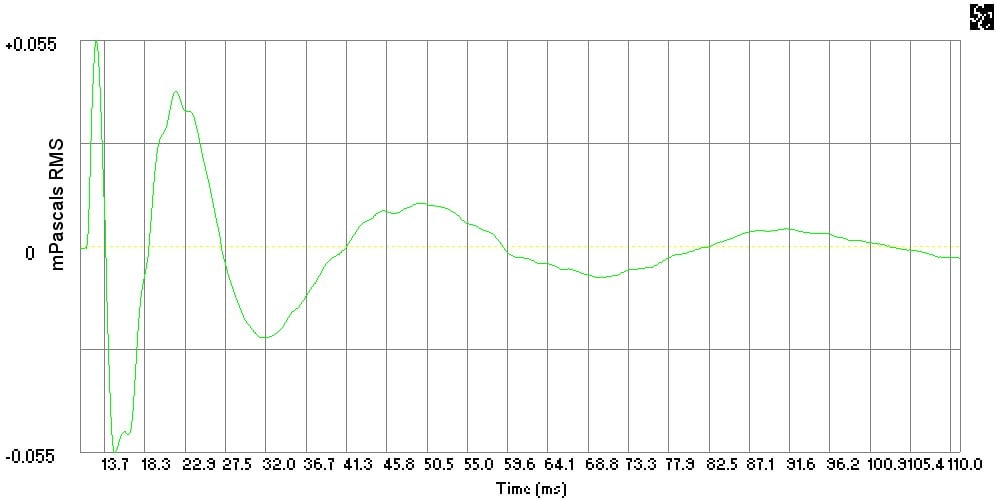
Figure 1: Composite impulse response in extension mode
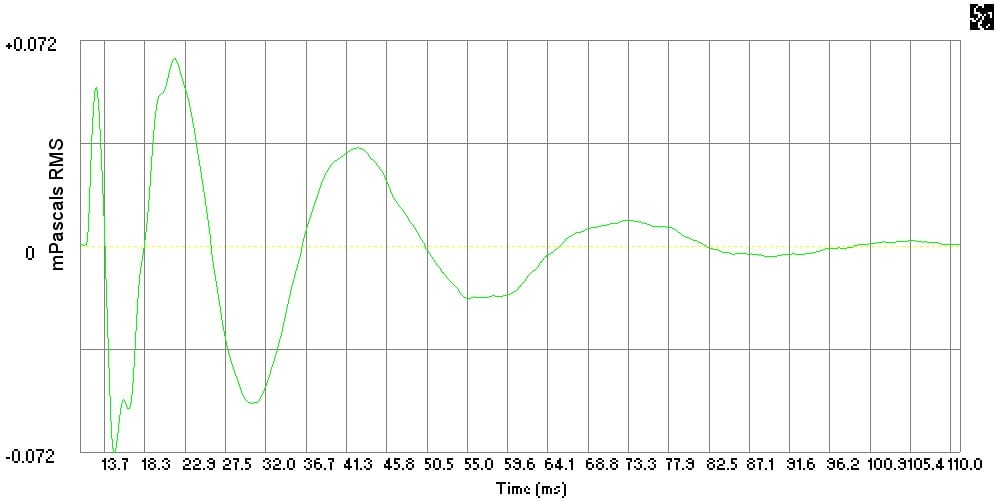
Figure 2: Composite impulse response in SPL mode.
Figures 1 and 2 show the subwoofer near field composite impulse response for the VTF-1 in extension and high SPL modes respectively. The plots were generated by summing near field impulse responses for the woofer with either one or two ports, respectively. Slight bumps in the otherwise smooth curves are a result of the phase differences between the driver and the port output. The measurements were taken at the same gain, at a moderate setting that produced 84dB in extension mode and 85 dB in SPL mode when measured at 1 meter.
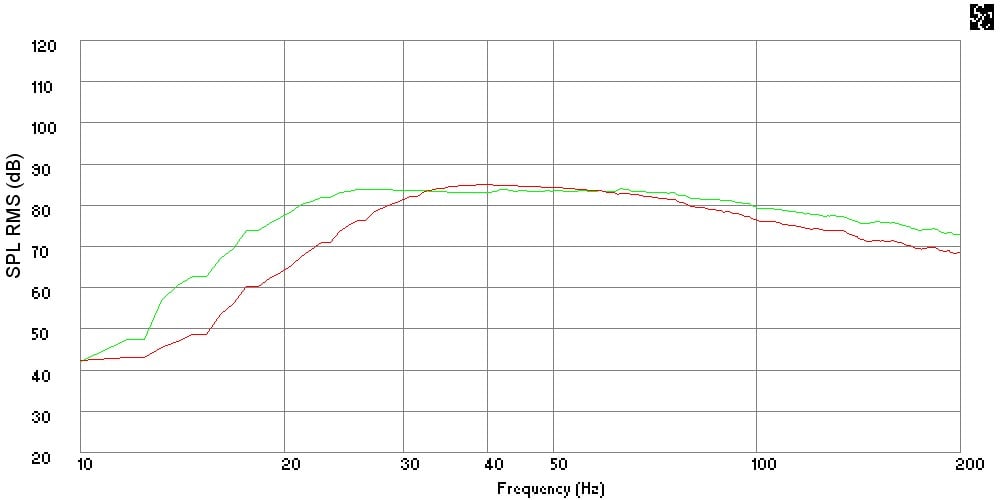
Figure 3: Frequency response at moderate volume for extension and SPL modes.
The frequency response curves in Figure 3 were generated from the composite impulse responses shown in figures 1 and 2. In the figure, the green trace is of the sub in extension mode with one port plugged and a peak of 84 dB while the red trace is of the sub measured in SPL mode with both ports open.
Both test cases were measured with identical gain settings and the appropriate switch setting for the subwoofer amplifier circuitry indicating that SPL mode will get about another dB at moderate gain settings, equivalent to 4/3 the effective wattage output. It is interesting to note that there is a clear tradeoff with a higher Q in the SPL configuration. The –3 dB point in extension mode gets to near a better than advertised 23 Hz while SPL mode gets to 32 Hz.
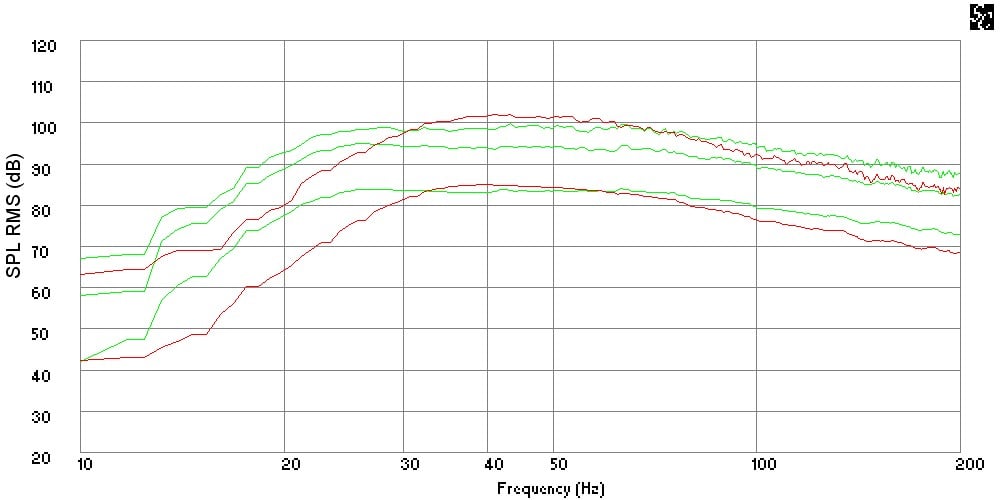
Figure 4: Maximum SPL in extension and SPL mode.
Figure 4 is an overlay of additional measurements taken at increasing gain. The green trace is again for the sub configured for maximum bass extension and the red trace for maximum SPL. System gain was increased to 95 and then 100 dB SPL when measured at 1 meter for extension mode where system gain was increased to its maximum setting. An SPL mode measurement was also taken at maximum gain and this peaked off at about 102 dB, effectively operating at 5/3 output of extension mode. From the plots, we can also note that both modes begin to show some signs of distress with both curves loosing smoothness, also indicative of output limits.
VTF-1 Conclusions and Recommendations
The Hsu Research VTF-1 has proven to be a solid performer that, relative to its price point, does most everything well with very little wrong. I found it to be both musical and responsive to the source material I threw at it while still capable of very respectable output levels. While the VTF-1 did balk at some of the more demanding LFE at high volume while in extension mode, one must remember that this sub gives the owner the option to switch to the higher SPL mode. However, when levels are less dynamically intense, the VTF-1 does go fairly low, to where other subs at this price point typically just can’t.
Sonically, the VTF-1 is similar to the STF-1, retaining the best qualities while making sonic improvements with key differences consisting of the larger driver, an increase in amplifier power, and the ability to play lower. The end result is that the VTF-1 sounds like a heftier sub, sonically, than the STF-1. The price performance ratio between the two subs is comparable; one will basically get what they pay for, dollar for dollar, when considering the value of purchasing either the STF-1 or the VTF-1.
If the reader is in the market for a high value subwoofer then Hsu should be on the list of products to investigate; the VTF-1 is a good sub that is hard to beat at the price. After spending time with entry level products in both the STF and VTF lines, I can say these products fit the bill of anyone looking for musicality at this price range, and in the case of the VTF-1, good luck finding another four hundred dollar sub that can cross the 30 Hz threshold and still make a good showing.
Hsu Research Inc.
3160 E. La Palma Ave,
Unit D
Anaheim, CA
92806
Toll free
(U.S.)
1-800-554-0150
International
1-714-666-9260
Canadian
Distributor 1-800-387-9101
www.hsuresearch.com
The Score Card
The scoring below is based on each piece of equipment doing the duty it is designed for. The numbers are weighed heavily with respect to the individual cost of each unit, thus giving a rating roughly equal to:
Performance × Price Factor/Value = Rating
Audioholics.com note: The ratings indicated below are based on subjective listening and objective testing of the product in question. The rating scale is based on performance/value ratio. If you notice better performing products in future reviews that have lower numbers in certain areas, be aware that the value factor is most likely the culprit. Other Audioholics reviewers may rate products solely based on performance, and each reviewer has his/her own system for ratings.
Audioholics Rating Scale
 — Excellent
- — Very Good
- — Good
- — Fair
- — Poor
| Metric | Rating |
|---|---|
| Bass Extension | |
| Bass Accuracy | |
| Build Quality | |
| Fit and Finish | |
| Ergonomics & Usability | |
| Features | |
| Performance | |
| Value | |
Professionally, David engineers building structures. He is also a musician and audio enthusiast. David gives his perspective about loudspeakers and complex audio topics from his mechanical engineering and HAA Certified Level I training.
View full profile Subscribe to our newsletter