


Orb Audio Mod4 Speakers Review
Orb Audio Mod4 Speakers
- Product Name: Mod4 Speakers with Uber Ten Sub
- Manufacturer: Orb Audio
- Performance Rating:

- Value Rating:
- Review Date: August 08, 2008 06:25
- MSRP: $ 2298 ($2778 as reviewed)
|
|
Pros
- Attractive speakers
- Big sound
- Excellent tactile bass response
Cons
- Sub aesthetically mismatched
- Confusing, complex mounting options
- Difficult assembly when using HOSS stands
Mod4 - Design, Build Quality and Setup
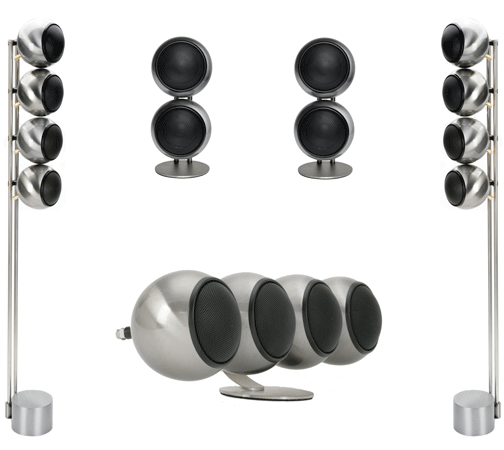 I
like big speakers. In fact, I often make fun of people who prefer smaller
speakers due to the reluctance of their significant others or just a reluctance
to have anything actually stand out in their otherwise pristine home. Drives me
crazy. After all, this is home audio, a domain where you should try as much as
possible to recreate a live music performance or the effect of going to a nice
movie theater. With most small speakers it's difficult to achieve that
realistically. Often you're simply left with a nice looking system that, if
it's lucky, impresses the neophytes and delivers a big "ho-hum" to those
who know better. When Orb Audio announced its new Mod4 speaker system I felt
compelled to finally listen to these spherical trinkets and satisfy my own
curiosity. After all, our resident critic, Tom Andry gave the Mod2 system 4
stars back in 2005.
I
like big speakers. In fact, I often make fun of people who prefer smaller
speakers due to the reluctance of their significant others or just a reluctance
to have anything actually stand out in their otherwise pristine home. Drives me
crazy. After all, this is home audio, a domain where you should try as much as
possible to recreate a live music performance or the effect of going to a nice
movie theater. With most small speakers it's difficult to achieve that
realistically. Often you're simply left with a nice looking system that, if
it's lucky, impresses the neophytes and delivers a big "ho-hum" to those
who know better. When Orb Audio announced its new Mod4 speaker system I felt
compelled to finally listen to these spherical trinkets and satisfy my own
curiosity. After all, our resident critic, Tom Andry gave the Mod2 system 4
stars back in 2005.
Ask around (online at least) and you'll likely find a whole group of people dedicated to the art of the spherical speaker design. While only a few commercial entities manufacture this type of enclosure, the design is widely accepted as a sound method (pun intended of course) of reducing troublesome acoustic diffraction issues that are common in enclosures with corners. The science is certainly up for debate but I, for one, am glad there is more than one way to make a loudspeaker. If not, the world would be full of identical boxes.
Build Quality & Setup
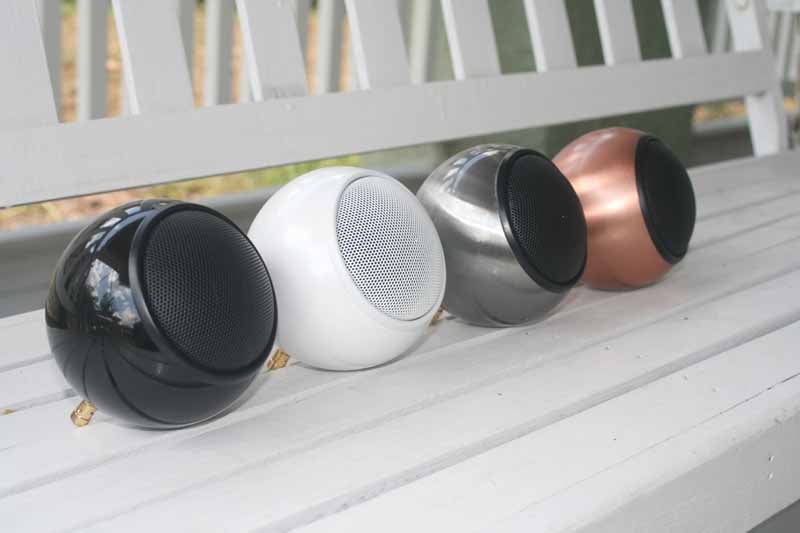 We anxiously unpacked the boxes which
contained the Orb Audio speakers. Each was carefully secured in form-fitting
foam which ensured safe passage across the country. Each speaker came in a
beautiful Bronze finish that really looked awesome - and unlike anything I'd
ever seen in a home theater room. If it's a choice between black or white
plastic cubes or a metallic sphere (available in Black, White, Steel, Copper,
Bronze...) I know which one I'd pick every time. Orb Audio was kind enough to
send us a loaner kit which included one of each of the colors available in the
line (our system was in Bronze and so we didn't photograph that here).
We anxiously unpacked the boxes which
contained the Orb Audio speakers. Each was carefully secured in form-fitting
foam which ensured safe passage across the country. Each speaker came in a
beautiful Bronze finish that really looked awesome - and unlike anything I'd
ever seen in a home theater room. If it's a choice between black or white
plastic cubes or a metallic sphere (available in Black, White, Steel, Copper,
Bronze...) I know which one I'd pick every time. Orb Audio was kind enough to
send us a loaner kit which included one of each of the colors available in the
line (our system was in Bronze and so we didn't photograph that here).
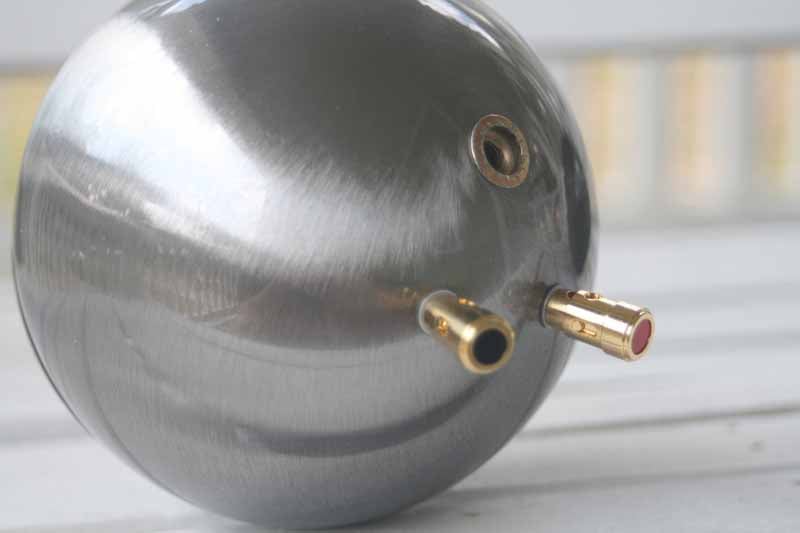 Our review system was comprised of a
set of Mod4s for the front and center channels and Mod2s for the surrounds. The
Mod1 speakers (a Mod 2 system is essentially two Mod1, and a Mod 4 system is
just 4 of the little spheres - you catching on?) are quite weighty. They
actually have some serious heft to them, coming in at around 2 pounds each.
While that doesn't sound like much, go ahead and pick up those little golf
ball-sized speakers they sell in big box stores sometime and compare. Two
pounds will feel like a hundred next to a $5 driver surrounded by a teaspoon of
plastic. I continued my inspection and noted the push-pin style binding posts
which can accept up to 14 gauge wire. I'm not a big fan of these connectors,
but I understand Orb Audio's use of them considering their series/parallel
methodology for adding more speakers into a system. These are certainly better
than the spring-clip style of connectors found on most home theater in-a-box
systems, and it makes connecting cables to these drivers quite easy.
Our review system was comprised of a
set of Mod4s for the front and center channels and Mod2s for the surrounds. The
Mod1 speakers (a Mod 2 system is essentially two Mod1, and a Mod 4 system is
just 4 of the little spheres - you catching on?) are quite weighty. They
actually have some serious heft to them, coming in at around 2 pounds each.
While that doesn't sound like much, go ahead and pick up those little golf
ball-sized speakers they sell in big box stores sometime and compare. Two
pounds will feel like a hundred next to a $5 driver surrounded by a teaspoon of
plastic. I continued my inspection and noted the push-pin style binding posts
which can accept up to 14 gauge wire. I'm not a big fan of these connectors,
but I understand Orb Audio's use of them considering their series/parallel
methodology for adding more speakers into a system. These are certainly better
than the spring-clip style of connectors found on most home theater in-a-box
systems, and it makes connecting cables to these drivers quite easy.
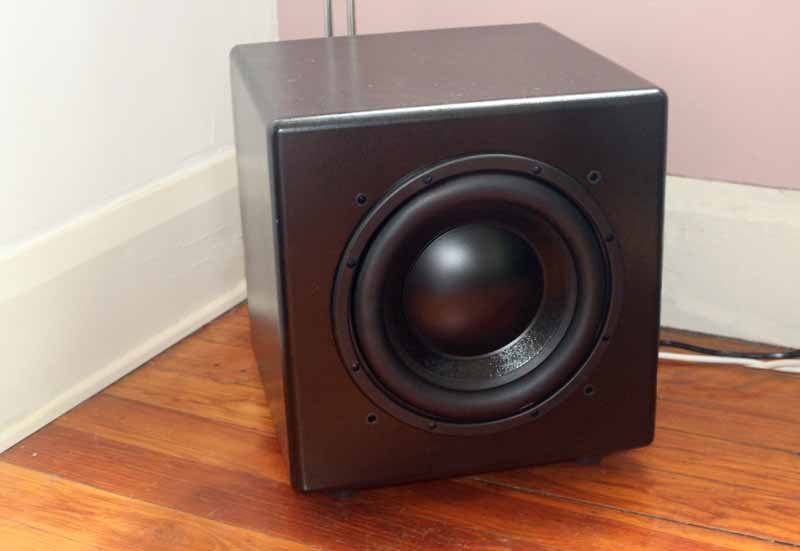 Our 5.1 system was capped off with the
aptly-named Uber Ten 10-inch front-firing, bottom-ported subwoofer. This sub
was small enough to be positioned just about anywhere, but certainly wasn't a
toy. You could feel that it was a serious product when you picked it up and I
found it to be extremely easy to work with. It features a fully variable
crossover and speaker level inputs and outputs, so you can use the sub to
crossover satellite speakers (fixed at 80Hz) when your receiver doesn't have
variable or adequate bass management (think integrated amplifiers or legacy
systems). I liked the Auto sensing switch on the back as I prefer those to
systems which are always On or Off. In a comical moment I realized that the
Uber Ten sub's volume actually goes to 11. Well it's one louder then, isn't it?
The sub sells for $699 on its own but only $538 when packaged - a bit more
reasonable given the competition and features. When ordering a system, Orb
Audio additionally gives you an option to upgrade from a Super Eight sub to the
Uber Ten sub for $299 (which is the difference between the selling price of the
two subs) when ordering a full (2.1 or 5.1) system.
Our 5.1 system was capped off with the
aptly-named Uber Ten 10-inch front-firing, bottom-ported subwoofer. This sub
was small enough to be positioned just about anywhere, but certainly wasn't a
toy. You could feel that it was a serious product when you picked it up and I
found it to be extremely easy to work with. It features a fully variable
crossover and speaker level inputs and outputs, so you can use the sub to
crossover satellite speakers (fixed at 80Hz) when your receiver doesn't have
variable or adequate bass management (think integrated amplifiers or legacy
systems). I liked the Auto sensing switch on the back as I prefer those to
systems which are always On or Off. In a comical moment I realized that the
Uber Ten sub's volume actually goes to 11. Well it's one louder then, isn't it?
The sub sells for $699 on its own but only $538 when packaged - a bit more
reasonable given the competition and features. When ordering a system, Orb
Audio additionally gives you an option to upgrade from a Super Eight sub to the
Uber Ten sub for $299 (which is the difference between the selling price of the
two subs) when ordering a full (2.1 or 5.1) system.
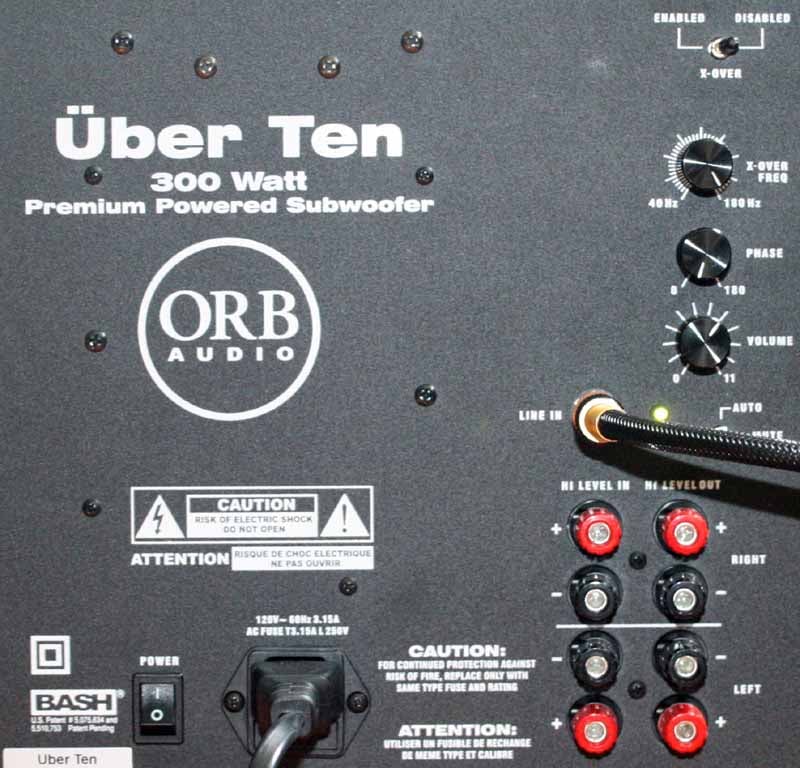
The Uber Ten is ready
for just about anything.
Rounding out the unit is a fully variable phase control which goes from 0-180 and a removable power cord (2-prong thank goodness, so it almost instantly eliminates the most common ground loop issues). The sub has a single line level input, not stereo, which means you'll have to pick a side or use a Y-cable when integrating it into the preamp outs of an integrated amplifier. It's a textured black enclosure that has a stand-off round speaker grill. While the sub looks fine, it looks completely out of place with the rest of the system. How Orb Audio can make such a great looking set of speakers and settle for a Plain Jane sub is beyond me.
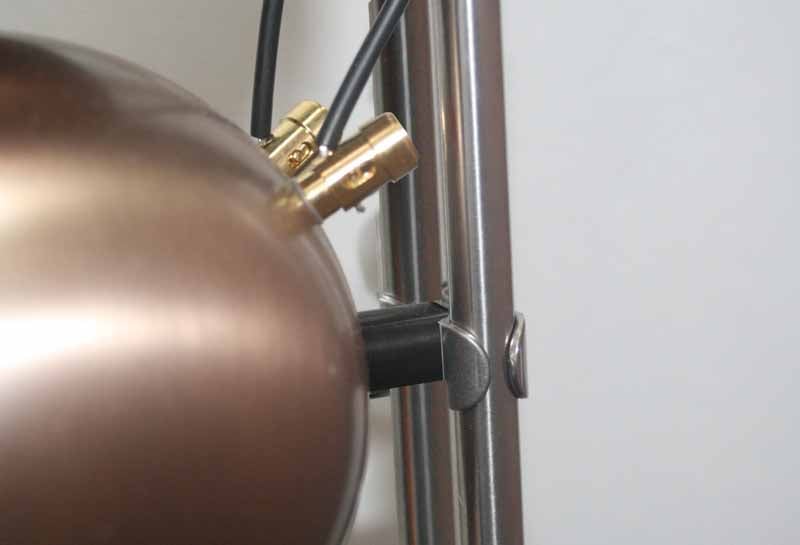 Because we opted to use the HOSS
(short for "hunk of solid steel") floor stands to mount both the Mod4
fronts and the Mod2 surrounds, we had to do some MODifications... OK, one more
pun and I'm throwing myself off this
review. This involved reconfiguring the speakers so that they attached directly
to the HOSS stands instead of being ready for wall-mounting. It sounds simple,
but you actually had to unseat each Mod4 speaker from the center pole it was pre-attached
to and then re-attach the speaker to the HOSS stands via a bracket that spanned
both posts. It took us a while, but eventually we had everything ready to go.
One thing that would have been nice was some instructions. Orb Audio forgot to
include those in the packaging so we fumbled around for a while before we broke
down and pulled up the website.
Because we opted to use the HOSS
(short for "hunk of solid steel") floor stands to mount both the Mod4
fronts and the Mod2 surrounds, we had to do some MODifications... OK, one more
pun and I'm throwing myself off this
review. This involved reconfiguring the speakers so that they attached directly
to the HOSS stands instead of being ready for wall-mounting. It sounds simple,
but you actually had to unseat each Mod4 speaker from the center pole it was pre-attached
to and then re-attach the speaker to the HOSS stands via a bracket that spanned
both posts. It took us a while, but eventually we had everything ready to go.
One thing that would have been nice was some instructions. Orb Audio forgot to
include those in the packaging so we fumbled around for a while before we broke
down and pulled up the website.
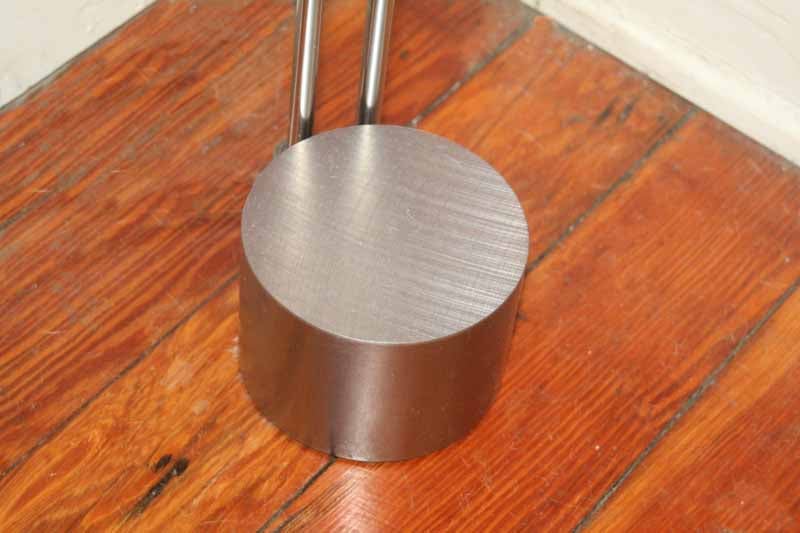 As for the HOSS stands, those were easy to assemble using a flat head
screwdriver (seriously, who uses those anymore?) We also found out that our
standard 12/2 speaker cables weren't exactly the best choice for this rig. If
you're using larger cables, you'll likely need to split them and run one wire
up each hollow tube. If you follow Orb Audio's lead, you'll stick to thinner 16
gauge cables and try to locate them in black to help them conceal when they pop
out the top and bend back down towards the binding posts. All-in-all it could
be easier, but it's not a stopping point or anything that would dissuade me
from buying them.
As for the HOSS stands, those were easy to assemble using a flat head
screwdriver (seriously, who uses those anymore?) We also found out that our
standard 12/2 speaker cables weren't exactly the best choice for this rig. If
you're using larger cables, you'll likely need to split them and run one wire
up each hollow tube. If you follow Orb Audio's lead, you'll stick to thinner 16
gauge cables and try to locate them in black to help them conceal when they pop
out the top and bend back down towards the binding posts. All-in-all it could
be easier, but it's not a stopping point or anything that would dissuade me
from buying them.
Mod4 - Listening Tests and Conclusion
DVD-Audio:
Ernest Ranglin
- Order of Distinction Ernest
Ranglin is an incredible guitarist whose playing comes across as if he were
about 30 years younger than he is. The man is amazing and AIX Records did a
great job of capturing the clean performance of this album. The opening track
featured a percussive banjo and a well-played melodica (kind of a cross between
a harmonica and a piano) which just jumped nicely out of the mix. A natural
jazz club reverb is what I would expect given the high definition video of the
performance located on the non DVD-Audio disc contained in the digi-pack. This
natural reverb was very well reproduced and I couldn’t believe the mid-bass
coming out of the congas and through the Mod4 speakers. The next track featured
a rimshot-fest of snare, kick and cymbals which drove behind a solid guitar
lead that toyfully played with Monty Alexander's piano as they exchanged licks.
This song was so full and yet I was able to crank it to sustained levels of
over 88 db SPL in a live room without much fatigue.
Ernest
Ranglin is an incredible guitarist whose playing comes across as if he were
about 30 years younger than he is. The man is amazing and AIX Records did a
great job of capturing the clean performance of this album. The opening track
featured a percussive banjo and a well-played melodica (kind of a cross between
a harmonica and a piano) which just jumped nicely out of the mix. A natural
jazz club reverb is what I would expect given the high definition video of the
performance located on the non DVD-Audio disc contained in the digi-pack. This
natural reverb was very well reproduced and I couldn’t believe the mid-bass
coming out of the congas and through the Mod4 speakers. The next track featured
a rimshot-fest of snare, kick and cymbals which drove behind a solid guitar
lead that toyfully played with Monty Alexander's piano as they exchanged licks.
This song was so full and yet I was able to crank it to sustained levels of
over 88 db SPL in a live room without much fatigue.
This system seemed to redefine just what is possible with diminutive speakers. If you would have asked me before this review if the Orbs could possibly sound the way they do I would most certainly have met you with a healthy dose of skepticism.
"Lollipop" gave us our first taste of female vocals and I finally heard a bit more midrange. Alana Davis' performance was solid and pure and I could hear a slight bit of compression when we increased the volume still further to see how much we could get out of the system. There are limits to how much clean audio can be pushed from the Orbs, but the levels we attained before running into any breakup was laudable. The bass coming from the 10-inch subwoofer was nothing short of powerful and pounding and it was impressive how much actually originated from the little Orb speakers themselves.
DTS-DVD: Eagles
- Hell Freezes Over The extended intro to this version of
Hotel California was room-filling. The crowds filled the surrounds along with
percussion while the guitars coursed through the mains in a slow crescendo. Henley's vocals pumped out of the center channel and
backing vocals filled in from all around during the chorus. The room was so
live and authentic-sounding during this track that I was having a hard time
determining if I was in a great room or the Mod4s were just that good. Another
favorite of mine (again, a Henley tune) is
"New York Minute." The reverberant keys which open the track carried
it into the room with an eerie smoothness. The kick and bass were locked tight
and the Uber Ten allowed the low frequency to literally roll out without
letting on where the Orbs stopped and the sub started. The toms, which intro
the chorus, resounded through the room from floor to ceiling, producing a nice tactile
cascade which I felt in my seat. The string-like keys continued and, as the
final verse opened up, Henley's voice had a
generous amount of texture and grit, letting me know the Orbs could handle
finesse during periods of high volume output.
The extended intro to this version of
Hotel California was room-filling. The crowds filled the surrounds along with
percussion while the guitars coursed through the mains in a slow crescendo. Henley's vocals pumped out of the center channel and
backing vocals filled in from all around during the chorus. The room was so
live and authentic-sounding during this track that I was having a hard time
determining if I was in a great room or the Mod4s were just that good. Another
favorite of mine (again, a Henley tune) is
"New York Minute." The reverberant keys which open the track carried
it into the room with an eerie smoothness. The kick and bass were locked tight
and the Uber Ten allowed the low frequency to literally roll out without
letting on where the Orbs stopped and the sub started. The toms, which intro
the chorus, resounded through the room from floor to ceiling, producing a nice tactile
cascade which I felt in my seat. The string-like keys continued and, as the
final verse opened up, Henley's voice had a
generous amount of texture and grit, letting me know the Orbs could handle
finesse during periods of high volume output.
DVD-Audio: The
Beatles - Love I pulled up The Beatles Love DVD-Audio disc and basked in the
wash of vocals and reverberant decay of "Because." When my eyes were
closed it sounded remarkably like I was sitting in a much larger venue with a
real stage performance. Not only were the vocals solid and strong, the background
effects (birds, etc) poked through cleanly, despite the excessive volume.
"Eleanor Rigby," one of my favorite tunes (and way too short for my
taste) sounded beautiful, with vocals which were forward and which had
presence. The textured violin was such that, when you sat back, it retained all
the movement and fingering sounds perfectly. Not only did the surrounds perform
with gusto, but the Mod4 front and center channels all but threw sound into the
room for me to enjoy, creating a large, live environment that I was reluctant
to ever leave. "Something" had a flowing bass line that really showed
that the 10-inch Uber Ten sub could hold its own. The laid back drums
contributed with a crisp rhythm which raised its head and peeked into the mix
easily. The break was powerful and I again wondered at how these tiny speakers
could pump so much volume into the listening room. Track 12
"Blackbird/Yesterday" gave me a breather as I focused on the acoustic
guitar and solitary lyric. The midrange issue I had earlier with Alana David
didn't seem as easy to pick out with McCartney's voice. I didn't complain.
I pulled up The Beatles Love DVD-Audio disc and basked in the
wash of vocals and reverberant decay of "Because." When my eyes were
closed it sounded remarkably like I was sitting in a much larger venue with a
real stage performance. Not only were the vocals solid and strong, the background
effects (birds, etc) poked through cleanly, despite the excessive volume.
"Eleanor Rigby," one of my favorite tunes (and way too short for my
taste) sounded beautiful, with vocals which were forward and which had
presence. The textured violin was such that, when you sat back, it retained all
the movement and fingering sounds perfectly. Not only did the surrounds perform
with gusto, but the Mod4 front and center channels all but threw sound into the
room for me to enjoy, creating a large, live environment that I was reluctant
to ever leave. "Something" had a flowing bass line that really showed
that the 10-inch Uber Ten sub could hold its own. The laid back drums
contributed with a crisp rhythm which raised its head and peeked into the mix
easily. The break was powerful and I again wondered at how these tiny speakers
could pump so much volume into the listening room. Track 12
"Blackbird/Yesterday" gave me a breather as I focused on the acoustic
guitar and solitary lyric. The midrange issue I had earlier with Alana David
didn't seem as easy to pick out with McCartney's voice. I didn't complain.
DVD-Audio: Seal
IV "Love's Divine" is a song I queue
up regularly to hear dynamics. From the almost earthquake-like intro to subtle
piano and Seal's vocal, this track ebbs and flows in a gradual, rolling
pattern. It also brings forth some gentle, but strong subsonic frequencies.
When the first hit, just before the chorus, I smiled as I felt and heard the
Uber Ten pick it up and throw it into the room like it was nothing. This
subwoofer really puts those popular "bass modules," which come with
many box systems, to shame - even if it does it with humility while looking
like a really inexpensive box sub. "Let Me Roll" always reminds me of
a cheesy dance track until it kicks in and, well, starts to roll. Then it
really pumps out some nice vocals, backgrounds, and a groove that will shake
your feet if you have them meeting the surface of the floor. If that's not
enough, a few select sub sweeps will send lesser subs looking for their
mommies. Orb Audio's 10-inch wonder fared very well, again surprising me,
though by now I should have known better!
"Love's Divine" is a song I queue
up regularly to hear dynamics. From the almost earthquake-like intro to subtle
piano and Seal's vocal, this track ebbs and flows in a gradual, rolling
pattern. It also brings forth some gentle, but strong subsonic frequencies.
When the first hit, just before the chorus, I smiled as I felt and heard the
Uber Ten pick it up and throw it into the room like it was nothing. This
subwoofer really puts those popular "bass modules," which come with
many box systems, to shame - even if it does it with humility while looking
like a really inexpensive box sub. "Let Me Roll" always reminds me of
a cheesy dance track until it kicks in and, well, starts to roll. Then it
really pumps out some nice vocals, backgrounds, and a groove that will shake
your feet if you have them meeting the surface of the floor. If that's not
enough, a few select sub sweeps will send lesser subs looking for their
mommies. Orb Audio's 10-inch wonder fared very well, again surprising me,
though by now I should have known better!
Conclusions
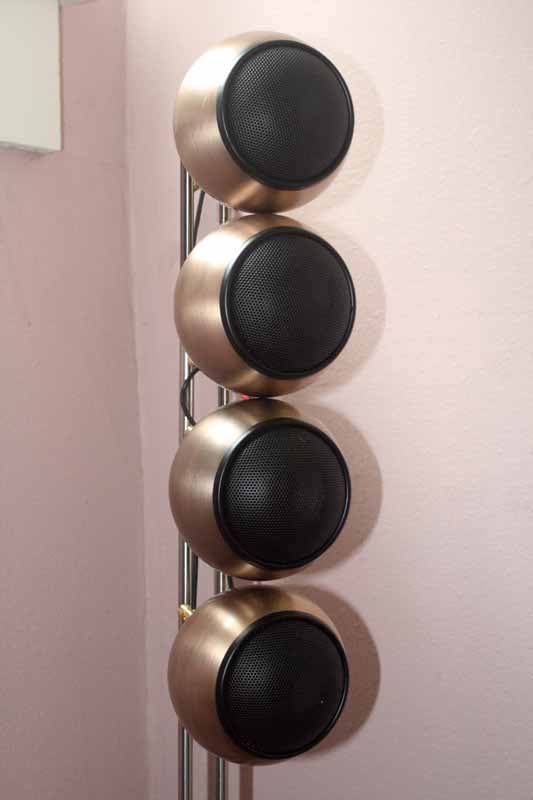 My impressions of the Orb Audio Mod4
system can be summed up in three words: Loud, Tactile, and Loud. Did I mention
the system can play loud? The Mod4's are more than a match for medium to
larger-sized rooms and we were very pleased with the definition, soundstage and
imaging of the speakers. While setup was a bit difficult given that Orb Audio
obviously ships these beauties intended them to be mostly wall-mounted, nothing
was so difficult that we found ourselves cursing the ocean liner that brought
in the materials. Though we didn't detail our movie experiences, both music and
feature films sounded fantastic on this system. Given that the room we listened
in wasn't treated acoustically, it's a safe bet that the Mod4 system is fairly
room-agnostic and will sound good in a whole host of differing environments. If
you're looking to spend "cube speaker" prices but actually want a
system that can play down low and make you feel the bass, the Mod4 system is
for you.
My impressions of the Orb Audio Mod4
system can be summed up in three words: Loud, Tactile, and Loud. Did I mention
the system can play loud? The Mod4's are more than a match for medium to
larger-sized rooms and we were very pleased with the definition, soundstage and
imaging of the speakers. While setup was a bit difficult given that Orb Audio
obviously ships these beauties intended them to be mostly wall-mounted, nothing
was so difficult that we found ourselves cursing the ocean liner that brought
in the materials. Though we didn't detail our movie experiences, both music and
feature films sounded fantastic on this system. Given that the room we listened
in wasn't treated acoustically, it's a safe bet that the Mod4 system is fairly
room-agnostic and will sound good in a whole host of differing environments. If
you're looking to spend "cube speaker" prices but actually want a
system that can play down low and make you feel the bass, the Mod4 system is
for you.
Orb Audio Mod4 Speaker System & Uber Ten Sub
MSRP $2778
Orb Audio LLC
520 East 88th Street
New
York,
NY 10128
(877) 672-2834
support@orbaudio.com
About Orb Audio
Orb Audio is committed to being
different. From the
beginning in 2002, it has been our intention to deliver speaker systems with
the finest quality components, an attractive, upscale design and an affordable
price. The only way to accomplish all of this was to be different from the
other players in the industry, make our speakers in the United States, and to
sell them to our clients directly to avoid substantial (and totally
unnecessary) markups. Our satellites are manufactured in the United States
by craftspeople with years of experience in electronics assembly. We do not
have to take mass market considerations into our design, so we can design our
speakers for one thing -- performance.
The Score Card
The scoring below is based on each piece of equipment doing the duty it is designed for. The numbers are weighed heavily with respect to the individual cost of each unit, thus giving a rating roughly equal to:
Performance × Price Factor/Value = Rating
Audioholics.com note: The ratings indicated below are based on subjective listening and objective testing of the product in question. The rating scale is based on performance/value ratio. If you notice better performing products in future reviews that have lower numbers in certain areas, be aware that the value factor is most likely the culprit. Other Audioholics reviewers may rate products solely based on performance, and each reviewer has his/her own system for ratings.
Audioholics Rating Scale
 — Excellent
- — Very Good
- — Good
- — Fair
- — Poor
| Metric | Rating |
|---|---|
| Build Quality | |
| Treble Extension | |
| Treble Smoothness | |
| Midrange Accuracy | |
| Bass Extension | |
| Bass Accuracy | |
| Imaging | |
| Soundstage | |
| Dynamic Range | |
| Fit and Finish | |
| Performance | |
| Value | |
Clint Deboer was terminated from Audioholics for misconduct on April 4th, 2014. He no longer represents Audioholics in any fashion.
View full profile Subscribe to our newsletter