


Sennheiser HD 600 Headphone Review
Sennheiser HD 600 Headphone
- Product Name: HD 600
- Manufacturer: Sennheiser
- Performance Rating:

- Value Rating:
- Review Date: March 30, 2007 11:57
- MSRP: $ 449
Transducer Principle: Dynamic, open
Frequency Response: 12-39,000 Hz
Nominal Impedance: 300 ohm
Weight (w/o cable): 9.2 oz
Characteristic Spl: 97 dB
Ear Coupling: Circumaural
Headband Pressure: 2.5 N
Distortion: Less than or equal to 0.1%Pros
- Phenomenal fidelity
- Unparalleled comfort
- Works well with a variety of sources
Cons
- Big and bulky
- Too nice for a travel companion
HD 600 Build Quality, Design, and Listening Tests
 It’s not often
that I review headphones as most of the models I’ve heard aren’t much to write
home about. However, upon speaking with Ivy
Scull of HeadRoom,
she sold me with a pretty convincing argument about the sonic joys of a quality
set of cans (headphones that is). I
asked her to send me a reference performance headphone system that is also
comfortable to wear. One of my pet peeves
with headphones is ear fatigue (not to be confused with listening fatigue) often
experienced after an extended wearing session such as a typical 4-5 hour plane
flight or listening to the entire Seconds
Out Live Genesis double CD. On
lesser designed headphones, I often find them unbearable to wear after about 30
minutes. Ivy suggested I try out a pair
of Sennheiser HD 600s which he claimed would meet my performance and comfort
requirements. For years I’ve heard the
raves among audiophiles and reviewers about Sennheiser headphones. I was excited to finally try them out for
myself to determine firsthand if their reputation was well warranted and if
they passed my ear fatigue test so many others have failed.
It’s not often
that I review headphones as most of the models I’ve heard aren’t much to write
home about. However, upon speaking with Ivy
Scull of HeadRoom,
she sold me with a pretty convincing argument about the sonic joys of a quality
set of cans (headphones that is). I
asked her to send me a reference performance headphone system that is also
comfortable to wear. One of my pet peeves
with headphones is ear fatigue (not to be confused with listening fatigue) often
experienced after an extended wearing session such as a typical 4-5 hour plane
flight or listening to the entire Seconds
Out Live Genesis double CD. On
lesser designed headphones, I often find them unbearable to wear after about 30
minutes. Ivy suggested I try out a pair
of Sennheiser HD 600s which he claimed would meet my performance and comfort
requirements. For years I’ve heard the
raves among audiophiles and reviewers about Sennheiser headphones. I was excited to finally try them out for
myself to determine firsthand if their reputation was well warranted and if
they passed my ear fatigue test so many others have failed.
 From
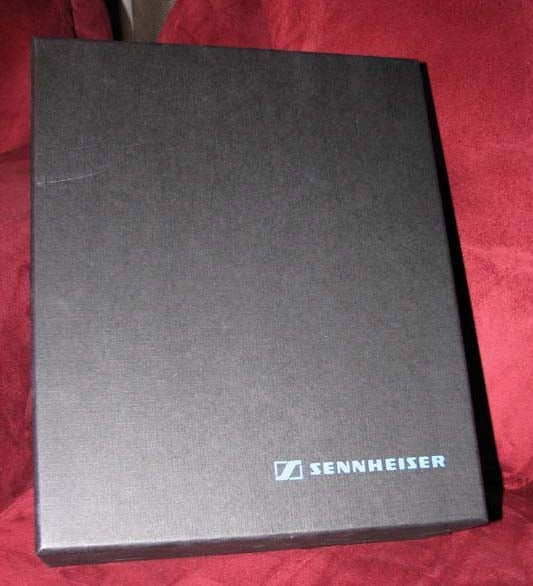
the moment I unboxed the shipping package, I knew I was in the big leagues as far as high performance headphones go. The HD 600s came with their own well built
carrying case that snugly and securely housed the headphones, cable and user
manual. This case is a keeper and you better
be sure to place your headphones back in when they are not in use. I’ve been known in the past to accidentally
step on headphones or remote controls left on the floor and if you’re like me,
you could rest better at night knowing that your $450 investment is well
protected from clumsy walkers or the external forces of gravity wanting them to
unexpectedly greet the floor.
From
the moment I unboxed the shipping package, I knew I was in the big leagues as far as high performance headphones go. The HD 600s came with their own well built
carrying case that snugly and securely housed the headphones, cable and user
manual. This case is a keeper and you better
be sure to place your headphones back in when they are not in use. I’ve been known in the past to accidentally
step on headphones or remote controls left on the floor and if you’re like me,
you could rest better at night knowing that your $450 investment is well
protected from clumsy walkers or the external forces of gravity wanting them to
unexpectedly greet the floor.
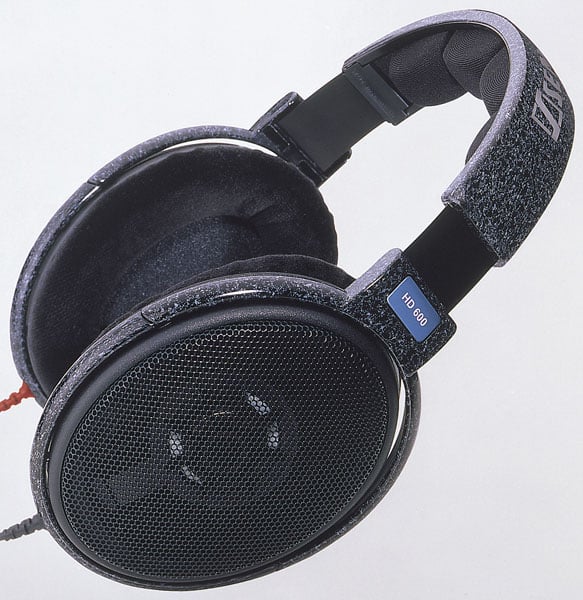
The HD 600s are well crafted headphones. They have plenty of padding at the top of the adjustable head band and have a beautiful glossy marble finish which is prevalent throughout the entire housing. The cable is removable, color coded and keyed to ensure proper polarity and channel identification upon connection to your headphone preamp. To me, having a removable headphone cable is essential, especially since mini plug terminations always seem to go bad over time with lots of usage. If after a few years you experience static or intermittent signal drop out, simply order a new cable and swap out the old one. You can always keep around the old cable in case you ever experience the urge to do some jump roping.
Design Overview
The Sennheiser HD 600 is an open air dynamic headphone design. This means that the headphone driver remains open to the outside, providing very little noise isolation from the outside world along with excessive sound leakage making them less than ideal for the cubical office environment. While they wont win over favors from your neighboring office buddy subjected to your listening session of Metallica's One album while he/she is trying to fill out their TPS reports, they will make audiophiles rejoice as open air designs tend to have far less distortion. Sennheiser claims the diaphragm is optimized using laser interferometry and claims to have eliminated standing waves and undesirable diaphragm distortions. The driver motor structure is composed of neodymium ferrous material for a powerful compact design. The published frequency response is 16 to 30kHz (-3dB) with a 300 ohm system impedance and an unusually high sensitivity of 97dB (nearfield measured at 1kHz).
The HD 600s have an excellent frequency response for a set of headphones and I was eager to put these cans through their paces to see if they could really deliver the goods. I was pleased that Sennheiser made these a relatively benign load impedance, allowing for a greater flexibility of portable electronics that can effectively be used with them and still achieve good sonic results. In the past, I have found quality headphones such as these really required a good headphone preamp to reach their potential. It was now time to see just how well these headphones did with common portable devices, AV receivers and, yes, even a dedicated high-end headphone preamp.
Listening Tests
I used a variety of source equipment with the Sennheiser HD 600s including the headphone out of my desktop computer DVD player, my Denon AVR-5805 and the Micro preamp and DAC from Headroom.
Track #1 “Striker” exemplifies the amazing guitar work of Daryl in full clarity on the Sennheisers. There is a reason Genesis has elected Daryl their "permanent-temporary-part-time member" (as Phil Collins refers to him) of Genesis for the last 30 years for their live shows – he rocks. The bass drum in Track #4 “Dream in Blue” and track # 7 “Heavy Heart” had all of the depth and feeling on the HD 600’s that you typically hear in a full range loudspeaker system. His stylistic solo playing on track #4 was reminiscent of his fabulous solos of Firth of Fifth during his live tours with Genesis. Track #8 “Meltdown” reminded me of the music from fusion jazz group Tribal Tech. The drums and guitar were focused front and center while the background percussions seemed to emanate beyond the plane of the headphones similar to how a good speaker system can extend its soundstage several feet behind and around the speakers.
CD: Harry Connick – When Harry Met Sally
 When Harry sings his more traditional, non New Orleans style music, he reminds me of a
young Frank Sinatra. This CD is well
recorded with a couple of tracks that really stand out for music lovers and
audiophiles alike. In Track #2 “Love is
Here to Stay” the trumpets had a very real sound and weren’t dull like so
typically found on lesser headphones or speaker systems for that matter. At times, Harry’s voice sent chills through
my body.
When Harry sings his more traditional, non New Orleans style music, he reminds me of a
young Frank Sinatra. This CD is well
recorded with a couple of tracks that really stand out for music lovers and
audiophiles alike. In Track #2 “Love is
Here to Stay” the trumpets had a very real sound and weren’t dull like so
typically found on lesser headphones or speaker systems for that matter. At times, Harry’s voice sent chills through
my body.
Track #9 “Let’s Call the Whole Thing Off” had bass that was very tight, controlled and extended while the vocals remained dead center and articulate. The brush on the cymbals had plenty of air and there was clear reverb in Harry’s voice which was well presented. The piano had a very dynamic and forward presence to it. Never did the sound turn too mush during complex passages.
CD: Dianne Reeves Never Too Far
 Track #1 “Hello Haven’t I Seen You Before” had the same
articulate bass and tightness I was used to in my reference system, though gave
up a bit of extension and slam that I was used to in my four subwoofer setup. Extension was impressive for a headphone
system, vocals were tonally correct with a very warm sound character making
them non-fatiguing.
Track #1 “Hello Haven’t I Seen You Before” had the same
articulate bass and tightness I was used to in my reference system, though gave
up a bit of extension and slam that I was used to in my four subwoofer setup. Extension was impressive for a headphone
system, vocals were tonally correct with a very warm sound character making
them non-fatiguing.
Track #4 “How Long” is a powerful song fueled with
passionate lyrics from Dianne Reeves and excellent instrumentals. This is a song that sounds better the louder
you play it. The bass was so good on
these headphones that I found myself using them as a reference on known source
material to ensure I properly setup my own home theater system. The drums exploded on scene and the vocals
filled the front plane of the headphones and seemed to extended beyond their
boundary similar to how I heard it on my reference speakers.
SACD: Rebecca Pidgeon – The Raven
Chock full of obscure lyrics, this is a recording I still keep in my collection as a reference for a variety of reasons. For one, it’s a very revealing recording that you can hear details in the instruments and background noises that simply wash away on less than stellar equipment. Track #12 “Spanish Harlem” remains the benchmark track I test gear out with when using this SACD as the source material. Rebecca Pidgeon adds her own flare on this remake hit originally recorded by Ben E. King back in 1961. It’s a close-miced recording with lots of ambience and sometimes reveals a tad too much siblance in her voice, but it sounds wonderful nontheless. The HD 600’s did a fabulous job of conveying the full depth of the recording. You could hear all of the nuances in the recording, including background shuffling that likely wasn’t intented to be there. The piano had a nice airy feel to it and the Sennheisers managed to capture a close approximation of what I heard on my $15k/pair RBH Sound reference speakers.
HD 600 Recommendations, Measurements, and Conclusion
Using various source equipment to power the Sennheisers proved to be an interesting lesson in revealing the subtleties of quality electronics. When listening to them via the DVD ROM drive of my computer, they sounded quite good that is until I switched over to the Headroom preamp and DAC system. The latter simply expanded the soundstage and depth of the headphones immensely. The HD 600’s also sounded stellar when powered by my Denon AVR-5805. I found using Dolby headphone to be a rewarding experience depending on source material.
For kicks, I even plugged the HD 600’s into my Yamaha DGX-500 synthesizer. Four hours later of jamming away, I realized I spent more time at my keyboard in one evening than I did in the past two months. This validated to me that there are virtually no limits to enjoy a quality set of headphones, especially if you want to hear your personal musical masterpieces in the highest fidelity possible.
If you are serious about fidelity as either a music lover, or a musician, and desire a no compromise, non compact wired headphone system, the HD 600’s are an excellent choice. I highly recommend taking them for a test drive at your local Sennheiser dealer.
Measurements & Analysis
I quickly learned the hard way that measuring open air headphones is a bit tricky. Unlike measuring an inner ear headphone whose cone area is approximately the size of the measuring microphone, or measuring say a subwoofer whose driver is infinitely bigger than the measuring mic, the driver of this type of headphone design is too small to be considered infinite size and too large to be treated as the inner ear headphone whose entire radiation pattern is directly captured by the microphone. Thus I had to construct a crude approximation of a human ear using a Styrofoam cup punctured in the middle to squeeze my microphone through for frequencies below 200Hz.
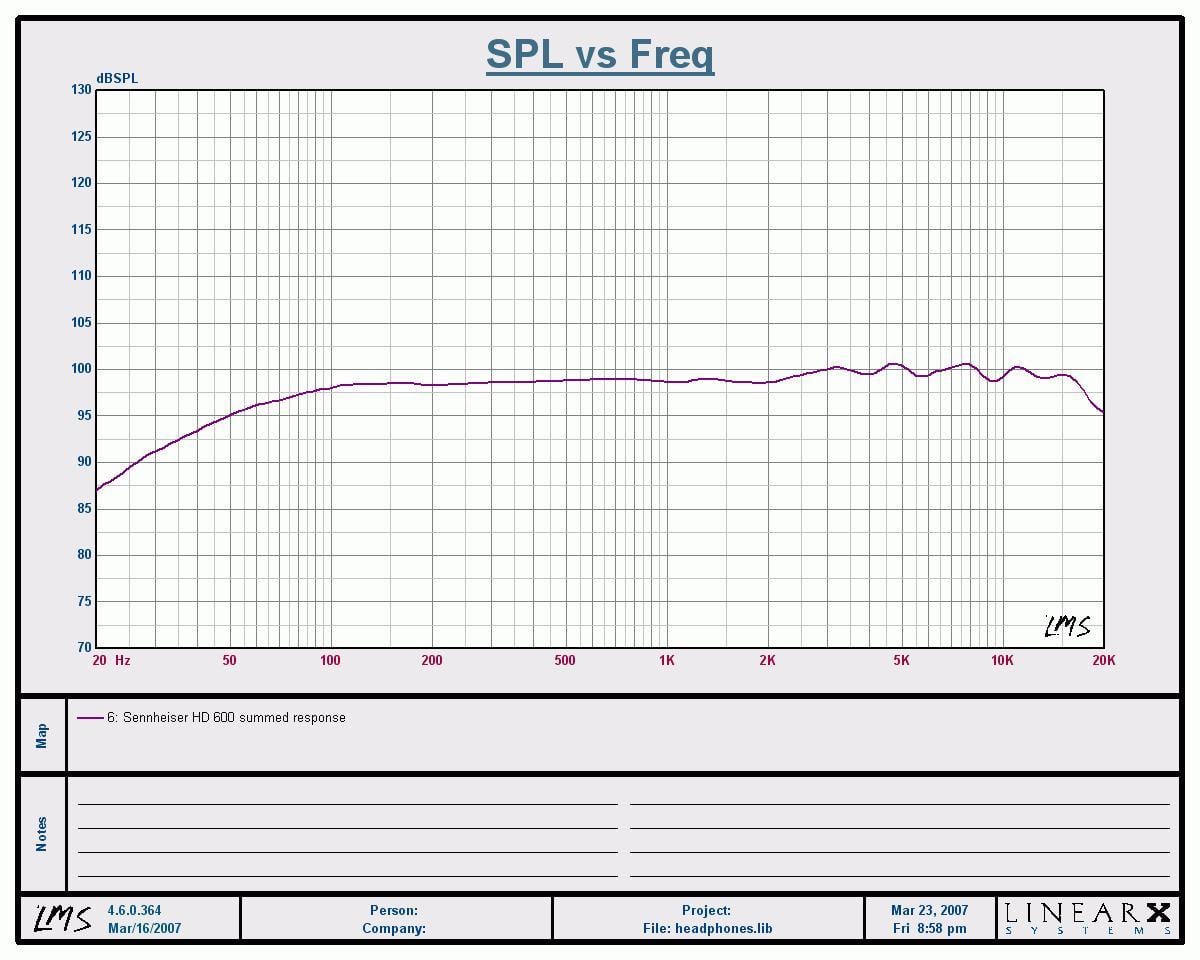
Summed Nearfield
Frequency Response measurement of the Sennheiser HD 600
As you can see from the graph, these headphones are extremely linear. I verified their linearity was equally excellent at various listening levels. I don’t believe the enclosure I created is sufficiently accurate at the lower frequencies which explains the excessive roll off which did not correlate with my listening experience or the manufacturers published specifications.
For additional measurements, check out the measurement database (frequency response, distortion, impedance, isolation, etc) Headroom has comprised using their pseudo head model and mini anechoic chamber in conjunction with their test measurement gear. You can even compare performance metrics between different models and brands.
Conclusion
 The
Sennheiser HD 600’s are truly an amazing set of cans any way you dice it. They sound great with virtually anything you
attach to them but reach their full potential with the best electronics unlike
any other headphones I have listened too.
The
Sennheiser HD 600’s are truly an amazing set of cans any way you dice it. They sound great with virtually anything you
attach to them but reach their full potential with the best electronics unlike
any other headphones I have listened too.
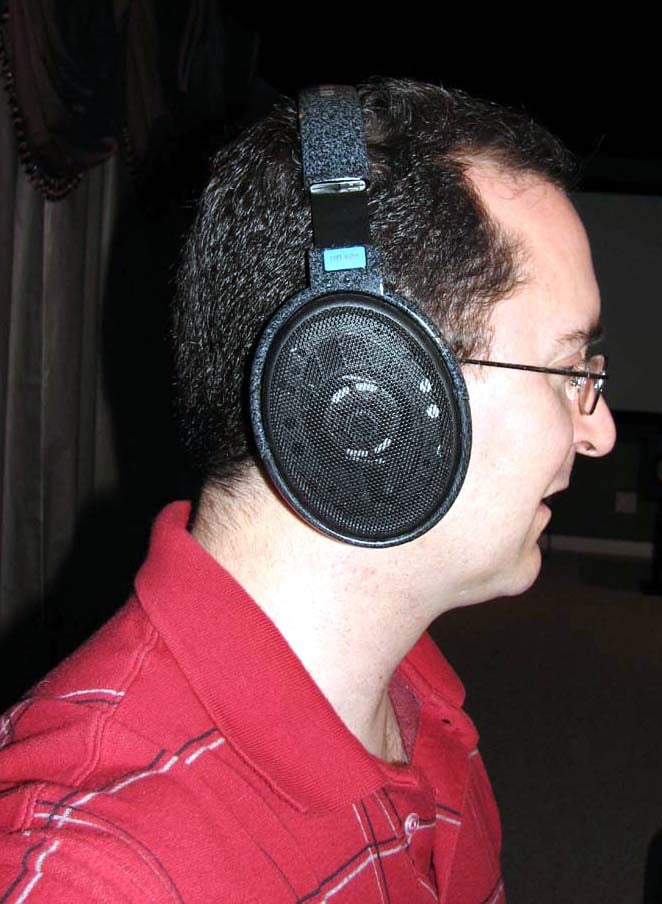
Their comfort is of equal measure to their sonic performance which in my experience is a rare balance to find in headphones. The only downside I can vouch for is that you will want to treat them with kid gloves. These are not a set of headphones you will want to take with you on ventures outside of your home or recording studio for fear of breaking them or (gasp) loosing them. For sonic bliss with the comfort of a Cadillac, look no further than Sennheiser’s open air headphones – particularly the HD 600’s. Sennheiser’s unprecedented reputation for headphone excellence is well warranted and secure.
Sennheiser HD 600
HD
600 Headphones
MSRP: $450/pr
Sennheiser Electronic
Corporation
1 Enterprise Drive
Old Lyme, CT 06371
Phone: (860) 434-9190
The Score Card
The scoring below is based on each piece of equipment doing the duty it is designed for. The numbers are weighed heavily with respect to the individual cost of each unit, thus giving a rating roughly equal to:
Performance × Price Factor/Value = Rating
Audioholics.com note: The ratings indicated below are based on subjective listening and objective testing of the product in question. The rating scale is based on performance/value ratio. If you notice better performing products in future reviews that have lower numbers in certain areas, be aware that the value factor is most likely the culprit. Other Audioholics reviewers may rate products solely based on performance, and each reviewer has his/her own system for ratings.
Audioholics Rating Scale
 — Excellent
- — Very Good
- — Good
- — Fair
- — Poor
| Metric | Rating |
|---|---|
| Build Quality | |
| Appearance | |
| Treble Extension | |
| Treble Smoothness | |
| Midrange Accuracy | |
| Bass Extension | |
| Bass Accuracy | |
| Dynamic Range | |
| Performance | |
| Value | |
Gene manages this organization, establishes relations with manufacturers and keeps Audioholics a well oiled machine. His goal is to educate about home theater and develop more standards in the industry to eliminate consumer confusion clouded by industry snake oil.
View full profile Subscribe to our newsletter