


Yamaha Soavo-1 Floorstanding Speaker Review
Yamaha's Soavo-1 Speakers
- Product Name: Soavo-1 Tower Speakers
- Manufacturer: Yamaha Electronics
- Performance Rating:

- Value Rating:

- Review Date: February 19, 2008 09:55
- MSRP: $ 1799.99/ea
|
|
Pros
- Above par build quality
- Beautiful finish
- Plays low and smooth
- Magnetic grills
- Outriggers standard
- Biampable
Cons
- Midrange could feature more detail
- Moderately narrow sweet spot
Soavo-1 Introduction and Build Quality
Yamaha isn't necessarily known for their amazing home theater speakers. This is a shame, since they have such a good reputation with making fine instruments and some of the most popular near-field speakers ever to hit the recording industry. Just try to find a studio without some flavor of Yamaha NS-10s - everyone uses them as the gold reference standard for midrange evaluation. When I unpacked the Soavo-1 speakers into my living room – I honestly had no idea what to expect, so I began at the beginning: with a clean slate, an open mind, and lots of good music.
Build Quality & Setup
Unpack the Soavo-1 speakers and you'll instantly realize that Yamaha didn't skimp on the aesthetics or the build quality. The finish on these speakers was flawless, with tight corners and manicured lines. The front face has a beautiful bevel that sets apart the tweeter and gives the speaker an imposing look. I also loved the cast outriggers - which came pre-attached to each speaker and gave them an unshakable stance. The biampable binding posts are conveniently located on the back of the speaker at the bottom and are of the high-quality gold-plated variety. Each speaker weighs in at an impressive 59.5 lbs. I instantly wanted to disassemble these speakers - I almost couldn't help myself. As it turned out, a lot of this weight is due to the almost ridiculously thick front baffle and the large magnets present on the twin bass drivers. Let's back up a bit, however and take a look at the components piece by piece.
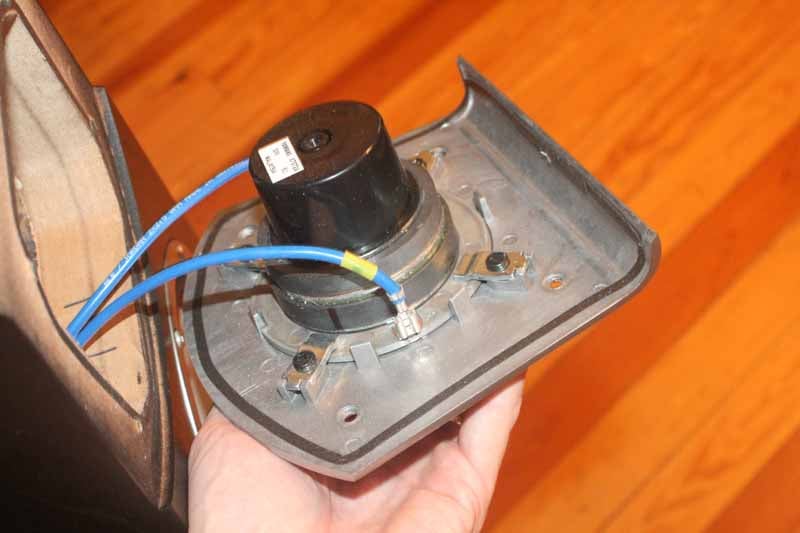 The tweeters are mounted
to an 1/8-inch thick metal plate that is both as decorative as it is damped.
The 1-inch aluminum dome tweeter is secured against this cast metal frame
through the use of four machined screws. The cast frame itself is damped and is
secured to the 1-inch thick front baffle of the Soavo-1 via four course thread
screws. I couldn't believe the heft of this tweeter assembly when I held it in
my hand. If you look at the pic, you'll quickly see the overbuilt front baffle
thickness which almost certainly allows no resonance from the drivers. Having
removed all the drivers, I can tell you that it continues all the way down the
speaker in the same thickness.
The tweeters are mounted
to an 1/8-inch thick metal plate that is both as decorative as it is damped.
The 1-inch aluminum dome tweeter is secured against this cast metal frame
through the use of four machined screws. The cast frame itself is damped and is
secured to the 1-inch thick front baffle of the Soavo-1 via four course thread
screws. I couldn't believe the heft of this tweeter assembly when I held it in
my hand. If you look at the pic, you'll quickly see the overbuilt front baffle
thickness which almost certainly allows no resonance from the drivers. Having
removed all the drivers, I can tell you that it continues all the way down the
speaker in the same thickness.
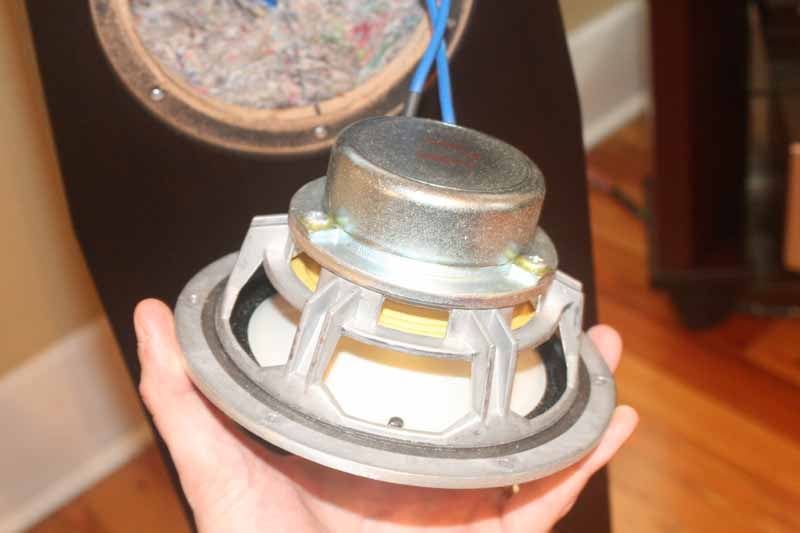 The 5-inch poly cone midrange
driver showed off an indestructible-looking cast basket – there is no allowance
for the use of stamped aluminum in this system. While I would have expected to
see a somewhat larger magnet structure on this driver, it is at least shielded
so people with legacy CRT-based systems can place these speakers closer to the
screen before they experience any negative effects. Given that most people
buying speakers in this price range are likely to have flat panel displays,
this is one area I would have love to see some cost-savings on the part of
Yamaha. This could either have lowered the price of entry, or allowed for a
more capable midrange driver.
The 5-inch poly cone midrange
driver showed off an indestructible-looking cast basket – there is no allowance
for the use of stamped aluminum in this system. While I would have expected to
see a somewhat larger magnet structure on this driver, it is at least shielded
so people with legacy CRT-based systems can place these speakers closer to the
screen before they experience any negative effects. Given that most people
buying speakers in this price range are likely to have flat panel displays,
this is one area I would have love to see some cost-savings on the part of
Yamaha. This could either have lowered the price of entry, or allowed for a
more capable midrange driver.
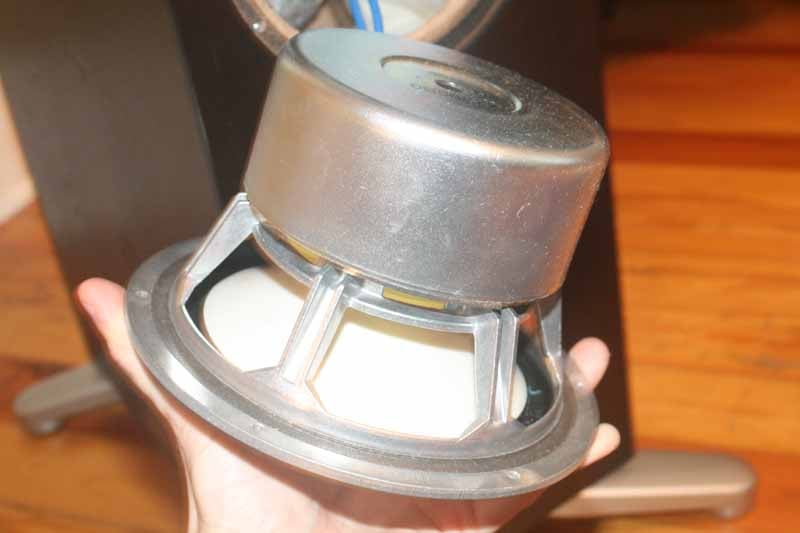 In my next adventure in
disassembly, I pulled out the two bass drivers. These were monstrous things,
which explained a lot of the capable low-end I heard later. The magnets on
these drivers almost dwarf the cones, though half of the mass is simply video
shielding. Hold them in your hands and you'll realize you're holding a serious
driver, not the wimpy drivers and stamped baskets found in lower cost products.
The Soavo-1 speakers have ample depth, which is crucial for ensuring that these
drivers have enough room to be installed correctly and provide enough box
volume for the necessary frequency response.
In my next adventure in
disassembly, I pulled out the two bass drivers. These were monstrous things,
which explained a lot of the capable low-end I heard later. The magnets on
these drivers almost dwarf the cones, though half of the mass is simply video
shielding. Hold them in your hands and you'll realize you're holding a serious
driver, not the wimpy drivers and stamped baskets found in lower cost products.
The Soavo-1 speakers have ample depth, which is crucial for ensuring that these
drivers have enough room to be installed correctly and provide enough box
volume for the necessary frequency response.
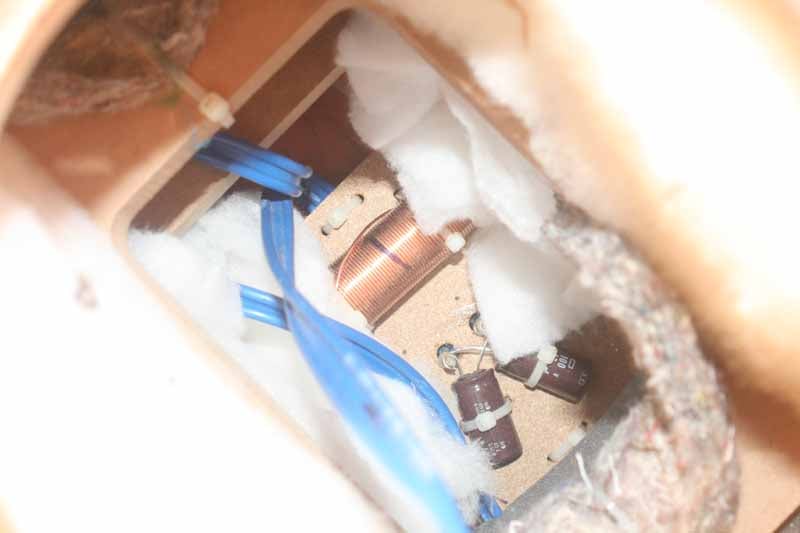 I was able to sneak a peek
at the crossover network which is mounted to the back of the cabinet towards
the bottom. Yamaha chose to go with electrolytic caps - not the best choice in
our opinion, but a budget consideration to be sure and one shared by many
speaker manufacturers (both online and traditional). The issue is that
typically these types of capacitors don't exhibit linear frequency response at
high frequencies due to variations in impedance and a potential for higher
distortion. We'd almost wish they'd upgrade the caps and dump the video
shielding in future models. By placing the crossover near the bottom of the
speakers and positioning them at the rear of the cabinet, Yamaha has kept the
inductors away from the drivers. Some companies don't provide enough separation
and thus negatively affect performance due to the interference of these systems.
I was able to sneak a peek
at the crossover network which is mounted to the back of the cabinet towards
the bottom. Yamaha chose to go with electrolytic caps - not the best choice in
our opinion, but a budget consideration to be sure and one shared by many
speaker manufacturers (both online and traditional). The issue is that
typically these types of capacitors don't exhibit linear frequency response at
high frequencies due to variations in impedance and a potential for higher
distortion. We'd almost wish they'd upgrade the caps and dump the video
shielding in future models. By placing the crossover near the bottom of the
speakers and positioning them at the rear of the cabinet, Yamaha has kept the
inductors away from the drivers. Some companies don't provide enough separation
and thus negatively affect performance due to the interference of these systems.
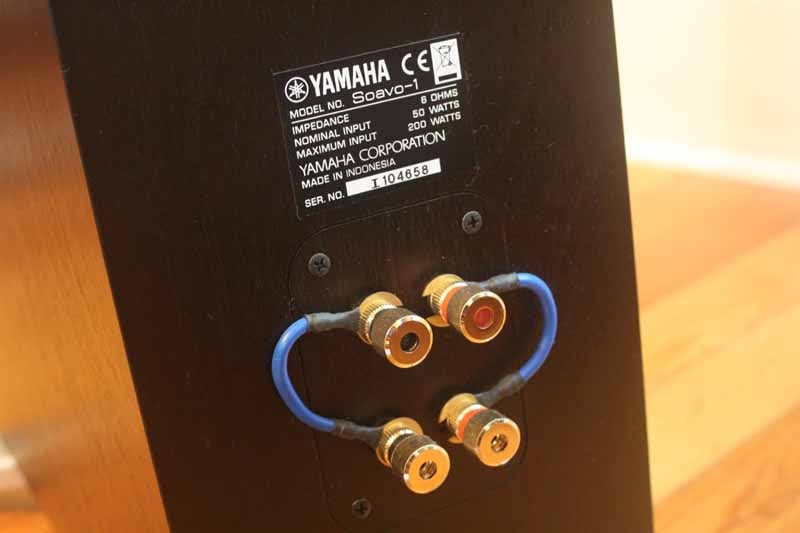 About the only thing you'll need
to concern yourself with during setup is removing the binding posts to get
access to the plastic caps which cover the banana jack holes. If you're using
banana plug terminations on your cables then this will affect you. These plastic
covers are put on because the spacing of the banana jacks actually matches the Schuko-style
power plugs in some European countries. As a result, they don't want people
using that connection type lest they accidentally plug a banana speaker cable
into the wall outlet (certainly there is a Darwin Award for someone who's done
this, no?).
About the only thing you'll need
to concern yourself with during setup is removing the binding posts to get
access to the plastic caps which cover the banana jack holes. If you're using
banana plug terminations on your cables then this will affect you. These plastic
covers are put on because the spacing of the banana jacks actually matches the Schuko-style
power plugs in some European countries. As a result, they don't want people
using that connection type lest they accidentally plug a banana speaker cable
into the wall outlet (certainly there is a Darwin Award for someone who's done
this, no?).
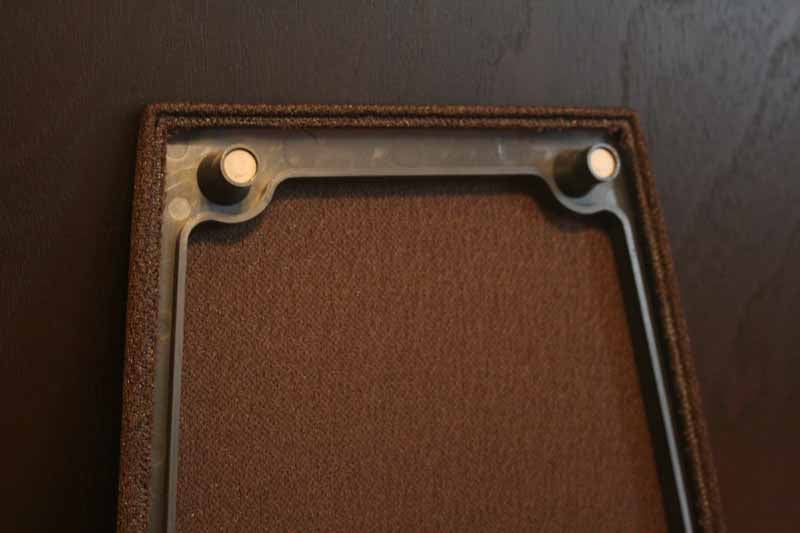 The speaker grills for the Soavo-1 speakers are
magnetically attached. This makes them very easy to remove and ensures that
you’re not going to break off any little plastic protrusions - the likes of
which can be found (most likely broken) on most loudspeakers these days. I
never felt the grills interfered with the sound reproduction, though I did all
my eventual listening tests with them off just to be sure. I actually preferred
the grills on, simply because they offer some level of protection against dust
build-up and they deter little inquisitive hands from pushing on things they
shouldn't. The grill covers removed easily and seemed to "lock" in
place once positioned correctly. It never felt as though they would damage the
finish at any time, especially since the fastening point were the same screws
that anchored the drivers into the cabinet.
The speaker grills for the Soavo-1 speakers are
magnetically attached. This makes them very easy to remove and ensures that
you’re not going to break off any little plastic protrusions - the likes of
which can be found (most likely broken) on most loudspeakers these days. I
never felt the grills interfered with the sound reproduction, though I did all
my eventual listening tests with them off just to be sure. I actually preferred
the grills on, simply because they offer some level of protection against dust
build-up and they deter little inquisitive hands from pushing on things they
shouldn't. The grill covers removed easily and seemed to "lock" in
place once positioned correctly. It never felt as though they would damage the
finish at any time, especially since the fastening point were the same screws
that anchored the drivers into the cabinet.
Soavo-1 Subjective Listening Tests
For these listening sessions we utilized a high quality Marantz PM-11S1 reference quality stereo integrated amplifier. Our measurements of this product showed that it will absolutely make sure that there are no excuses for the Soavo-1's to not be able to perform to their utmost potential. For cables, we utilized Impact Acoustics Velocity terminated speaker cables.
I pulled a few of my favorite reference material for this listening session. Overall the comments I would make include the fact that these speakers play very low and smooth. For music purposes, there is no reason you would need to add a subwoofer to get the most enjoyment out of your system. Additionally, I found that the Soavo-1s tended to sound better toed-in a bit more than most speakers I've listened to. The sweet spot wasn't excessively wide (about two seats held together well) when the speakers were toed in, but it wasn't like listening to as pair of electrostats either. If anything, this is where I felt the speakers could benefit from additional tweaking - the drivers require extra care in placement if you want them to sound just right. Beyond that I quickly realized that these speakers were extremely musical and sounded good with nearly all types of music, provided the dynamic range was intact. Compressed MP3s can make even good speakers sound bad, so if you're doing loudspeaker evaluations, be sure to know what you're putting into the system.
CD: Yello - The
Eye The closer you are to
these speakers the more you will want to toe them in for best imaging. They
image incredibly well - it's almost uncanny. You'll know you have it right when
the speakers disappear, melting into your listening room. If you're sitting
less than 9-10 feet away, go ahead and point these puppies almost straight at
you.
The closer you are to
these speakers the more you will want to toe them in for best imaging. They
image incredibly well - it's almost uncanny. You'll know you have it right when
the speakers disappear, melting into your listening room. If you're sitting
less than 9-10 feet away, go ahead and point these puppies almost straight at
you.
Though track 14 is titled "Planet Dada (Flamboyant)" I think the "click and pop" track describes it nicely. There is nothing analogue about this track and it lends itself to an incredible opportunity to hear some really wild and dynamic imaging. I now use this as one of the track to dial in any speakers I am reviewing.
Near the end of this track a harsh digital phone ring sound pops out that actually made me jump and turn my head to look back into the other room! Now two things need to be said here. One, I knew that I was listening to a bunch of electronica music so I should have been prepared, and two I don't have a wireless phone that sounds anything remotely like this. And I still jumped and looked and had to actually think about it for a few seconds - it was that well imaged.
The last minute of this track makes a good set of speakers, and I'm now including the Soavo-1s in that designation, image in full 3D space. Sounds pop and sweep behind you as if you were listening to a full 5-speaker surround system. Take into account the ability of these speakers to play down incredibly low and I could upgrade that to 5.1.
In track 5 "Junior B" harsh female vocals dominate, but they come across as though you are listening live, with a hot, breathy vocalist standing right in the room with you. There is a lot of powerful but smooth bass in this track, including some nice sweeps that never once caused the Soavo-1 speakers to chuff or break a sweat. When they ran out of frequency below 35Hz, they simply bowed out gracefully. Given what I heard I'd have a hard time wanting to add a subwoofer for music reproduction. Cranking the system up on this track there was plenty of tactile energy and it didn't sound artificial. If anything, adding a sub or two might simply help compensate for deficiencies in your room acoustics.
CD: Steely Dan - A
Decade of Steely Dan Track 6 :"Hey
Nineteen" has long been a reference track of mine to hear how well a
system recreates the feel of a wide studio recording. When the choral backing
vocals came in, I found that the soundstage extended well into the room, making
for a very pleasing and realistic sound. The snap on the kick drum was firm and
you could almost feel the guitar being played - so clear was the string noise.
Vocals were as clear as could be expected given the recessed nature of this mix
and overall positioning of images within the soundstage was accurate and wide.
I did note that the midrange sounded a tad thin during some of the more solo
vocal lines, though I am a midrange
snob and it's tough to make me happy.
Track 6 :"Hey
Nineteen" has long been a reference track of mine to hear how well a
system recreates the feel of a wide studio recording. When the choral backing
vocals came in, I found that the soundstage extended well into the room, making
for a very pleasing and realistic sound. The snap on the kick drum was firm and
you could almost feel the guitar being played - so clear was the string noise.
Vocals were as clear as could be expected given the recessed nature of this mix
and overall positioning of images within the soundstage was accurate and wide.
I did note that the midrange sounded a tad thin during some of the more solo
vocal lines, though I am a midrange
snob and it's tough to make me happy.
Despite my comment about midrange, I noted that the tenor saxophone in "FM" was stunningly realistic and came though as if Pete Cristlieb were hanging out about 10 feet in front of me. I like having musicians play in my living room, so a good set of speakers is imperative for this experience. I felt that the Soavo-1's had a nice punchy midrange that didn't refrain from pushing out the parts of the music often lost by speakers that don't have enough cone area dedicated to this task. It certainly seemed as if the Soavo-1's dedicated 4-1/2" midrange was excelling at its given duties.
CD The Riotous Brothers - The Riotous
Brothers This band was mastered by
a friend of mine in Orlando
Florida who was one of the
Engineers on the Eagles' Hotel California album. While a bit hot, there are
some awesome guitar and vocal tracks within this album that really show the
detail in any speaker system. Track 1 "Deja Voodoo" features an
accentuated guitar and some nice Hammond B3 organ as well as clear stage-mixed
drums that sound authentic and live. The entire mix feels like the Brothers are
quite literally playing on a stage in front of you. There are no excessively
wide pans and the drums don't jump across the soundstage as if they were 30
feet wide.
This band was mastered by
a friend of mine in Orlando
Florida who was one of the
Engineers on the Eagles' Hotel California album. While a bit hot, there are
some awesome guitar and vocal tracks within this album that really show the
detail in any speaker system. Track 1 "Deja Voodoo" features an
accentuated guitar and some nice Hammond B3 organ as well as clear stage-mixed
drums that sound authentic and live. The entire mix feels like the Brothers are
quite literally playing on a stage in front of you. There are no excessively
wide pans and the drums don't jump across the soundstage as if they were 30
feet wide.
The guitar intro in track 2 "Real Mother for Ya" is one of the cleanest electrics you'll ever hear. I love the texture of the snare in this track and it really came though clean, telltale ring and all. The male vocal had an edge to it that didn't break up or have any nasally sound. The rhythm guitar panned left had some very nice staccato picking sounds and you felt as if you could reach out and grab the medium plastic pick as if it were right there for the taking.
The bass open of "Strange Face of Love" was smooth and clean, while the electric guitar and accompanying vocal both had this gritty sound that again had that absolutely 'live' sound you her when checking out a band at a small, intimate pub. Being from England, this is probably the way you would most commonly experience The Riotous Brothers, so that was a good call on the part of the mix engineers. I don't recall hearing such a live album in a long time that wasn't compressed flat. The Soavo-1's really allowed this CD to emulate a late evening music performance that had me closing my eyes and feeling as if I had left my living room. What I loved best was getting the sound of a night club performance without all the smoke.
Soavo-1 Review Conclusion
Yamaha has made some really nice speakers in the Soavo series. These towers are some of the nicest looking speakers I've seen and the build quality of the Soavo-1s is enough to make me wonder if they aren't slightly overbuilt (meaning they could probably cost a little less without sacrificing performance). They exhibit a very clean soundstage, though you'll have to play a bit with the toe-in for best results. I found the low frequency extension of these speakers to be accurate and not boomy - important with a full-range system. There wasn't anything I threw at it that caused the bottom end to waver or the ports to chuff - it simply plays back everything it can and does it reliably. I think that listeners with an ear for good sound and an eye for good aesthetics could do a lot worse than the Soavo-1's. Yamaha has clearly put a lot of their musical instrument-making skills into these towers and it shows.
Yamaha Soavo-1 Loudspeakers
$1799.99/ea
Yamaha Electronics
Corporation, USA
6660 Orangethorpe Avenue
Buena Park, CA 90620
(714) 522-9105
www.yamaha.com
About Yamaha
Yamaha Electronics Corporation (YEC), USA, based in Buena Park, California,
is a wholly owned subsidiary of Yamaha. YEC offers Home Theater components and
systems, featuring A/V Receivers, Amplifiers, DVD/CD, Speakers, Mini-Systems,
Video Projection, as well as A/V & IT Convergence Products.
The Score Card
The scoring below is based on each piece of equipment doing the duty it is designed for. The numbers are weighed heavily with respect to the individual cost of each unit, thus giving a rating roughly equal to:
Performance × Price Factor/Value = Rating
Audioholics.com note: The ratings indicated below are based on subjective listening and objective testing of the product in question. The rating scale is based on performance/value ratio. If you notice better performing products in future reviews that have lower numbers in certain areas, be aware that the value factor is most likely the culprit. Other Audioholics reviewers may rate products solely based on performance, and each reviewer has his/her own system for ratings.
Audioholics Rating Scale
 — Excellent
- — Very Good
- — Good
- — Fair
- — Poor
| Metric | Rating |
|---|---|
| Build Quality | |
| Appearance | |
| Treble Extension | |
| Treble Smoothness | |
| Midrange Accuracy | |
| Bass Extension | |
| Bass Accuracy | |
| Imaging | |
| Soundstage | |
| Dynamic Range | |
| Fit and Finish | |
| Performance | |
| Value |  |
Clint Deboer was terminated from Audioholics for misconduct on April 4th, 2014. He no longer represents Audioholics in any fashion.
View full profile Subscribe to our newsletter