


Salk Sound Veracity HT2-TL Review
Salk Sound Veracity HT2-TL
- Product Name: Veracity HT2-TL
- Manufacturer: Salk Sound
- Performance Rating:


- Value Rating:
- Review Date: March 01, 2010 00:00
- MSRP: $ 3995/pair, $4195 as tested
Design: MTM 2-way TL
Drivers:
(1) LCY pure ribbon tweeter and (2) Seas Excel W18 midrange
Response:
45Hz
- 25KHz (+ .5/- 2db), 32Hz - 60KHz (+/-3db)
Sensitivity (dB/2.83v/1M): 87db
Impedance (nominal): 4 ohms
Recommended Amplification: 30 - 150 tube watts, 80 -250 solid state watts
Box Alignment: quarter wave tube transmission line
Dimensions (HWD): 44 1/2" H x 9" W x 17" D in 1" MDF
Pros
- Impeccable finish
- Authoritative, impactful bass
- Crystal clear highs
- Top quality components
Cons
- Pricy
- Funky non-spikes
- A bit finicky for the best placement
- Heavy
Veracity HT2-TL First Impressions
For any that have listened to the AV Rant podcast or really read any of my recent reviews, you know that the Salk SongTower QWT speakers are a favorite of mine. I was fortunate enough to both review them and use them in a shootout of $1500-$2000 speakers. The SongTowers did well in both. While some might see this as a Salk bias, it really is simply an identification of quality. Do you say people are biased for liking a highly rated car or amp? No, they are simply identifying quality. In the case of the SongTowers, it is pretty much a universally held opinion that they are a great bang for buck speaker (even though we are talking about around 1800 bucks).
When Salk approached me about a review of their new Veracity HT2-TLs, I was skeptical. Anyone that knows me knows that I don't really like reviewing high dollar speakers (and no, I don't mean speakers that cost as much as a car (or a house) - I mean speakers over $2000 a pair). I frankly tend to think that the benefits as you get higher up in price become so miniscule that I can't, in good conscience, recommend the speakers. When Salk mentioned that the new HT2-TLs share a lot of the design elements of the SongTowers, I was even more hesitant. How much better could they be? How much indeed. Read on to find out.
First Impressions and Build Quality
The first place that the review of the Salk Veracity HT2-TL speakers was thought to take place was at Gene DellaSala's lab. There he has all the high end measurement equipment and $30k a pair speakers to compare the HT2's to. Well, the problem is that Gene has a bad back and at around 87 lbs a piece, the HT2-TLs weren't going to make it up the stairs to his lab. Since I not only was familiar with Salk speakers but still had a pair of SongTower QWTs on hand for comparison purposes, I was the logical second choice.
The speakers arrived, as you might imagine, in the hands of some very perturbed delivery drivers. While they were kind enough not to take out their emotions on their packages, they certainly weren't shy about expressing their displeasure at having to move around nearly 90 pound boxes. It was with a smile that they left them in my foyer for me to manhandle alone. Usually I'd take a picture of the speakers in the box outside for better lighting and setting. This time you get them in my hallway since moving them (other than sliding them across the floor) was out of the question.
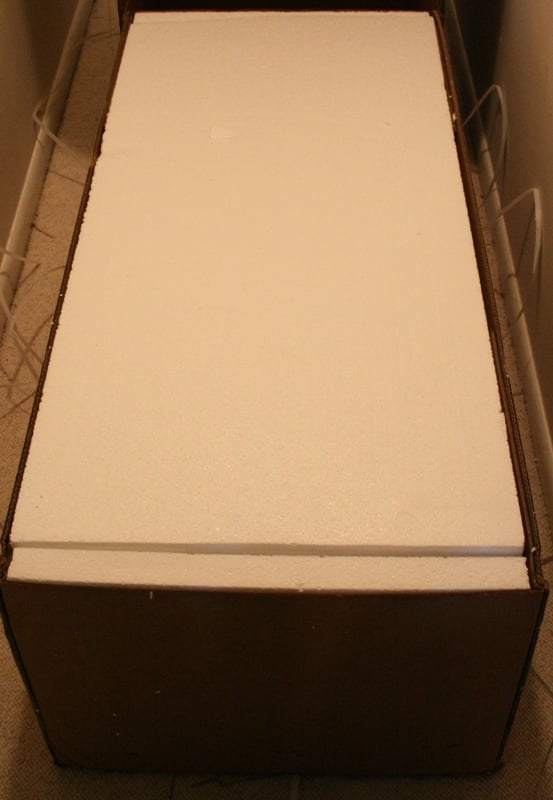
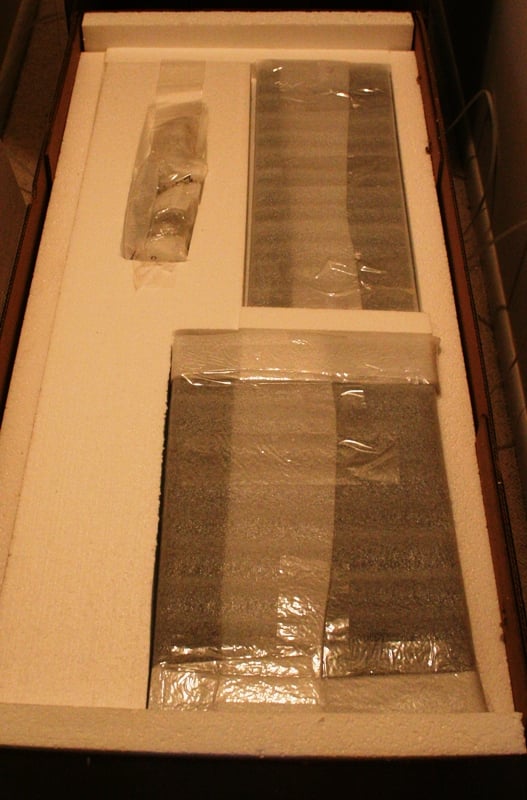
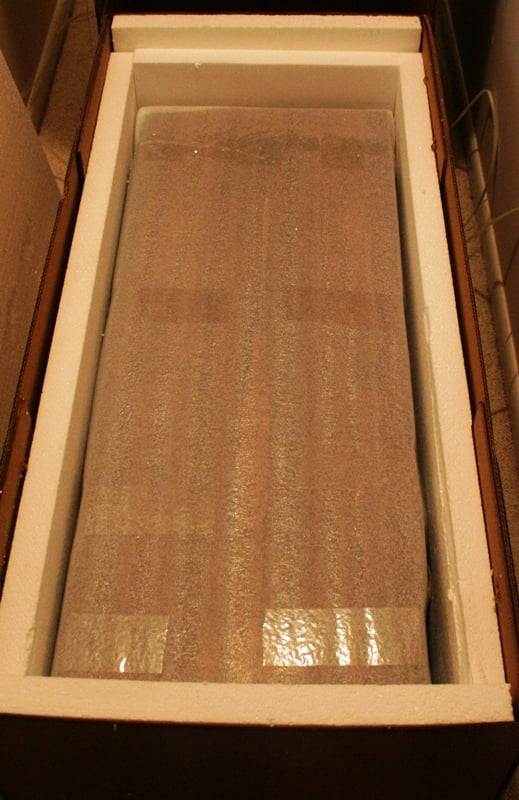
As you can see, Salk did an excellent job of packaging. Foam encased the entire speaker with cutouts for the feet and plinth. With the SongTowers the packaging had been pieced together from raw pieces of foam, with the HT2-TLs it was much more custom. I much prefer this as it means that the speakers are better protected and that customers can assume that each speaker will be packaged identically. Every component was wrapped in foam-paper for additional protection. I commend Salk for leaving out the cotton sock which many would expect at this price point. Handling a speaker at half the weight in a sock is a chore, at ~87lbs, I'm sure some lawsuits would be filed for dropped speakers or crushed feet.
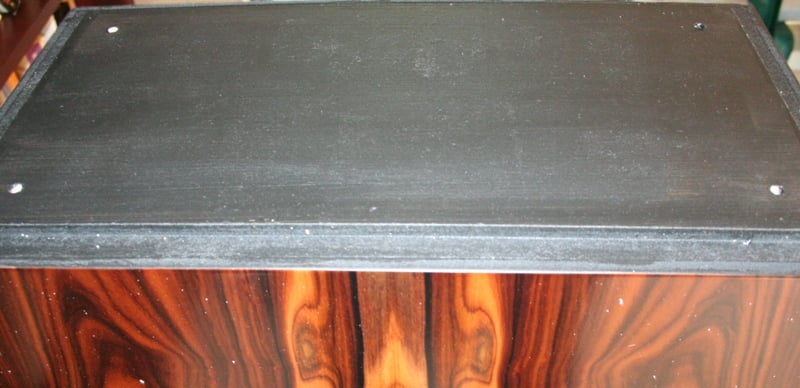 The
first thing you'll need to do is attach the plinth and the feet. This
is fairly easily done with the supplied hardware but you'll need a
socket wrench. You'll also want to make sure that the plinth is even
on every side. There is a little wiggle room so positioning will be
important. Once you secure the plinth (not too tightly or you risk
pulling out the threaded inserts), the feet are screwed in by hand.
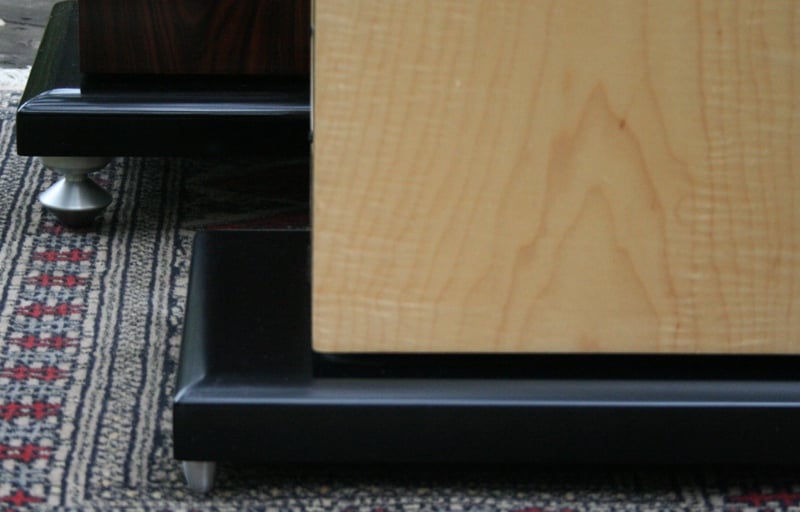
The plinth actually mounts onto the bottom of the speaker that has
been routed out about 1/2 inch so that the speaker appears to float
about 1/4 inch off the plinth. This seems to be a fairly common
practice in speaker design and one that I can't say does anything for
me aesthetically. But it does seem to be popular.
The
first thing you'll need to do is attach the plinth and the feet. This
is fairly easily done with the supplied hardware but you'll need a
socket wrench. You'll also want to make sure that the plinth is even
on every side. There is a little wiggle room so positioning will be
important. Once you secure the plinth (not too tightly or you risk
pulling out the threaded inserts), the feet are screwed in by hand.
The plinth actually mounts onto the bottom of the speaker that has
been routed out about 1/2 inch so that the speaker appears to float
about 1/4 inch off the plinth. This seems to be a fairly common
practice in speaker design and one that I can't say does anything for
me aesthetically. But it does seem to be popular.
The feet (I hesitate to call them "spikes" because they aren't) are probably the most unique design I've ever seen. They are extra bulky with a metal base that seems at first blush to be completely superfluous. The entire foot assembly measures about 2" high with the first 1/2" of that in the metal base. It then tapers down and flares out again. Finally, it tapers down to a point that is even less sharp than the one I complained about on the SongTower spikes. These feet are definitely not meant as carpet spikes which are, by definition, sharp and designed to pierce the carpet making solid contact with the ground underneath. That being said, at around ~87lbs a piece, they probably don't need carpet spikes.
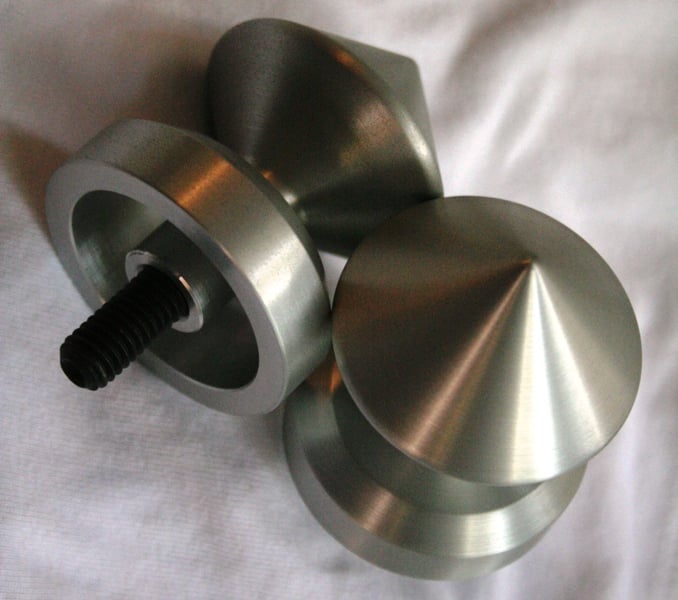
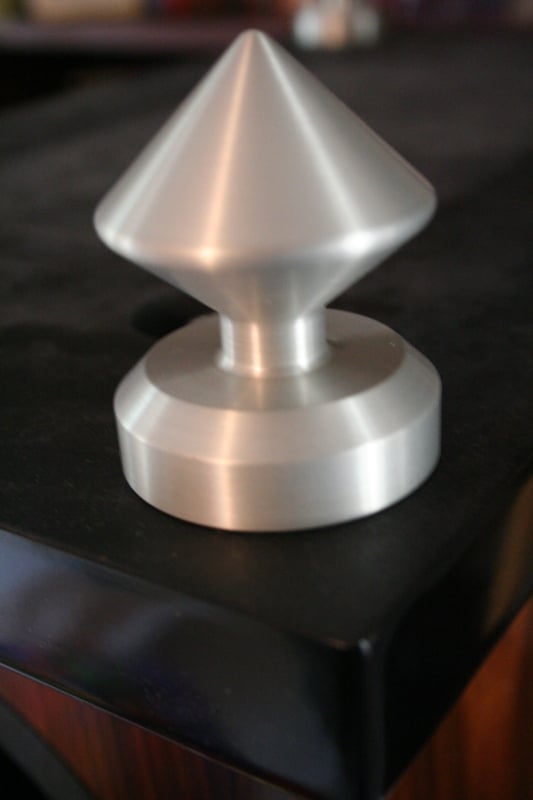
The weight should be taken into account when ordering these speakers. While they are certainly manageable (I don't consider myself to be a particularly strong man but I was able to move them with a modicum of cursing, swearing, and farting), those with bad backs or home theaters up or down stairs should be aware. If nothing else, you might want to have a friend around. I will say that I hope that Salk Sound has heavily reinforced the mounting of the rear port on this speaker as it is the natural handhold when moving these behemoths. The rear port is near the bottom of the speaker and is large enough for me to insert my whole hand. It has a smooth finish, is constructed out of plastic, and is flared at both ends.
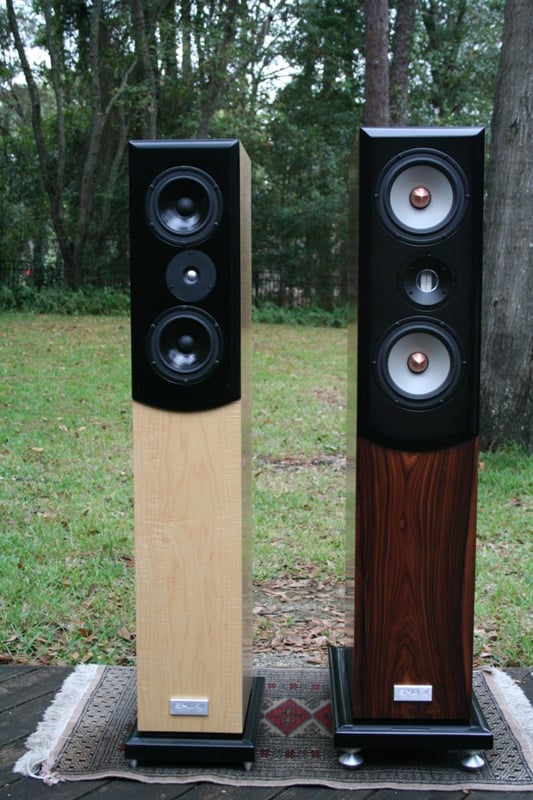 I
slightly misspeak when I call the HT2-TLs behemoths - they are very
similar in size to their smaller cousins the SongTowers. The most
notable size difference is in the depth. While the SongTowers are a
full foot deep, the HT2-TLs add
5 inches to that dimension (note, you can request the enclosure be
built with 3/4" MDF which allows them to reduce the depth back
to identical to the the original HT2's (15") without changing
the internal volume). It isn't until you take off the grill that you
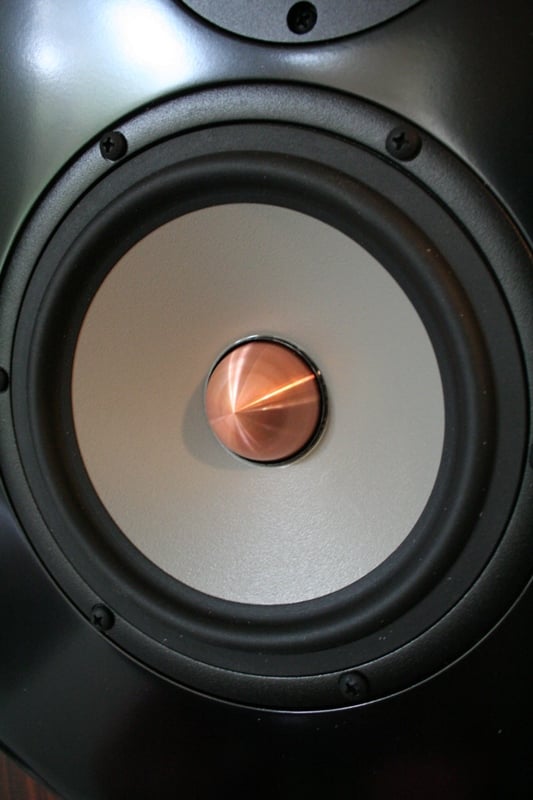
notice some of the most significant changes. Gone are the 5"
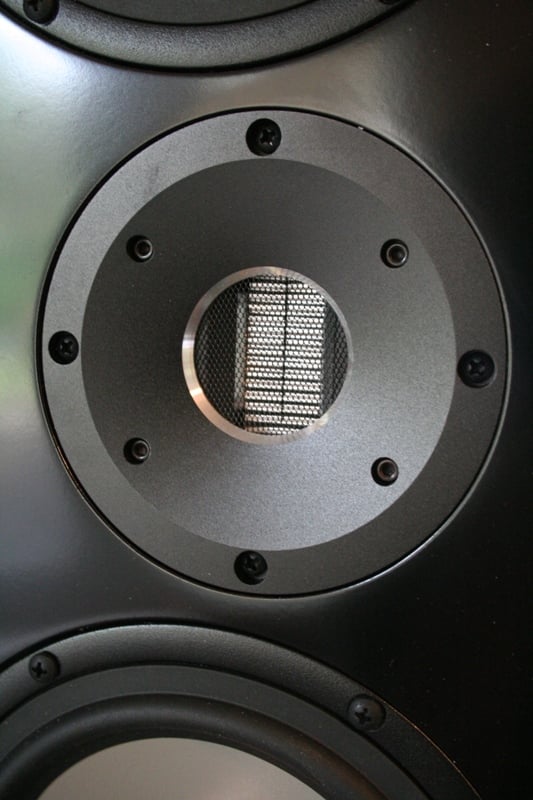
paper cone SEAS midrange and Hiquphon QW2 soft dome tweeter. Instead
you see the 7" SEAS Excel W18 midrange (magnesium/aluminum alloy
cone with copper phase plug) and LCY-110 ribbon tweeter. It is here
where the extra height in the feet starts to come into focus. Rather
than redesign the size of the box, Salk Sound, it seemed to me,
decided just to make the feet bigger. Why? Well, the 7" driver
pushed down the tweeter ~2". To get the tweeters to the optimal
height (ear height when seated) that distance had to be made up
somewhere. Salk chose the feet much to my wife's chagrin. Personally,
I don't mind the feet - I think they are different and unique. Aside
from outriggers, these feet allow the easiest adjustments I've ever
experienced. The missus on the other hand thought they looked
"stupid." Oh, well, can't please everyone. According to
Salk, these are the same spikes they normally use on all Veracity
models. They also have a "bullet" version for those who do
not care for this design similar to the ones on the SongTowers. In
addition, they would be happy to locate, purchase and install any
type of spike the customer wants. Now that's customer service!
I
slightly misspeak when I call the HT2-TLs behemoths - they are very
similar in size to their smaller cousins the SongTowers. The most
notable size difference is in the depth. While the SongTowers are a
full foot deep, the HT2-TLs add
5 inches to that dimension (note, you can request the enclosure be
built with 3/4" MDF which allows them to reduce the depth back
to identical to the the original HT2's (15") without changing
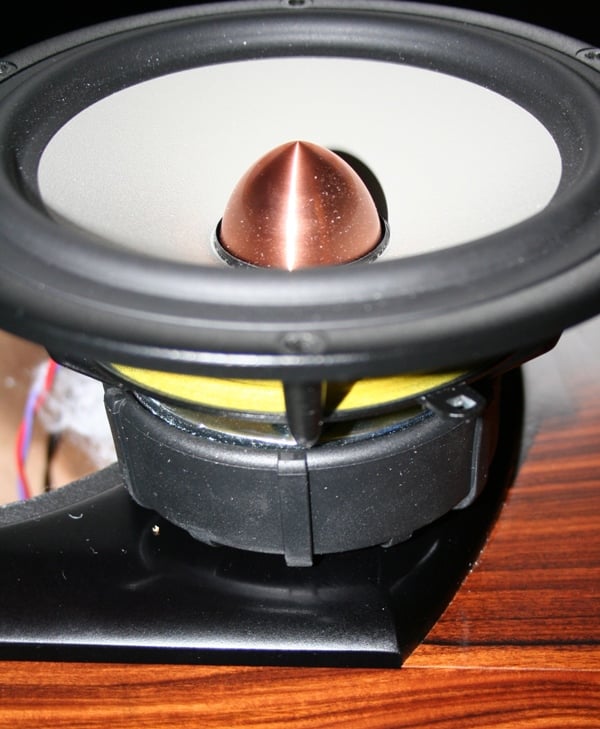
the internal volume). It isn't until you take off the grill that you
notice some of the most significant changes. Gone are the 5"
paper cone SEAS midrange and Hiquphon QW2 soft dome tweeter. Instead
you see the 7" SEAS Excel W18 midrange (magnesium/aluminum alloy
cone with copper phase plug) and LCY-110 ribbon tweeter. It is here
where the extra height in the feet starts to come into focus. Rather
than redesign the size of the box, Salk Sound, it seemed to me,
decided just to make the feet bigger. Why? Well, the 7" driver
pushed down the tweeter ~2". To get the tweeters to the optimal
height (ear height when seated) that distance had to be made up
somewhere. Salk chose the feet much to my wife's chagrin. Personally,
I don't mind the feet - I think they are different and unique. Aside
from outriggers, these feet allow the easiest adjustments I've ever
experienced. The missus on the other hand thought they looked
"stupid." Oh, well, can't please everyone. According to
Salk, these are the same spikes they normally use on all Veracity
models. They also have a "bullet" version for those who do
not care for this design similar to the ones on the SongTowers. In
addition, they would be happy to locate, purchase and install any
type of spike the customer wants. Now that's customer service!
Veracity HT2-TL Build Quality
 You are
probably wondering why I haven't addressed the one feature that every
owner, wannabe owner, and casual observer of Salk speakers
immediately note - the finish. Don't worry, I'm getting to that.
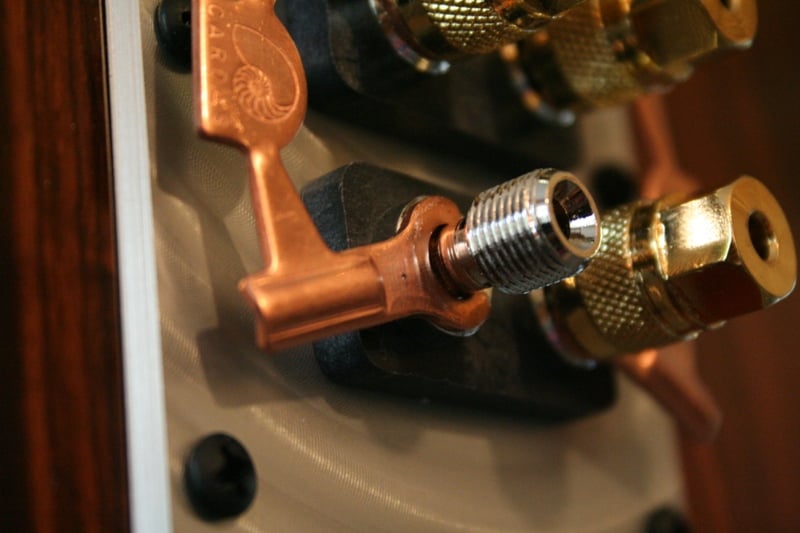
First let's look inside. The review pair of speakers were constructed
out of 1" MDF and had two 3/4" MDF internal braces running
up the length of the cabinet. As you might image, the "knock"
test is fairly inert especially from the front, back and top. From
the sides there is a bit more ringing than I expected. The back has a
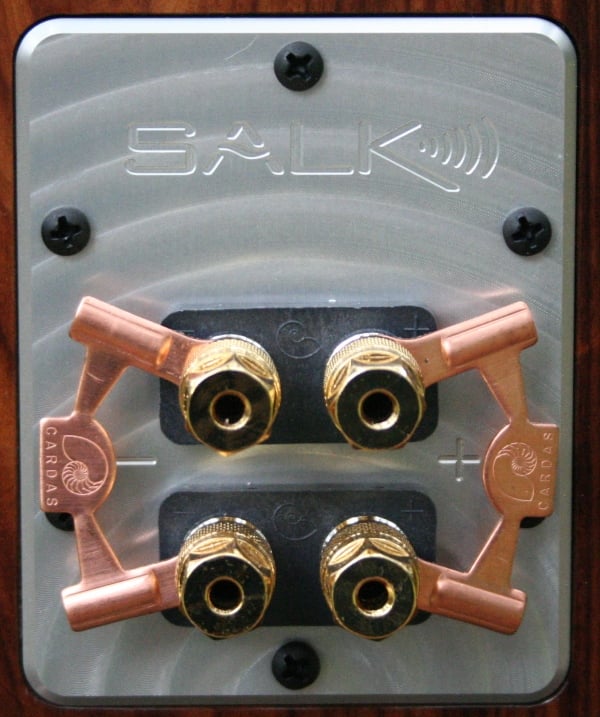
very high-end Cardas Premium dual binding post setup for bi-amping
mounted to an aluminum plate. The jumpers between the binding posts
are copper brackets - something I've not seen before. If I had a
complaint here it is that there is not a color cue as to which wires
go where. Usually the binding posts have a black and red label on
them. On the HT2-TLs, there is a + and a - etched into the aluminum
mounting plate only. While for most users this is a minor gripe as
they really only install speaker wires once, for someone that is
often switching speaker cables, it can be a hassle. There are also
black screws securing the aluminum plate. While this is the back of
the speaker and isn't getting shown off, taking the care to use an
aluminum plate and then marring it with black screws seems a little
baffling. It would have been better to use adhesive (like on the
front logo plate) or maybe rivets. The grills on the HT2-TLs are
identical (except for size) to the ones found on the SongTowers -
they are constructed out of MDF, are held on magnetically, and are
very secure. I'm a big fan of these grills as they are sturdy and
come off just easy enough.
You are
probably wondering why I haven't addressed the one feature that every
owner, wannabe owner, and casual observer of Salk speakers
immediately note - the finish. Don't worry, I'm getting to that.
First let's look inside. The review pair of speakers were constructed
out of 1" MDF and had two 3/4" MDF internal braces running
up the length of the cabinet. As you might image, the "knock"
test is fairly inert especially from the front, back and top. From
the sides there is a bit more ringing than I expected. The back has a
very high-end Cardas Premium dual binding post setup for bi-amping
mounted to an aluminum plate. The jumpers between the binding posts
are copper brackets - something I've not seen before. If I had a
complaint here it is that there is not a color cue as to which wires
go where. Usually the binding posts have a black and red label on
them. On the HT2-TLs, there is a + and a - etched into the aluminum
mounting plate only. While for most users this is a minor gripe as
they really only install speaker wires once, for someone that is
often switching speaker cables, it can be a hassle. There are also
black screws securing the aluminum plate. While this is the back of
the speaker and isn't getting shown off, taking the care to use an
aluminum plate and then marring it with black screws seems a little
baffling. It would have been better to use adhesive (like on the
front logo plate) or maybe rivets. The grills on the HT2-TLs are
identical (except for size) to the ones found on the SongTowers -
they are constructed out of MDF, are held on magnetically, and are
very secure. I'm a big fan of these grills as they are sturdy and
come off just easy enough.
 Breaking
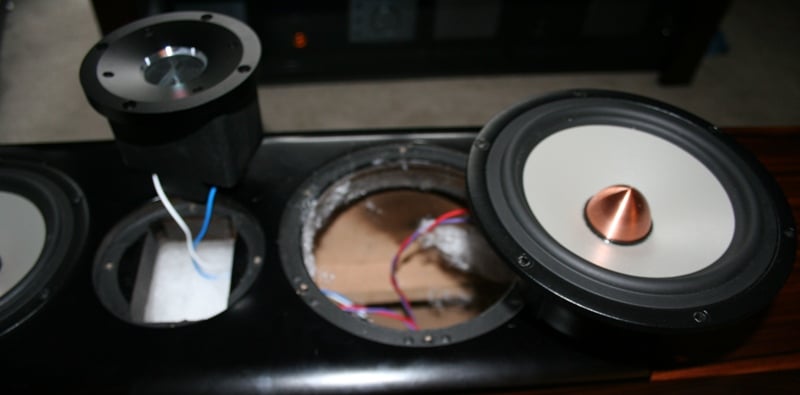
down the speaker, I removed the LCY-110
tweeter and the bottom SEAS W18 woofer on one of the review speakers.
Under the drivers I found a rubber gasket to eliminate any vibration
between the driver and the baffle. Inside I first confirmed that the
cabinets are built out of 1" MDF for the walls and 3/4" MDF
for the two internal braces. The braces run from the floor to the
roof parallel to the front baffle. They have cutouts for easy access
and to reduce weight. This is actually one less brace than is found
within the SongTower speaker which is a little confusing at this
price point and size. According to Salk, however, they claim that the
added wall thickness allowed them to reduce the number of braces. I
did confirm that the knock test on the Veracity HT2-TLs sounded
deader than the SongTowers so that appears to be true. The cabinet is
stuffed with a dacron batting that I don't usually find in speakers.
The SEAS W18 woofer was heavy and well built with an injection molded
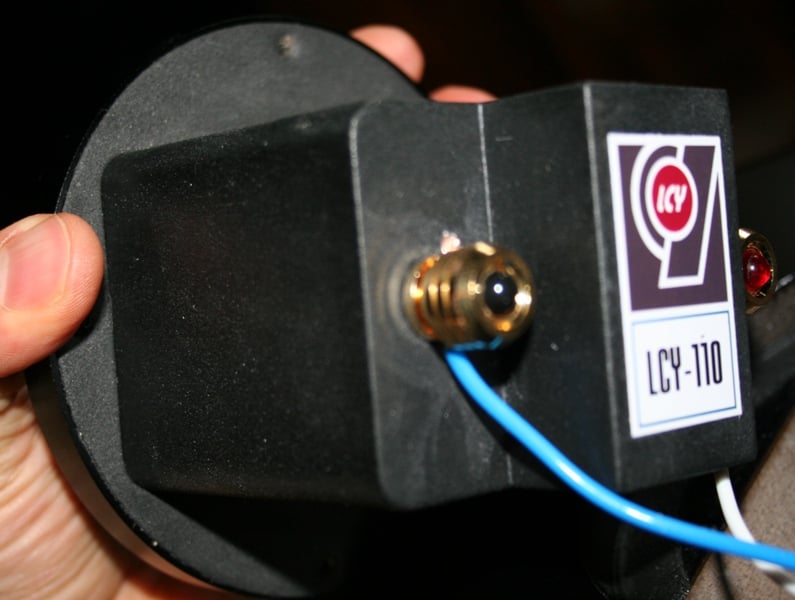
metal basket. The drivers are not shielded. The LCY ribbon tweeter is
completely encased in its own enclosure with dedicated binding posts.
The tweeter has "a unique design that uses two ribbons of half
the length of conventional ribbons in order to control vertical plane
dispersion." This essentially means that it doesn't suffer from
the same off-axis response problems that plague other ribbons. The
only real problem I saw in the construction was that the wires were
completely undampened. At this (and lower) price points I often find
a bit of sticky velvet-like material wrapped around the wires to
eliminate the possibility of noise from the wires vibrating against
the cabinet, drivers, or each other. The crossover was located
directly behind the bottom woofer. Although it may not look as neat
as an etched PCB board, great care was taken to hand build the
crossover and properly orient the air core inductors to avoid mutual
coupling which can have deleterious effects on performance.
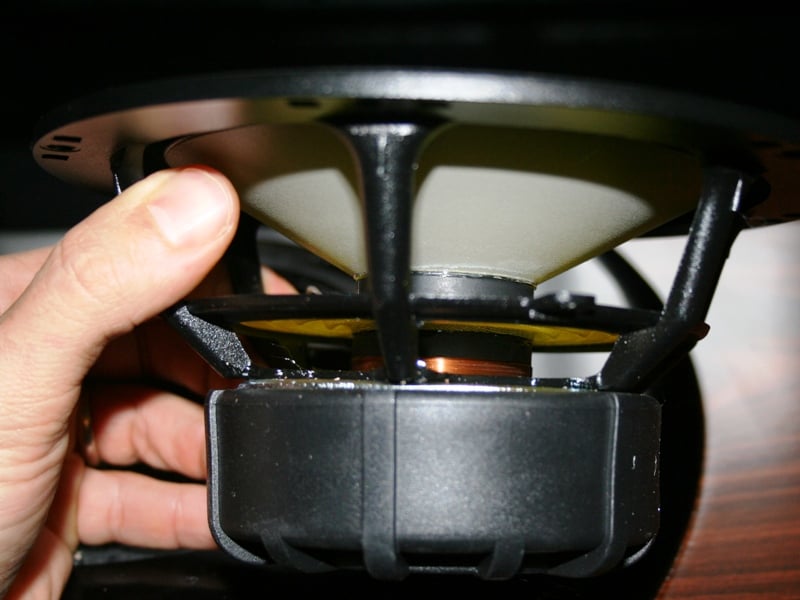
Breaking
down the speaker, I removed the LCY-110
tweeter and the bottom SEAS W18 woofer on one of the review speakers.
Under the drivers I found a rubber gasket to eliminate any vibration
between the driver and the baffle. Inside I first confirmed that the
cabinets are built out of 1" MDF for the walls and 3/4" MDF
for the two internal braces. The braces run from the floor to the
roof parallel to the front baffle. They have cutouts for easy access
and to reduce weight. This is actually one less brace than is found
within the SongTower speaker which is a little confusing at this
price point and size. According to Salk, however, they claim that the
added wall thickness allowed them to reduce the number of braces. I
did confirm that the knock test on the Veracity HT2-TLs sounded
deader than the SongTowers so that appears to be true. The cabinet is
stuffed with a dacron batting that I don't usually find in speakers.
The SEAS W18 woofer was heavy and well built with an injection molded
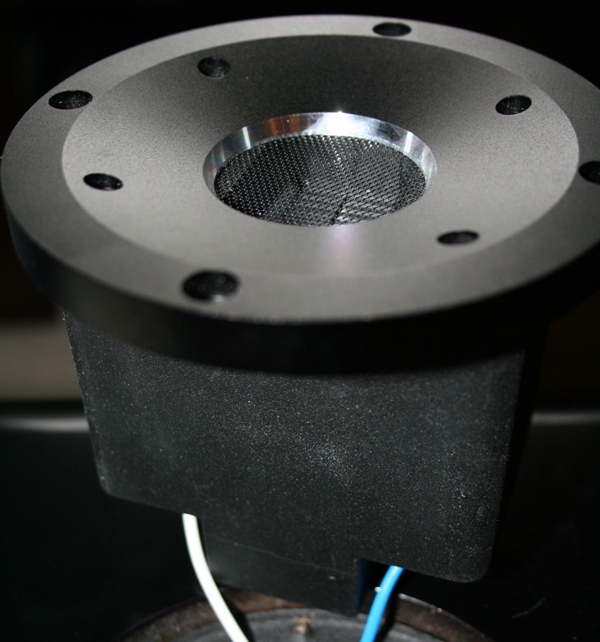
metal basket. The drivers are not shielded. The LCY ribbon tweeter is
completely encased in its own enclosure with dedicated binding posts.
The tweeter has "a unique design that uses two ribbons of half
the length of conventional ribbons in order to control vertical plane
dispersion." This essentially means that it doesn't suffer from
the same off-axis response problems that plague other ribbons. The
only real problem I saw in the construction was that the wires were
completely undampened. At this (and lower) price points I often find
a bit of sticky velvet-like material wrapped around the wires to
eliminate the possibility of noise from the wires vibrating against
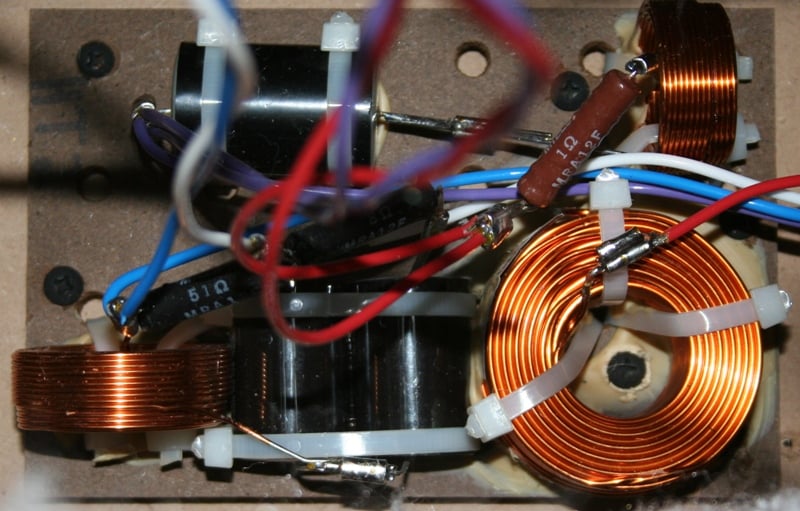
the cabinet, drivers, or each other. The crossover was located
directly behind the bottom woofer. Although it may not look as neat
as an etched PCB board, great care was taken to hand build the
crossover and properly orient the air core inductors to avoid mutual
coupling which can have deleterious effects on performance.
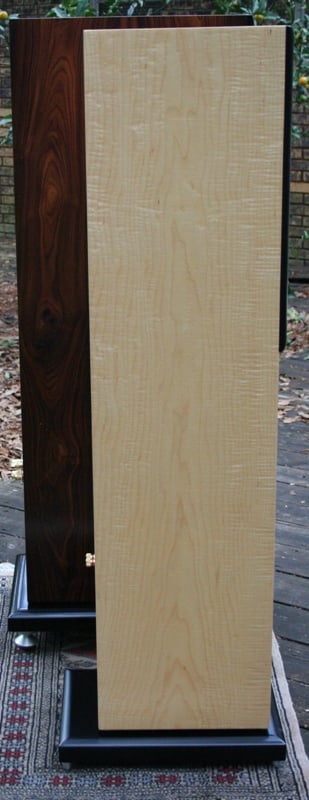
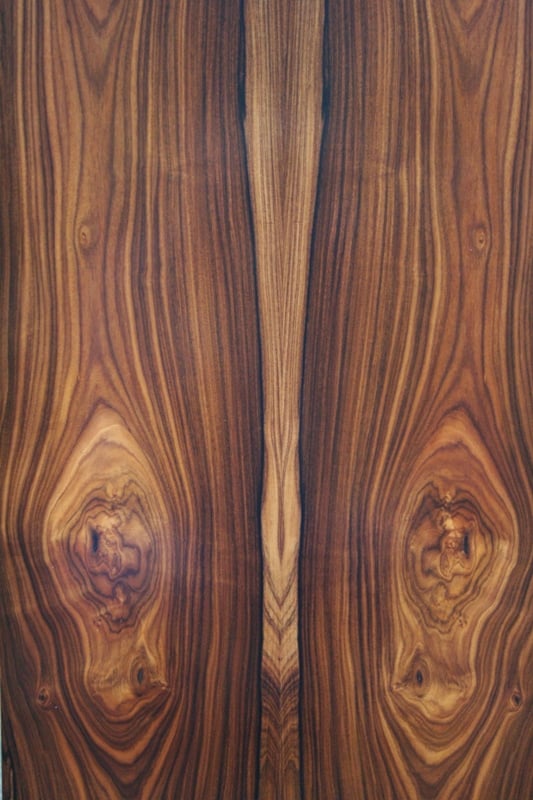 Now, I
end this section with one of the best physical features of this, or
any, Salk Sound speakers - the finish. The Veracity HT2-TL's came
wrapped in a Pau Ferro rosewood veneer that is, in short, stunning
(it is also at a $200 premium over one of the stock finishes). A
friend who works a lot with wood instantly noticed the quality of the
wood veneer saying that someone that both really knows what they are
doing and also really takes pride in their work veneered the
speakers. When I asked why he thought so he pointed out the
similarity in the grain patterns on both the speakers. He was
suitably impressed. Salk Sound used a satin lacquer on the speaker
which allows a bit of shine but not as much as a high gloss finish
would provide. The front baffle (the speaker can be designed as a
solid veneered unit for a premium) had a black satin finish. While audioholics like me are impressed with the driver typology and
overall speaker design, everyone was impressed with the looks of the
Veracity HT2-TLs. At this price point, you expect a speaker to make a
statement both physically and audibly. The Veracity HT2-TLs screamed,
even to the uninitiated, "We are quality."
Now, I
end this section with one of the best physical features of this, or
any, Salk Sound speakers - the finish. The Veracity HT2-TL's came
wrapped in a Pau Ferro rosewood veneer that is, in short, stunning
(it is also at a $200 premium over one of the stock finishes). A
friend who works a lot with wood instantly noticed the quality of the
wood veneer saying that someone that both really knows what they are
doing and also really takes pride in their work veneered the
speakers. When I asked why he thought so he pointed out the
similarity in the grain patterns on both the speakers. He was
suitably impressed. Salk Sound used a satin lacquer on the speaker
which allows a bit of shine but not as much as a high gloss finish
would provide. The front baffle (the speaker can be designed as a
solid veneered unit for a premium) had a black satin finish. While audioholics like me are impressed with the driver typology and
overall speaker design, everyone was impressed with the looks of the
Veracity HT2-TLs. At this price point, you expect a speaker to make a
statement both physically and audibly. The Veracity HT2-TLs screamed,
even to the uninitiated, "We are quality."
HT2-TL Set Up and Measurements
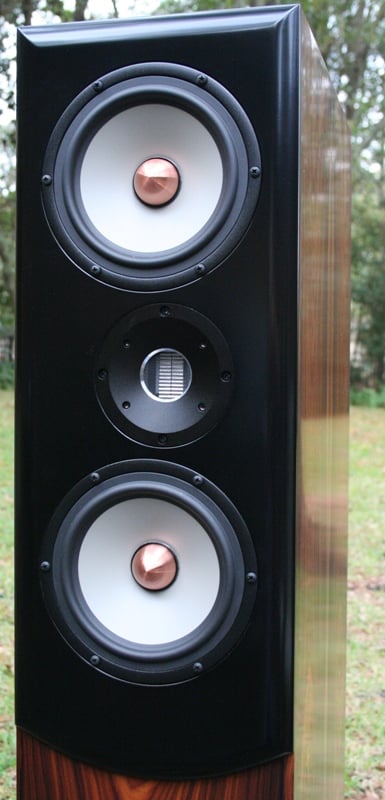 As you
might imagine, one of the hardest parts of setting up the Veracity
HT2-TLs is just the pure physical size of them. In the end, though, I
found that they were not that hard to move around. Once you got them
in place it wasn't too hard to position them - at least not on the
medium-pile carpet that I have. For those of you with hardwood…
well, I'd recommend those furniture sliders until you get your
positioning right.
As you
might imagine, one of the hardest parts of setting up the Veracity
HT2-TLs is just the pure physical size of them. In the end, though, I
found that they were not that hard to move around. Once you got them
in place it wasn't too hard to position them - at least not on the
medium-pile carpet that I have. For those of you with hardwood…
well, I'd recommend those furniture sliders until you get your
positioning right.
My impression of the Veracity HT2-TLs is that they need a bit of room to breath. In my room, their bass was so impactful as to be a bit distracting at times. While I don't consider this a con, I do think it is something that potential customers should keep in mind. While they very well might work well in smaller rooms (especially if you aren't planning on running a sub), they will really shine in medium to larger rooms. With a 4ohm impedance and 87dB sensitivity, I'd recommend external amplification or a very solid A/V receiver. You are definitely going to be tempted to bump up to a dedicated amp for these - and rightfully so. The Veracity's certainly will benefit from any power upgrade you might want to provide. People looking for speakers in this price bracket probably already have amps so this is a non-issue. But if you don't, check out some of the Emotiva, Rotel, or other amp offerings. Your new Veracitys will thank you.
I, like you, was initially worried a lot about off axis response. The manufacturer of the ribbon tweeter might claim great off-axis response but you never really know. I started with the speakers pointed directly at me and varied them at multiple angles all the way to pointed straight ahead (so that I'm about 45 degrees off axis. The speakers were placed about 8-9 feet from each other and the same from my seated position. I decided, eventually, on a positioning with the speaker pointed slightly toward me with their point of convergence a few feet behind my back. This is slightly more toe-in than I usually use. I will say, however, that fine tuning was quite a chore. While imaging overall was fine as long as you were close, the nature of ribbon tweeters is that there is a definite sweetspot. If you can hit that sweetspot, you'll get a lot more resolution in your imaging and sound definition. It took a few hours of listening and adjusting before I got it just right. I'd say you should be prepared to do the same.
 These
speakers were mated with a lot of different gear. First and foremost
most of the critical listening tests were done with the Denon
DVD-3910 driving
the analogue only Emotiva RSP-1/RPA-1
combo. This combo provides more power than most speakers will ever
need and keeps everything in the analogue domain. Also, however, they
were matched with the Denon
AVR-4310CI,
Seymour
AV 5001 Ice Amps,
and a myriad of sources. Wiring was provided by Blue
Jean Cables and
Ram
Electronics. All
listening tests were done in full range without the benefit of a sub
and in pure direct mode (where applicable). All Audyssey and other
processing was disabled. The room has been treated with some DIY
treatments and
GiK
Acoustics Tri-Traps
placed as recommended by Auralex via their Room
Acoustics Plus
consultation program.
These
speakers were mated with a lot of different gear. First and foremost
most of the critical listening tests were done with the Denon
DVD-3910 driving
the analogue only Emotiva RSP-1/RPA-1
combo. This combo provides more power than most speakers will ever
need and keeps everything in the analogue domain. Also, however, they
were matched with the Denon
AVR-4310CI,
Seymour
AV 5001 Ice Amps,
and a myriad of sources. Wiring was provided by Blue
Jean Cables and
Ram
Electronics. All
listening tests were done in full range without the benefit of a sub
and in pure direct mode (where applicable). All Audyssey and other
processing was disabled. The room has been treated with some DIY
treatments and
GiK
Acoustics Tri-Traps
placed as recommended by Auralex via their Room
Acoustics Plus
consultation program.
Measurements & Testing
For measurements, I used TrueRTA with a Behringer ECM8000 mic and an M-Audio Fast Track Pro external soundcard. For amplification I used a Sherbourn 2/75B amp. This setup gives me a lot of flexibility as to where and when I can do measurement. To start with I placed the speakers in my Ready Acoustics treated AV Rant podcast room. This room is small but extremely dead with 19, four inch thick panels lining the walls and ceiling and straddling all the corners. While the room isn't exactly an anechoic chamber, it is a heck of a lot deader than most people would ever experience and almost every wife on the planet allow in their home. To start with I measured the speakers 1 meter on axis.
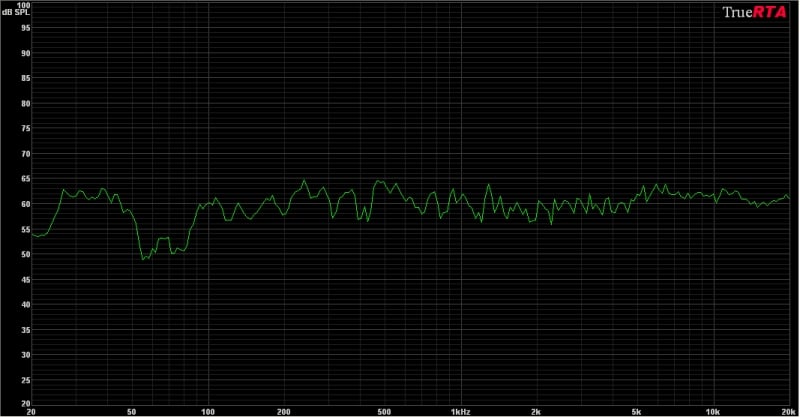
Salk
Sound Veracity HT2-TL One Meter On Axis 1/24th Octave
(note - not
a 1 watt measurement)
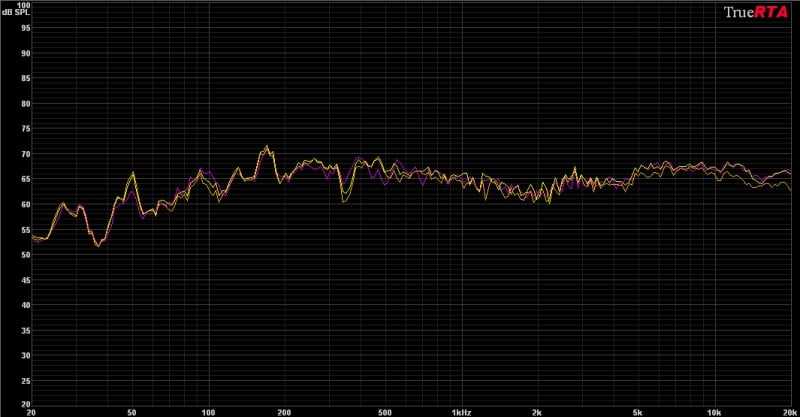
As you can clearly see the Salks are extremely linear all the way through the bandwidth. The suckout between 50Hz and 90Hz is surely room/mic interaction. I verified by measuring the drivers nearfield and no suckout was present.
Salk
Veracity HT2-TL 1/2 Meter, 1/24th Octave
Purple
- On Axis, Yellow - 15 Degrees off, Orange - 30 Degrees Off
Up closer to the speaker you start to see a dip at 2k (something that is just barely noticeable in the first graph). This is where the tweeter and the woofers cross over which is more prominent up close because the microphone is too close to accurately measure the summed output. The interesting thing is the linearity of the speaker. On the top end, the On Axis and 15 degrees off are almost identical. The 30 degrees off is showing a bit of a dip but it still looks very good.
Salk Veracity HT2-TL Impedance/Phase vs Frequency
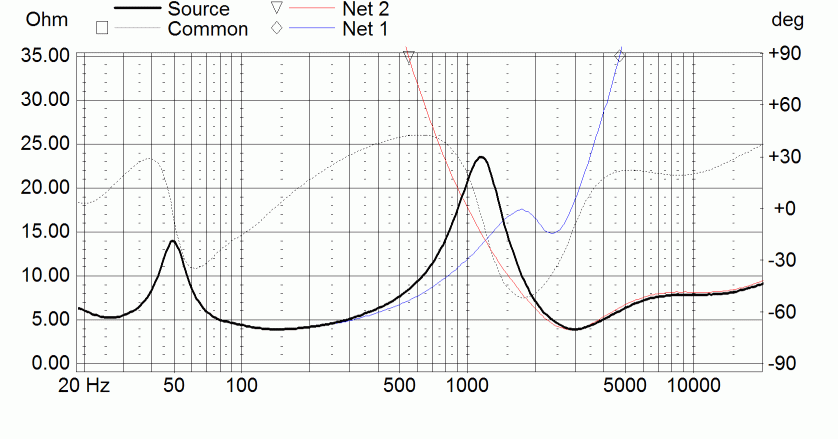
The Salk Veracity HT2-TL actually measures more like a 5 ohm speaker but Salk appears to be rating it conservatively. There is a pretty sharp impedance peak at around 1200Hz causing a phase shift of about 75 degrees but it shouldn't cause any amplifier problems. Salk is using a higher order network to reduce the on axis response of the woofer before the crossover frequency which helps preserve its linearity. This is a common practice among competently designed loudspeakers such as the HT2-TLs.
Salk HT2-TL Listening Tests
I have a smallish room (about 12 by 14 feet) that is open on two sides to most of the rest of the house. So, while my room dimensions might suggest that I don't need that much of a speaker, the open nature of the room tends to suck out a lot of bass. Still, with the addition of the room treatments and bass trapping, I've found that I've tamed a lot of my worst problems. Running a speaker, even one that is as nice as the Salk Veracity HT2-TLs, full range… well you have to take into account the limitations of the speaker plus any problems that the room might introduce into the bass regions. As I mentioned in the setup section, the HT2-TLs were run full range, pure-direct, without any room correction processing (other than passive room treatments), and without the aid of a sub.
I was floored by the bass.
Often I start with my Rives Test CD 2 disc to test just how low the speakers will reach - not in an anechoic chamber but in room. I've tested speakers that have lived up to their specifications, a few that have exceeded, but most have fallen a bit short. Salk Sound rates the HT2-TLs down to 32Hz at -3dB. I heard (well, felt really) bass as low as 20Hz with usable bass as low as 25Hz (the next test tone up from 20Hz on the disc). Subjectively, the usable, authoritative in-room response was at least 25Hz and I'm guessing a bit lower. To say I'm impressed is a massive understatement. And it's not just because the speakers dip so low - no, that's not the real reason. I'd been using the Veracity HT2-TLs for some weeks before I performed this test and I had no idea they reached that low. In fact, I had convinced myself that they were similar to the SongTowers in performance on that metric. Why? Because they blended so well with my Axiom EP500 subwoofer. I was running the speakers full range with the sub for normal and multichannel playback and the speakers added perfectly to the sub without even singling themselves out. While you might think that this indicates that they weren't contributing much, I'd disagree. To me this indicates that not only were they contributing, but they were not adding any noise you might associate with over-reaching, bottoming out, or distortion. If my eyes weren't wide open before, they were now.
 The
next, and really most obvious, step was to compare them to the Salk
SongTower QWTs. The Veracity HT2-TLs are the big
brother of the SongTowers and for over double the price, I'd expect a
significant performance increase. Again, I was still half convinced
that the Songs would hold their own against their big brother. I've
loved the Songs for quite some time and really thought you couldn't
do much better no matter the price. So, to be honest, I was biased
against the Veracity HT2-TLs before the review. Of course I based
this opinion on how well the SongTower's had preformed not only in my
review but in our
shootout.
The
next, and really most obvious, step was to compare them to the Salk
SongTower QWTs. The Veracity HT2-TLs are the big
brother of the SongTowers and for over double the price, I'd expect a
significant performance increase. Again, I was still half convinced
that the Songs would hold their own against their big brother. I've
loved the Songs for quite some time and really thought you couldn't
do much better no matter the price. So, to be honest, I was biased
against the Veracity HT2-TLs before the review. Of course I based
this opinion on how well the SongTower's had preformed not only in my
review but in our
shootout.
I was wrong.
(Don't tell my wife I said that.)
I've reviewed another pair of speakers with SEAS Excel magnesium-cone woofers - the Snell LCR7 XLs. These speakers retail for 6k a pair and are bookshelf speakers. The Snells sounded better than the SongTowers but at 3x's the price, they should. Of course they didn't have the bass that the towers had (you can't fight physics) so the comparison was very hard to do. While I no longer have the Snells on hand (unfortunately), the HT2-TL's are a much better direct comparison to the SongTowers. They have the same basic design, the same shape, and the same driver orientation. While the cabinet of the Veracity speakers is bigger and thicker and the drivers are upgraded, the speakers are basically the same.
 The
comparison, however, showed that they weren't. The Veracity HT2-TL's
bass was more than a match for the Song's. In the direct comparison,
on every metric I could think of, the HT2-TLs were superior to the
Songs. Bass, midrange, highs… everything. My jaw literally hit the
ground. I A/B'ed the speakers over and over thinking that there must
be something wrong with the wires or configuration. Sure, the
Veracity's cost a bit more than 2x's the SongTowers, but to my ear,
the differences were dramatic. Very dramatic. Are they worth the
money…? Well, to my ear, yes. I hate saying this as I have such
love and respect for the SongTowers but they don't hold a candle to
the Veracitys. The bass isn't even in the same league. While I found
both of the speakers to have very linear bass responses, the depth of
the Veracity HT2-TLs was worlds better. The entire presentation and
sound of the Veracity speakers was more natural, more lifelike, and,
in general, more effortless. In fact, if I had to describe the
Veracity HT2-TLs in a word it would be effortless. They don't seem to
present sound as much as allow sound to pour through them.
The
comparison, however, showed that they weren't. The Veracity HT2-TL's
bass was more than a match for the Song's. In the direct comparison,
on every metric I could think of, the HT2-TLs were superior to the
Songs. Bass, midrange, highs… everything. My jaw literally hit the
ground. I A/B'ed the speakers over and over thinking that there must
be something wrong with the wires or configuration. Sure, the
Veracity's cost a bit more than 2x's the SongTowers, but to my ear,
the differences were dramatic. Very dramatic. Are they worth the
money…? Well, to my ear, yes. I hate saying this as I have such
love and respect for the SongTowers but they don't hold a candle to
the Veracitys. The bass isn't even in the same league. While I found
both of the speakers to have very linear bass responses, the depth of
the Veracity HT2-TLs was worlds better. The entire presentation and
sound of the Veracity speakers was more natural, more lifelike, and,
in general, more effortless. In fact, if I had to describe the
Veracity HT2-TLs in a word it would be effortless. They don't seem to
present sound as much as allow sound to pour through them.
CD:
Yello - the eye I
use this album not only for a setup disc, but also to test some of
the more gross functions of a pair of speakers. While it doesn't have
a lot of range to it, this album does allow you to test the imaging
and bass linearity. Again, I was impressed by the bass of the
Veracity HT2-TLs. The bass was not just punchy, not just linear, but
visceral. Windows shook - and not because I was blasting the music.
The Veracitys were able to vibrate the windows just by hitting the
right, very low, frequencies. That is something I usually only
experience with subwoofers. Imaging was also very good. As you'd
expect with a ribbon tweeter, three-dimensionality was increased. Out
of all the speakers I've ever heard in this room, the Salk Veracity
HT2-TLs probably imaged the best. Sounds were clearly place behind,
next to, and in front of me. Side to side movement was well defined
and quick. There are a few moments on a few songs that have sounds
flipping between the two speakers very quickly. In poor speakers, you
can't tell it is happening. In OK speakers you can tell something is
going on but not exactly what. In great speakers you can clearly hear
the sounds as they bounce back and fourth. With the Salks, I heard a
level of definition I've never experienced before. Not only could I
hear the sounds in each speaker but I could also hear the silence
between each of the sounds. It was a level of precision that I didn't
know I was missing.
I
use this album not only for a setup disc, but also to test some of
the more gross functions of a pair of speakers. While it doesn't have
a lot of range to it, this album does allow you to test the imaging
and bass linearity. Again, I was impressed by the bass of the
Veracity HT2-TLs. The bass was not just punchy, not just linear, but
visceral. Windows shook - and not because I was blasting the music.
The Veracitys were able to vibrate the windows just by hitting the
right, very low, frequencies. That is something I usually only
experience with subwoofers. Imaging was also very good. As you'd
expect with a ribbon tweeter, three-dimensionality was increased. Out
of all the speakers I've ever heard in this room, the Salk Veracity
HT2-TLs probably imaged the best. Sounds were clearly place behind,
next to, and in front of me. Side to side movement was well defined
and quick. There are a few moments on a few songs that have sounds
flipping between the two speakers very quickly. In poor speakers, you
can't tell it is happening. In OK speakers you can tell something is
going on but not exactly what. In great speakers you can clearly hear
the sounds as they bounce back and fourth. With the Salks, I heard a
level of definition I've never experienced before. Not only could I
hear the sounds in each speaker but I could also hear the silence
between each of the sounds. It was a level of precision that I didn't
know I was missing.
The one complaint I had with the Veracity HT2-TLs mirrors one I had with the SongTowers - the soundstage width. I'm not sure if this is a function of the design of these two speakers but both of the speakers suffered from a similar limitation. While the Veracitys seemed to have wider soundstage than the Songs, it still didn't seem as wide as it could be and I've definitely experienced speakers with wider soundstages.
CD:
Bang & Olufsen Vol. XIII - The Sound of Perfection
Ok,
some of you that are familiar with my SongTower review are thinking,
"Hey, he used these same albums for that review too." Yes,
yes I did. And yes, I'm doing it on purpose. In each of these
comparisons, I'm using not only the HT2-TLs but also the SongTowers.
I can say that in every case the Veracitys are superior. Again, this
is not a knock against the Songs - who would expect a manufacturer to
make a speaker that sounds as good as one of their own speakers that
costs half as much? But I had them both out so I continued with the
comparison. There are songs that I've heard hundreds of times and
there are particular parts of songs that I've heard thousands. These
are portions that have particularly challenging material. There were
moments when I came to one of those extremely familiar sections where
my eyes got wide as I realized I was hearing something I'd never
heard before. More often than not it was movement in the space. What
I thought was a localized sound often moved with the Veracity
HT2-TLs.
CD:
Lorna Hunt - One Fine Day I
plugged in this CD for one reason only. When I reviewed the Salk
SongTowers I felt that female vocals were a little more forward than
was natural, especially with this recording. I thought perhaps it was
a function of the driver layout (slightly offset tweeter) or perhaps
something intrinsic to the speaker design. I can say that this isn't
the case. Lorna's vocals were well anchored in the center and were
prominent but not forward with the HT2-TLs. Again, I was impressed by
the definition I was hearing. Separation between the notes was clear
and clean. There seemed to be very little "extra" sound
coming from the Veracitys. In addition, I've rarely found a speaker
that I felt was as non-fatiguing as the HT2-TLs. I could really crank
the volume on these speakers without running out of headroom.
Usually, I turn things down because they start to compress or
breakup, with the Veracitys, I turned it down because it was just too
loud.
I
plugged in this CD for one reason only. When I reviewed the Salk
SongTowers I felt that female vocals were a little more forward than
was natural, especially with this recording. I thought perhaps it was
a function of the driver layout (slightly offset tweeter) or perhaps
something intrinsic to the speaker design. I can say that this isn't
the case. Lorna's vocals were well anchored in the center and were
prominent but not forward with the HT2-TLs. Again, I was impressed by
the definition I was hearing. Separation between the notes was clear
and clean. There seemed to be very little "extra" sound
coming from the Veracitys. In addition, I've rarely found a speaker
that I felt was as non-fatiguing as the HT2-TLs. I could really crank
the volume on these speakers without running out of headroom.
Usually, I turn things down because they start to compress or
breakup, with the Veracitys, I turned it down because it was just too
loud.
Blu-Ray:
Diana Krall - Live in Rio
With
this test, instead of the Emotiva combo, I used the Denon AVR-4310CI
and Seymour AV Ice Amps. This Blu-ray has a two channel LPCM mode for
the highest possible two-channel audio. On this recording, I actually
think the LPCM Stereo track sounds a bit better than the DTS HD
Master Audio track - it seems to have more bass and a bit more
presence. This may very well be because the rest of the speakers in
my setup are not up to the caliber of the Veracity HT2-TLs. One thing
you hear about planar speakers is that they image amazingly. Well,
the HT2-TLs only have a ribbon tweeter so I only got a taste of it
but it was a taste that I really enjoyed. Imaging was very
three-dimensional. Diana's voice was rock solid in the center of the
soundstage through moved toward and away from me as her importance in
the music changed (sometimes she's just adding a bit behind a solo).
Plenty of times I could hear the audience and the background music
coming from behind me. While this recording isn't particularly bassy,
the bass that was available was punchy and accurate.
Veracity HT2-TL Conclusion
 To be
absolutely honest, I was biased when I went into this review. I
thought there would be no way any speaker, Salk or no, could best my
beloved Salk SongTowers. I was wrong. The Veracity HT2-TLs command a
high price, to be sure, but that price is well justified. The
performance of the Veracity's is in a completely different league
from other speakers I've heard in this, and higher price categories.
With commanding bass, ruler flat response, and what is possibly the
finest veneer I've ever seen on a speaker, it's hard to find
something about the Veracity HT2-TLs to not like. In my opinion, Salk
has once again redefined a price point. While they took the under $2k
and made it their own with the SongTowers, it looks like they are
trying to do the same with the under $4k. If this is your price
point, you need to hear these speakers.
To be
absolutely honest, I was biased when I went into this review. I
thought there would be no way any speaker, Salk or no, could best my
beloved Salk SongTowers. I was wrong. The Veracity HT2-TLs command a
high price, to be sure, but that price is well justified. The
performance of the Veracity's is in a completely different league
from other speakers I've heard in this, and higher price categories.
With commanding bass, ruler flat response, and what is possibly the
finest veneer I've ever seen on a speaker, it's hard to find
something about the Veracity HT2-TLs to not like. In my opinion, Salk
has once again redefined a price point. While they took the under $2k
and made it their own with the SongTowers, it looks like they are
trying to do the same with the under $4k. If this is your price
point, you need to hear these speakers.
Salk Veracity HT2-TL
$3995/pair
Salk
Sound
2700
Long Winter Lane
Oakland, MI 48363
(248)
814-8062
Read Consumer Reviews on
The Score Card
The scoring below is based on each piece of equipment doing the duty it is designed for. The numbers are weighed heavily with respect to the individual cost of each unit, thus giving a rating roughly equal to:
Performance × Price Factor/Value = Rating
Audioholics.com note: The ratings indicated below are based on subjective listening and objective testing of the product in question. The rating scale is based on performance/value ratio. If you notice better performing products in future reviews that have lower numbers in certain areas, be aware that the value factor is most likely the culprit. Other Audioholics reviewers may rate products solely based on performance, and each reviewer has his/her own system for ratings.
Audioholics Rating Scale
 — Excellent
- — Very Good
- — Good
- — Fair
- — Poor
| Metric | Rating |
|---|---|
| Build Quality | |
| Appearance | |
| Treble Extension | |
| Treble Smoothness | |
| Midrange Accuracy | |
| Bass Extension | |
| Bass Accuracy | |
| Imaging | |
| Soundstage | |
| Dynamic Range | |
| Fit and Finish | |
| Performance |  |
| Value | |
As Associate Editor at Audioholics, Tom promises to the best of his ability to give each review the same amount of attention, consideration, and thoughtfulness as possible and keep his writings free from undue bias and preconceptions. Any indication, either internally or from another, that bias has entered into his review will be immediately investigated. Substantiation of mistakes or bias will be immediately corrected regardless of personal stake, feelings, or ego.
View full profile Subscribe to our newsletter