


Pinnacle Black Diamond BD 1000 Tower Loudspeaker System Review
Pinnacle BD 1000
- Product Name: BD 1000
- Manufacturer: Pinnacle
- Performance Rating:


- Value Rating:
- Review Date: August 27, 2010 11:24
- MSRP: $ 1299/pair
- System Type: 3-Way, 4-element, 4th Order Front Vented
- 1" liquid cooled silk dome tweeter with neodymium magnet
- 5.25" polymer cone midrange with rubber surround and die cast phase plug
- (2) 5.25" polymer cone woofers with rubber surrounds
- Frequency Response: 34 - 20 kHz (+/- 3 dB)
- Crossover Frequency: 200 Hz & 5 kHz
- Recommended Amplifier Power: 15 - 200 Watts RMS per channel
- Operative Power Range: 15 - 150 Watts, 300 Watts Peak
- Sensitivity: 88 dB @ 1 Watt / 1 Meter (2.83 Volts Pink Noise)
- Nominal Impedance: 8 Ohms
- Dimensions: 6 1/2" Wide x 40 3/4" High x 10 1/2" Deep (with grille and isolation cones attached)
- Finish: High Gloss Piano Black
- Warranty: 10 years transferable on parts & labor
- Weight: 33 lbs. each
Pros
- Blends into any room décor
- Impressive sound for its size
- Surprisingly good bass extension
Cons
- Tends to sound compressed at high listening levels
- Some poor design choices in crossover
- Pricey (see notes)
Pinnacle Black Diamond BD 1000 Introduction
 Pinnacle
isn't a name that's been on the Audioholics radar for quite some time. In fact, it's been nearly 13 years since my
love affair with the Pinnacle Classic Gold Aerogel Tower system that at the
time impressed me so much that it served as my reference speaker for many
years. Pinnacle says that since 1999 its
core market direction has been providing a wide variety of speaker products
(over 100) primarily through accredited Custom Installers. Their line up including speaker bars, ultra
compact, high performance powered subwoofers, 3 lines of architectural
in-wall/in-ceiling product, 2 lines of speakers in cabinets – all ranging in
price from highly affordable to prices for people with virtually unlimited
budgets. Pinnacle proudly points out
that they are in their 34th year and claim to be the 2nd
oldest independently owned and operated speaker company in the United
States. Now, we have rediscovered them
through their new Black Diamond series.
This new speaker line developed by Pinnacle is said to offer similar
performance characteristics of their older Classic Gold series but in a more
modern, compact, elegant cabinet.
Curious to see how Pinnacle progressed over the years, I requested a
pair of their entry level towers - the BD 1000's for a formal review and
inclusion into our annual speaker face off.
Unfortunately timing wasn't just right for the face off, but I have had
plenty of time to focus my attention for this dedicated review.
Pinnacle
isn't a name that's been on the Audioholics radar for quite some time. In fact, it's been nearly 13 years since my
love affair with the Pinnacle Classic Gold Aerogel Tower system that at the
time impressed me so much that it served as my reference speaker for many
years. Pinnacle says that since 1999 its
core market direction has been providing a wide variety of speaker products
(over 100) primarily through accredited Custom Installers. Their line up including speaker bars, ultra
compact, high performance powered subwoofers, 3 lines of architectural
in-wall/in-ceiling product, 2 lines of speakers in cabinets – all ranging in
price from highly affordable to prices for people with virtually unlimited
budgets. Pinnacle proudly points out
that they are in their 34th year and claim to be the 2nd
oldest independently owned and operated speaker company in the United
States. Now, we have rediscovered them
through their new Black Diamond series.
This new speaker line developed by Pinnacle is said to offer similar
performance characteristics of their older Classic Gold series but in a more
modern, compact, elegant cabinet.
Curious to see how Pinnacle progressed over the years, I requested a
pair of their entry level towers - the BD 1000's for a formal review and
inclusion into our annual speaker face off.
Unfortunately timing wasn't just right for the face off, but I have had
plenty of time to focus my attention for this dedicated review.
Design Overview
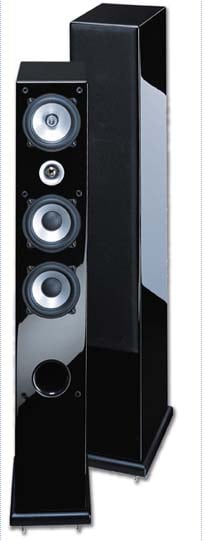
 The Pinnacle BD 1000s only come in
high gloss black, but that's not a bad thing -
especially since they look so elegant.
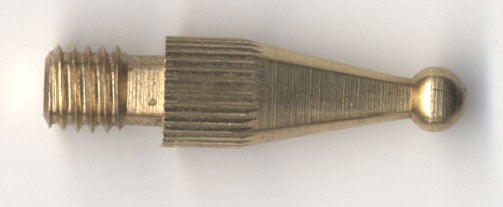
They feature a non-removable plinth which adds stability to the speaker
to prevent tipping and also provides for accessory feet - though only theirs
will fit as the threaded holes are larger than I've seen with most accessory
items. Pinnacle supplies solid brass
feet with a ball tip on the bottom to prevent damage to hardwood flooring. They seemed to make the speaker extremely
unstable on carpeted floors, so I don’t recommend installing them in those
cases. Pinnacle did inform me that the
actual production models have the holes spaced out further than my prototypes
to add stability in such cases. I
recommend using the feet when placing these speakers on hard flooring to
potentially enhance system bass response by better coupling the cabinet to the
floor.
The Pinnacle BD 1000s only come in
high gloss black, but that's not a bad thing -
especially since they look so elegant.
They feature a non-removable plinth which adds stability to the speaker
to prevent tipping and also provides for accessory feet - though only theirs
will fit as the threaded holes are larger than I've seen with most accessory
items. Pinnacle supplies solid brass
feet with a ball tip on the bottom to prevent damage to hardwood flooring. They seemed to make the speaker extremely
unstable on carpeted floors, so I don’t recommend installing them in those
cases. Pinnacle did inform me that the
actual production models have the holes spaced out further than my prototypes
to add stability in such cases. I
recommend using the feet when placing these speakers on hard flooring to
potentially enhance system bass response by better coupling the cabinet to the
floor. 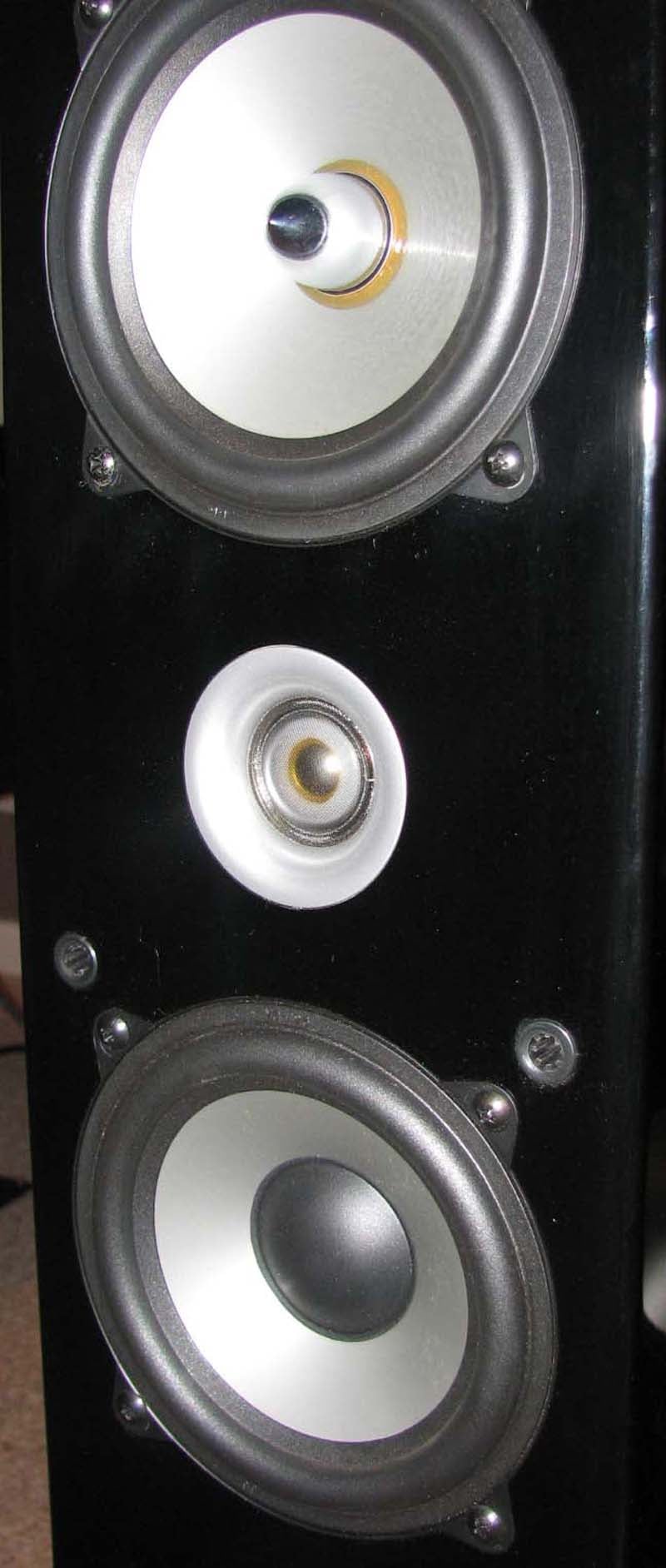 The
BD 1000s I received are engineering samples, and the finish wasn't perfect upon
close inspection as evident in visible seams across the cabinet. Pinnacle
assured me this is not the case with production units. The Pinnacles are quite a nice looking,
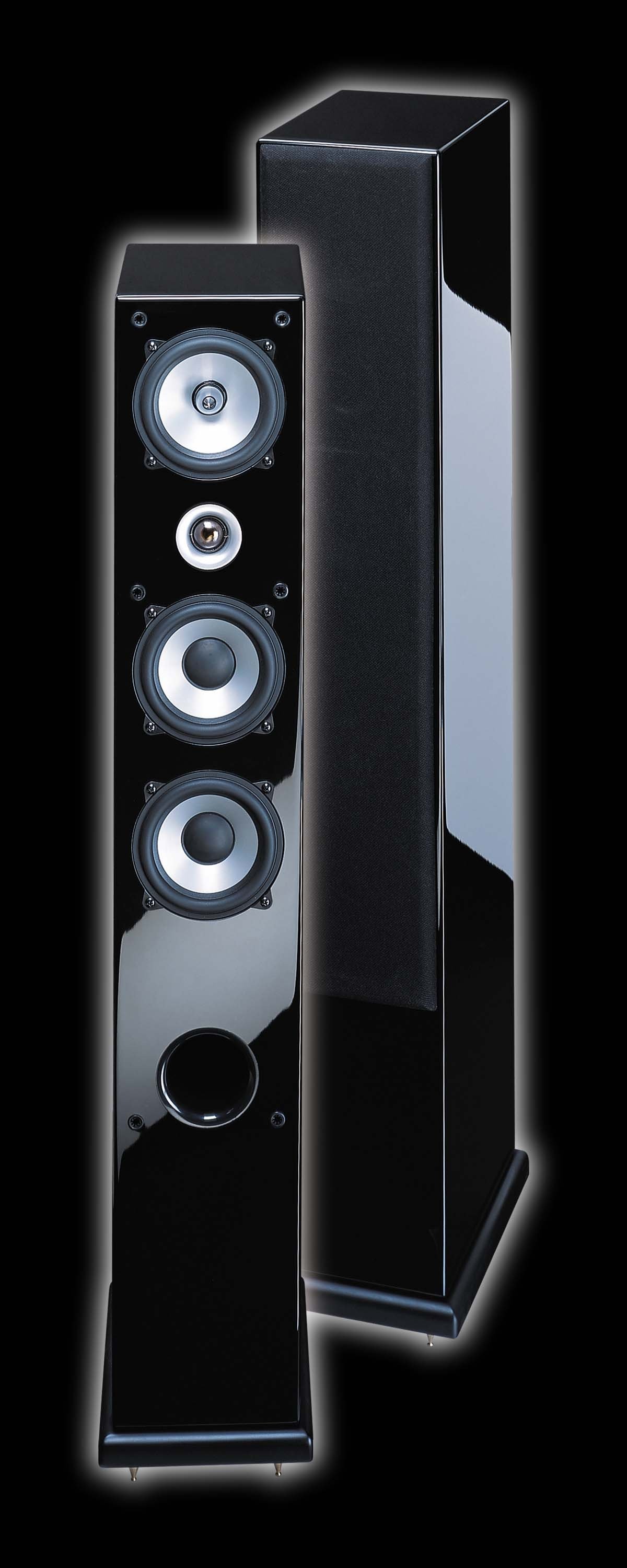
unobtrusive speaker, especially with the grille off with the four drivers
staring at you. The grille frame is
constructed of MDF instead of the cheap thin plastic you find on many more
costly speakers. The pegs are metallic
and grated for a more secure and stable connection. I hope Pinnacle will eventually move over to
magnetic grilles like you see in many of their competitors these days. The speaker looks much more attractive with
the grille off without visible threaded holes.
On the flip side, pegs do offer a more stable grille connection which is
an important consideration when the grille is too large or heavy for magnets to
properly secure them.
The
BD 1000s I received are engineering samples, and the finish wasn't perfect upon
close inspection as evident in visible seams across the cabinet. Pinnacle
assured me this is not the case with production units. The Pinnacles are quite a nice looking,
unobtrusive speaker, especially with the grille off with the four drivers
staring at you. The grille frame is
constructed of MDF instead of the cheap thin plastic you find on many more
costly speakers. The pegs are metallic
and grated for a more secure and stable connection. I hope Pinnacle will eventually move over to
magnetic grilles like you see in many of their competitors these days. The speaker looks much more attractive with
the grille off without visible threaded holes.
On the flip side, pegs do offer a more stable grille connection which is
an important consideration when the grille is too large or heavy for magnets to
properly secure them.
The
BD 1000 is considered to be a tower system standing a mere 40" tall. Because of its slimline profile, it's less
imposing than some bookshelf speakers.
Sitting in a listening space, these speakers will likely go unnoticed by
most casual observers entering the room.
The back of the BD 1000's are unremarkable. They have a simple pair of 5-way binding post
connections with no provisions for bi-amping or bi-wiring.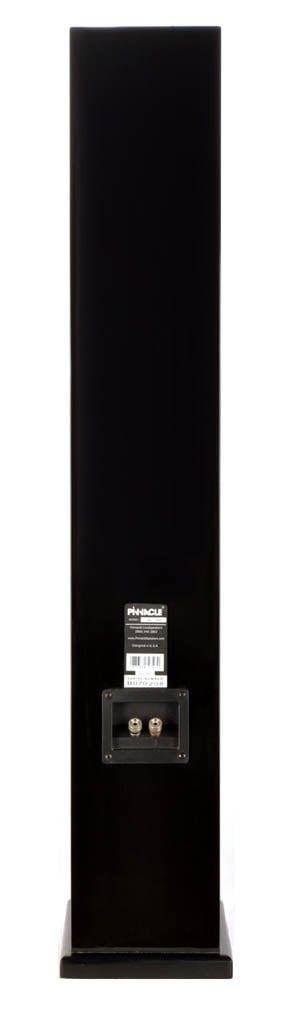 The
BD 1000 is rated at 8-ohms and has a claimed frequency response of 34Hz to
20kHz (+-3db) with a sensitivity rating of 88dB 1 watt/meter. This system is a three-way, four element, 4th
order front vented design consisting of two 5-1/4" polymer woofers, one
5-1/4" polymer midrange with phase plug, and a 1" horn loaded silk
dome tweeter with neodymium magnet. I'm
not a huge fan of neodymium tweeters because they are often thermally limited,
but Pinnacle was obviously well aware of this limitation and hence chose a high
crossover point (5kHz) to reduce system strain and preserve dynamics. Though, I couldn't help to wonder if the
system would have blended better with a 3/4" dome tweeter instead of the
1" horn loaded dome they chose. To
pull this high crossover point off correctly, Pinnacle would have to use a small
enough midrange with high enough usable bandwidth to ensure a seamless
blend. Small drivers require a larger
motor structure and add cost. Large
drivers don't do well here but the phase plug does helps to extend
bandwidth.
The
BD 1000 is rated at 8-ohms and has a claimed frequency response of 34Hz to
20kHz (+-3db) with a sensitivity rating of 88dB 1 watt/meter. This system is a three-way, four element, 4th
order front vented design consisting of two 5-1/4" polymer woofers, one
5-1/4" polymer midrange with phase plug, and a 1" horn loaded silk
dome tweeter with neodymium magnet. I'm
not a huge fan of neodymium tweeters because they are often thermally limited,
but Pinnacle was obviously well aware of this limitation and hence chose a high
crossover point (5kHz) to reduce system strain and preserve dynamics. Though, I couldn't help to wonder if the
system would have blended better with a 3/4" dome tweeter instead of the
1" horn loaded dome they chose. To
pull this high crossover point off correctly, Pinnacle would have to use a small
enough midrange with high enough usable bandwidth to ensure a seamless
blend. Small drivers require a larger
motor structure and add cost. Large
drivers don't do well here but the phase plug does helps to extend
bandwidth.
The
midrange has a real phase plug and not the fake knock off (quasi-phase plug)
popularized by some of the budget European speakers. Those quasi-phase plugs
serve no purpose other than cosmetic and can actually hinder performance by
providing an inconsistent surface area while also increasing cone mass. Typically,
this yields poorer frequency response and linearity. A real phase plug driver like the one found
in the Pinnacle BD 1000's doesn’t move with cone excursions as its not directly
connected to the cone. This allows the
driver to extend its usable frequency response by reducing cone mass and
decreasing beaming.
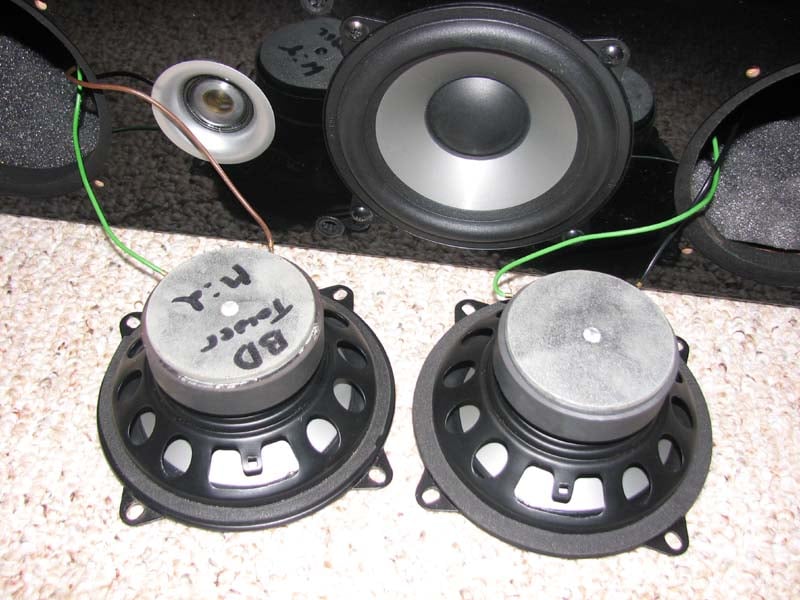 The woofers are all stamped metal
baskets and magnetically shielded though my samples were prototypes and
unshielded which is a moot point in this day and age with virtually everyone
tossing their bulky CRTs for flatpanel displays.
The woofers are all stamped metal
baskets and magnetically shielded though my samples were prototypes and
unshielded which is a moot point in this day and age with virtually everyone
tossing their bulky CRTs for flatpanel displays.
The
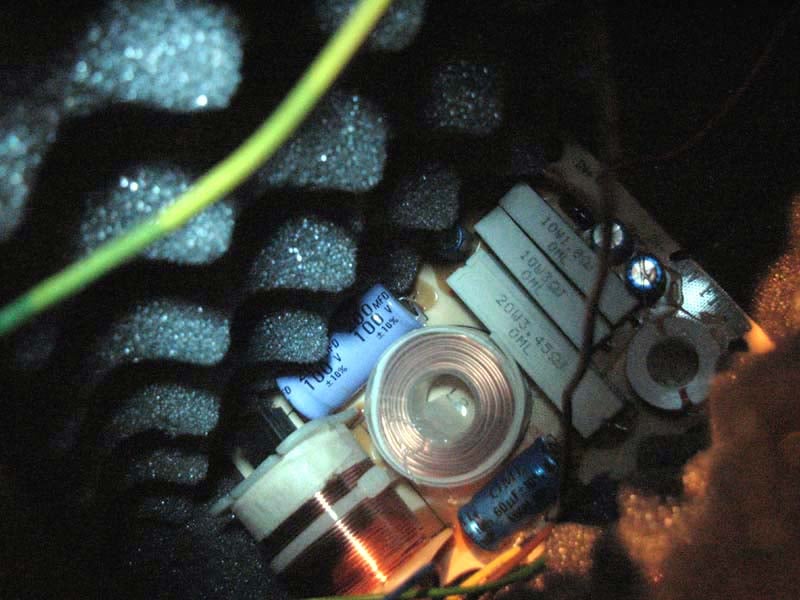
crossover consists of a combination of air core and iron core inductors,
ceramic resistors to pad down tweeter sensitivity and electrolytic
capacitors. Nothing here stands out as
high end or specialty but, as I've found in the past, Pinnacle has a knack for
designing good sound with budget components.
The resistors being so closely spaced causes me a little concern with
regards to heat but I've seen many speaker manufacturers do this to cut down on
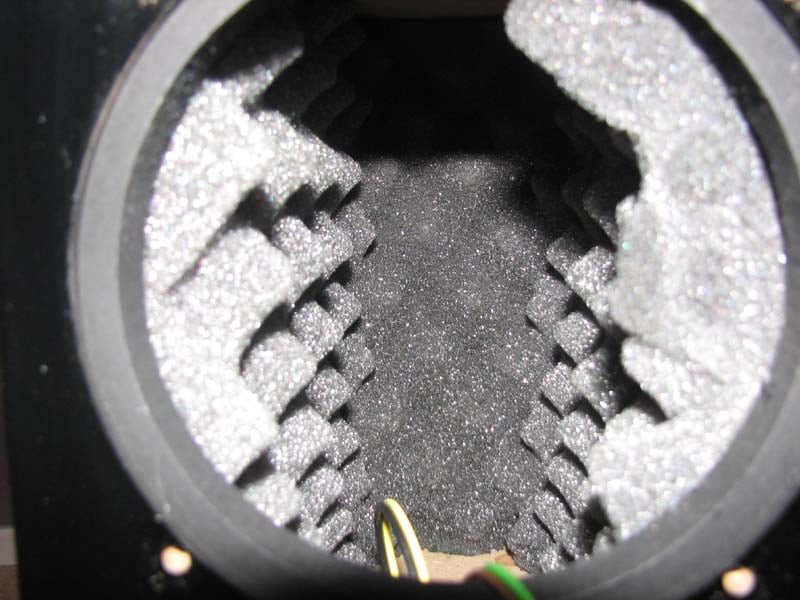
PCB board space and cram the crossover into the enclosure. The cabinet appears to be 1/2" MDF with
a 3/4" front baffle and is stuffed with egg carton type foam. The midrange is in its own enclosure to
ensure optimal performance and employs a first order high pass filter. The midrange still contributes to the overall
upper bass output of the system without causing the system impedance to drop at
low frequencies.
Pinnacle Black Diamond BD 1000 Setup and Listening Tests
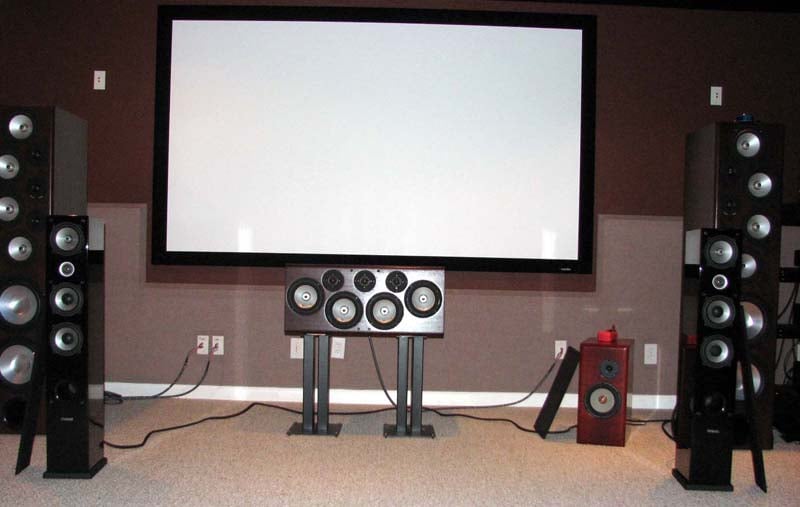 I set up the BD 1000s in the
Audioholics Showcase home theater room using my Marantz PM-11S2 Integrated
amplifier and Denon DVD-A1UDCI BD player as the source. The BD player was connected via balanced
analog outputs to the PM-11S2 using Impact Acoustics balanced cables. The speaker cables were Kimber 8PR with WBT
compression banana terminations.
I set up the BD 1000s in the
Audioholics Showcase home theater room using my Marantz PM-11S2 Integrated
amplifier and Denon DVD-A1UDCI BD player as the source. The BD player was connected via balanced
analog outputs to the PM-11S2 using Impact Acoustics balanced cables. The speaker cables were Kimber 8PR with WBT
compression banana terminations.
The speakers were positioned about 5ft from side and backwalls, spread apart 10ft from each other which was about two feet shy of the 12ft distance to my primary listening position. After experimenting, I found they sounded best when toed in slightly which really focused the imaging and vocals but also overemphasized the treble slightly.
Unless otherwise stated, all listening tests were conducted full-range without a subwoofer in two-channel configuration. This is the worst possible test condition for this speaker system as I suspect most users will bass manage them utilizing a powered subwoofer to take the stress off the speakers and provide more bass impact, especially for movies. Nevertheless I treated this review as a dedicated two-channel setup but in most cases I do recommend a powered subwoofer even for two-channel setups.
Listening Tests
Dianne
Reeves - Never to Far
I
wasn't expecting much bass playback on this track with the little BD 1000s, but
they surpassed my expectations. Instead
of the anemic bass heard on most economical systems like this, it was quite
punchy and extended. I did notice a bit
of boom but I would suspect this would be welcome to people that like bass
emphasis in their music. Dianne Reeves'
voice sounded very articulate, especially when the Pinnacle's were
toed-in. I found the saxophone started
to sound a bit stringent when played at high output levels but the speakers
never bottomed out - even when being pounded with the intense bass of this
track.
Fourplay - Chant
This
song tends to break improperly designed woofers because of the extremely
dynamic kick drum. I honestly thought
the little 5" drivers of the Pinnacles would go spastic if I turned the
volume up. Instead, I was pleasantly
surprised at how loudly they would play without ever bottoming out. At very high levels I did hear things start
losing composure, but no nasty bottoming was evident. I've tested $3k+ tower speakers that couldn't
play as loudly as the Pinnacles did with this track.
Pat Metheny / John Scofield - Say the
Brother's Name
The
clarity of the brushes was excellent while the reverb of Pat Metheny's guitar
sounded heavenly. Upon cranking up the
volume in my large listening space, I noticed the instruments started to lose
composure. Everything began sounding a
bit mushy and compressed. It sounded
like thermal compression of the tweeter or the coils in the crossover was the
likely culprit but I was asking these speakers to provide full-range sound in a
listening space that demands much larger, more dynamic, speakers..
Harry Connick - Receipt for Love
This
is a good track to check for chestiness in the male vocals. I didn't find this coloration artifact in the BD 1000s which is
tribute to not only the good midrange they used, but properly executed
crossover points to avoid having their midrange extend too low in frequency to
cause this issue. I did find Harry's
voice a bit sibilant but it wasn't offensive.
Voice articulation was excellent and the speakers imaged well enough to give
the illusion of a phantom center channel at the sweet spot.
Sade - Hang On To Your Love
The
BD 1000s really did a nice job of placing that raspy sound at the beginning of
this song front and center on each speaker.
Guitars were forward and vibrant and Sade's voice was clear and
relatively uncolored. When loudness was
kept at reasonable levels, the overall presentation of this song was very
pleasant.
Santana - Put Your Lights On
You
can tell that the BD 1000s love to show off their percussive prowess. They really dug the beginning of this Santana
classic featuring the lyrics of Everlast.
The transparency of the acoustic guitar was excellent as the BD 1000s
did a nice job of conveying stereo imaging here. Bass had a good thump to it, certainly enough
to seamlessly blend in very well with a sub to reach the bottom octave with
more authority. Vocals were a bit more
recessed than I was expecting in this song but the BD 1000s did a great job of
showing off just how good they could sound on well recorded music.
Pinnacle Black Diamond BD 1000 Measurements and Analysis
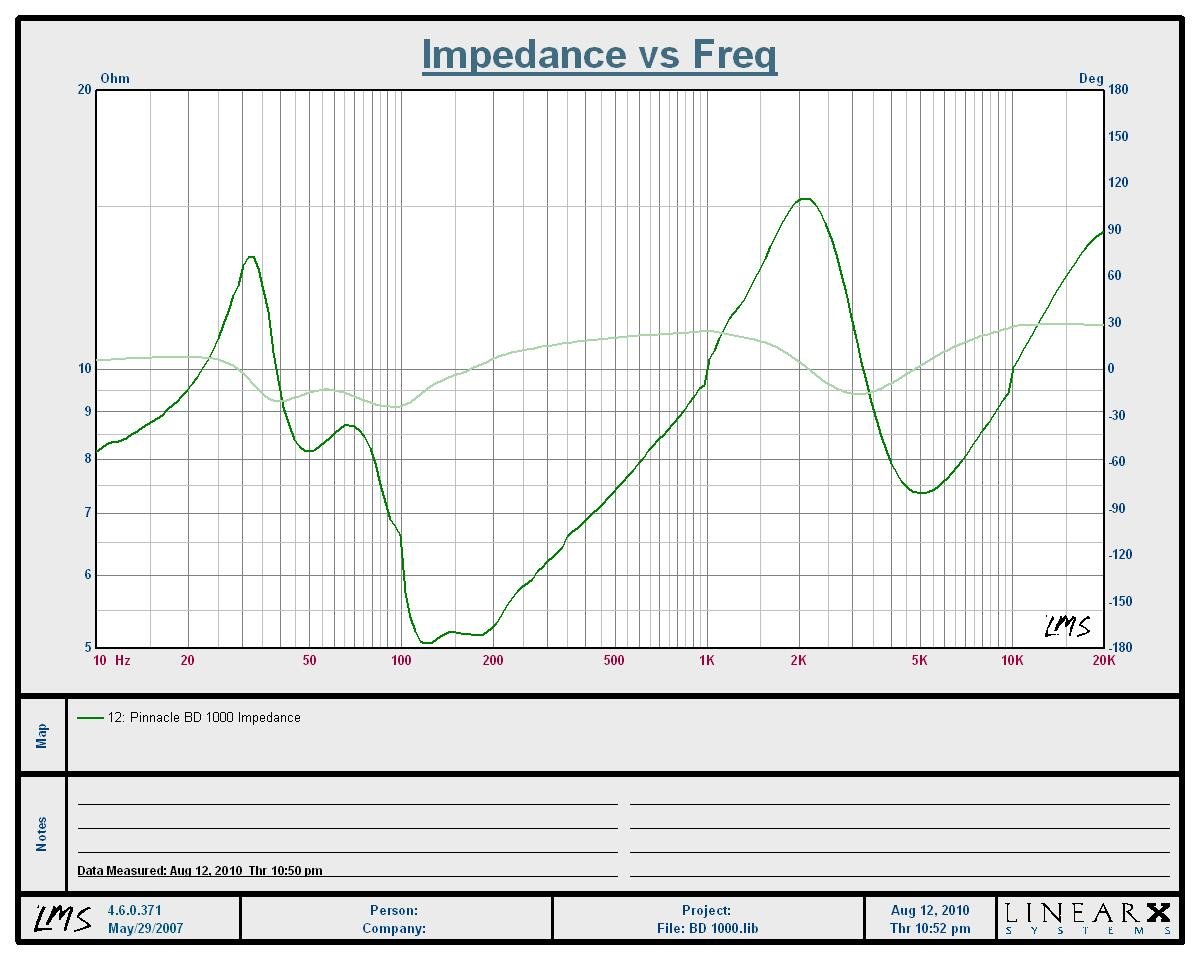
Impedance / Phase Measurements of the Pinnacle BD 1000
The BD 1000s maintain an 8 ohm rating all the way down to DC but the sharp dip down to 5 ohms in the 100-200Hz range where amplifiers are usually taxed to deliver a lot of power gives me pause about saying they are an easy load for any receiver amplifier to drive. Further work could have been done by the manufacturer to better optimize the crossover. Looking at the frequency response of these graphs and the impedance plot, the BD 1000s appear to be tuned at around 50Hz. The asymmetrical saddle points are likely caused by the impedance dip of all three 5.25" inch drivers in combination with their crossover network. Again further optimization of the crossover would have helped this.
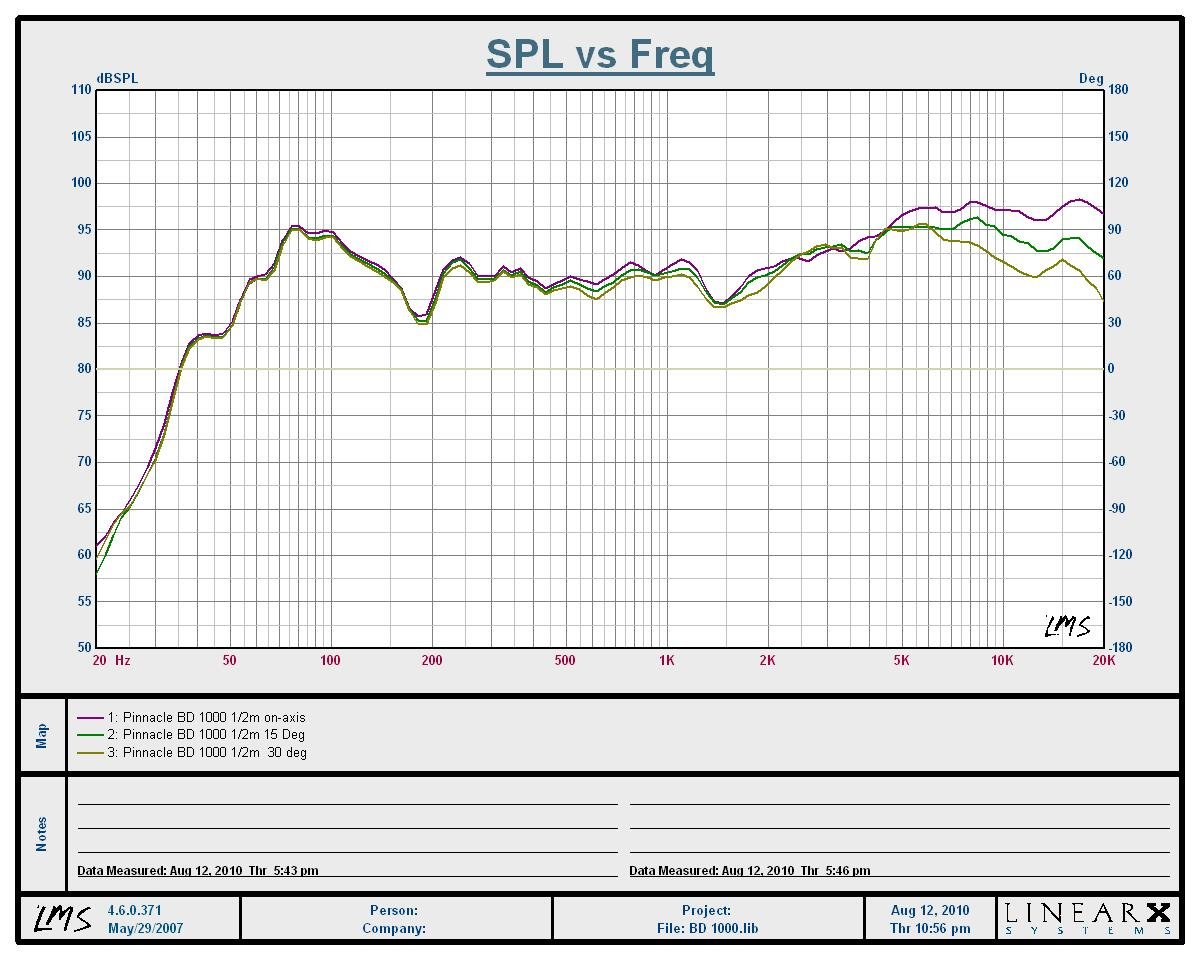
In-room
1/2 meter SPL vs Frequency Pinnacle BD 1000 (1/12th octave smoothed)
Purple
trace: on-axis; Green trace: 15 deg off-axis; Yellow trace: 30 deg off-axis
Measuring
the BD 1000s in my listening space revealed a very smooth midrange response
overall with a bit of excessive top end likely caused by the horn loaded
tweeter. In my experience, Pinnacle has
always run the tweeters a few dB high in their products to appeal to a wider
listening audience. Overall this strategy
pays off in most cases unless the listener is ultra critical about having a
tonally neutral speaker, or if they tend to play the speaker at very high
output levels which places further strain on the tweeters since they are
working harder. Normally I would NOT
recommend toeing in these speakers because of the excessive tweeter output, but
I found them to image much better when toe-ed in. So slight toe-in is recommended in most
cases.
When
I power swept the BD 1000s, I found one of the cabinets resonated slightly at
around 300 Hz. If I applied pressure to
the cabinet, the resonance went away.
Since these were prototypes I think it's safe to assume this issue was a
function of my sample and not a flaw in production units. In any event, I never detected this cabinet
resonance in my listening tests so the comments here are mostly academic.
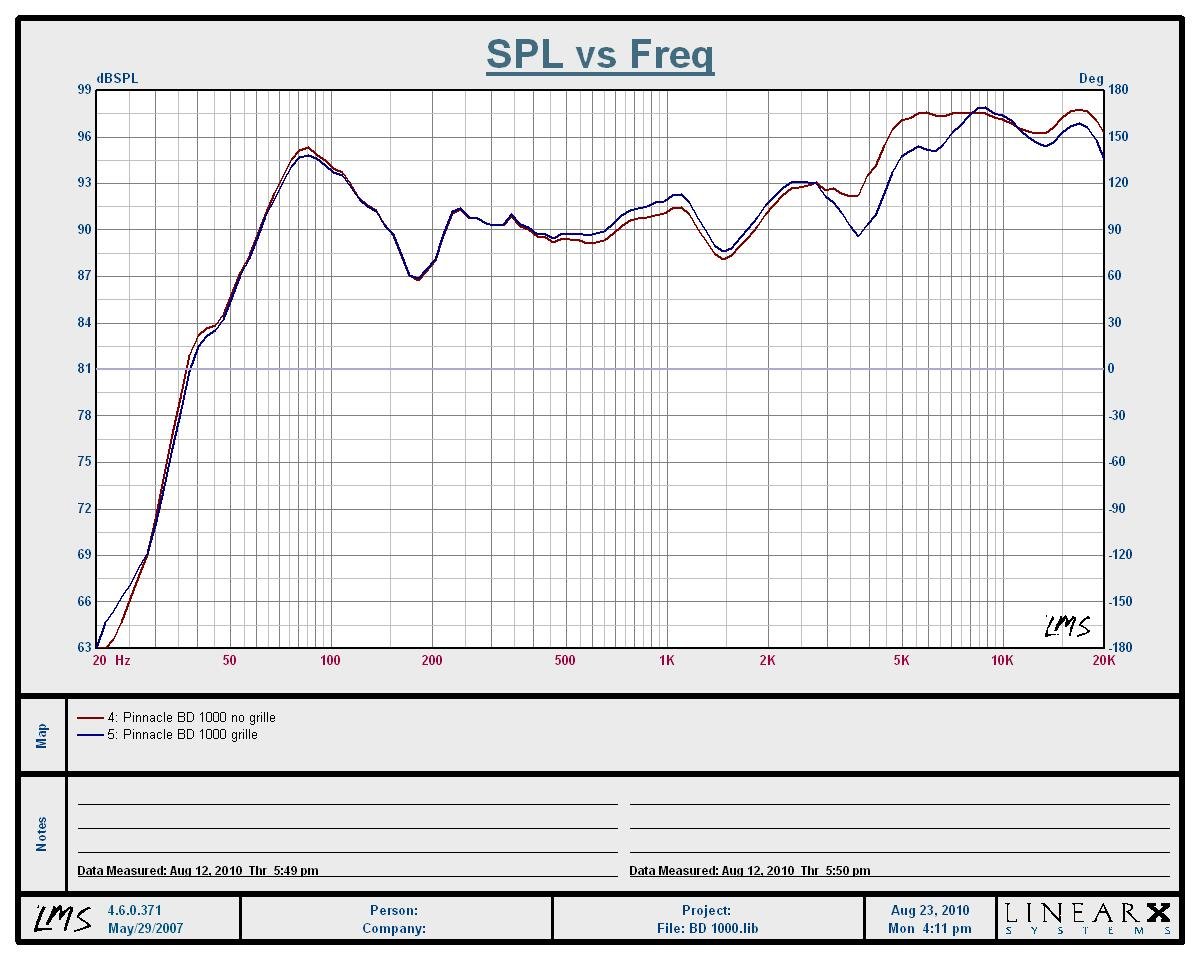
In-room
1/2 meter SPL vs Frequency Pinnacle BD 1000 (1/3rd octave smoothed)
Purple
trace: no-grille; Blue trace: with grille
The grille cover does soak up some of the upper midrange and high frequency response of the BD 1000s (about 3dB from 4kHz to 7kHz). This can actually be a welcomed thing for listeners finding the speakers to sound a bit too bright. In those cases, keep the grilles on, this will reduce the brightness and also make the wife happy as the speakers literally disappear into the room with them in place.
Pinnacle Black Diamond BD 1000 Conclusion
 If you're looking for a tonally
neutral full-range tower, than the BD 1000s aren’t for you. You can expect to pay a lot more for such an
animal and it will most certainly take much more real estate in your listening
space. If instead you're looking for an
unobtrusive, relatively affordable compact tower speaker system that gives you
plenty of boom and sizzle with excellent midrange clarity, then this is your
speaker. The BD 1000s are ideally suited
for small to medium sized rooms (under 2500 ft^3). In fact, I think they are perfect size
speakers for a college dorm or studio apartment. I listed "pricey" as a Con for
these speakers but Pinnacle did point out that their pricing includes
professional consultation, delivery and home installation which Pinnacle
estimates these services to be valued at $300 per pair. In the day and age where people mail order
products and set them up themselves (sometimes incorrectly), its nice to know
there are companies offering a customized service to go that extra mile to
ensure consumers get the most out of their purchases.
If you're looking for a tonally
neutral full-range tower, than the BD 1000s aren’t for you. You can expect to pay a lot more for such an
animal and it will most certainly take much more real estate in your listening
space. If instead you're looking for an
unobtrusive, relatively affordable compact tower speaker system that gives you
plenty of boom and sizzle with excellent midrange clarity, then this is your
speaker. The BD 1000s are ideally suited
for small to medium sized rooms (under 2500 ft^3). In fact, I think they are perfect size
speakers for a college dorm or studio apartment. I listed "pricey" as a Con for
these speakers but Pinnacle did point out that their pricing includes
professional consultation, delivery and home installation which Pinnacle
estimates these services to be valued at $300 per pair. In the day and age where people mail order
products and set them up themselves (sometimes incorrectly), its nice to know
there are companies offering a customized service to go that extra mile to
ensure consumers get the most out of their purchases.
I do recommend bass managing the BD 1000s with your A/V receiver and supplementing the bass response with a dedicated powered subwoofer. This will not only free up amplifier strain, but will reduce the burden for these little speakers to produce bass, allowing them to remain cleaner in the mids and highs at higher listening levels. This is advice we give for most multi-channel systems even if the speakers have more output capability than the BD 1000s.
Pinnacle has done a decent job with the execution of their BD 1000 speaker system both aesthetically and performance-wise. They understand the trade-offs in providing a small form factor tower speaker system and know their audience of buyers for such a product. A few tweaks to the crossover, and usage of a smaller non horn-loaded tweeter could have potentially improved product performance but I suspect many folks will appreciate the overall sound of this product as is.
Pinnacle
BD 1000 Review
MSRP: $1299/pair
Pinnacle Loudspeakers
http://pinnaclespeakers.com/
Read Consumer Reviews on
About
Pinnacle
For over 34 years Pinnacle has been a speaker
company best known for high performance loudspeakers at incredible consumer
values. As family owned and operated
company based in New York they proudly design, manufacture and distribute world
class speaker products from right here in the United States. Pinnacle is the 2nd oldest
privately owned speaker company in the US. Pinnacle estimate there are approximately 5,000
installers that work with our product through our network of distributors and
online authorized store partners like the Audioholics E-store.
The Score Card
The scoring below is based on each piece of equipment doing the duty it is designed for. The numbers are weighed heavily with respect to the individual cost of each unit, thus giving a rating roughly equal to:
Performance × Price Factor/Value = Rating
Audioholics.com note: The ratings indicated below are based on subjective listening and objective testing of the product in question. The rating scale is based on performance/value ratio. If you notice better performing products in future reviews that have lower numbers in certain areas, be aware that the value factor is most likely the culprit. Other Audioholics reviewers may rate products solely based on performance, and each reviewer has his/her own system for ratings.
Audioholics Rating Scale
 — Excellent
- — Very Good
- — Good
- — Fair
- — Poor
| Metric | Rating |
|---|---|
| Build Quality | |
| Appearance | |
| Treble Extension | |
| Treble Smoothness | |
| Midrange Accuracy | |
| Bass Extension | |
| Bass Accuracy | |
| Imaging | |
| Soundstage | |
| Dynamic Range | |
| Performance |  |
| Value | |
Gene manages this organization, establishes relations with manufacturers and keeps Audioholics a well oiled machine. His goal is to educate about home theater and develop more standards in the industry to eliminate consumer confusion clouded by industry snake oil.
View full profile Subscribe to our newsletter