


Aperion Audio Powered Towers Intimus 522D-PT Loudspeaker System Review
- Product Name: Aperion Audio Power Towers - Intimus 522D-PT Loudspeakers
- Manufacturer: Aperion Audio
- Performance Rating:

- Value Rating:
- Review Date: December 07, 2006 12:07
- MSRP: $ 1199/pr
- DiAural Crossover Technology
- Dual-Composition Enclosure
- 5 ¼" Midrange Woofer
- 1" Ferrofluid-Filled Dome Tweeter
- 8" Long Throw Woofer
- 150 watt High Power Amp
- Magnetically Shielded Multi-way Binding Posts
| Dimensions: 41.5" H x 9.75"
W x 12.5" D
Weight: 57 lbs (ea) Sensitivity: 88db Minimum Impedance: 4ohms Nominal Impedance: 6-8 ohms |
Amp Power (Continuous): 150W
Amp Power (Maximum): 180W Frequency Response: 30Hz - 20kHz Recommended Power: 50 - 150 Watts Per Channel Enclosure Type: Ported 1" HDF |
Pros
- Beautiful aesthetics, build quality, fit and finish
- Excellent bass response
- Overall pleasing sound
Cons
- Slightly recessed midrange and sibilant highs
- Narrow sweet spot
Intimus 522D-PT First Impressions
We seem to be living in an era dominated by internet shopping and "Buy-Direct-Now" for the absolute best savings mentality usually void of customer service and human touch in these virtual transactions. Over the past few years exclusive online consumer electronics companies have been popping up defying this typical stereotype. Enter Aperion Audio. Aperion Audio is a relative newcomer to the scene of direct-sales loudspeakers manufacturing. For those of you who peruse many of the home theater / audio websites and forums, you have probably been blasted by one of their "pop-up" ads (don't worry Audioholics doesn't do pop-ups). However, I do encourage a click on them at least one time. I was surprised to find a wealth of information pertaining to home theater and detailed product specifications on an internet loudspeaker company website. They even have a live chat hosted by friendly tech support people to answer any of your questions regarding their products. I took advantage of this unique service a few times to get detailed product specifications that I was unable to extract from their published marketing literature and spec sheets. I was floored when I reached one of their staffed engineers who probably showered me with more information that I could disseminate in one session. The bottom line is there are real people at this company that are intimately familiar with their product designs. To me that was as equally refreshing as it was surprising.
First Impressions
|
|
|
|
|
I was impressed by how nicely these speakers were packaged. The 522D-PT towers were encased in very slick blue velvet bags. |
The rear of the Intimus tower is quite impressive. The top midrange/tweeter section is rear ported and in its own isolated enclosure from the active ported subwoofer. |
The internal baffle is 1" thick and constructed of High Density Fiber Board (HDF). The midrange enclosure it both well braced and dampened. These speakers passed the knuckle wrap test with flying colors. I was absolutely stunned by their sturdy construction and excellent cabinetry. |


One week prior to me receiving my review samples of the Intimus Towers, I received a care package from Aperion Audio with white gloves (not to be confused with OJ's or the King of Pop's), a soft cloth and care instructions to keep these babies looking as good as they sound. I again was beside myself by the level of attention Aperion Audio shows its customers.
Manufacturer Care Instructions
-
Step 1: Put on your favorite cleaning music.
-
Step 2: Use cotton gloves to handle speakers.
-
Step 3: Apply a smidgen of Old English lemon oil or pre-diluted Murphey's Oil Soap to cloth and clean speakers with a circular motion.
-
Step 4: Buff to a shine lustre!
-
Step 5: Stand in awe.
To me this was a nice sentiment as it made me feel as if I was being treated like an individual customer and not just another sale. So often these days one can get a great product without the service to match it. It's nice to see you can have both, especially from an Internet based "buy direct" speaker company.
Intimus 522D-PT Design and Setup
 Upon closer inspection, the midrange
driver appeared to be of good quality as evident by the plastic basket and large motor structure. Speakers in this price class usually use stamped metal baskets which can be more prone to resonate.
Upon closer inspection, the midrange
driver appeared to be of good quality as evident by the plastic basket and large motor structure. Speakers in this price class usually use stamped metal baskets which can be more prone to resonate.

The top section of the Intimus tower was comprised of a paper poly treated 5 ¼"
midrange
driver and 1" soft dome tweeter. The 8" long throw subwoofer appears to be of rugged design
with its 1.05kG magnet.

The 1" soft dome tweeter contains a neodymium magnet structure. While I am
normally not a fan of these tweeter designs because they often suffer from
thermal compression, I took close note of the heat sink strapped to the back
of the magnet assembly. Obviously the engineers at Aperion Audio were quite knowledgeable about this
issue and attempted to address it.
In fact, I seemed to recall reviewing a similarly priced British loudspeaker a few
years back that utilized a lesser designed neodymium tweeter with no heat sink,
and received rave reviews like "just buy them" from other magazines. I also recalled
how compressed and boxy that speaker sounded, especially at higher volume levels.
I was unable to pull out the 8" side firing subwoofer for a closer
look, since it didn't have readily accessible screws and I didn't want to risk damaging it with my
prying hands. However, using the midrange and tweeter as an indication to the quality of the drivers
Aperion Audio utilized, I wasn't too concerned with examining the motor structure of the
subwoofer.
The Design
When I pinged Aperion Audio for some design specifics for these powered towers, I was promptly showered with technical info from their designer.
Crossovers
(All slopes are
the actual measured slope of driver's outputs.
This involves drawing in the asymptote by hand and
measuring it.
So these slope #s will give you the phase but not power transfer
functions)
Active LP slope on 8" sub is 12dB/oct
Passive HP slope of 5.25" driver is also 12dB/oct
Crossover freq is 110 Hz and is the -10dB point of both drivers
LP slope on the 5.25" is 8dB/oct
HP slope on the 1" tweeter is 12dB/oct
Crossover freq is 2000 Hz and is the -9dB point of both drivers
The 5"-to-tweet crossover is a series type it is also "DiAural", which simply means that the series C to the tweeter is replaced by a resistor.
My initial concern here is that most series crossover designs featuring the DiAural crossover dump too much power across the tweeter which can lead to dynamic compression and distortion - the exact opposite goal of the circuit intent. When the resonant mode of the tweeter is near the crossover point, this problem can be amplified. In this case however, the tweeters resonance frequency is at 1kHz. Since the high pass (HP) filter of the tweeter is not the typical shallow 6dB/Oct slope common in most series crossover designs, the tweeter's power response is nearly 20dB down at its resonance mode. This consideration, combined with the properly heat sinked magnet and ferrofluid cooling of the tweeter, should alleviate most of these concerns.
For more information on crossover types and detailed simulation comparisons between series and parallel crossover networks, you may wish to review the following articles:
Crossover Types
Series vs. Parallel Crossovers
The Set-Up
 It's not often I review loudspeakers with integrated powered subwoofers; and I often do
so
carefully realizing there are advantages and disadvantages to this design approach.
The advantages can be convenience, space saving, and cost effectiveness to the consumer.
The disadvantages are that you have now limited your placement of the subs to where the mid
woofer/tweeter sections reside. This can be problematic for those who have nasty room modes
that can only be cured by relocation of the subwoofers, listener or some type of parametric low
frequency room correction. Usually the most effective option is relocation of the subwoofer(s) to
a null position in the room or moving them ¼ wavelength from the coupling surfaces of the primary room
modal frequency. Another consideration of multiple subwoofers is the potential problem of
path differences between the subs and the primary listening position. These are all issues we
must address with any large bass capable speakers, but they become even more involving with powered
towers such as these when used in conjunction with other subwoofers in a system.
It's not often I review loudspeakers with integrated powered subwoofers; and I often do
so
carefully realizing there are advantages and disadvantages to this design approach.
The advantages can be convenience, space saving, and cost effectiveness to the consumer.
The disadvantages are that you have now limited your placement of the subs to where the mid
woofer/tweeter sections reside. This can be problematic for those who have nasty room modes
that can only be cured by relocation of the subwoofers, listener or some type of parametric low
frequency room correction. Usually the most effective option is relocation of the subwoofer(s) to
a null position in the room or moving them ¼ wavelength from the coupling surfaces of the primary room
modal frequency. Another consideration of multiple subwoofers is the potential problem of
path differences between the subs and the primary listening position. These are all issues we
must address with any large bass capable speakers, but they become even more involving with powered
towers such as these when used in conjunction with other subwoofers in a system.
In my review application, I focused on two-channel playback with no additional subwoofers in my system. In reality, I suspect most buyers of a system like this will rely on the Intimus system to serve as the LFE channel (and rightfully so, as you can see in my low frequency measurements in Figure 3.) by simply rerouting the bass management of the receiver/processor as tabulated below.
Bass Management Configuration
Subwoofer: No
Main Speaker Size: Large
Sub Out/LFE: Main
Note that the Intimus towers have no line level connections for the side firing subwoofers, thus it is not possible to route line level subwoofer connections from your receiver/processor to the speakers which is one of the reasons why I recommend the connection method and bass management configuration I suggested.
Speaker Positioning
I found the best sound in my listening room for these speakers was placing them about 3 feet from the side walls 2 feet from the back walls with a slight toe-in. I did some comparative listening with the grills on/off and heard little difference so I opted to leave them on. At times I actually preferred the grills on which I suspected was mostly psychological since I thought the speaker system looked more elegant.
I was a bit disappointed that there was no variable phase adjustment on the powered subs, but I was equally thrilled that I did not run into bass integration problems when I set this system up. After a few times of going behind the speakers for bass level tweaking, and re-measuring their bass response at my listening position, I was done (see Figures 1-3 ).
Intimus 522D-PT Measurements and Analysis
The Intimus 522D-PT are a moderately efficient loudspeaker system. I had no problems powering these speakers with a Yamaha RX-V2400 A/V receiver, but based on their moderately low sensitivity (88dB SPL @ 1 watt/meter, I highly encourage an amplifier of at least 100 watts/ch to power the non active portion of these speakers (mid woofers & tweeters). The amps powering the subs are very capable, thus I don't recommend skimping power for the critical mids and highs.
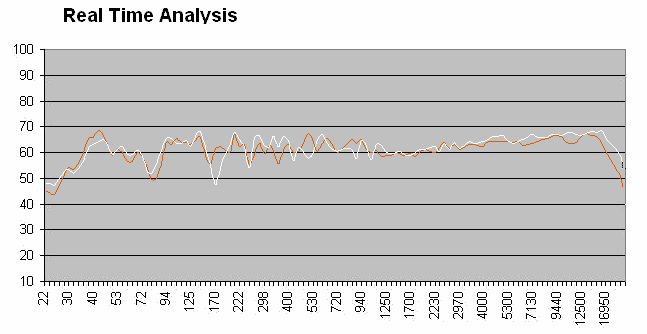
On Axis (white trace):
Shows relatively smooth frequency response with a rising trend of 4-7dB between 4kHz and
18kHz. The high end frequency response was well extended as indicated by the -1dB at 20kHz. The notches
in low frequency response at 80Hz and 170Hz were likely a result of the side firing woofer not fully
acoustically summing at the mic position 1 meter away. This is a fault in measurement technique, NOT
the speaker as it is quite difficult to make an accurate nearfield measurement of a speaker with
drivers located off axis to the main front baffle. I could have measured the response further away from
the speaker, but that would have resulted in more room influences as indicated in Figure 2.
30 Degree Off Axis (orange trace):
We see the slightly energetic top end of the speaker smooth out off axis, but at the
expense of more profound roll off at the high frequency limits (-10dB at 20kHz). This is NOT atypical
of any dynamic cone speaker. I would recommend slight toe-in for these speakers to achieve the
smoothest frequency response and integration at the listening position. This would certainly help in
lively rooms to cut down on side wall reflections. As you can see the lower end bass null at 170Hz has
been greatly diminished since the microphone is now closer towards the plane of the side firing
woofer.
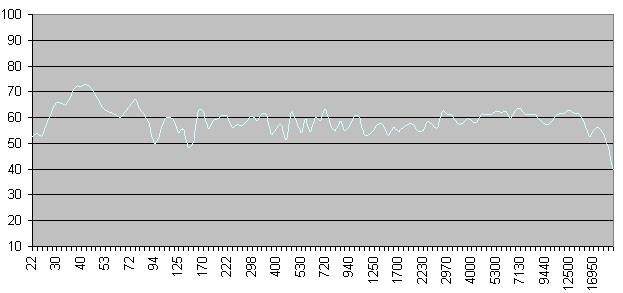
This measurement was taken about 11ft from the center point (sweet spot) of the Intimus towers. As you can see there is a slight recession (3-4dB) in the midrange region between 1kHz to 3kHz (also seen in the quasi nearfield measurement, likely a sonic attribute of the speakers) and a rising trend between 4kHz and 7kHz (though not as dramatic as the nearfield response indicating that the room was helping to soften the top end a bit). At the listening position, the high frequency 3dB point measured around 16kHz making you wonder just how important those esoteric cables really are compared to the dramatic effect room acoustics play on loudspeakers. The 12-13dB bump centered around 40Hz, and the 10dB suck out at 94Hz is mostly a result of axial room modes as illustrated in Figure 4.
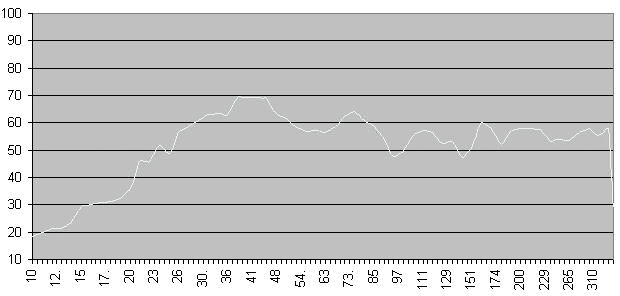
Figure 3. Listening Position Low Frequency Response (1/12 th Octave FFT Analysis)
To get a better look at the bass response of the Intimus loudspeaker system, and how it integrated into my listening room, I ran a 1/12th octave low frequency FFT analysis focusing from 20Hz to about 300Hz. As you can see, room gain was partly responsible for the impressive 3dB point of 27Hz. The manufacturer states a low frequency response of 30Hz and these speakers certainly delivered that and then some without any fuss.
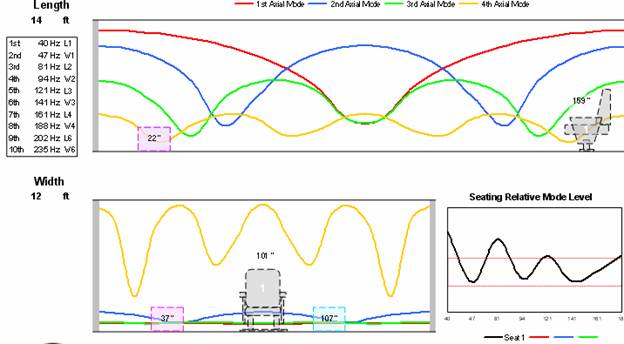
Figure 4. Analyzing Listening Room Modes
It is interesting to note that when I ran my room dimensions into the Quest Room Mode calculator factoring in loudspeaker position (treating each Intimus Tower as a subwoofer) and my listening position, we see fairly similar dips at 47Hz and 94Hz with the bumps around 40Hz. The nulls were being attributed to the listening position located at the 4th axial / 2nd width room mode, while the bump at 40Hz seemed to be a result of the 1st , 2nd and 3rd axial modes (1st length, 1st width, 2nd length modes, respectively). While my room certainly isn't an ideal rectangle as this room calculator assumes, it still portrays a fairly accurate representation of what is going on in the listening position measurements for bass frequencies in figures 2 and 3.
Intimus 522D-PT Listening Evaluation and Conclusion
Listening Evaluation: Two-Channel Audio
|
Eric
Hanson
|
1. Killing Me Softly With His Song
|
1. Por Un Beso
|
Gloria
Estefan
|


I began with an intimately familiar flamingo CD that was given to me by my lovely wife on our anniversary a few years ago. This is the type of CD that is most enjoyable at soft listening levels in the quiet silence and darkness of the evening. I use this disc to judge just how well a speaker system, or component gear for that matter, can reproduce the subtle nuances of Eric Hanson's guitars, as well as all of the percussions and too many other instruments to notate here.
What I discovered when listening to this CD on the Aperion Intimus loudspeaker system was a very involving reproduction of the disc I have grown accustomed to on some of the previously reviewed fine performing loudspeakers. I did feel some of the top quality bookshelf speakers I have reviewed in this price range offered a more open soundstage and presence. However, the almost anemic bass response of most bookshelf speakers in this price category was no match for these Aperion Audio powered towers.
The Aperion Audio's put forth a great amount of detail with conviction. But, at times I felt the top end of this speaker system was somewhat more aggressive than I was accustomed to. I don't consider this to be a "bright" speaker, but more a forwardly challenged breed typical of most A/V enthusiast listening preferences. I found the top end of this speaker to be right there in your face, but it never seemed piercing like I have heard in some similarly priced metal dome tweeter systems. In fact, there were instances where I welcomed the energetic sound on dull recordings.
Moving on to SACD, I chose Gloria Estefan for a variety of reasons {great sound, great music, great WOW factor}. Gloria's voice in " Por Un Beso " sounded wonderfully powerful and crisp. The drums were vibrant and the bass was well extended. While the vocals were smooth, I did find the Intimus system portrayed them in a slightly recessed style for my listening preferences. I personally prefer a more forward sounding midrange, but as Bugs Bunny once said "one man's meat is another man's poison" - and who am I to argue his wisdom?
" No Me Dejes De Querer " is the type of song you play loud at Columbian parties, or when you have a few moments to yourself with nobody around to yell at you. I had the luxury of the latter and took full advantage of it within the limits of my hearing. The Aperion Intimus towers didn't disappoint. The bass remained clean and well extended. The overall tonal balance maintained uniformity with minor signs of compression. Overall, my listening experience was not tainted at high listening levels like I have experienced with other speakers. Apparently, the tweeters were coping quite well despite my initial fears of neodymium magnets and shallow series crossovers. I did feel the overall sweet spot of these speakers was over a smaller window than I have experienced with other products, especially when compared to my much costlier reference bookshelf speakers. But if you're like me, you have that "hot seat" reserved for yours truly and beware the unsuspecting person who attempts to claim it for their own.
The Wife Acceptance Factor (WAF)
Because of the sheer visual beauty of these speakers, and their relatively small footprint, the Intimus towers garnered a rather high WAF and were exempt from my WAF Five Step Procedure previously mentioned in my RBH Sound T-2 review . My wife usually doesn't take much notice to loudspeakers I review unless they are an eye sore to her, or very appealing. In this case, she was overly pleased with their slim elegant design and snazzy bass plinth.
Recommendations
The Aperion Audio Intimus Powered Tower (what a mouthful) garners my recommendation to those looking for a full range handsomely crafted speaker system with integrated subwoofers to eliminate the bulk of yet another big box in your home theater / living room. Their overall sound should please most audio enthusiasts and their well-extended bass should enthrall the home theater aficionados alike. There is a sense of pride of ownership of this product NOT typical in most consumer audio gear (especially at this price). Whether this appeal is a result of the craftsmanship, sound quality, customer support and service, I will let you decide. My guess is that it will be all of the above.
The Score Card
The scoring below is based on each piece of equipment doing the duty it is designed for. The numbers are weighed heavily with respect to the individual cost of each unit, thus giving a rating roughly equal to:
Performance × Price Factor/Value = Rating
Audioholics.com note: The ratings indicated below are based on subjective listening and objective testing of the product in question. The rating scale is based on performance/value ratio. If you notice better performing products in future reviews that have lower numbers in certain areas, be aware that the value factor is most likely the culprit. Other Audioholics reviewers may rate products solely based on performance, and each reviewer has his/her own system for ratings.
Audioholics Rating Scale
 — Excellent
- — Very Good
- — Good
- — Fair
- — Poor
| Metric | Rating |
|---|---|
| Build Quality | |
| Appearance | |
| Treble Extension | |
| Treble Smoothness | |
| Midrange Accuracy | |
| Bass Extension | |
| Bass Accuracy | |
| Imaging | |
| Soundstage | |
| Dynamic Range | |
| Performance | |
| Value | |
Gene manages this organization, establishes relations with manufacturers and keeps Audioholics a well oiled machine. His goal is to educate about home theater and develop more standards in the industry to eliminate consumer confusion clouded by industry snake oil.
View full profile Subscribe to our newsletter