


Usher Audio S-520 Bookshelf Speaker Review
Usher Audio S-520 Bookshelf Speakers
- Product Name: S-520
- Manufacturer: Usher Audio
- Distributor: MusikMatters
- Performance Rating:


- Value Rating:
- Review Date: May 17, 2007 19:00
- MSRP: $ 400/pair
2-way system tweeter 1" (UA025-10), mid-bass 5" (KSW2-5029B)
Sensitivity 86 dB @ 1 watt / 1m
Nominal impedance 8 ohms
Frequency response (-3 dB) 52 Hz ~ 20 kHz
Power handling 50-125 watts
Crossover frequencies 2 kHz
Weight 15 lbs
Dimensions (w x d x h) 7.09" x 10.43" x 11.81"
Shipping weight 32 lbs
Shipping box (w x d x h) 17.9" x 13.0" x 15.0"
Finishes Piano Black, Pearl White, Ferrari Red, Gloss Yellow, Birch
Pros
- Extremely detailed
- Incredible build quality
- Fully shielded
- Rock bottom price
Cons
- Unforgiving of poorly recorded music
- A bit bright
- Tendency to bottom out with bass heavy music at high SPL levels
Usher S-520 Speaker Build Quality and Setup
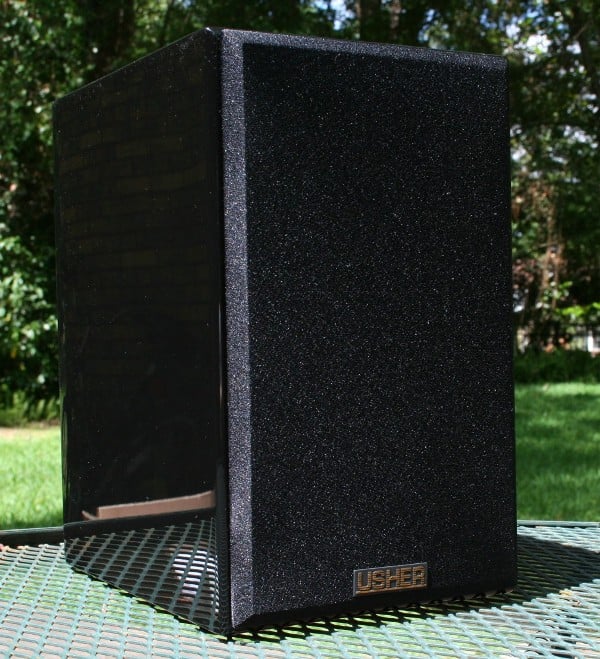 One thing
I’m constantly on guard about is assumptions. You hear them all the time,
“Brand X makes the best speakers,” or “silver cable is better than copper” or
“Internet Direct speakers give you more bang for your buck than brick and
mortar brands.” In the public consciousness, these statements, once said enough
times, start to take on a kind of “truth” in people’s minds. It takes a big
product or a big article in the right place at the right time to dispel these
myths. Usher Audio is looking to dispel the idea that you need to search the
Internet for quality bookshelf speakers at a reasonable price.
One thing
I’m constantly on guard about is assumptions. You hear them all the time,
“Brand X makes the best speakers,” or “silver cable is better than copper” or
“Internet Direct speakers give you more bang for your buck than brick and
mortar brands.” In the public consciousness, these statements, once said enough
times, start to take on a kind of “truth” in people’s minds. It takes a big
product or a big article in the right place at the right time to dispel these
myths. Usher Audio is looking to dispel the idea that you need to search the
Internet for quality bookshelf speakers at a reasonable price.
I’ve been a big proponent of Internet Direct speakers. I’ve reviewed them, owned them, and loved them. They have their drawbacks, sure, but for the price they are usually hard to beat. When Usher Audio approached us about a review, I picked out a bookshelf speaker towards the middle of the price range of their catalog. Much to my surprise, they suggested their newest and least expensive speaker. For a company whose most expensive set of speakers tops $16k, to recommend a $400 pair of bookshelves showed a lot of confidence. My curiosity piqued, I waited for the arrival of the S-520’s restlessly.
Build Quality
When the Usher Audio box showed up on my doorstep, I was confused by its size - it was so small. Then I tried to pick it up. To say I was shocked is an understatement. Fifteen pounds a speaker doesn’t sound like a lot but these speakers are SOLID. After reviewing a number of Internet direct brands, I had come to expect a certain size in a bookshelf speaker. The S-520’s were only a pound shy of the weight of my old Axiom m22’s which are easily twice the size and have an extra woofer! Either they are packing this enclosure with lead or we’ve got a seriously engineered speaker on our hands.
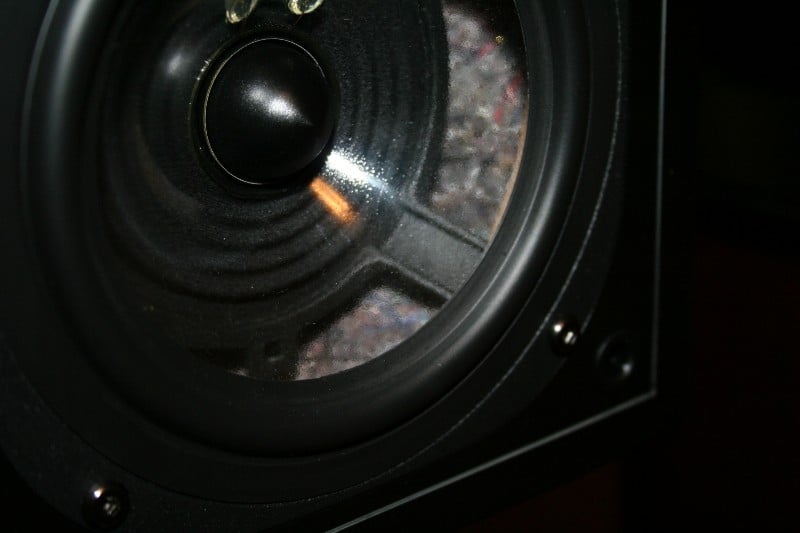 The piano
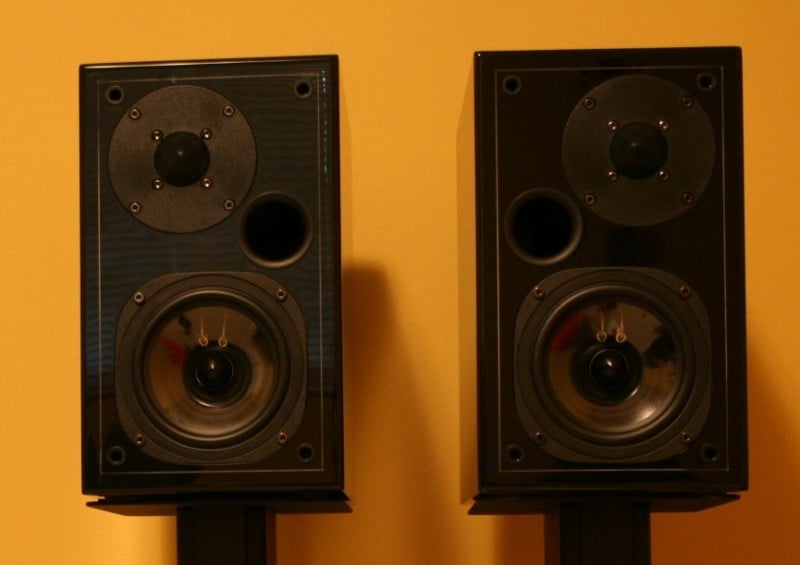
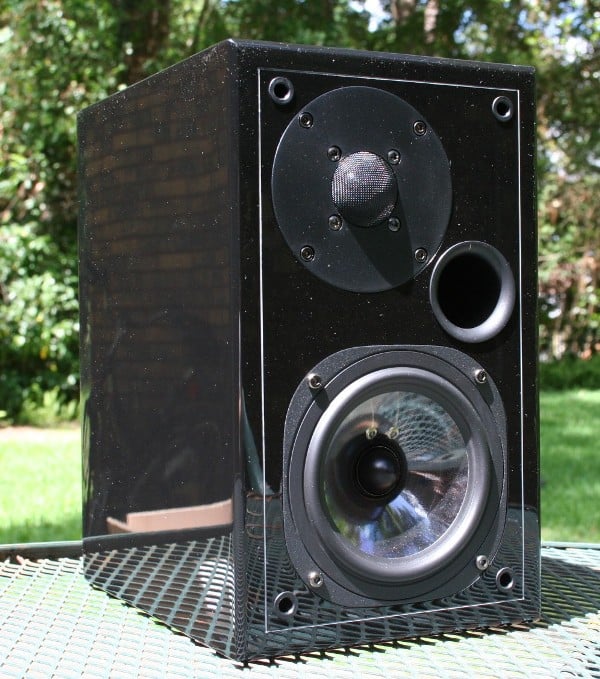
black finish on the S-520’s is without reproach. Clean lines, rounded corners,
the fit and finish on these speakers is amazing. The one “seam” is hidden
behind the grill and while it may be more visible on other finishes
(particularly the wood grain from the pictures I’ve seen) with the grill off,
on the black, it is all but invisible. The 1” tweeter is covered by a small
wire mesh grill and is offset to make room for the port. The pair is actually a
mirror image of each other so that the port is on the left side of one and the
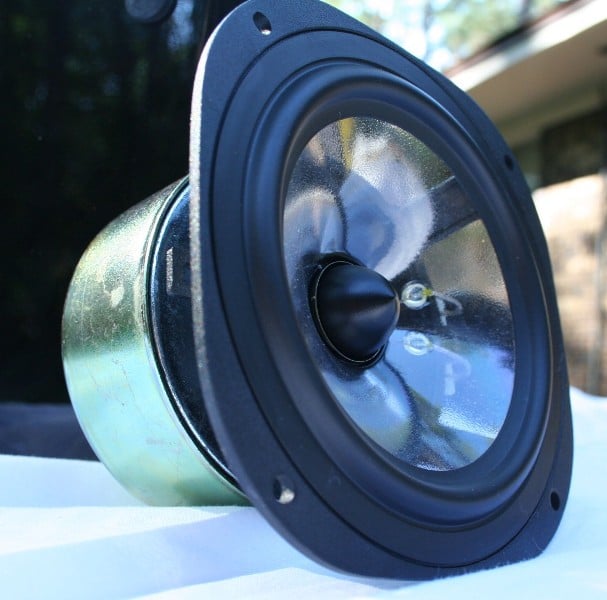
right of the other. The 5” woofer is clear so that you can see the cross member
of the basket, the spider, and some of the insulation. Gimmicky? Sure, but I
like it. The phase plug in the center of the woofer is real and not for show.
The piano
black finish on the S-520’s is without reproach. Clean lines, rounded corners,
the fit and finish on these speakers is amazing. The one “seam” is hidden
behind the grill and while it may be more visible on other finishes
(particularly the wood grain from the pictures I’ve seen) with the grill off,
on the black, it is all but invisible. The 1” tweeter is covered by a small
wire mesh grill and is offset to make room for the port. The pair is actually a
mirror image of each other so that the port is on the left side of one and the
right of the other. The 5” woofer is clear so that you can see the cross member
of the basket, the spider, and some of the insulation. Gimmicky? Sure, but I
like it. The phase plug in the center of the woofer is real and not for show.
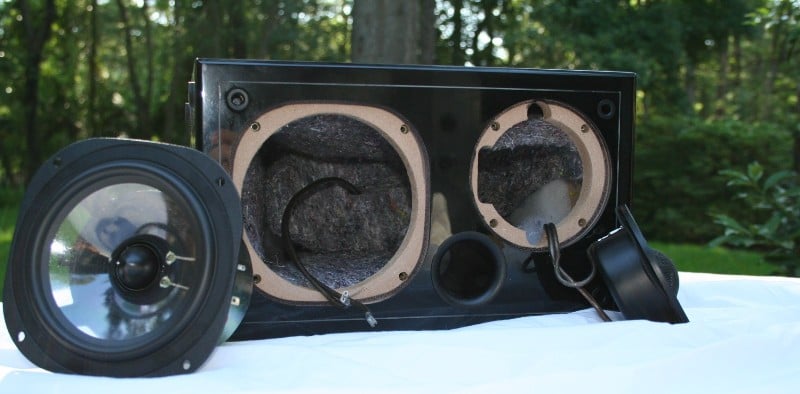 You know
those stories where someone finds a deal for a Porsche for $1 in the
classifieds, checks it out and it turns out to be a disgruntled spouse looking
to screw their partner on the sale? That’s what opening up the Usher S-520’s
was like for me. Everything I thought I knew to be true about “budget” speakers
went right out the window. Fully shielded drivers? Yep. Threaded inserts for
each of the woofer/tweeter screws? Check. Cast baskets? Uh huh. High quality
drivers? Check. One inch think MDF? Looks like. High quality components in the
crossover? Absolutely. Every single element was a step above what I was
expecting to see. These are the types of components you’d expect to see in the
top of the line, no expenses spared speaker in a product line. This isn’t what
you expect to find in a $400 a pair “budget” speaker. I just don’t see how
Usher can make a speaker with these components and not lose money on every
sale.
You know
those stories where someone finds a deal for a Porsche for $1 in the
classifieds, checks it out and it turns out to be a disgruntled spouse looking
to screw their partner on the sale? That’s what opening up the Usher S-520’s
was like for me. Everything I thought I knew to be true about “budget” speakers
went right out the window. Fully shielded drivers? Yep. Threaded inserts for
each of the woofer/tweeter screws? Check. Cast baskets? Uh huh. High quality
drivers? Check. One inch think MDF? Looks like. High quality components in the
crossover? Absolutely. Every single element was a step above what I was
expecting to see. These are the types of components you’d expect to see in the
top of the line, no expenses spared speaker in a product line. This isn’t what
you expect to find in a $400 a pair “budget” speaker. I just don’t see how
Usher can make a speaker with these components and not lose money on every
sale.
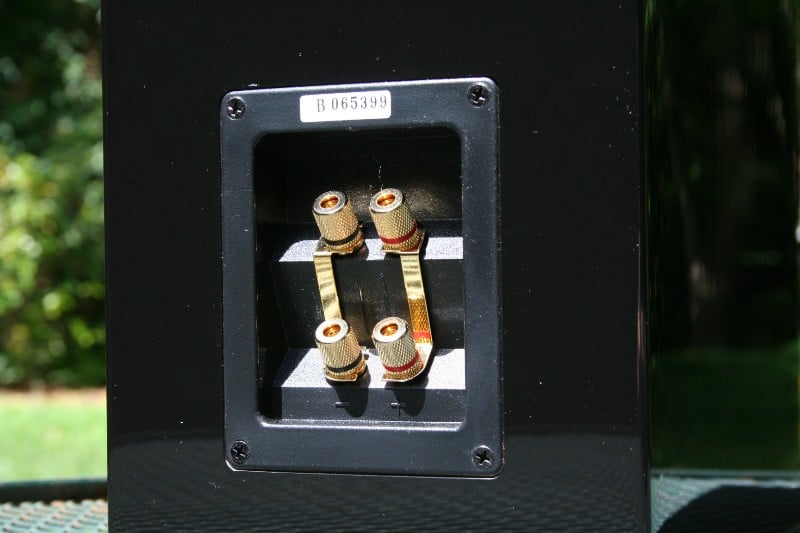
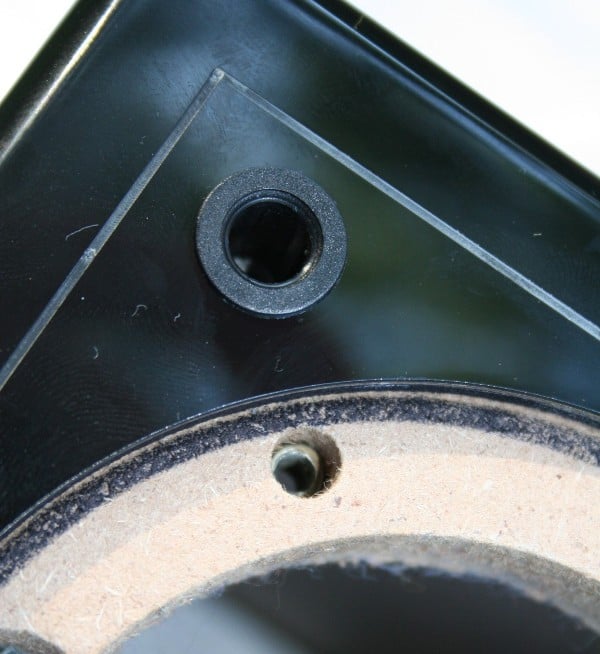
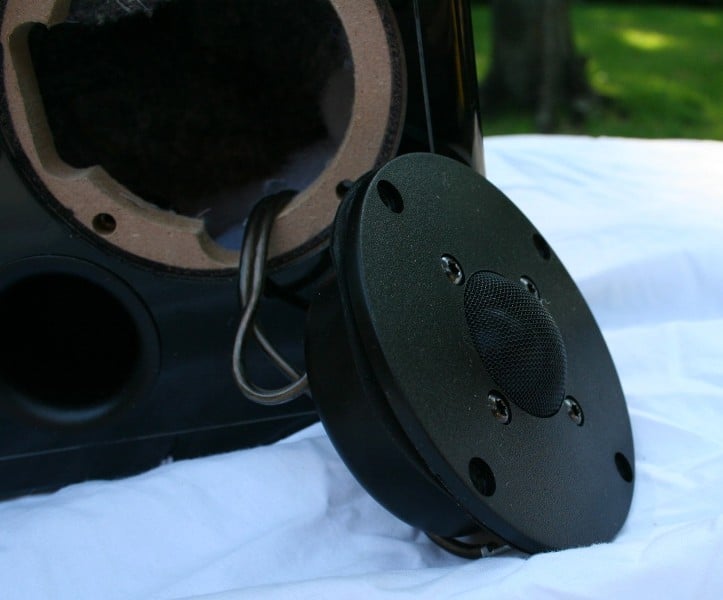
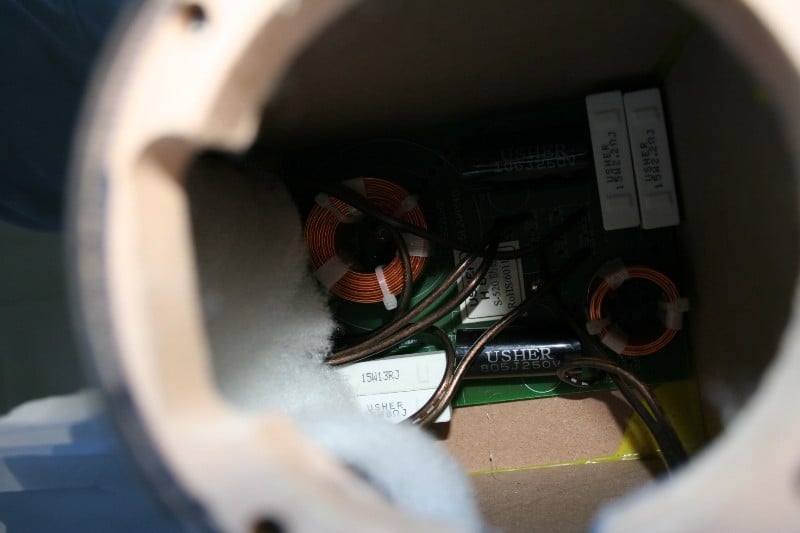 Each edge of the cabinet absolutely dripped with glue
and the interior lined with insulation. The bottom had a grey cotton blend that
was stapled to the cabinet that surrounded the woofer and ran up the back wall.
Around the tweeter was a porous white polyfill that I usually see in these
sorts of speakers. Each of the drivers had a rubber ring between it and the
cabinet it to reduce vibrations during operation. The crossover was so large
that I don’t think I could have gotten it out had I dared to unscrew it from
the back wall. Even though it was flush with the top of the cabinet, it
overhung the binding post opening by almost an inch! Between the circuit
Each edge of the cabinet absolutely dripped with glue
and the interior lined with insulation. The bottom had a grey cotton blend that
was stapled to the cabinet that surrounded the woofer and ran up the back wall.
Around the tweeter was a porous white polyfill that I usually see in these
sorts of speakers. Each of the drivers had a rubber ring between it and the
cabinet it to reduce vibrations during operation. The crossover was so large
that I don’t think I could have gotten it out had I dared to unscrew it from
the back wall. Even though it was flush with the top of the cabinet, it
overhung the binding post opening by almost an inch! Between the circuit 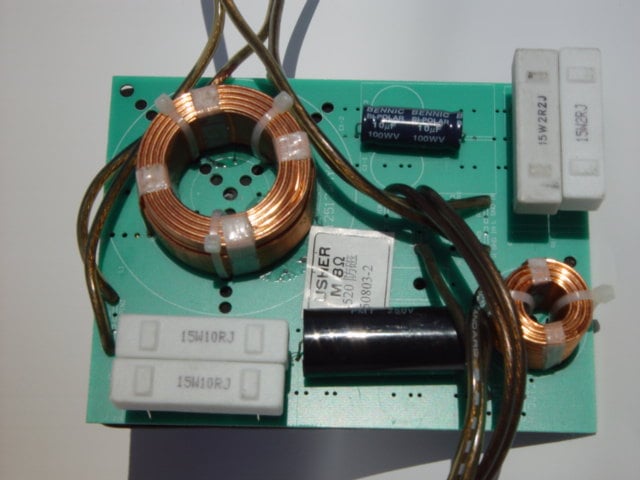 board
and the wall was a dense rubber layer to once again eliminate vibrations. Let
me just sum this up for any that are skimming this – The build quality of the
Usher S-520’s is beyond compare. After conferring with the other Audioholic
reviewers, we all agree that we’ve never, EVER, seen a speaker at this price
point with this compliment of high quality components. It is unreal!
board
and the wall was a dense rubber layer to once again eliminate vibrations. Let
me just sum this up for any that are skimming this – The build quality of the
Usher S-520’s is beyond compare. After conferring with the other Audioholic
reviewers, we all agree that we’ve never, EVER, seen a speaker at this price
point with this compliment of high quality components. It is unreal!
Setup
Setting up
bookshelf speakers isn’t exactly brain surgery – Grab a couple of stands, set
them to either side of your display, and you’re good to go. Right? Well,
there’s a little thing that audiophiles refer to as the “golden triangle.” The
idea is that you set the speakers so that the distance between you and each of
the speakers and the distance between the two speakers is all the same (yes,
and equilateral triangle). Then you point the speakers directly at you (or just
over your shoulder as indicated in the Usher Audio setup manual) and sit down
to enter audio nirvana. Well, that’s probably a good place to start but I’m
more of a pragmatist. Your room probably isn’t set up so that you can place
everything equidistant from each other plus, you just MIGHT want to have someone else enjoy
the music with you (or you’d just buy headphones, wouldn’t you?) so the
suggested severity of the toe-in might not work.
 No, I’m
more for experimenting with positioning and placement. There are plenty of
speakers that shouldn’t be set up in this way – for example those that try to
attain a flat off-axis response as they will sound bright pointed right at you.
You’ll never know what will work for your ears or your room until you try. My first question after I unpacked
the speakers was, “Which side does the port go on, inside or outside?” There
didn’t really seem to be any clear directions in the manual so I tried both. To
my ears, I couldn’t really hear a difference. This is one of those things that,
as a reviewer, I think, “OK, if I can hear a difference here, other reviewers
will think I’m cool. Well, I did everything I could to hear that difference. I
switched the speakers, listened to the same passages over and over, and
eventually just stood about two feet in front of one of the speakers with my
ears at tweeter height walking back and forth (about 30 degrees off axis). No
matter which side of the speaker I was on, I really couldn’t hear a significant
sonic difference. So I set them up with the port on the outside (I thought it
looked better).
No, I’m
more for experimenting with positioning and placement. There are plenty of
speakers that shouldn’t be set up in this way – for example those that try to
attain a flat off-axis response as they will sound bright pointed right at you.
You’ll never know what will work for your ears or your room until you try. My first question after I unpacked
the speakers was, “Which side does the port go on, inside or outside?” There
didn’t really seem to be any clear directions in the manual so I tried both. To
my ears, I couldn’t really hear a difference. This is one of those things that,
as a reviewer, I think, “OK, if I can hear a difference here, other reviewers
will think I’m cool. Well, I did everything I could to hear that difference. I
switched the speakers, listened to the same passages over and over, and
eventually just stood about two feet in front of one of the speakers with my
ears at tweeter height walking back and forth (about 30 degrees off axis). No
matter which side of the speaker I was on, I really couldn’t hear a significant
sonic difference. So I set them up with the port on the outside (I thought it
looked better).
The speaker sits almost a foot high with the center of the tweeter about 9 ½ inches from the bottom of the rubber feet. The feet are permanently attached – no ridiculous spikes on a bookshelf here. I experimented with the toe in quite a bit and decided that either pointed straight ahead or perhaps with a little toe in was best sonically (see below for description). You’ll want to experiment on your own to see what works best for you.
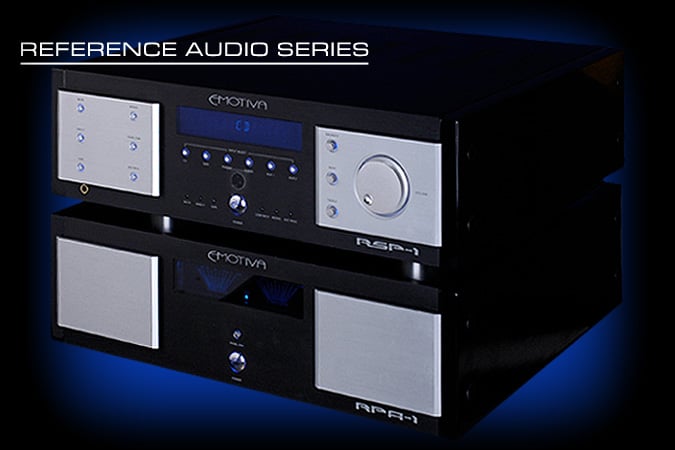 Emotiva Audio was gracious enough to provide their
Reference Audio Series which consists of the RSP-1 stereo preamplifier and the
RPA-1 stereo amp. This is an analogue only system which does very little to alter
the signal other than providing a summed filtered RCA output so that you can
utilize a subwoofer. At 200 watts per channel, the dual mono configuration of
the RPA-1 will provide more than enough power for most ANY speaker especially
the Usher S-520’s. Paired with the Denon 3910, I had at my disposal equipment
that will provide the S-520’s (or any other stereo pair of speakers) the purity
of signal with power reserves to spare. There will be no doubt that any imperfections
revealed in my testing are a result of the speakers and not the electronics.
Emotiva Audio was gracious enough to provide their
Reference Audio Series which consists of the RSP-1 stereo preamplifier and the
RPA-1 stereo amp. This is an analogue only system which does very little to alter
the signal other than providing a summed filtered RCA output so that you can
utilize a subwoofer. At 200 watts per channel, the dual mono configuration of
the RPA-1 will provide more than enough power for most ANY speaker especially
the Usher S-520’s. Paired with the Denon 3910, I had at my disposal equipment
that will provide the S-520’s (or any other stereo pair of speakers) the purity
of signal with power reserves to spare. There will be no doubt that any imperfections
revealed in my testing are a result of the speakers and not the electronics.
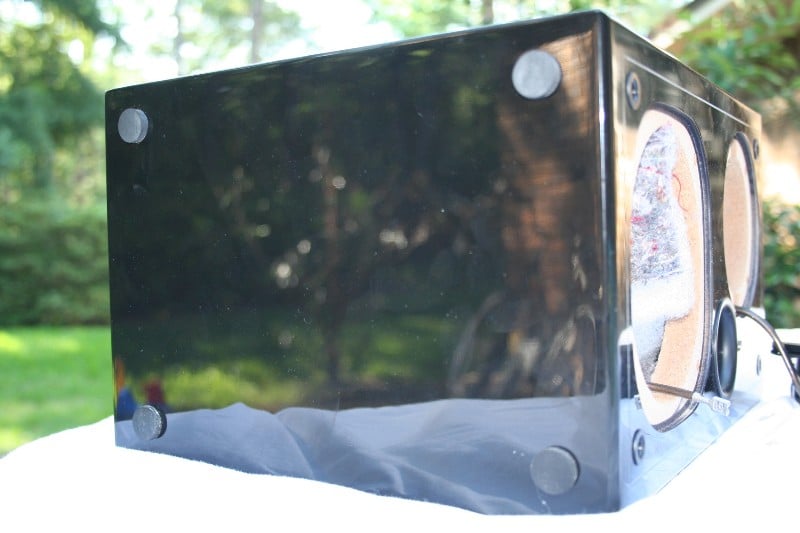 The S-520’s are front ported which should make
placement a little easier than a rear ported speaker. During playback, even at
insane levels, I was surprised at how little air was being pushed through the
port. I’m used to putting my hand up to the port and feeling a rush of wind as
the woofer(s) pump air in and out of the speaker enclosure. This can lead to
port noise. With the S-520’s, port noise was NEVER a problem. They are a bit
insensitive and I was worried that they may demand some solid external
amplification over the typical run of the mill receiver. While I did all my
listening tests on the Emotive Reference Audio Series, I did briefly hook up
the S-520’s to the Denon AVR-2307 to see how they would react to a mid-level
receiver. Much to my relief, they did well. If you are looking at the S-520’s,
you wouldn’t be wasting money on an external amp but you don’t absolutely need
it. Think of it this way, with the money you just saved on the Usher’s, you can
easily purchase a decent amp and STILL save money over a set of speakers that
wouldn’t sound as good!
The S-520’s are front ported which should make
placement a little easier than a rear ported speaker. During playback, even at
insane levels, I was surprised at how little air was being pushed through the
port. I’m used to putting my hand up to the port and feeling a rush of wind as
the woofer(s) pump air in and out of the speaker enclosure. This can lead to
port noise. With the S-520’s, port noise was NEVER a problem. They are a bit
insensitive and I was worried that they may demand some solid external
amplification over the typical run of the mill receiver. While I did all my
listening tests on the Emotive Reference Audio Series, I did briefly hook up
the S-520’s to the Denon AVR-2307 to see how they would react to a mid-level
receiver. Much to my relief, they did well. If you are looking at the S-520’s,
you wouldn’t be wasting money on an external amp but you don’t absolutely need
it. Think of it this way, with the money you just saved on the Usher’s, you can
easily purchase a decent amp and STILL save money over a set of speakers that
wouldn’t sound as good!
Usher S-520 Speaker Listening Tests and Conclusion
If there is a theme of the listening section of this review, it is “clear”. I’ve had a lot of speakers in for review in the last few years and NONE have had the detail and clarity that the Usher S-520’s have. My own reference speakers - the Axiom m60’s sounded like they had a sheet thrown over them in comparison (not a blanket, mind you, a sheet). This level of detail reveals things in recordings that you’ve never noticed before. It also tends to lead people to a “bright” description. Even familiar recordings will suddenly have a depth that you didn’t know existed. Rather than wax poetic, why don’t I get right to the tests?
CD: Yello – the eye
 Well, you knew this one was coming. As always I was
looking at imaging and I was worried primarily about placement and toe in. The
off axis response of the S-520s was remarkably uniform out to about 30 degrees
on each side. The only real difference I heard was between directly on axis and
off (meaning directly in front of the speaker as compared to a little off to
one side). For the purposes of imaging and presenting a coherent soundstage,
toe in and port side didn’t seem to make much of a difference. If you are going
to change the positioning of these speakers, it will NOT be because of the
imaging because the imaging didn’t seem to change that much with different
degrees of toe-in. Generally, the imagining was good but it never really had
the unity and cohesiveness that I’ve experienced with my reference speakers or
others. Instruments were placed in the soundstage but they didn’t have the
three dimensional quality I’ve heard in the past.
Well, you knew this one was coming. As always I was
looking at imaging and I was worried primarily about placement and toe in. The
off axis response of the S-520s was remarkably uniform out to about 30 degrees
on each side. The only real difference I heard was between directly on axis and
off (meaning directly in front of the speaker as compared to a little off to
one side). For the purposes of imaging and presenting a coherent soundstage,
toe in and port side didn’t seem to make much of a difference. If you are going
to change the positioning of these speakers, it will NOT be because of the
imaging because the imaging didn’t seem to change that much with different
degrees of toe-in. Generally, the imagining was good but it never really had
the unity and cohesiveness that I’ve experienced with my reference speakers or
others. Instruments were placed in the soundstage but they didn’t have the
three dimensional quality I’ve heard in the past.
CD: Bang & Olufsen Vol. XIII – The Sound of Perfection
I acquired this CD on my trip to B&O a while back. At first listen, I only really liked one song but a few of the others have grown on me. In particular, Maggie Reilly’s Close your Eyes (track 4) has grown on me for its crazy audio quality and alluring timbre. This ballad is recorded with such high fidelity that you feel like you are inside the microphone. As I played around with the toe in, I began to realize that I preferred the on axis setup. The sound was more present, more immediate. Regardless of toe in, the bass was extremely tight and the piano lifelike. I hate saying this because I sound like one of those reviewers, but it was like a veil was lifted. Honestly. The holdover on notes was reduced, everything was tighter and clearer, and sounds that were masked by held over notes were now audible. For the first time, I could hear the felt on the piano rub on the strings. When you play a piano, you’ve heard that sound and can identify it readily. But you are not used to hearing it so clearly in reproduced music. Suddenly, I was hearing it again.
DTS CD: Diana Krall – Love Scenes (read the review)
 Ok, I know this isn’t a two channel CD and I’m
playing it though a two channel preamp but I like it and most of the material
is in the right and left channels anyhow. Diana Krall’s venerable CD is a
staple in a reviewer’s library. I’ve even been to “hi-end” boutique shops that
sport the CD and/or vinyl versions of this album. Listening to Diana Krall’s
voice though the Usher S-520’s was like being in the room with her. Every
moment of silence, every note, every breath, every word was immediate, was
present. You know what? I don’t even believe me. I’m writing this and thinking,
“I can’t possibly mean this can I?” But I’m listening to it right now, I’m
thinking all these things. I can’t help but challenge you to go out and demo
these speakers and see if you agree.
Ok, I know this isn’t a two channel CD and I’m
playing it though a two channel preamp but I like it and most of the material
is in the right and left channels anyhow. Diana Krall’s venerable CD is a
staple in a reviewer’s library. I’ve even been to “hi-end” boutique shops that
sport the CD and/or vinyl versions of this album. Listening to Diana Krall’s
voice though the Usher S-520’s was like being in the room with her. Every
moment of silence, every note, every breath, every word was immediate, was
present. You know what? I don’t even believe me. I’m writing this and thinking,
“I can’t possibly mean this can I?” But I’m listening to it right now, I’m
thinking all these things. I can’t help but challenge you to go out and demo
these speakers and see if you agree.
DVD-A: Porcupine Tree – Deadwing (read the review)
 I reviewed this album a little while
back and for the most part it is a good listen. The style is a little
inconsistent so for most people, they are going to love some of the songs and
loath the rest. The thing about detailed speakers is that they tend to be
unforgiving. You put in well recorded music and you can have a transcendent
experience. You put in compressed or poorly mastered music and they’ll let you
experience every agonizing moment of it. While I’m not suggesting that Deadwing
has poor audio quality (far from it) but there were certain decisions made in
order to get the sound they wanted (i.e. distortion, reverb, and feedback).
This means that during some of the faster tracks, the guitar can become a
little fatiguing. I found that while I preferred the S-520’s pointed directly
at me (or near to it) for the ballads (and most of the other listening I did),
on these faster tracks, I preferred them pointed out. Even on the ballads and
other music they sounded great pointed out but I felt they sounded a little
better pointed at me. As a concession, I generally kept them facing straight
ahead or with a slight toe in (maybe 10 degrees) during causal listening. Even in
this configuration with this type of music I found them a little bright.
I reviewed this album a little while
back and for the most part it is a good listen. The style is a little
inconsistent so for most people, they are going to love some of the songs and
loath the rest. The thing about detailed speakers is that they tend to be
unforgiving. You put in well recorded music and you can have a transcendent
experience. You put in compressed or poorly mastered music and they’ll let you
experience every agonizing moment of it. While I’m not suggesting that Deadwing
has poor audio quality (far from it) but there were certain decisions made in
order to get the sound they wanted (i.e. distortion, reverb, and feedback).
This means that during some of the faster tracks, the guitar can become a
little fatiguing. I found that while I preferred the S-520’s pointed directly
at me (or near to it) for the ballads (and most of the other listening I did),
on these faster tracks, I preferred them pointed out. Even on the ballads and
other music they sounded great pointed out but I felt they sounded a little
better pointed at me. As a concession, I generally kept them facing straight
ahead or with a slight toe in (maybe 10 degrees) during causal listening. Even in
this configuration with this type of music I found them a little bright.
Recommendations
Are you kidding? If you’re looking at bookshelf speakers, try to find someplace to listen to the S-520s. You’ll have to locate a dealer which might be a problem for some but do what you can to get a listening session. Bring your favorite music (and a large selection). Plan to spend some time. The Usher Audio S-520’s are worth it. My only suggestion? Don’t listen to these first. Listen to everything else you can get your hands on first. Cause you’re probably going to walk out with these speakers. Better you should be sure of your purchase at the time rather than wonder if that Audioholics guy really knew what he was talking about. My only caveat is that in the wrong room (read – lots of hard surfaces) the “revealing” nature of these speakers will cross over from “a bit bright” to “oh my god my ears.” You’ll want to make sure that this type of sound is for you.
Conclusion
 Can you
tell I like these speakers? For a while I’ve been getting a reputation among my
peers as being too harsh – too hard on products. I don’t know how they are
going to react to this review, but I know how you should. Run, don’t walk, to
your nearest dealer to get a session with these speakers. The build quality is
without equal, the component quality rivals (and bests) speakers much more
expensive, and the sound if phenomenal. As far as I’m concerned, these are THE
budget bookshelf speakers to beat.
Can you
tell I like these speakers? For a while I’ve been getting a reputation among my
peers as being too harsh – too hard on products. I don’t know how they are
going to react to this review, but I know how you should. Run, don’t walk, to
your nearest dealer to get a session with these speakers. The build quality is
without equal, the component quality rivals (and bests) speakers much more
expensive, and the sound if phenomenal. As far as I’m concerned, these are THE
budget bookshelf speakers to beat.
About Usher Audio
Usher Audio Technology speakers and electronics are built for the experienced listener who just won’t compromise on sound quality even at moderate prices. Our loudspeakers are produced with skill and pride in an ultra-modern factory in Taiwan with great attention to manufacturing efficiency and productivity, turning out beautifully-crafted speaker systems incorporating advanced technologies like beryllium midrange drivers to match Usher’s superb beryllium tweeters.
Usher’s designs are optimized from the start of the manufacturing process with full confidence that Mr. Tsai and his dedicated employees are as devoted to perfectionist sound, surprising value, and extraordinary craftsmanship as importer MusikMatters is.
We are very happy to have Dr. Joseph D'Appolito as Usher’s technical consultant since early 2000. He provides guidance on all our speakers’ crossover designs. A world-renowned authority in audio and acoustics, he specializes in loudspeaker system design with credentials galore: BEE, SMEE, EE and Ph.D., degrees from RPI, MIT and the University of Massachusetts. As a member of the Audio Engineering Society, Dr. D'Appolito has published over 30 journal and conference papers. His most popular and influential brainchild has to be the MTM (midrange/tweeter/midrange vertical array) commonly known as the D'Appolito Configuration that’s used by dozens of manufacturers throughout the world
The Score Card
The scoring below is based on each piece of equipment doing the duty it is designed for. The numbers are weighed heavily with respect to the individual cost of each unit, thus giving a rating roughly equal to:
Performance × Price Factor/Value = Rating
Audioholics.com note: The ratings indicated below are based on subjective listening and objective testing of the product in question. The rating scale is based on performance/value ratio. If you notice better performing products in future reviews that have lower numbers in certain areas, be aware that the value factor is most likely the culprit. Other Audioholics reviewers may rate products solely based on performance, and each reviewer has his/her own system for ratings.
Audioholics Rating Scale
 — Excellent
- — Very Good
- — Good
- — Fair
- — Poor
| Metric | Rating |
|---|---|
| Build Quality | |
| Appearance | |
| Treble Extension | |
| Treble Smoothness | |
| Midrange Accuracy | |
| Bass Extension | |
| Bass Accuracy | |
| Imaging | |
| Soundstage | |
| Dynamic Range | |
| Fit and Finish | |
| Performance |  |
| Value | |
As Associate Editor at Audioholics, Tom promises to the best of his ability to give each review the same amount of attention, consideration, and thoughtfulness as possible and keep his writings free from undue bias and preconceptions. Any indication, either internally or from another, that bias has entered into his review will be immediately investigated. Substantiation of mistakes or bias will be immediately corrected regardless of personal stake, feelings, or ego.
View full profile Subscribe to our newsletter