


Snell LCR7 XL 30th Anniversary Bookshelf Speaker
Snell LCR7 XL
- Product Name: LCR7 XL
- Manufacturer: Snell
- Performance Rating:


- Value Rating:
- Review Date: June 30, 2009 03:40
- MSRP: $ 6000
Stand-mounted, magnetically shielded, sealed-box, two-way loudspeaker intended for left, right, or center use.
Tweeter:
1" soft-dome tweeter
Woofer: Two
5.25" magnesium-cone woofers.
Crossover frequency: 2kHz
Frequency response: 75Hz–22kHz, ±3dB
Nominal impedance: 4 ohms
Sensitivity:
90dB/W/m
Maximum SPL (pair): 110dB
Dimensions: 19" H by 7" W by 8.75" D
Weight: 26
lbs
Finishes: Cherry veneer or hand-rubbed satin black walnut (most wood and
paint finishes available on special order), with silver or black perforated
metal grilles and solid aluminum end caps, anodized silver or black.
Pros
- Looks
- Fantastic high end
- Ruler flat midrange
- Build quality
Cons
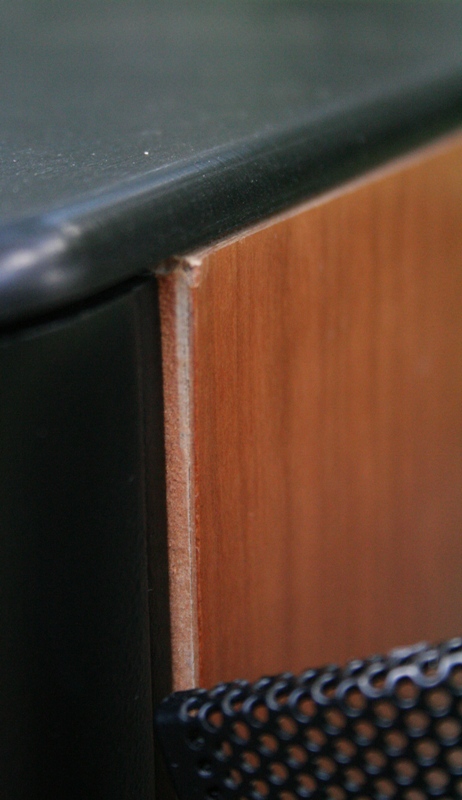
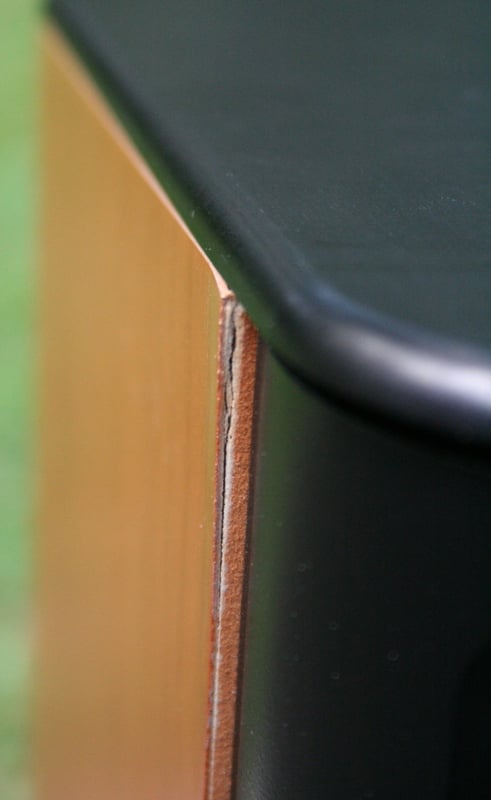
- Grills very difficult to remove, damage edges
- Pricey
- Require sub
- Packaging substandard
Snell LCR7 XL Build Quality
Snell is not a new name in speakers and is known for high end in-room and in-wall offerings. The LCR7 XLs are one of their premier speakers that feature a design by Snell Chief Engineer Joe D’Appolito memorializing the 30th anniversary of Snell Acoustics. Utilizing a D'Appolito array (or Mid-Tweet-Mid, MTM for short, design) and the renown SEAS XL drivers, the LCR7 XL represent the pinnacle of what you can achieve through components and experience. At $6000 a pair, they certainly seem to be sparing no expense. There is a standard LCR7 version without the driver and crossover upgrades that retails for $2000/pair. Honestly, when I agreed to the review, I thought I was getting the standard version. Talk about a welcomed surprise!
Build Quality
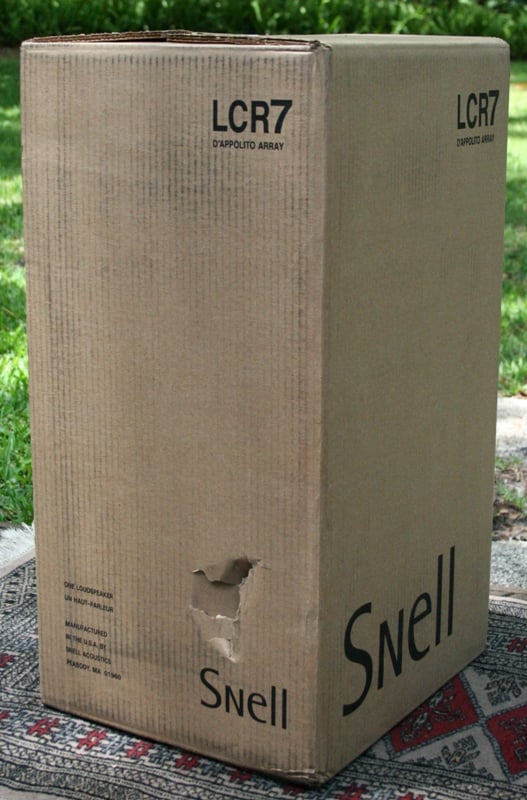 My first impression of
the Snell Acoustics LCR7 XL was not as positive as you might think. They were
single-boxed encased in a plastic bag with a foam endcap. While my thoughts on
the ubiquitous cotton sock are well known to Audioholics readers, let me
restate - I hate them. I much prefer plastic as it actually protects rather
than just gives some sort of pseudo-impression of quality. With a speaker like
the LCR7 XL, you certainly don't need to put on airs. No, my concern was the
boxing. While the speaker arrived in good condition despite the shipper's best
efforts to the contrary (notice the gash on the side of the box), the box was
not sealed. There were only a few staples across the top! I could actually see
inside of the box from the top. This seems to be a very convenient way for
rain, snow, bugs, and all matter of debris to get access to the speaker during
storage and transit. Especially here in Florida
where it rains pretty much every day, I'd be concerned about damage. At this
price point, components are usually shipped in crates! Luckily, the speakers did
not have any damage of that sort as they were in transit during a particularly
unusual (for the summer) dry-spell.
My first impression of
the Snell Acoustics LCR7 XL was not as positive as you might think. They were
single-boxed encased in a plastic bag with a foam endcap. While my thoughts on
the ubiquitous cotton sock are well known to Audioholics readers, let me
restate - I hate them. I much prefer plastic as it actually protects rather
than just gives some sort of pseudo-impression of quality. With a speaker like
the LCR7 XL, you certainly don't need to put on airs. No, my concern was the
boxing. While the speaker arrived in good condition despite the shipper's best
efforts to the contrary (notice the gash on the side of the box), the box was
not sealed. There were only a few staples across the top! I could actually see
inside of the box from the top. This seems to be a very convenient way for
rain, snow, bugs, and all matter of debris to get access to the speaker during
storage and transit. Especially here in Florida
where it rains pretty much every day, I'd be concerned about damage. At this
price point, components are usually shipped in crates! Luckily, the speakers did
not have any damage of that sort as they were in transit during a particularly
unusual (for the summer) dry-spell.
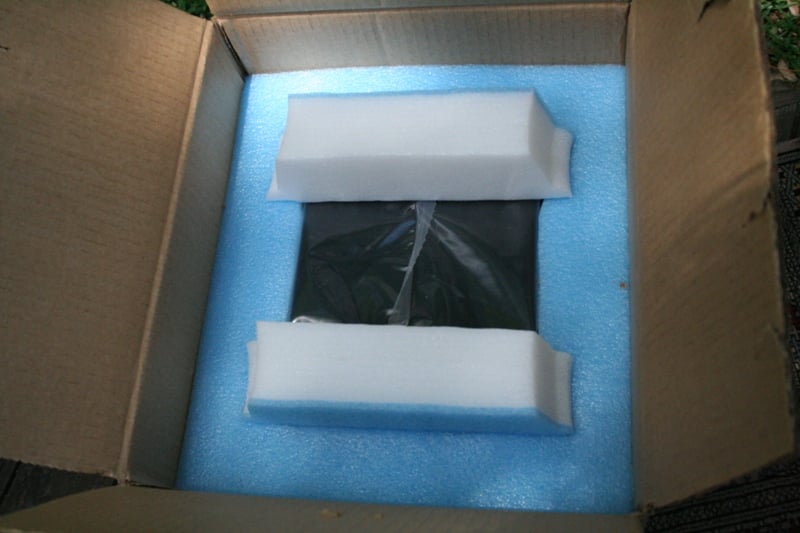
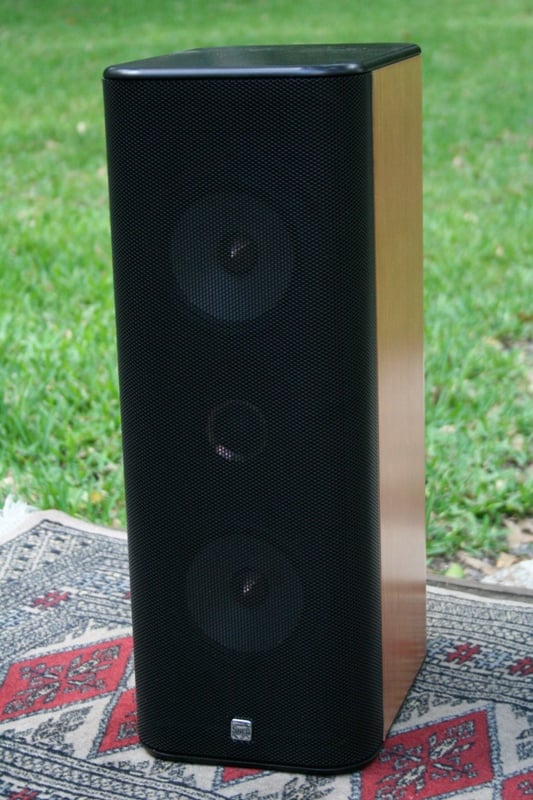 Unboxing the speakers,
I couldn't help but be impressed by their size and weight. The LCR7 XLs are one
of the larger bookshelf speakers I've had the pleasure of reviewing and I
couldn't help but wonder how they would do on stands. I suspected (correctly as
you'll see later) that they'd be fine because of the weight. At 26 lbs, the
LCR7 XLs feel solid. Extremely solid. So solid you'll wonder if there is any
space left in there for the drivers. The speakers are only 7" wide and a
bit over 8" deep but a whopping 19" tall. You'll probably recognize
these measurements more resemble a center channel
than a bookshelf - and you'd be right. D'Appolito design are optimized for vertical orientation but in
the right situations, they can also function well horizontally for center channel duties. The LCR designation should give this
away as the speaker is designed to be used as a Left, Right, or Center channel (of course, surround and rear speakers are
also on the table but LCRSR is a little cumbersome, don't you think?).
Unboxing the speakers,
I couldn't help but be impressed by their size and weight. The LCR7 XLs are one
of the larger bookshelf speakers I've had the pleasure of reviewing and I
couldn't help but wonder how they would do on stands. I suspected (correctly as
you'll see later) that they'd be fine because of the weight. At 26 lbs, the
LCR7 XLs feel solid. Extremely solid. So solid you'll wonder if there is any
space left in there for the drivers. The speakers are only 7" wide and a
bit over 8" deep but a whopping 19" tall. You'll probably recognize
these measurements more resemble a center channel
than a bookshelf - and you'd be right. D'Appolito design are optimized for vertical orientation but in
the right situations, they can also function well horizontally for center channel duties. The LCR designation should give this
away as the speaker is designed to be used as a Left, Right, or Center channel (of course, surround and rear speakers are
also on the table but LCRSR is a little cumbersome, don't you think?).
Editorial Note on the D'Appolito Design by Gene DellaSala
A D’Appolito driver topology can only be truly optimized for vertical orientation. The crossover network is usually designed for flat axial response as opposed to flat power response (which is only the same when the speaker is an infinitesimally small point in space). This can never be true for a D'Appolito Array for obvious reasons. If you have your front L & R at 30 degrees, then having a smaller horizontal dispersion window will cut down on inter channel interference and likely result in better stereo imaging. Using a speaker like this as a center channel oriented horizontally is a special case. For the most part, people have to locate the center channel above or below the screen, so by having a larger radiation angle top to bottom (vertical), instead of left to right (horizontal) makes a lot of sense. Now for a Left or Right channel speaker, since this is far more likely to be at or near optimum level (height) for listening, you want a wider horizontal dispersion, and a narrower vertical dispersion, as side wall reflections are better spatial cues for imaging than are ceiling and floor reflections which tend to be more likely to detract from the sound quality in a normal room than do side wall reflections. This is why you would orient this speaker vertically for the front channels and NEVER horizontally.
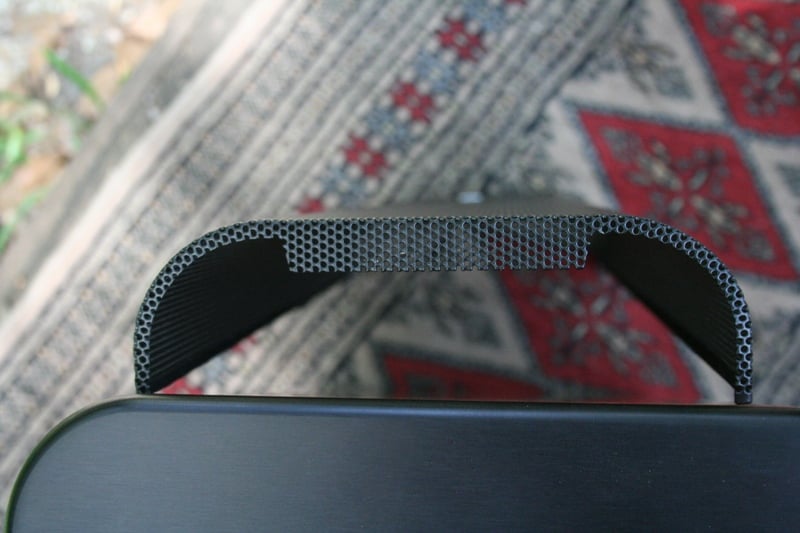 The review samples have a cherry
veneer (gloss black is also an option as are custom finishes for those
interested) and a black metal mesh grill (silver is also available). I had a
bit of a time getting the grills off at first before I figured out that you
needed to pull out from the sides. There are thin strips of rubberized tape
around the tabs at the top and bottom of the grills. The sides of the cabinet
have an indentation where the end of the grill snaps in to keep them in place.
They were never as secure as I'd like as I noticed a little movement of the
grills with some nudging. However, there was never any noise from the grill
during playback (when the grills were one which wasn't often with speakers as
good looking as these). I was surprised to see Snell go with this grill design
especially considering how popular (and well implemented) magnetic grills have
become. For a speaker in this price point, this grill seems unnecessarily
cluncky.
The review samples have a cherry
veneer (gloss black is also an option as are custom finishes for those
interested) and a black metal mesh grill (silver is also available). I had a
bit of a time getting the grills off at first before I figured out that you
needed to pull out from the sides. There are thin strips of rubberized tape
around the tabs at the top and bottom of the grills. The sides of the cabinet
have an indentation where the end of the grill snaps in to keep them in place.
They were never as secure as I'd like as I noticed a little movement of the
grills with some nudging. However, there was never any noise from the grill
during playback (when the grills were one which wasn't often with speakers as
good looking as these). I was surprised to see Snell go with this grill design
especially considering how popular (and well implemented) magnetic grills have
become. For a speaker in this price point, this grill seems unnecessarily
cluncky.
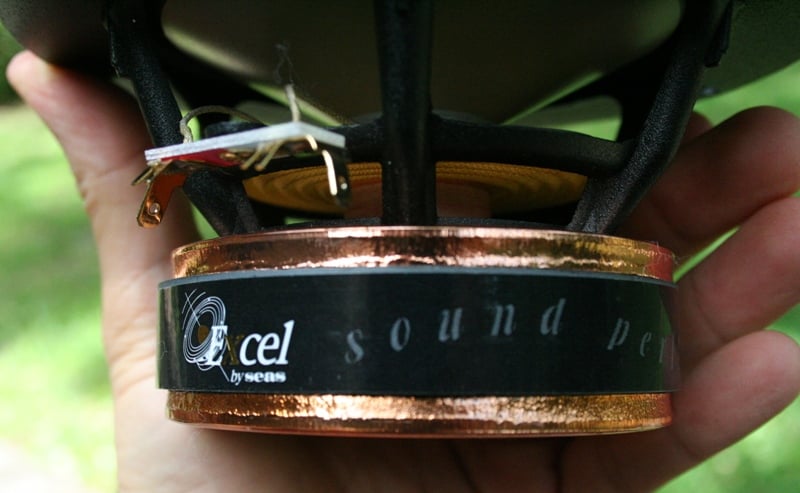
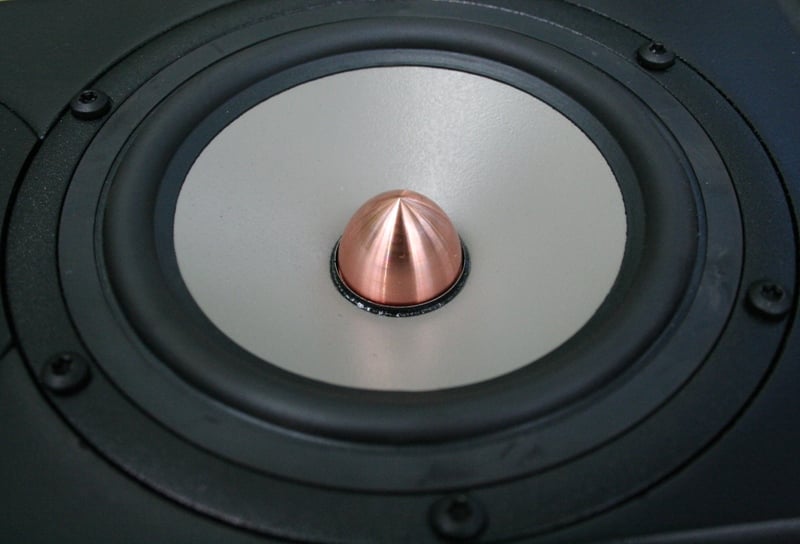
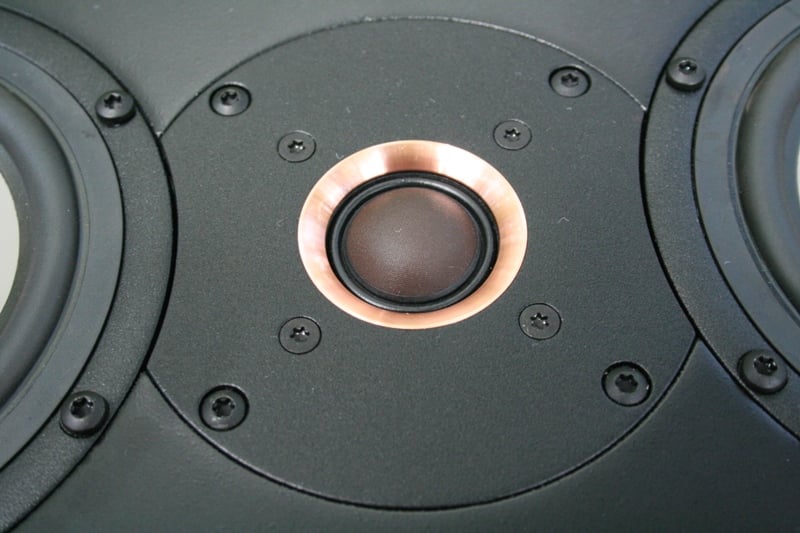
Underneath the grill you'll notice the copper highlights of the woofer phase plugs and ring around the tweeter. The front baffle is black and the drivers are inset. The woofers are 5.25" with magnesium cones. The tweeter has a Sonotex dome (a proprietary fabric from SEAS) and a neodymium magnet. As mentioned, the drivers are all manufactured by SEAS, a Norway based driver manufacturer known for some of the highest quality transducers and in business since 1950. If you think Snell is skimping on the drivers, you're sadly mistaken. These are components of the highest order which is reflected in the retail price of this product.
 The edges of the speaker
are all rounded and the sides and back sport the cherry veneer. The tops and
bottom are capped with a black bushed aluminum plate (silver, again, also available). The aluminum obviously
adds to the weigh of the speaker but also allows for worry-free stand
placement. Unlike veneered surfaces which can scratch, ding, or dent, the
aluminum is practically invulnerable. The back of the speaker has a small,
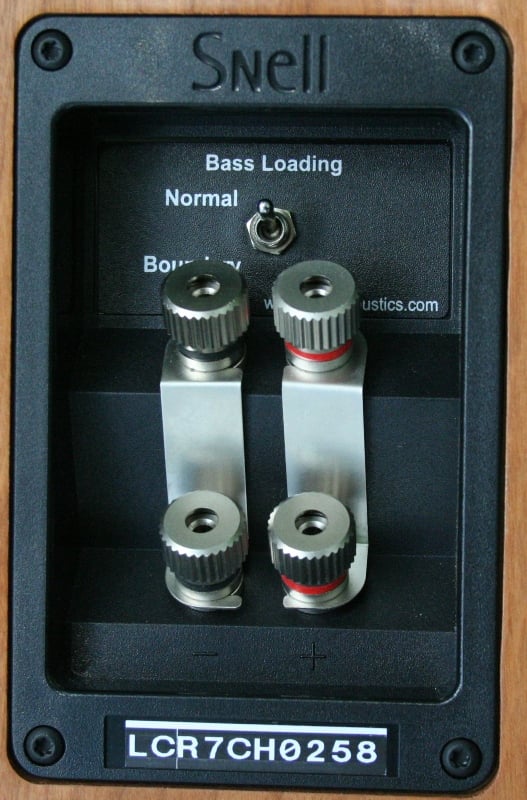
inset housing with two pairs of binding posts with an included jumper bar. The copper
motif is not carried through to the back of the unit with the binding posts and
jumper having a brushed steel look. There is also a boundary compensation
switch for placement close to walls. I actually like the more industrial look
of the binding posts. It gives the LCR7 XLs a bit of a different look from the
more traditional binding posts you see on every other speaker on the market.
The edges of the speaker
are all rounded and the sides and back sport the cherry veneer. The tops and
bottom are capped with a black bushed aluminum plate (silver, again, also available). The aluminum obviously
adds to the weigh of the speaker but also allows for worry-free stand
placement. Unlike veneered surfaces which can scratch, ding, or dent, the
aluminum is practically invulnerable. The back of the speaker has a small,
inset housing with two pairs of binding posts with an included jumper bar. The copper
motif is not carried through to the back of the unit with the binding posts and
jumper having a brushed steel look. There is also a boundary compensation
switch for placement close to walls. I actually like the more industrial look
of the binding posts. It gives the LCR7 XLs a bit of a different look from the
more traditional binding posts you see on every other speaker on the market.
The fit and finish of the speaker overall was very good. The only problem I noted was where the grills met the cabinet. As I mentioned, the way the mesh grills work is that they slide between the aluminum top/bottom plate and around the sides of the baffle. The problem was where it met the veneered sides, it had damaged the veneer. This was clearly visible on close inspection on both speakers (before I tried getting the stubborn grills off). While the edges of the grill are bent over and not at all sharp, moving the speaker (like taking it from the box to the stand) generally pushes on the grill. This in turn pushes on the edge of the veneer which causes it to split. I don't see how this damage is going to be avoided given the grill design. My advice upon receipt of the speaker is to check those edges carefully for damage. If there is none (or not enough to make you send them back), make sure not to put too much pressure on the grill when you are moving the speaker around. This seems to me to be a bit of a slip in a speaker at this price point. For $6k, you shouldn't have to treat your speakers with kid gloves. Honestly, these speakers are so good looking without the grills that I wish Snell would just put a small screen over the tweeter and leave it at that. The phase plugs protect the most vulnerable part of the woofer by eliminating the dust cap and the only point that draws little fingers left is the dome tweeter.
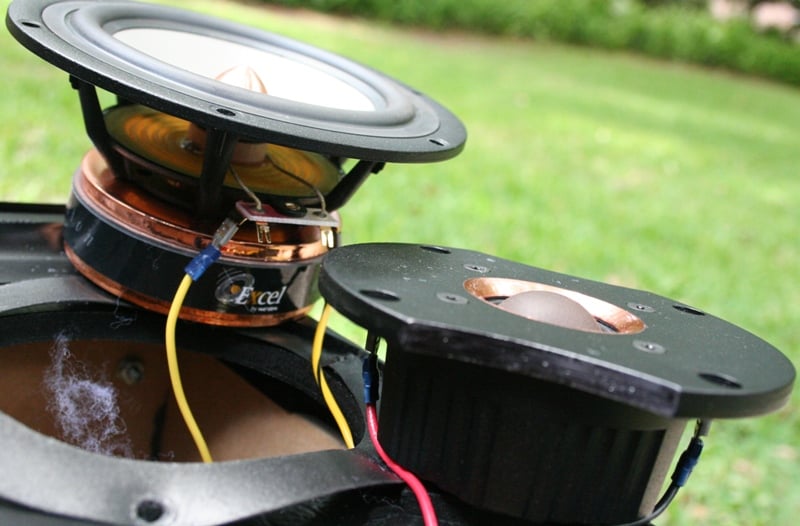
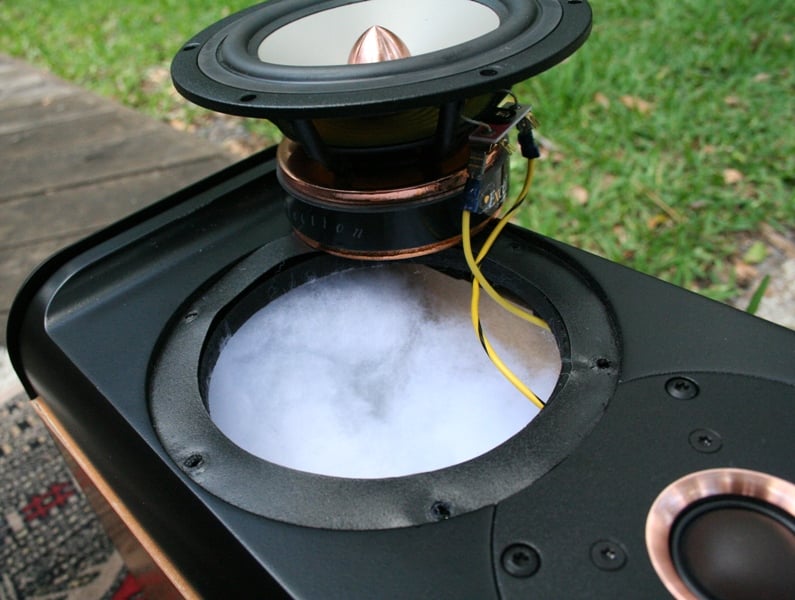
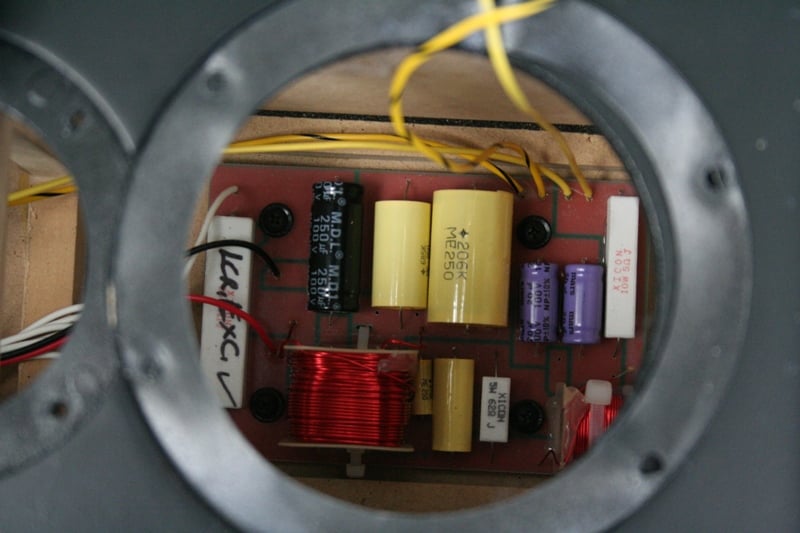
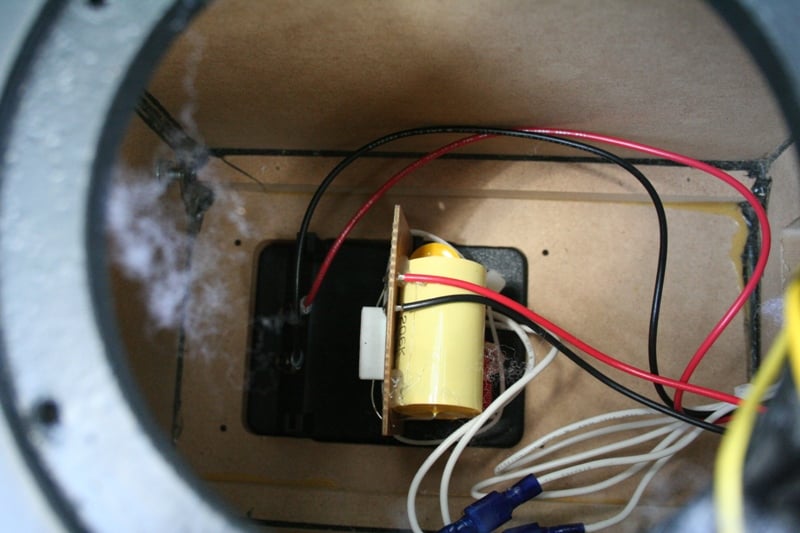
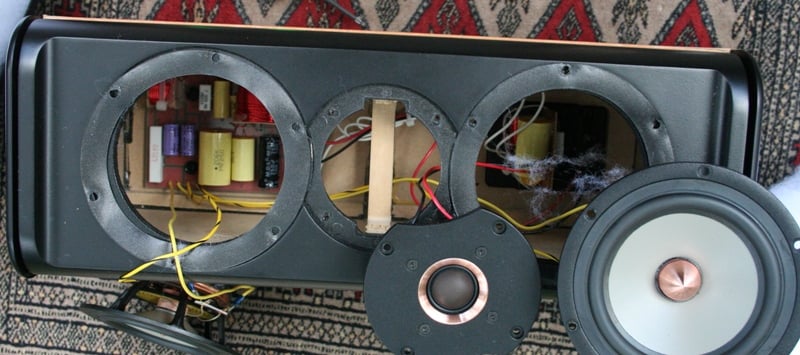 Opening up the speakers,
it is easy to see that the quality did not stop with the choice of drivers.
Under each driver is a thin rubber ring to reduce any physical noise. The
woofers have a cast basket, the tweeter is in a sealed backbox, and the
crossover spans nearly the entire back of the cabinet encompassing two separate
boards. There is a center brace directly behind the tweeter. The box is
constructed out of 5/8" MDF and is absolutely stuffed full of polyfill. I
don't think I've ever seen so much polyfil in a box this size before. The
cabinet construction and bracing explains the overall inertness of the box as
the "knock" test practically hurt my knuckles. The connectors on the
drivers are the snap on rather than soldered which is a bit unexpected at this
price point. While it made it easier for me to get pictures, I expected a more
permanent connection. Actually, I wouldn't mind seeing some sort of "lug"
attachment to allow for easy service while providing a more robust connection
than the snap on type. I've seen more than one snap-on connector bent and
nearly broken in speakers in the past. The crossover appears to be constructed
of quality parts with high tolerance big yellow poly caps, ceramic
resistors. The wiring is a bit thin and
I was surprised to see they didn’t use twisted pair to reduce coupling and
noise pickup.
Opening up the speakers,
it is easy to see that the quality did not stop with the choice of drivers.
Under each driver is a thin rubber ring to reduce any physical noise. The
woofers have a cast basket, the tweeter is in a sealed backbox, and the
crossover spans nearly the entire back of the cabinet encompassing two separate
boards. There is a center brace directly behind the tweeter. The box is
constructed out of 5/8" MDF and is absolutely stuffed full of polyfill. I
don't think I've ever seen so much polyfil in a box this size before. The
cabinet construction and bracing explains the overall inertness of the box as
the "knock" test practically hurt my knuckles. The connectors on the
drivers are the snap on rather than soldered which is a bit unexpected at this
price point. While it made it easier for me to get pictures, I expected a more
permanent connection. Actually, I wouldn't mind seeing some sort of "lug"
attachment to allow for easy service while providing a more robust connection
than the snap on type. I've seen more than one snap-on connector bent and
nearly broken in speakers in the past. The crossover appears to be constructed
of quality parts with high tolerance big yellow poly caps, ceramic
resistors. The wiring is a bit thin and
I was surprised to see they didn’t use twisted pair to reduce coupling and
noise pickup.
LCR7 XL Setup and Measurements
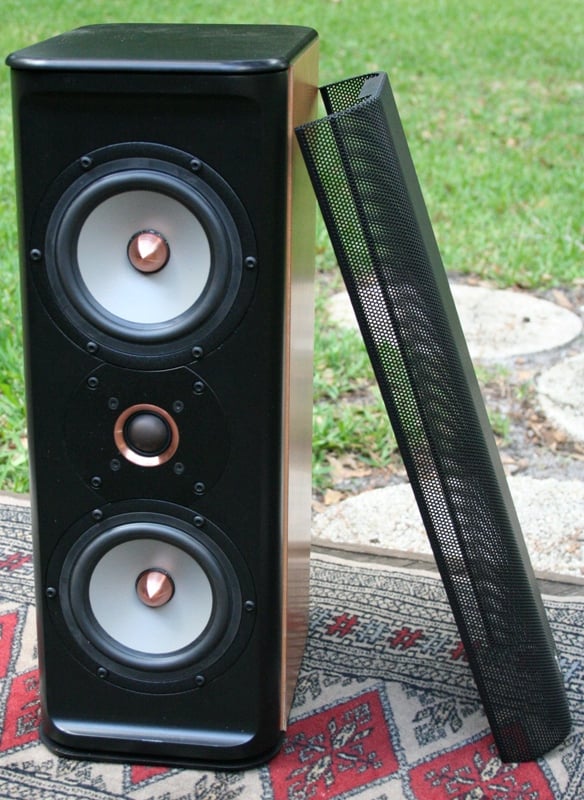 As I mentioned, the
one thing I was really worried about with the Snell Acoustics LCR7 XL was their
height. Looking at them, I thought I might have to worry about them falling off
my Studio Tech stands. While I can mass-load the stands, I haven't simply
because I have to move them so often. While the Snells only weigh 26lbs, they
are solid and well balanced. When I placed them on the stand, it was as if they
became part of the stand! I honestly forgot they were bookshelves as I was
climbing behind them to get to cables and other gear (and thrown Legos). Never
once did they falter, tip, or even hint that they might go over. This is surly
an interaction between the sturdy stand construction and the Snell even weight
distribution.
As I mentioned, the
one thing I was really worried about with the Snell Acoustics LCR7 XL was their
height. Looking at them, I thought I might have to worry about them falling off
my Studio Tech stands. While I can mass-load the stands, I haven't simply
because I have to move them so often. While the Snells only weigh 26lbs, they
are solid and well balanced. When I placed them on the stand, it was as if they
became part of the stand! I honestly forgot they were bookshelves as I was
climbing behind them to get to cables and other gear (and thrown Legos). Never
once did they falter, tip, or even hint that they might go over. This is surly
an interaction between the sturdy stand construction and the Snell even weight
distribution.
I set the LCR XLs about 8 feet apart and 8 feet from my prime listening position. The were wired with Ram Electronics HS series cables and powered by either a Denon AVR-2307CI pushing Seymour AV Ice Block 5001 500 Watt Ice Block Monoblocks or the Emotiva RSP-1/RPA-1 combo. Source was either a Denon DVD-3910 via analogue to the Emotiva combo or HDMI to the Denon or PS3 to the Denon. Digital cabling was provided by Impact Acoustics and analogue by Blue Jeans Cable.
 The first thing I do
when I set up a pair of speakers is play with positioning. Even before I did
any measurements, I knew that the LCR XLs should be placed off axis. Pointed
directly at me, the high end of the speakers was piercing and bright. Way too
much for my taste. With the speakers off axis, I found the sound much more
pleasant and remarkably accurate (I'll reserve the rest of my comments for the
listening section). I ended up with the speakers pointed nearly directly
forward with just a slight toe in of maybe 5 degrees. The sweetspot of the LCR
XLs was frankly amazing with a very wide but defined center image that could be
discerned from a number of seats in my home theater.
The first thing I do
when I set up a pair of speakers is play with positioning. Even before I did
any measurements, I knew that the LCR XLs should be placed off axis. Pointed
directly at me, the high end of the speakers was piercing and bright. Way too
much for my taste. With the speakers off axis, I found the sound much more
pleasant and remarkably accurate (I'll reserve the rest of my comments for the
listening section). I ended up with the speakers pointed nearly directly
forward with just a slight toe in of maybe 5 degrees. The sweetspot of the LCR
XLs was frankly amazing with a very wide but defined center image that could be
discerned from a number of seats in my home theater.
I was definitely glad that I had external amplification with the Snell Acoustics LCR7 XL as they did seem a bit power hungry. While their efficiency was the main culprit, part of this was because I couldn't get them to distort and therefore could turn them up higher without thinking they were too loud. I've experienced almost immediate listener fatique with other speakers of lower quality. I’d turn them up to a "reasonable" level and within a few moments I'd have to turn them back down because of ear fatigue from screeching tweeters and compressing woofers. With the Snells, I could turn them up to reference levels and beyond without any hint of fatigue or compression. While your midlevel receivers may be able to technically power these, I'd suggest springing for an amp. Of course, anyone spending $6k on a pair of speakers probably has already done so but just in case.
 While I was reviewing
the Snell Acoustics LCR7 XL in a 2-channel
configuration, I couldn't help but wonder what they would sound like in a full
surround setup (or at least three across the front). While I've often used
review speakers in conjunction with my reference speakers, rarely do I find
them so outclassed as I have with the Snells. My RBH 515C center channel has melded well with most other speakers. In
fact, the only time it hasn't is when the other speakers couldn't keep up. With
the LCR7 XLs, it was obvious that my RBH center channel
speaker was outclassed. Of course, with the RBH a fraction of the price, you'd
expect that. But I've reviewed speakers in this price range before and never
noticed so much of a difference. The LCR7 XLs were just so much clearer and
more dynamic.
While I was reviewing
the Snell Acoustics LCR7 XL in a 2-channel
configuration, I couldn't help but wonder what they would sound like in a full
surround setup (or at least three across the front). While I've often used
review speakers in conjunction with my reference speakers, rarely do I find
them so outclassed as I have with the Snells. My RBH 515C center channel has melded well with most other speakers. In
fact, the only time it hasn't is when the other speakers couldn't keep up. With
the LCR7 XLs, it was obvious that my RBH center channel
speaker was outclassed. Of course, with the RBH a fraction of the price, you'd
expect that. But I've reviewed speakers in this price range before and never
noticed so much of a difference. The LCR7 XLs were just so much clearer and
more dynamic.
Measurements & Analysis
For laboratory measurements I used the Sencore SP395A FFT Audio Analyzer and a Sherbourn 2/75B amp, I measured the Snell Acoustics LCR7 XL's in-room on- and off-axis frequency response with 1/12th octave resolution.
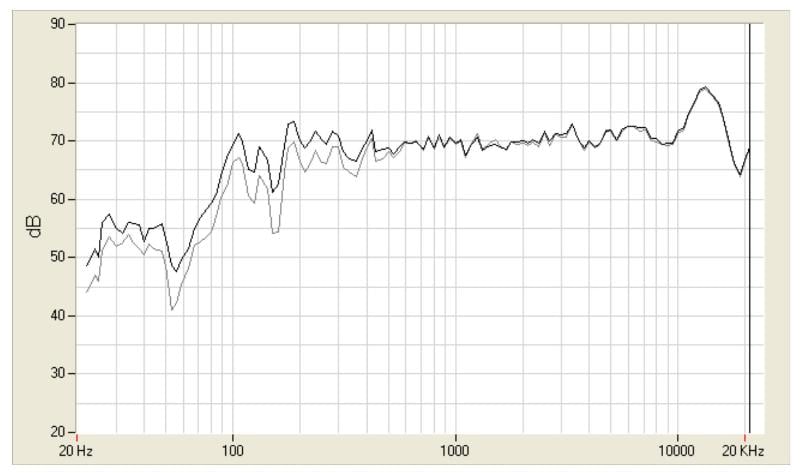
Snell LCR7 XL 1 Meter Frequency
Response (1/12th Octave) On Axis
Note
- this is NOT a 1 watt measurement
As you can see, the LCR7 XL measures incredibly flat on axis except for a bump around 15kHz with a fairly dramatic dropoff below 80Hz. Snell specs these speakers to 75Hz which seems around right from these measurements. The high end bump was a little disconcerting however. The lighter line is with the boundary compensation turned on. It does a very smooth job of reducing the bass output below 500Hz by about 3dB.
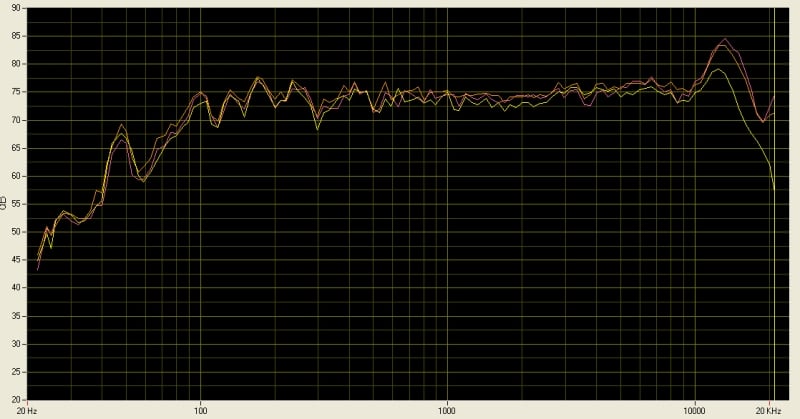
Snell LCR7 XL 1/2 Meter Frequency
Response (1/12th Octave)
Pink - On axis, Orange - 15 degrees off axis, Yellow - 30
degrees off axis
What's important in this graph is again how flat the frequency response is between 80Hz and 10kHz but also how it flattens out with the 30 degree (yellow) line. I did a few informal tests with the mic around 4" away from the speaker and at 35-40 degrees off axis, the response was nearly ruler flat all the way up to 18kHz. Off axis is definitely where you want to be with these speakers unless you like a little more high end energy or have lost a little hearing in that range.
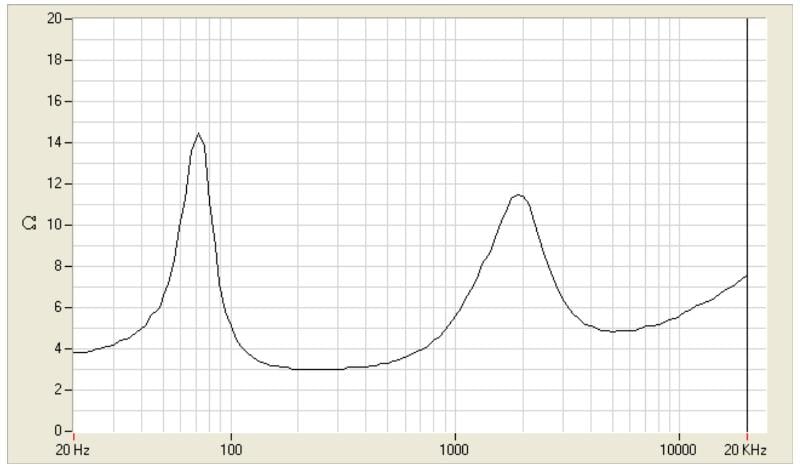
Snell LCR7 XL Impedance
The Sencore consistently measures impedance one ohm low. I measured the impedance at the terminals at about 4 ohms which lines up well with the Sencore and Snell's specs.
Snell Listening Tests and Conclusion
 My first step was to test the usable in-room
bass response of the Snell Acoustics LCR7 XLs. Grabbing my Rives
Test CD2, I played a few test tones. It was clear that past 80Hz, the LCR7
XLs didn't have much to offer. In my room, I measured with the Radio Shack SPL
corrected tones a 10dB drop between 100 and 80Hz and another 10dB between 80
and 63Hz. Part of the 80Hz is likely due partially to a suckout around that
frequency in my room but it shouldn't account for all of it. Including a sub
with the Snell Acoustics LCR7 XLs is an absolute must.
My first step was to test the usable in-room
bass response of the Snell Acoustics LCR7 XLs. Grabbing my Rives
Test CD2, I played a few test tones. It was clear that past 80Hz, the LCR7
XLs didn't have much to offer. In my room, I measured with the Radio Shack SPL
corrected tones a 10dB drop between 100 and 80Hz and another 10dB between 80
and 63Hz. Part of the 80Hz is likely due partially to a suckout around that
frequency in my room but it shouldn't account for all of it. Including a sub
with the Snell Acoustics LCR7 XLs is an absolute must.
I've often claimed that any speaker can do movies (though obviously some better than others) but its music where the quality speakers shine. As a quick aside, with my new AV Rant sponsored PS3, this is becoming less and less true. The high definition surround formats are really showing off with a surround sound system can do. I watched Serenity on Blu-ray along with Rocky Balboa and a number of others. The dynamics of the speakers really played well with the greater dynamic range and fidelity of the DTS HD and Dolby TrueHD tracks. While I'm not sure that I could in good conscience suggest that someone purchase such high dollar speakers just for movies, but you will, in the right room, be able to hear a clear difference between the Snells and many lower dollar speakers.
It was very hard to do an objective analysis of the Snell LCR7 XLs and the Salk SongTower QWTs. The Salks have a lot more bass so I had to try to ignore that in the A/B comparison or add a sub to the Snells. Neither was a very good solution so I just ran them both full range, picked music without much low end content, and focused on the midrange and high end. In the Salk's favor, I thought they occasionally provided a bit better imaging and perhaps comparable soundstage. On every other metric (except bass response) I felt the Snells won hands down. High end clarity and extension, midrange warmth and depth, basically everything was anywhere from a bit to a lot better with the Snells. At over 3x's the price, it better be.
CD: Yello
- the eye I often use this CD for setup purposes.
Honestly, it isn't all that great to listen to for enjoyment. It is electronic
and contains a lot of high and low information. The high end, in particular,
can get a little grating over time. First though, let's talk about the bass.
One of the drawbacks of the LCR7 XLs is that they fall off pretty fast after
80Hz. This forces you to use a sub. I expected the bass to roll off much more
dramatically than it did. I've heard speakers that have spec'ed bass response
much lower than the Snells that didn't have usable bass as low as the LCR7 XLs.
In-room the bass response was impressive considering
the measurements. While you're still going to need a sub for the low end to
reach the lowest octaves with authority, the midrange and high end is fully
fleshed out and rich.
I often use this CD for setup purposes.
Honestly, it isn't all that great to listen to for enjoyment. It is electronic
and contains a lot of high and low information. The high end, in particular,
can get a little grating over time. First though, let's talk about the bass.
One of the drawbacks of the LCR7 XLs is that they fall off pretty fast after
80Hz. This forces you to use a sub. I expected the bass to roll off much more
dramatically than it did. I've heard speakers that have spec'ed bass response
much lower than the Snells that didn't have usable bass as low as the LCR7 XLs.
In-room the bass response was impressive considering
the measurements. While you're still going to need a sub for the low end to
reach the lowest octaves with authority, the midrange and high end is fully
fleshed out and rich.
The high end, especially with this challenging material, was surprisingly enjoyable. Where other speakers compress and get shrill, the LCR7 XLs maintained their composure and actually allowed me to somewhat enjoy this album even at higher volumes. Of course, this was dependent on sitting off axis. As I moved the speaker around, it was obvious that a direct orientation was not to my liking. Even at lower volumes, I found the high end too fatiguing. Once I moved off axis, it was like the Snells were a different speaker. While others might suggest that this is a flaw in the speaker, I personally don't see it that way. People have different preferences especially for the high and low end. Universally, I think, people tend to appreciate a flat midrange. With the drop off of the speaker in the bass requiring a sub and the ability to "tune" the high end by turning the speaker toward you, you have a very versatile and customizable experience.
CD: Speaker
Shootout Test Disk
A few months ago we did a $1500-$2000
floorstanding speaker shootout. The participants brought a selection of their
favorite tracks and I kept a copy. It includes everything from Seal to Lyle
Lovett. A lot of it is bass heavy tracks for testing floorstanding speakers but
of course it's got tracks for midrange and high end. Male and female vocals, a
variety of instruments… it's just some of the best of the music we've ever used
to test speakers. The Snell Acoustics LCR7 XL performed better than any speaker
I've ever experienced in my listening environment. The bass was limited in
extension, of course, but what was there was linear and accurate. The midrange
was clear and full. Actually, if I had to describe the LCR7 XLs in a word, it'd
be rich (ironically considering the
price). The depth of the soundstage was remarkable, the dynamic range never
felt compressed or stunted.
SACD: Various
I pretty much went through my entire
collection of SACDs with this review. Of course, the fidelity was excellent
with the LCR7 XLs but straight fidelity isn't everything. Two things that I was
concerned about with the LCR7 XLs were imaging and soundstage. I'm used to
speakers with one great feature having it at the expense of the others. With
such an airy and smooth high end, I thought that I might have some deficiencies
elsewhere. My fears were mostly unfounded. The width of the soundstage with the
LCR7 XLs was nearly as large as any speaker I've had in my room. Side to side
pans extended well past the physical location of the speaker and nearly to the
wall and beyond. The center image was solid if a bit soft at times. The wide
sweet spot seemed to work slightly against the imaging of the LCR7 XLs in this
regard. Not irredeemably so, however, but not as crisp as I've experienced. The
more I toed in the speakers, the better this central image seemed to get but,
of course, at the expense of increasing the energy of the high end. There is
definitely going to be a balance here as you experiment for yourself.
Conclusion
 It is clear that I love the sound of
the Snell Acoustics LCR7 XL. They are certainly the best sounding speakers that
I've ever had in my room. That being said, they are extremely expensive. While
you can make an argument that the cost is justified by the upgraded drivers,
the lack of bass response (admittedly by design) and a grill that damages the
veneer with normal use, I have a hard time rating these at a very high value.
Performance-wise, they are tops with a fantastically clear high end and nearly
limitless power handling. These are speakers you can drive practically until
your amp gives out since they seem to have no real upper limit. I'd love to have
an opportunity to compare these to standard LCR7s which cost roughly a third of
the XLs. At $6000, they may be extremely well performing, but there are surely
a lot of other speakers in the price range that can perform similarly without
the limitations. If you have the money, I can't stress enough that you should
give these a listen. Heck, even if you don't, you should just so you know how
good speakers can sound. Just be sure
to give yourself a lot of time because once these start playing, you're not going
to want to get up.
It is clear that I love the sound of
the Snell Acoustics LCR7 XL. They are certainly the best sounding speakers that
I've ever had in my room. That being said, they are extremely expensive. While
you can make an argument that the cost is justified by the upgraded drivers,
the lack of bass response (admittedly by design) and a grill that damages the
veneer with normal use, I have a hard time rating these at a very high value.
Performance-wise, they are tops with a fantastically clear high end and nearly
limitless power handling. These are speakers you can drive practically until
your amp gives out since they seem to have no real upper limit. I'd love to have
an opportunity to compare these to standard LCR7s which cost roughly a third of
the XLs. At $6000, they may be extremely well performing, but there are surely
a lot of other speakers in the price range that can perform similarly without
the limitations. If you have the money, I can't stress enough that you should
give these a listen. Heck, even if you don't, you should just so you know how
good speakers can sound. Just be sure
to give yourself a lot of time because once these start playing, you're not going
to want to get up.
Snell Acoustics LRC7 XL
$6000/pair
Snell Acoustics
300 Jubilee Drive
PO Box 3717
Peabody, MA 01961-3717
Tel: (978) 538-6262
www.snellacoustics.com
About Snell Acoustics
For 31 years Snell Acoustics has designed and manufactured high-end
loudspeakers, and has earned a reputation as one of the world’s foremost
manufactures of custom-built, handcrafted speakers. Based in Peabody, Massachusetts,
the company is renowned for its aesthetically pleasing hand-made cabinets,
award-winning sound, and pioneering efforts with THX.™ Snell Acoustics is a
wholly owned subsidiary of D&M Holdings Inc.
The Score Card
The scoring below is based on each piece of equipment doing the duty it is designed for. The numbers are weighed heavily with respect to the individual cost of each unit, thus giving a rating roughly equal to:
Performance × Price Factor/Value = Rating
Audioholics.com note: The ratings indicated below are based on subjective listening and objective testing of the product in question. The rating scale is based on performance/value ratio. If you notice better performing products in future reviews that have lower numbers in certain areas, be aware that the value factor is most likely the culprit. Other Audioholics reviewers may rate products solely based on performance, and each reviewer has his/her own system for ratings.
Audioholics Rating Scale
 — Excellent
- — Very Good
- — Good
- — Fair
- — Poor
| Metric | Rating |
|---|---|
| Build Quality | |
| Appearance | |
| Treble Extension | |
| Treble Smoothness | |
| Midrange Accuracy | |
| Bass Extension | |
| Bass Accuracy | |
| Imaging | |
| Soundstage | |
| Dynamic Range | |
| Fit and Finish | |
| Performance |  |
| Value | |
As Associate Editor at Audioholics, Tom promises to the best of his ability to give each review the same amount of attention, consideration, and thoughtfulness as possible and keep his writings free from undue bias and preconceptions. Any indication, either internally or from another, that bias has entered into his review will be immediately investigated. Substantiation of mistakes or bias will be immediately corrected regardless of personal stake, feelings, or ego.
View full profile Subscribe to our newsletter