


RBH Sound Signature SE/R Series Review
Signature SE/R
- Product Name: Signature SE/R Series
- Manufacturer: RBH Sound
- Performance Rating:

- Value Rating:

- Review Date: March 22, 2005 18:00
- MSRP: $ 2,747 (up $4,177)
|
61-SE/R 44-SE |
661-SE/R Detailed Price Breakdown
|
|||||||||
Pros
- Phenomenal performance
- SE/R Upgrade to Status Acoustics Drivers
- Excellent System Synergy
- Over 30 Custom Veneer Finishes
Cons
- 4 ohm (except 61-SE/R), moderate efficiency
- Binding post / cup plate proximity
- Sets your expectations too high
 There are a lot of great speaker companies on
the market today.
I sympathize with consumers when trying to make the tough choice between all
the great brands, especially when not always being able to directly compare them in a listening
test.
We always tell our readers to choose the product that is right for their application and
make sure the company or retailer you buy from offers exceptional customer service and product
support.
There are a lot of great speaker companies on
the market today.
I sympathize with consumers when trying to make the tough choice between all
the great brands, especially when not always being able to directly compare them in a listening
test.
We always tell our readers to choose the product that is right for their application and
make sure the company or retailer you buy from offers exceptional customer service and product
support.
Besides RBH Sound's solid product line offering, we have found them to be one class act to deal with both professionally and socially. Over the years we have received rave feedback from our readers whom have purchased RBH product through authorized dealers. We have noted they are some of the most loyal customers not just because of their excellent sound quality, but because RBH Sound stands behind their products, and they sell though a network of well-trained dealers who are fully qualified to do the highest caliber home theater systems in the industry.
RBH Sound's Signature Series represents their "cream of the crop" in loudspeaker design. You may recall my personal reference system used the Signature T-2P System ; and to this date I still use their Status Acoustics Decimo as my reference bookshelf speaker. I was so enamored with this product that I pleaded with RBH to offer Status Acoustics driver upgrades to compatible products in their Signature lineup and sure enough they did!
Back in 2002 I reviewed the Signature 61-SE two-way bookshelf speaker system. Shortly afterwards I had RBH send me the Status Acoustic driver and crossover upgrades to do a comparison. The upgraded speakers were called the Signature 61-LSE (as in limited) and for a short time were sold to the public until they discontinued offering this upgrade. The 61-LSE offered about 90% of the performance of the venerable Status Acoustics Decimos, but at less than ½ the cost. It was an audiophile's dream come true, and brought this level of performance to a larger audience.
Now RBH is back at it with SE/R version of their Signature Series products (limited to products with 6.5" midranges only such as 61-SE, 661-SE, 1266-SE). The difference between the LSE and SE/R is the latter contains the standard Signature crossover while the LSE had the Status Acoustics upgrades. Hey, I told you guys to get LSE when they were offered - nothing lasts forever. Don't sweat it though as you will see in this review SE/R is pretty darn close to the LSE series in performance and only an Audioholic with an excellent room and discerning ear will likely hear a difference in a Double Blind Test (DBT) between the two.
Signature SE/R First Impressions & Build Quality
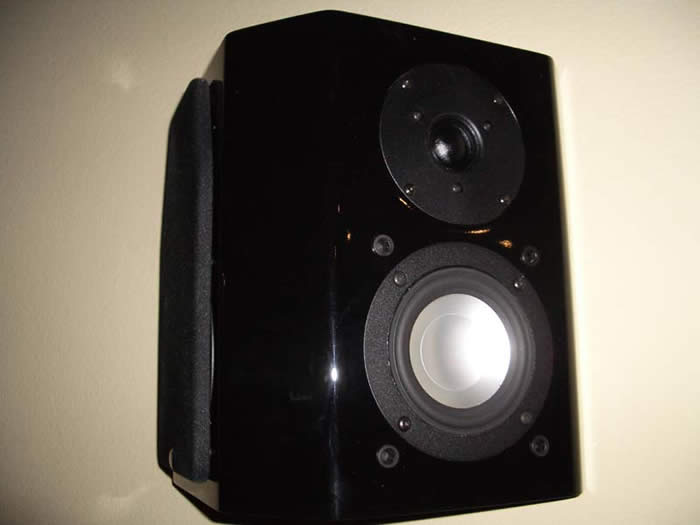 As with all
RBH Signature and MC products, their build quality and fit and finish are top notch.
I ordered my
review samples in the Piano Gloss finish, which is one of my favorites.
Unlike some of their
competitors which offer much lower grade finishes (causing uneven surface area and a "wavy"
look) the Signature products suffer no such shortcomings.
Instead, the cabinet is a uniform wrap
that is silky smooth and shiny as if it was waxed and polished.
This finish is very close to that
of my Status Acoustics Decimo's though slightly more shiny and vibrant.
In fact, RBH offers
each of their Signature Series speakers in
30 uniquely
different, and quite stunning, high-quality, genuine wood grain veneers.
Some of the finishes are
so beautiful you might find yourself redecorating your living room to match your speakers.
If
not, then it is likely you will find a finish to suit your room décor.
As with all
RBH Signature and MC products, their build quality and fit and finish are top notch.
I ordered my
review samples in the Piano Gloss finish, which is one of my favorites.
Unlike some of their
competitors which offer much lower grade finishes (causing uneven surface area and a "wavy"
look) the Signature products suffer no such shortcomings.
Instead, the cabinet is a uniform wrap
that is silky smooth and shiny as if it was waxed and polished.
This finish is very close to that
of my Status Acoustics Decimo's though slightly more shiny and vibrant.
In fact, RBH offers
each of their Signature Series speakers in
30 uniquely
different, and quite stunning, high-quality, genuine wood grain veneers.
Some of the finishes are
so beautiful you might find yourself redecorating your living room to match your speakers.
If
not, then it is likely you will find a finish to suit your room décor.
Build Quality
The build quality of RBH Signature products is truly superb. Their cabinets are made of 3/4" HDF (High Density Fiberboard) and are baffle braced and well-insulated with Dacron or acoustic foam. The picture to the right is of the Signature 661-SE I recently took during my RBH On the Spot Location Tour last summer. As you can see, this is a very rigid cabinet. This is a MTM or D'Appolito driver configuration featuring dual 6.5" aluminum cone woofers and a 1" fabric dome tweeter. RBH's aluminum drivers are proprietary and are some of the best drivers on the market that we've tested. Their crossover networks feature air core inductors and polypropylene capacitors (you won' t find series electrolytic caps - even on their least expensive models).
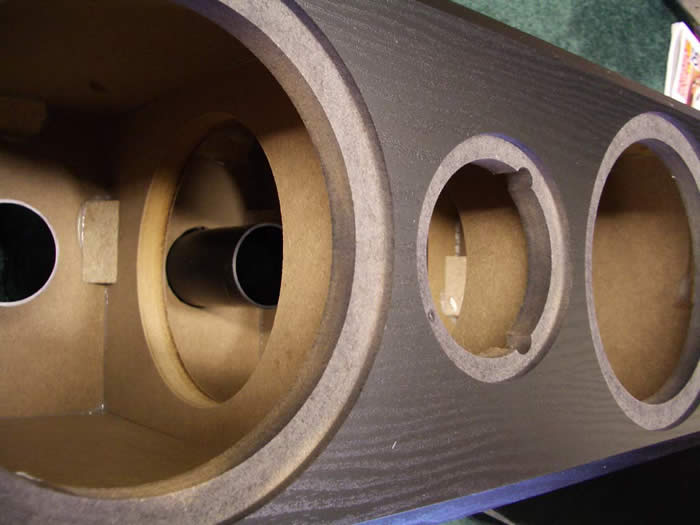
RBH 661-SE Inside View
RBH Aluminum Drivers

There are several good reasons why RBH aluminum midranges and bass drivers excel in performance. These include careful engineering, and quality control. Granted, many manufacturers use aluminum drivers these days, but all are NOT created equal. Without the proper damping (both in the cone and the surround), cone shape, motor structure, and tight manufacturing tolerances, these types of drivers can be worse off than conventional paper cones. Because RBH Sound uses voice coil formers manufactured from Kapton, possess a superior ability to handle heat under even the most demanding conditions which minimizes power compression and distortion. The aluminum cone material is coated with a silicon-based material and the surround is made from butyl rubber to minimize ringing and resonance. The cone enters break up mode at a frequency well above the system crossover point and because of the measures RBH has taken to ensure a linear performance, it can operate higher than most conventional cone drivers allowing for a more acoustically seamless blend with the tweeter.
All of the speakers in this package (except the 44-SE's) were upgraded to the Status Acoustics phase plug version of their Signature 6.5" driver as well as the venerable ScanSpeak 9500 tweeter (which is arguably one of the best tweeters ScanSpeak has made to date).
Editorial Note on Phase Plug Drivers
Hi quality aluminum cone midrange driver with phase plug . Using aluminum for the cone provides benefits such as superior stiffness to weight ratio when compared with a variety of other commonly used materials. The driver operates in piston mode to relatively higher frequencies, minimizing break up distortion and dynamic compression due to cone flexing. The phase plug essentially eliminates the need for a dust cap, which in turn, reduces cone mass, permitting extended frequency response. It allows more airflow through the motor structure, which improves cooling and thus increases power handling. A Phase plug also helps to reduce on-axis beaming by dispersing higher frequencies that the cone is producing.
Note : Beware, many loudspeaker manufacturers use a quasi phase plug which looks like a phase plug for marketing purposes, but does not physically separate from the cone of the driver. These "so called" phase plugs can do more harm than good as they provide an inconsistent surface area and they also increase mass of the cone yielding poorer frequency response and linearity.
RBH Tweeters (Vifa & ScanSpeak)
 While the standard tweeter RBH uses
in their Signature product (Vifa D27 series) is no slouch, I simply love the ScanSpeak upgrade.
The ScanSpeak tweeter has higher power handling, lower resonant frequency (550Hz as opposed to 1kHz of
the Vifa), and better off axis response.
This yields a smoother, more open and airy sound quality
with less compression.
Because of a longer rear chamber, the ScanSpeak driver can play much lower
than pretty much any 1"
dome tweeter on the market.
This takes the stress off of a midrange
driver to produce frequencies it really can'
t do effectively.
While the standard tweeter RBH uses
in their Signature product (Vifa D27 series) is no slouch, I simply love the ScanSpeak upgrade.
The ScanSpeak tweeter has higher power handling, lower resonant frequency (550Hz as opposed to 1kHz of
the Vifa), and better off axis response.
This yields a smoother, more open and airy sound quality
with less compression.
Because of a longer rear chamber, the ScanSpeak driver can play much lower
than pretty much any 1"
dome tweeter on the market.
This takes the stress off of a midrange
driver to produce frequencies it really can'
t do effectively.
The disadvantage of this tweeter is a slight reduction in efficiency and on axis high frequency response. Thus the loudspeaker designer must reduce the overall system efficiency to compensate causing the end user to expend more power from their amplifiers to achieve similar loudness levels of the more efficient Vifa design. Is it worth it? Yes, if you have a discerning ear, quality electronics, good room acoustics and a slightly fatter wallet. The ScanSpeak driver is nearly 3x the cost of the Vifa, thus one of the reasons for the moderate price differential between Signature and Signature SE/R upgraded loudspeakers.
High Quality crossovers
 RBH Sound uses nothing but the best inductors, high tolerance resistors and film caps in their
crossovers. Their crossovers are designed to insure optimal performance of each driver within its
audible bandwidth, guaranteeing proper phase and frequency response of the speaker system.
All of the cables are 14AWG twisted pair to minimize signal loss and reduce
crosstalk.
Note the inductors are spaced apart to mimimize coupling as per our
Inductor Crosstalk Basics
article.
RBH Sound uses nothing but the best inductors, high tolerance resistors and film caps in their
crossovers. Their crossovers are designed to insure optimal performance of each driver within its
audible bandwidth, guaranteeing proper phase and frequency response of the speaker system.
All of the cables are 14AWG twisted pair to minimize signal loss and reduce
crosstalk.
Note the inductors are spaced apart to mimimize coupling as per our
Inductor Crosstalk Basics
article.
Note : Beware, many loudspeaker companies use cheap electrolytic capacitors in series with the mid and tweeter drivers. Electrolytic capacitors are not very linear at high frequencies and thus should usually never be utilized in series for these crossover sections.
Signature SE/R Design Overview & Setup


61-SE/R Cherry Finish (top pic) 661-SE/R Piano Black Finish (bottom pic)
Signature 61-SE/R
The 61-SE/Rs are a conventional two-way design featuring a 6.5" midbass driver and a 1" silk dome tweeter. They use a 2nd order crossover (Bessel filter response). The acoustical roll off of the bass driver is about 12dB/oct above 3kHz making the response appear more like a 4th order system. The speakers are rear ported.
Signature 661-SE/R
The 661-SE/R is a two-way, 3 driver design in a D'Appolito (or MTM) driver topology. This loudspeaker arrangement involves placing the woofers vertically above and below the tweeter with equal spacing. As a result of the phase displacement and the related interference effects, the portions of the sound emitted upwards and downwards are minimized. This is an excellent driver topology for loudspeakers when placed vertically but some don' t do too well when placed horizontally such as a typical center channel installation. If you don' t use quality drivers and carefully executed crossover design, you will experience significant lobing in all seats but the money seat. The 661-SE/R crossover is asymmetrical. It combines a 2nd order low-pass filter and a 3rd order high-pass filter with the end result being more similar to an acoustic 3rd order than 4th order response, respectively. A minimum recommended crossover response is 2nd order for these types of designs. Choosing the right crossover point and slope characteristics are paramount considerations which RBH painstakingly executed about as well as I have seen in this type of design. This speaker contains two rear ports and comes with port plugs for installations near a back wall or integrated into cabinetry.
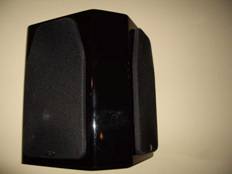 Signature 44-SE

The 44-SE is a dipole/bipole speaker design featuring two 4" midwoofers and two 1" silk dome tweeters. It' s a hybrid dipolar/bipolar speaker system that functions such that the woofers operate in phase and the tweeters operate out of phase - combining the best of both worlds between direct radiators and traditional dipolar speakers. This speaker provides the listeners in front of the speaker a direct sound path via the front firing drivers and a diffused surround field plays into the room from the drivers on the back firing drivers. The front and back baffles are about 45 degrees off from the null of the speaker. It is usually recommended to have a back wall behind the listening area, but these speakers also function well in free space provided that the listener sits no further back than its acoustical null or center point of the cabinet. This speaker is a sealed (acoustic suspended) design.
For further info in this topic, I recommend reading the following articles we have previously published:Loudspeaker Filter Types & Crossovers
Setup
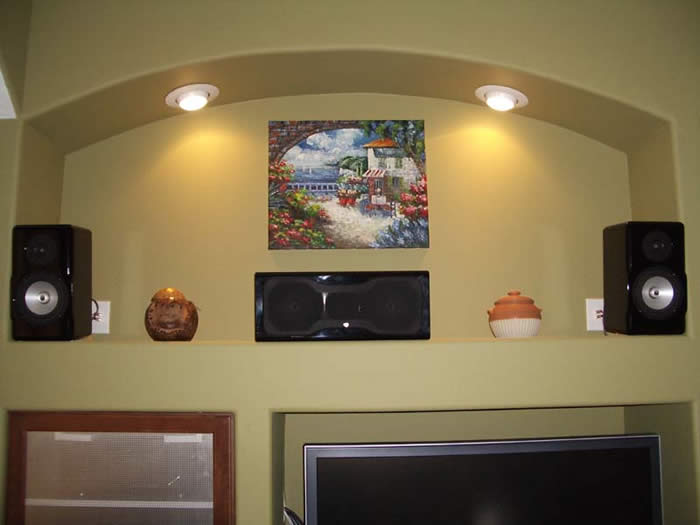 I
decided to use the venerable
Axiom EP500
subwoofer to belt out the
low notes.
The electronics consist of the
Yamaha RX-V2600
in conjunction with our amplifier of the
year in 2005 - the
Emotiva MPS-1
and
Denon DVD-5900
Universal DVD player and the
Yamaha MCX-2000 MusicCAST
digital music server.
All of the speaker cables are of course
10AWG Blue
Jeans
Cable and the interconnects are a combination of Blue Jeans Cable and Impact Acoustics.
Power conditioning was handled by none other than APC with dual H-15s running on dedicated independent
20amp outlets.
I
decided to use the venerable
Axiom EP500
subwoofer to belt out the
low notes.
The electronics consist of the
Yamaha RX-V2600
in conjunction with our amplifier of the
year in 2005 - the
Emotiva MPS-1
and
Denon DVD-5900
Universal DVD player and the
Yamaha MCX-2000 MusicCAST
digital music server.
All of the speaker cables are of course
10AWG Blue
Jeans
Cable and the interconnects are a combination of Blue Jeans Cable and Impact Acoustics.
Power conditioning was handled by none other than APC with dual H-15s running on dedicated independent
20amp outlets.
This system was set up in Reference System #1' s Family Room. I installed my Decimos and the 661-SE/R on the same vertical plane a couple of feet above ear level. Though this isn' t ideal, it was a space savings call to appease to the wife and a likely scenario in many living rooms, thus I wanted to gauge their performance in this setting. I fortunately had perfect positioning for the 44-SE's (more on this later). To round the system out, I installed a pair of MC-615's in the ceiling to serve the Surround Back duties for PLIIx Music and Movie processing. The MC-615's were ceiling mounted about 2 feet back from the 44-SE's and 6 feet apart. A review of these speakers will follow shortly. It is certainly less than ideal to install speakers in the ceiling, but given the choice between in-ceiling speakers, and no speakers, I chose the former. In my opinion, no system is complete without back channels. I am too enamored with the expansive performance of PLIIx processing to not have it in my home theater.
 Since I had no choice but to place the Decimo'
s and 661-SE/R speakers above the TV
in the open bay of my built in entertainment center, I had to find a way to fire them down slightly
towards the listener to ensure a more direct sound path was being heard.
Thus I used rubber felt
pad to line the floor of the cabinet so that the speaker wouldn't make direct contact with
it.
I did this for two reasons: to protect the cabinet finish of the speakers as well as the
entertainment unit, and to eliminate any potential vibration caused by cabinet resonance.
I then
purchased some door stops from my local supply store and wedged them behind the speakers.
This
angled the speakers down to the listener quite nicely.
I also flush-mounted all of the speakers
to the front wall of the entertainment center to minimize reflections.
Since I had no choice but to place the Decimo'
s and 661-SE/R speakers above the TV
in the open bay of my built in entertainment center, I had to find a way to fire them down slightly
towards the listener to ensure a more direct sound path was being heard.
Thus I used rubber felt
pad to line the floor of the cabinet so that the speaker wouldn't make direct contact with
it.
I did this for two reasons: to protect the cabinet finish of the speakers as well as the
entertainment unit, and to eliminate any potential vibration caused by cabinet resonance.
I then
purchased some door stops from my local supply store and wedged them behind the speakers.
This
angled the speakers down to the listener quite nicely.
I also flush-mounted all of the speakers
to the front wall of the entertainment center to minimize reflections.
The Axiom EP500 was placed in the best location I found in the room which was about 5 feet from the front wall and off to the left side wall behind one of the couches. For kicks, I always place uninvited guests in the seat directly in front of the sub. If they are bass freaks, they will love it, if not, it will usually turn them off from wanting to sit and watch the Lord of the Rings Trilogy while I have work to attend to.

The 44-SEs were placed on the side walls equidistant from the main listening area about 2 feet back and 5 feet off the floor. It is very important to NOT sit the listener any further back than the null of the speaker. We found sitting 2-3 feet in front of the speakers worked best to preserve the direct sound path of the speakers, especially when listening to multi-channel music. If you are using straight dipoles (or listen to more than 75% home theater) then typically you will want to face the null at the main listening position.
One important thing to remember during installation is to ensure you orient the speakers correctly when mounting them on the wall. The cabinet is marked with directional arrows towards the screen as illustrated in the photo. The drivers on its corresponding baffle are all wired in phase which is what you want pointed at the listeners sitting in front and to the null of the speakers.
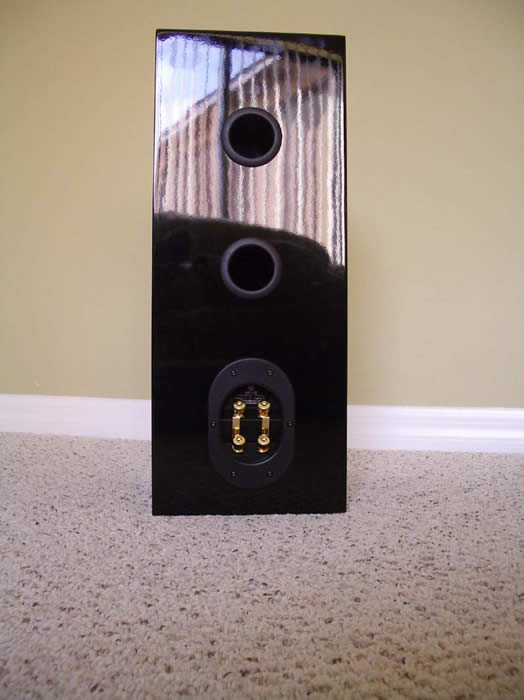 For those installing the 661-SE/R or 61-SE/R into cabinetry or near a back wall, it is
advised you stuff the ports with port plugs in order to minimize boundary effects which can lead to
bloated bass and loss of vocal clarity.
In my case, I really didn't need to since the
cavity I installed them in was open and I already had the speakers bass-managed.
For those installing the 661-SE/R or 61-SE/R into cabinetry or near a back wall, it is
advised you stuff the ports with port plugs in order to minimize boundary effects which can lead to
bloated bass and loss of vocal clarity.
In my case, I really didn't need to since the
cavity I installed them in was open and I already had the speakers bass-managed.
For more speaker installation recommendations check out our article:
Speaker Placement: Setup Tips for Upgraded Home Theater SystemsAs a side note, I have had extensive listening experience with all Signature Series products in various listening environments, powered by a wide assortment of equipment. The 661-SE/R served as my reference center channel for over 4 years until it was replaced by their Signature T-2p System speaker package and the Status Acoustics Decimos / Signature 61-LSEs have continued to serve as my mainstay bookshelf reference speaker for over 5 years. By now it is quite obvious I am a big fan of the Signature 61-SE, 61-LSE/SER and Status Acoustics Decimo bookshelf speakers. To say I know these speakers well would be a gross understatement. But the test of any great speaker system is how well it can perform in a variety of listening environments. Read on to find out how the RBH Signature system faired in the most challenging listening room I have yet to install them in.
Signature SE/R Listening Evaluation
 Donald Fagen -
Morph the Cat
Donald Fagen -
Morph the Cat
I started out with Donald Fagen's Morph the Cat CD. Steely Dan fans rejoice, as this, in my opinion, is their (or should I say Donald Fagen's) best work since Steely Dan's Two Against Nature . Track #1 "Morph the Cat" has some serious bass. The Axiom EP500 really struts its stuff here. The trumpets and vocal harmonies were very enveloping. Cymbal crashes were super crisp, detailed and NOT bright thanks to the wonderful integration of the ScanSpeak tweeter upgrades. Without the driver upgrades, these speakers still sound wonderful , however, the upgrades result in a larger, more surreal soundstage and a much more airy top end. This is particularly true when comparing the 61-SE to the 61-SE/R.
Switching over to PLIIx Music mode really opened up the sound field. I loved how the vocal harmonies appeared to come from all around me which much of the credit to this effect goes to the 44-SE. In fact, I spent most of my listening session of this CD in PLIIx Music mode simply because the system worked so well together and provided a fantastically convincing discrete surround sound presentation.
Track #2 "H Gang" (my personal favorite on the CD) piped through nicely on this system. I briefly switched back to two-channel before the song started and swore the center channel was on and I was still engaged in PLIIx mode. The Decimo's imaging was so good that it provided a very good phantom center image while at the same time presented a large enough soundstage to make the vocal harmonies appear to come from around the speakers. Of course getting the other speakers in the loop via PLIIx Music mode further enhanced this effect.
Track #3 "What I Do" made me a believer that the Axiom EP500 and RBH Signature speaker system worked very well together. I managed to get a good splice between the speakers and subwoofer and since they are all high caliber products, they sounded excellent together. The Emotiva MPS-1 really showed off its power with this track and the RBHs loved to gobble it all up. As the volume control passed insanity levels, I realized it was too loud when I didn' t see or hear the UPS man standing outside my glass doors in the backyard trying to make a delivery. Being a Steely Dan fan lured him to the sound of the music, and luckily so, as he had an important item to deliver to me.
Pat Metheny -
Way Up
 Pat Metheny Way Up
is a phenomenal CD, and in my opinion contains some of
Pat Metheny' s finest work to date.
Playing the 26 minute song titled "Part 1"
in PLIIx Music mode sounded superb on the RBH system.
Drums were tight and dynamic, cymbals airy
and open sounding, and bass was fluid and well extended.
Track #1
"Opening"
had a
reminiscent quality of the
Off Ramp
album (one of my personal favorite Pat Metheny CDs).
Antonio Sanchez's hi hats sounding like butter, again a tribute to the ScanSpeak tweeter
upgrade.
Did I mention how much I like this tweeter?
Pat Metheny Way Up
is a phenomenal CD, and in my opinion contains some of
Pat Metheny' s finest work to date.
Playing the 26 minute song titled "Part 1"
in PLIIx Music mode sounded superb on the RBH system.
Drums were tight and dynamic, cymbals airy
and open sounding, and bass was fluid and well extended.
Track #1
"Opening"
had a
reminiscent quality of the
Off Ramp
album (one of my personal favorite Pat Metheny CDs).
Antonio Sanchez's hi hats sounding like butter, again a tribute to the ScanSpeak tweeter
upgrade.
Did I mention how much I like this tweeter?
Every fiber of Pat's (yes I feel like I know him on a personal level) acoustic guitars was reproduced on these speakers. I felt the emotion of his playing and, in a very big way, connected to the music. In fact I lost total track of time when playing the 26 minute Track #2 "Part 1" (I know, not very creative track titles). Pitch and timber from his synthesized electric guitars to his nylon string instruments, were reproduced without any coloration other than the mediocre room they were placed in (something which can be dealt with as per our guidelines in our Room Acoustics section of the site.)
Despite the facts that my three front speakers were placed above the listening position and the room was untreated, the Signature system performed admirably for music. Being familiar with this system in a controlled listening environment gave me the realization that they were greatly outperforming the room I installed them in. The excellent surround field established by the 44-SE's and MC-615's really helped mask some of my room deficiencies. If it wasn' t for the superb polar response of the 61-SE/R's and 661-SE/R, they would have likely not sounded this good in this environment.
Diana Krall - Love Scenes DTS CD
 I am
very fond of the
Diana Krall Love Scenes DTS
CD
for three reasons; content, recording quality, and surround implementation.
Of course her
rather attractive appearance doesn'
t factor into this at all, but I thought it would be important
to point out ;)
On an exceptional playback system, track#1 "All or Nothing at
All"
envelopes you with Diana's powerful and eloquent voice.
You could clearly hear
the echo decay of her voice and airiness indicating a lack of compression and care taken in the
mastering and mixing.
The surrounds aren't used as a cheap trick in an attempt to dazzle
the listener, but instead to increase the soundstage and enveloping experience of the recording.
On the RBH Signature System, I could hear all of the elements I have grown to adore on my
reference.
Track #3 "
I Don'
t Know Enough about You"
sounded silky smooth
with excellent separation of instruments and clarity of vocals. I could feel the bass in my chest from
track #7
"I Don'
t Stand a Ghost of a Chance with You"
.
No matter where I sat in
my primary seating area, the RBH system remained tonally balanced and true to the source.
Diana's voice sounded fabulously lush and airy on the 661-SE/Rs.
Overlaying Pro Logic IIx
Music mode on this disc added a further sense of depth and envelopment to the mix.
The 44-SE and
MC-615 combo really engulfed me into the recording from the snapping of Diana's fingers in Track
#11 "My Love Is"
, and breath of her voice, I was captivated.
I am
very fond of the
Diana Krall Love Scenes DTS
CD
for three reasons; content, recording quality, and surround implementation.
Of course her
rather attractive appearance doesn'
t factor into this at all, but I thought it would be important
to point out ;)
On an exceptional playback system, track#1 "All or Nothing at
All"
envelopes you with Diana's powerful and eloquent voice.
You could clearly hear
the echo decay of her voice and airiness indicating a lack of compression and care taken in the
mastering and mixing.
The surrounds aren't used as a cheap trick in an attempt to dazzle
the listener, but instead to increase the soundstage and enveloping experience of the recording.
On the RBH Signature System, I could hear all of the elements I have grown to adore on my
reference.
Track #3 "
I Don'
t Know Enough about You"
sounded silky smooth
with excellent separation of instruments and clarity of vocals. I could feel the bass in my chest from
track #7
"I Don'
t Stand a Ghost of a Chance with You"
.
No matter where I sat in
my primary seating area, the RBH system remained tonally balanced and true to the source.
Diana's voice sounded fabulously lush and airy on the 661-SE/Rs.
Overlaying Pro Logic IIx
Music mode on this disc added a further sense of depth and envelopment to the mix.
The 44-SE and
MC-615 combo really engulfed me into the recording from the snapping of Diana's fingers in Track
#11 "My Love Is"
, and breath of her voice, I was captivated.
Listening Tests - Movies
 War of the Worlds
Now it was
time to separate the men from the boys to see how this system would fair with some of Hollywood's
latest and greatest flicks.
War of the Worlds has quickly become reference material for my testing. It has some one of the most energetic LFE tracks I have heard and will literally pin you down when the alien ships fire their disintegrator gun.
The RBH system put me right in the action. Supplemented with the Axiom Audio EP500, I felt every pulverizing pulse from the alien weapons as well as the bombardment of bombs from the choppers and jet fighters. The panning in the scene where Tom Cruise was dodging the first unearthed alien ship was very fluid. This was a good sign of system synergy and timber matching. The 44-SEs portrayed a much larger surround field than I have heard with any conventional monopole loudspeaker designs and made me a believer of this type of surround speaker.
The RBH System played plenty loud with no signs of distress or audible compression. They were quite content with the powerful feed from the Emotiva MPS-1 and readily served up each shockingly horrific action scene of the movie with aplomb.
The Downside
Let's face it, nothing is perfect and despite how good a product can be, there are always improvements that can be made. In this regard, the RBH System laundry list is much shorter than most of their competitors.
A couple of minor things I would like to see improvements upon are mostly cosmetic. To start, a new grill cover design would be nice. The band aid grill cover of the 661-SE and the barn door effect of the 61-SE/R grill cover leave much to be desired in my opinion. I would like to see a less boxy looking cabinet design for the 61-SE/R and 661-SE/R, though in a premium finish with rounded edges, these speakers are still very sexy.
I wish RBH would change their binding posts or cup terminal plate. It is very cumbersome to fit your fingers in the cavity to tighten them after the cable is installed and using a wrench is not advised as they strip easily.
As with any quality high resolution and accurate speaker system, they will only sound as good as the source and upstream equipment. Feed them compressed mp3 Britney Spears music (read: The Dumbing Down of Audio) and they will reward you with lousy sound. Of course, anyone listening to this type of music on a regular basis would likely be better off with a cubed speaker system.
Though these speakers are very linear and, as I found, perform well even in non-ideal rooms, they deserve an acoustically balanced room. Some investment in thought, time and money is advised before purchasing such a high quality system, especially with the SE/R upgrades. To use a car analogy, one doesn't go out and purchase a C6 Corvette and put regular unleaded fuel in it or use generic parts to maintain the vehicle.
Signature SE/R Measurements & Analysis
61-SE/SER Measurements
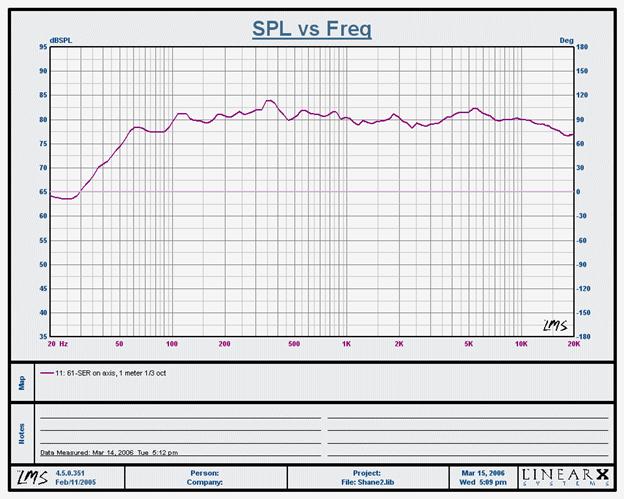
Figure 1. 61-SE/R 1 Meter Inroom Response 1/3 octave smoothed
As you can see by the graph, these speakers are very linear and neutral. Their 3dB point is around 50Hz and I have had excellent success running them full range in a small room, or crossed over as low as 60Hz to a subwoofer in larger rooms. For multi channel systems, I recommend keeping a global crossover at 80Hz and picking a good sub to compliment them.
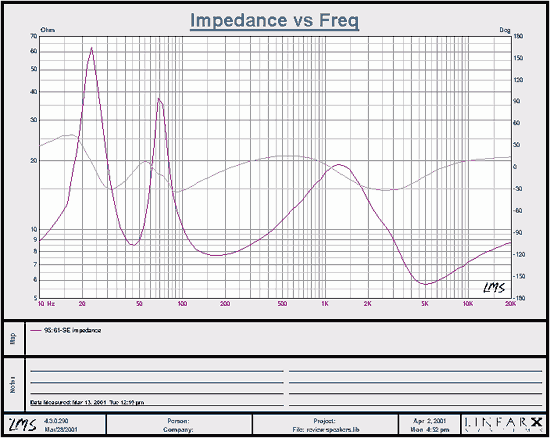
Figure 2. 61-SE Impedance & Phase
The 61-SE/SER is a relatively easy load to drive. Judging by the impedance graph, these speakers appear to be tuned just under 50Hz. Their phase response stays within +-30deg phase window for the entire audio band which is excellent. Its nominal impedance is 8 ohms, but does dip down to 4 ohms above 5kHz. For best results, quality amplification with a low output impedance is highly recommended.
661-SE/SER Measurements
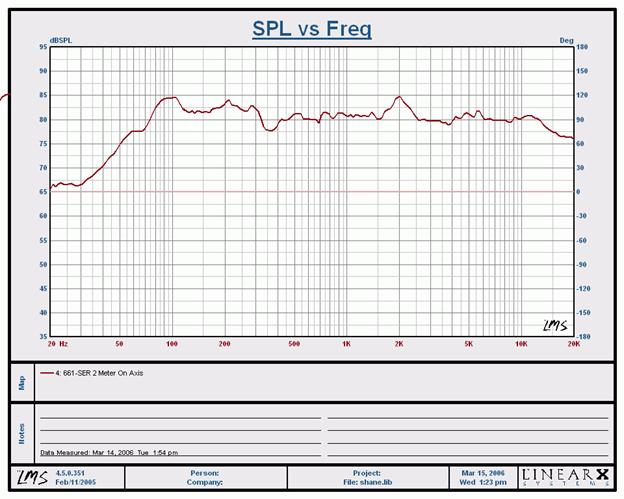
Figure 3. 661-SE/R 2 Meter On-Axis Inroom Response, 1/3 octave smoothed
Oriented horizontally (for center channel applications), the 661-SE/R measured surprisingly well. Since this speaker was placed near a backwall, I enabled bass management to limit its low frequency response to around 80Hz. Measured in free space however, I was able to get a 3dB point of around 45-50Hz.
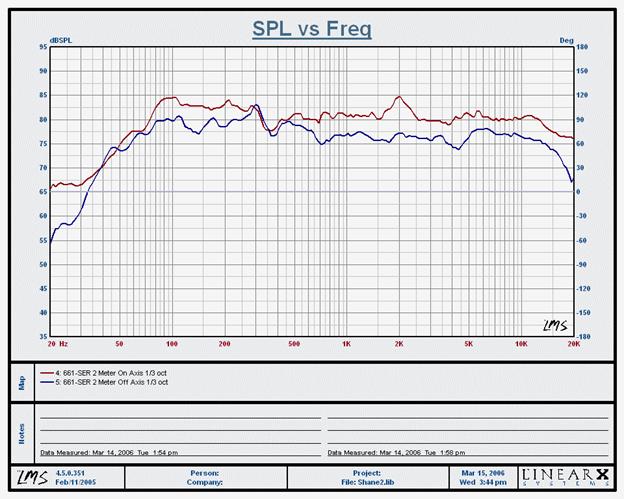
Figure 4. 661-SE/R 2 Meter Off-Axis Inroom Response, 1/3 octave smoothed
Many D'Appolito designs like the 661-SE mounted horizontally suffer lobing issues off axis. I checked a 30-45 degree window at 2 meters and didn't find any ill effects. The response of this speaker remained very linear and exhibited excellent lateral polar response. During listening tests I found this speaker to be very consistent sounding for all of the listening seats which is a sign of good loudspeaker engineering and careful consideration in the design process.
Signature SE/R Measurements & Analysis Continued
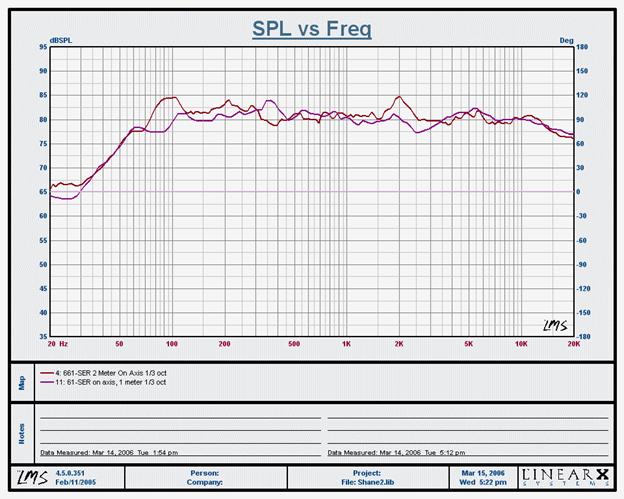
Figure 5. 61-SE/R & 661-SE/R 2 Meter On-Axis Inroom Response, 1/3 octave smoothed
Just for fun, I decided to overlay my measurements of the 61-SE/R and 661-SE/R. As you could see by the graph they measured very similarly which explains why this system has such excellent synergy.
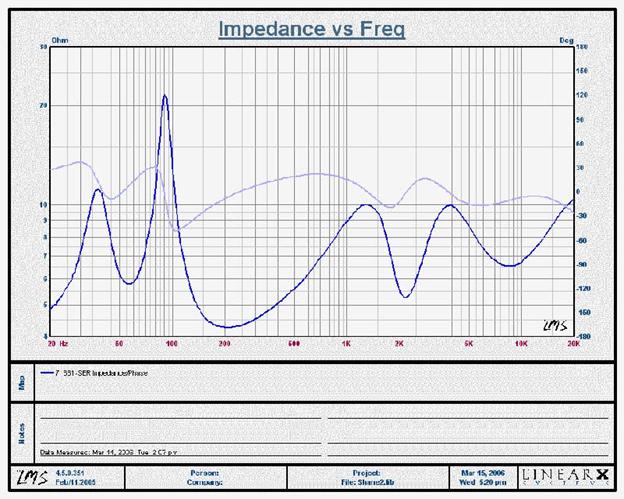
Figure 6. 661-SE/R Impedance & Phase
The 661-SE/R is has a nominal impedance of 6 ohms despite the RBH rating of 4 ohms. I suppose they are playing it safe because of the dip to 4 ohms around 200Hz and the rather steep phase angle around 100Hz. It maintains a +30/-60 degree phase in the audio band and is a relatively high efficient design. It appears to be tuned at around 50Hz. It is highly recommended that quality amplification is used with this speaker for it to truly reach its potential.
44-SE Measurements
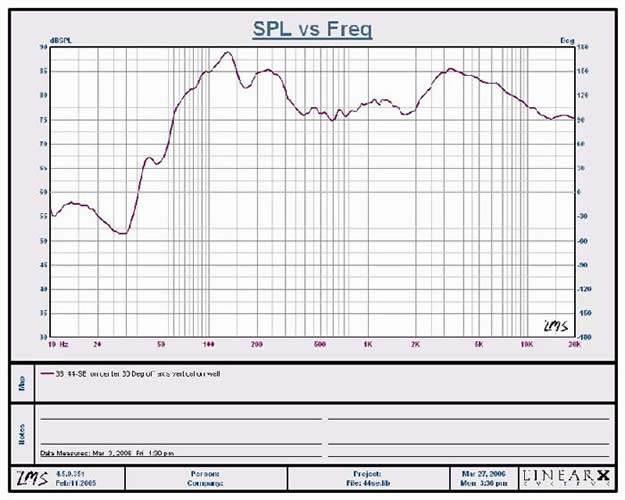
Figure 7. 44-SE 1.25 Meter On Center Inroom 30 Deg Off Axis Response, 1/3 Oct Smoothed
It's most challenging to figure out how to measure such an unusual speaker. We measured the speaker at the null (center) of the cabinet 30 degrees off axis at 1.25 meter. Usable bass extension goes down to around 55-60Hz, though these speakers should be crossed over at 80Hz for best results. The suckout between 250Hz and 2kHz is a result of the out of phase driver summation or in this case cancellation. As you move towards the front of the speaker baffle, the response begins to look more linear like the 41-SE . However, in a surround environment, a penalty in linearity is usually a good design trade off for creating a more diffusive speaker system that will envelop the listeners.
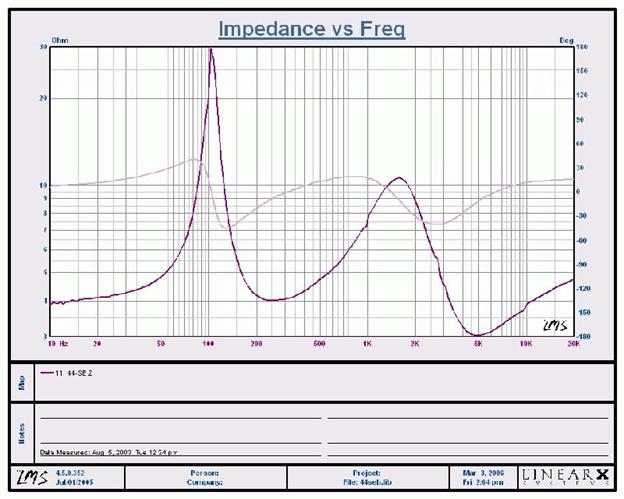
Figure 8. 44-SE Impedance & Phase
The 44-SE nominal impedance is 4 ohms, but the speaker dips down to 3 ohms in the upper midrange region. Because of its low impedance, and moderate efficiency (88dB @ 1 watt/meter), quality amplification is strongly advised.
Signature SE/R Conclusion
The RBH Signature speaker system is not for everyone.
If you are not a critical music lover or home theater aficionado and
you are simply looking for a speaker system to provide
sound
then this is NOT your product.
Like fine wine or precious jewelry, these speakers need to be
cherished, respected and appreciated.
Careful attention must be taken in choosing the right electronics,
system layout and room - not because these speakers are finicky, but
because they are so good that they deserve nothing but the best to show
off their true potential.
The star performer of this review has to go to the 44-SE's. Until I heard these speakers for multi-channel music and movies, I was not fully convinced they would be a viable alternative to direct radiator designs. I surprised myself when I discovered my preference towards them to conventional designs in almost every listening scenario, especially movies. Though they didn't have quite the focus of say a 41-SE, their ability to envelop the listener, especially in all seats, was clearly superior. They made movie watching far more enjoyable. I loved the reactions my wife and family members portrayed when they were caught off guard by a surround effect emanating from them that they thought sounded too real and expansive to be part of the movie. The only Achilles heal to this speaker is you have to follow proper placement guidelines for them to perform optimally. In situations where you cannot seat the listeners at null or 2-3 feet in front of the speakers, use a pair of direct radiators instead such as the Signature 41-SE's .
The 61-SE/R/LSE to this day remains my all time favorite bookshelf speaker system, second only to the more expensive Status Acoustics Decimo's which are only better due to the cabinetry and lower profile baffle. The 61-SE/R retains most of the magical ability to disappear into the room that the Decimos exhibit and makes for an intoxicating experience when placed in a small to medium sized room with controlled acoustics. If I were setting up a high end two-channel bedroom system, this would be my speaker of choice, regardless of price. However if you have plans to do a full scale theater in a large (3000cu ft) living room, you may wish to opt for 661-SE/R's for all three front channels. Though the 661-SE/R don't quite disappear like the 61-SE/R's do, they throw off a much larger soundstage and are far more dynamic making them the better choice to fill large listening venues with clean and concise sound.
The 661-SE/R is a great center channel speaker any way you look at it. It delivers excellent vocal tonality with little to no coloration and serves up plenty of dynamics, while avoiding the oil can effect of many center channels that utilize a single 5.25" midrange and dual bass drivers. It also makes for a stellar stereo speaker pair when placed vertically.
This system is meant for the music lover at heart that also enjoys watching movies. Treat them well and they will serve you well. Because of the moderate efficiency of the 61-SE/R's and the low impedance of the 661-SE/R and 44-SE's, we recommend using a meaty amplifier or at the very minimum a solid $1k and over A/V receiver.
This has been one of the most enjoyable surround systems I have assembled in quite a while. It served equally well for critical music listening, movie watching and entertaining at parties. In the weeks I have had this system online, I lost count at how many people, including industry folks, who commented on the excellent sound, fit and finish of the RBH products. The combination of performance, build quality and excellent service all add up to a company and product line easy for us to recommend to our readers without hesitation.
Our only warning is that these speakers have the ability to raise your expectations of sound quality and may invoke audio elitism of anyone who owns them. If you find yourself fall victim to this side effect, do your best to control your impulses and inner monologue when visiting a friend or family members home who isn't fortunate or wise enough to have an RBH Signature speaker system gracing their system.
The Score Card
The scoring below is based on each piece of equipment doing the duty it is designed for. The numbers are weighed heavily with respect to the individual cost of each unit, thus giving a rating roughly equal to:
Performance × Price Factor/Value = Rating
Audioholics.com note: The ratings indicated below are based on subjective listening and objective testing of the product in question. The rating scale is based on performance/value ratio. If you notice better performing products in future reviews that have lower numbers in certain areas, be aware that the value factor is most likely the culprit. Other Audioholics reviewers may rate products solely based on performance, and each reviewer has his/her own system for ratings.
Audioholics Rating Scale
 — Excellent
- — Very Good
- — Good
- — Fair
- — Poor
| Metric | Rating |
|---|---|
| Build Quality | |
| Appearance | |
| Treble Extension | |
| Treble Smoothness | |
| Midrange Accuracy | |
| Bass Extension | |
| Bass Accuracy | |
| Imaging | |
| Soundstage | |
| Dynamic Range | |
| Performance | |
| Value |  |
Gene manages this organization, establishes relations with manufacturers and keeps Audioholics a well oiled machine. His goal is to educate about home theater and develop more standards in the industry to eliminate consumer confusion clouded by industry snake oil.
View full profile Subscribe to our newsletter