


Emotiva ER 5.0 Speaker System Review
Emotiva ER Speakers
- Product Name: ER 5.0 Speaker System
- Manufacturer: Emotiva Audio
- Performance Rating:

- Value Rating:

- Review Date: March 31, 2008 09:37
- MSRP: $ 1,246
|
Drivers
Precision Crossover
|
Additional Features
Dimensions
|
Pros
- Clarity of sound
- Dipole speaker performance exceptional
- Extremely flexible placement
- Tremendous off-axis performance
Cons
- Lackluster appearance
- Center channel performance diminished in-cabinet
- Magnetic grills fall off easily
Emotiva ER Build Quality
If you attended the Audioholics 9th Annual State of the CE Union Event last year, you probably heard Emotiva's new speaker offerings long before I did. That's the joys of attending such a progressive event. Reportedly, people walked away from the Emotiva demo so impressed that they pre-ordered speakers on the spot. Well, for everyone that has been sitting on the fence in anticipation, the wait is over. Emotiva's speakers are here (well "here" meaning "at my house" - they're not shipping just yet) and the review is done. What's the final verdict? Read on to find out.
First Impressions
 A
quick conversation with Dan Laufman, President of
Emotiva let me know a few things. First, he is very proud of these speakers and
second, I'm getting a preproduction set to test (or at least the packaging and
grills were). This is good in that this review will get to you while you still
have time to preorder but bad in that some of the issues I've experienced with
these speakers will be resolved before the first set ships to any customer. As
is my custom, I'm going to report, unedited, my experiences as well as any
changes Emotiva has made to the actual production speakers. What is most
important with this, or any, set of speaker is how they sound and I've been
assured that those components won't change at all.
A
quick conversation with Dan Laufman, President of
Emotiva let me know a few things. First, he is very proud of these speakers and
second, I'm getting a preproduction set to test (or at least the packaging and
grills were). This is good in that this review will get to you while you still
have time to preorder but bad in that some of the issues I've experienced with
these speakers will be resolved before the first set ships to any customer. As
is my custom, I'm going to report, unedited, my experiences as well as any
changes Emotiva has made to the actual production speakers. What is most
important with this, or any, set of speaker is how they sound and I've been
assured that those components won't change at all.
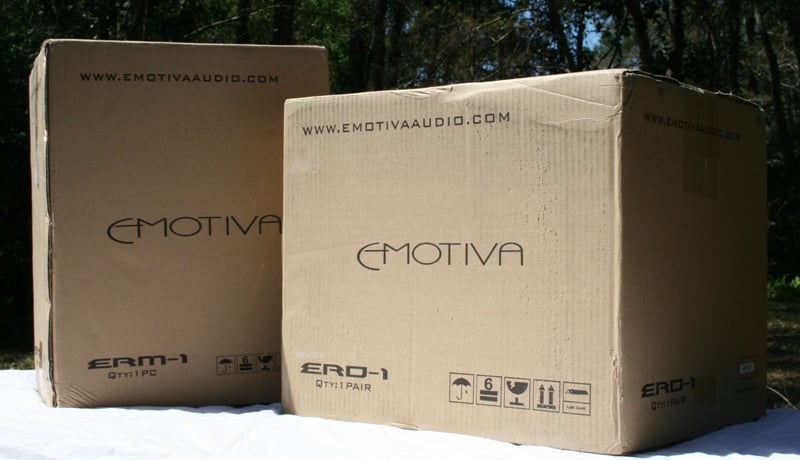
 The ER (Emotiva Reference) line
of speakers so far consists of a bookshelf speaker (ERM-1, the "M" stands
for "monitor) and a dipole surround speaker (ERD-1, guess what the
"D" stands for). The ERM-1 speakers
are all boxed individually while the ERD-1 speakers are boxed as pairs. Each
speaker or speaker set has a molded foam top and bottom cap and comes in a
black cotton sock. While I understand that the sock is meant to convey quality
and "audiophileness", it mostly just makes handling the speakers akin
to wrestling a pissed-off fish. Luckily, the size and weight of the speakers
means this isn't much of an issue. The ERDs were double boxed while the ERMs weren't.
Regardless, all the speakers arrived undamaged and in good working order.
Emotiva has provided a mounting plate for the ERDs and included two slots in
their endcaps to ensure that the plates didn't damage the speakers in transit.
The ER (Emotiva Reference) line
of speakers so far consists of a bookshelf speaker (ERM-1, the "M" stands
for "monitor) and a dipole surround speaker (ERD-1, guess what the
"D" stands for). The ERM-1 speakers
are all boxed individually while the ERD-1 speakers are boxed as pairs. Each
speaker or speaker set has a molded foam top and bottom cap and comes in a
black cotton sock. While I understand that the sock is meant to convey quality
and "audiophileness", it mostly just makes handling the speakers akin
to wrestling a pissed-off fish. Luckily, the size and weight of the speakers
means this isn't much of an issue. The ERDs were double boxed while the ERMs weren't.
Regardless, all the speakers arrived undamaged and in good working order.
Emotiva has provided a mounting plate for the ERDs and included two slots in
their endcaps to ensure that the plates didn't damage the speakers in transit.
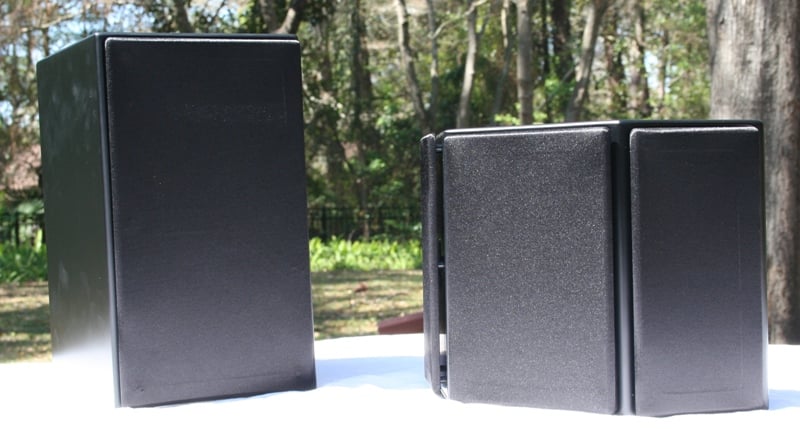
Once I got the socks off, I got a chance to take a good long look at the speakers. I'm used to one of two finishes on speakers - glossy or wood grain. The Emotivas were neither. If I had to describe them I'd call them a satin black. It has as non-reflective a surface as you'd hope to see on a speaker. While this might not make for the most aesthetically pleasing appearance in the light of a showroom floor (on in a review's pictures), it is extremely functional in a home theater environment. Sure, they look more like studio monitors than pieces of furniture, but in a dark room, all you really care about is not reflecting the light from your display. The finish did seem to prone to showing every little speck of dust or finger smudge that hit them. The front plate on the speakers and the backplates are both black aluminum which is an unusual choice of parts in a speaker in this price class. From an aesthetic standpoint, it doesn't seem to make much of a difference but functionally, it does. The front adds stability and rigidity to the enclosure while the back is used to mount the crossover. Let's face - it speaker enclosures are generally designed to be as rigid as possible. Most manufacturers use some sort of plastic backplate. What do you think is more likely to flex, a plastic backplate or metal one? Yeah, me too.
Branding on the Emotiva speakers was nearly non-existent with the Emotiva name on the back plates and the mounting bracket. According to Emotiva, you can expect a small logo on the grills. The logo on the ERM will have the ability to rotate for those that want to use the bookshelf lying on its side as a center. The grills on all the speakers are held in place by magnetically charged posts. During transit, the speakers were shipped with a small buffer sheet between the speaker and the grill in order to keep it from scratching up the faceplate (presumably). Unfortunately, during the shipping process, the speaker pressed against the grill and pushed some of the magnets in. This was easily corrected by pressing them back into place. Emotiva has informed me that the full production models will be packed so that the grills aren't under any stress and a stronger glue will be applied to the magnets.
 Aesthetically, the Emotiva ER
speakers are just "OK" in my book. I can't get excited by the finish
no matter how functional it is. The black box, black drivers, black aluminum
plate thing reminds me more of studio monitors than actual home theater
speakers. This is great for the ERD-1s
as they are on-wall but for the ERM-1s, which are out in the open, I feel it is a hard sell. Some speakers
look better with the grills on, others with them off. The Emotivas are so uniform in color that they look about the same. Personally,
I'm all about the performance so I'm not as concerned about looks but in many
households, looks is one of the (if not the)
most important thing. I have a hard time believing that Mrs. Consumer is going to get excited about the ER speakers. Gene DellaSala, on the other hand says, " I was quite
impressed with the appearance of the Emotivas as they remind me of the M&K speakers back in the day. They are designed to look like
professional monitors with a single aesthetic goal – to disappear into a home theater.
Also, statistically, black speakers outsell any custom finishes as they are the
easiest to blend into virtually any room décor and the lack of an added price
premium makes it more appealing." As they say, beauty is in the eye of the
beholder.
Aesthetically, the Emotiva ER
speakers are just "OK" in my book. I can't get excited by the finish
no matter how functional it is. The black box, black drivers, black aluminum
plate thing reminds me more of studio monitors than actual home theater
speakers. This is great for the ERD-1s
as they are on-wall but for the ERM-1s, which are out in the open, I feel it is a hard sell. Some speakers
look better with the grills on, others with them off. The Emotivas are so uniform in color that they look about the same. Personally,
I'm all about the performance so I'm not as concerned about looks but in many
households, looks is one of the (if not the)
most important thing. I have a hard time believing that Mrs. Consumer is going to get excited about the ER speakers. Gene DellaSala, on the other hand says, " I was quite
impressed with the appearance of the Emotivas as they remind me of the M&K speakers back in the day. They are designed to look like
professional monitors with a single aesthetic goal – to disappear into a home theater.
Also, statistically, black speakers outsell any custom finishes as they are the
easiest to blend into virtually any room décor and the lack of an added price
premium makes it more appealing." As they say, beauty is in the eye of the
beholder.
Build Quality
 Let me say that I've had a "grass is greener" sort of
outlook on the whole magnetic grill thing. The Emotivas are the first speaker
I've ever tested with magnetic grills and I've long wanted to. Well, now that I
have, I have to say that I'm a little disappointed. There were no
"dimples" or anything to ensure that the grills were centered so you
had to fiddle with them in order to get them true. Even then, I'd look at them
and think that they were off. Now, I had the problem with the recessed magnets
but I must mention that during some of the listening tests the grills rattled.
I ended up having to adjust the magnets a number of times to get it right (I
think I cracked one of the grills when I did that). If Emotiva is going to use
stronger glue, I HIGHLY recommend that they make sure the fit and finish is
dead on with the grills. Any gap on any one of the magnets is enough for a sub
to take advantage of. Lastly, the magnets just weren't all that strong. Any
little bump and the grill would shoot off. Once you have the speakers set up it
wasn't much of a problem but try mounting a trapezoidal speaker on a ladder
with grills popping off at the slightest provocation. With the tweeter dome
slightly raised from the front baffle, I'm shocked that I didn't damage one of
them at some point.
Let me say that I've had a "grass is greener" sort of
outlook on the whole magnetic grill thing. The Emotivas are the first speaker
I've ever tested with magnetic grills and I've long wanted to. Well, now that I
have, I have to say that I'm a little disappointed. There were no
"dimples" or anything to ensure that the grills were centered so you
had to fiddle with them in order to get them true. Even then, I'd look at them
and think that they were off. Now, I had the problem with the recessed magnets
but I must mention that during some of the listening tests the grills rattled.
I ended up having to adjust the magnets a number of times to get it right (I
think I cracked one of the grills when I did that). If Emotiva is going to use
stronger glue, I HIGHLY recommend that they make sure the fit and finish is
dead on with the grills. Any gap on any one of the magnets is enough for a sub
to take advantage of. Lastly, the magnets just weren't all that strong. Any
little bump and the grill would shoot off. Once you have the speakers set up it
wasn't much of a problem but try mounting a trapezoidal speaker on a ladder
with grills popping off at the slightest provocation. With the tweeter dome
slightly raised from the front baffle, I'm shocked that I didn't damage one of
them at some point.
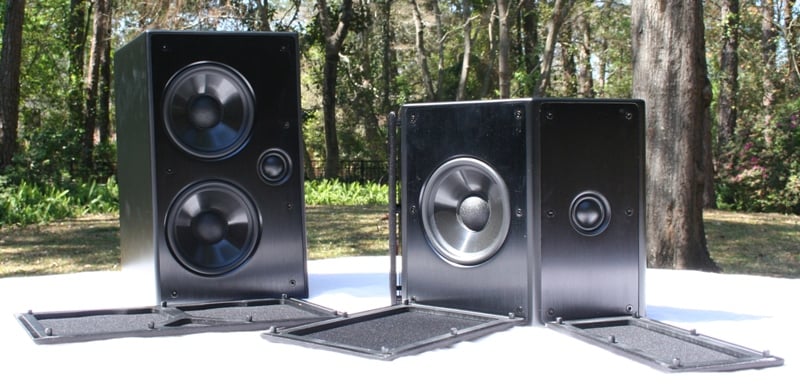
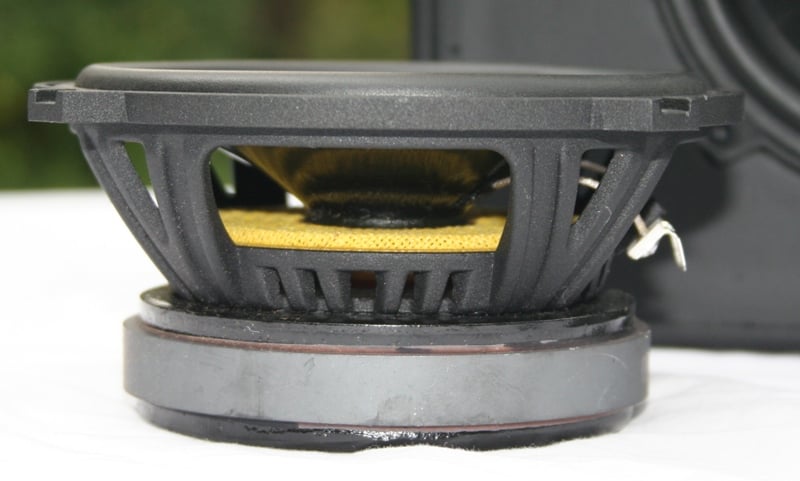 While the drivers on all the
speakers are identical, the ERMs have two of
the 5.25" composite cone woofers while the ERDs have only one. The woofer
on the ERDs are pointed straight out while the two 25mm tweeters are on either
of the angled sides. The rear of the ERMs have dual
binding posts and a large gold jumper between the two. You also have a two
position switch for Boundary Compensation (on or off) and a three position
switch for Tweeter adjustment (0, -2dB, +2dB). While I've come across many a
piece of AV equipment with buttons, switches, and menu items that seems to be
more decorative than functional, it was easy to hear a difference between all
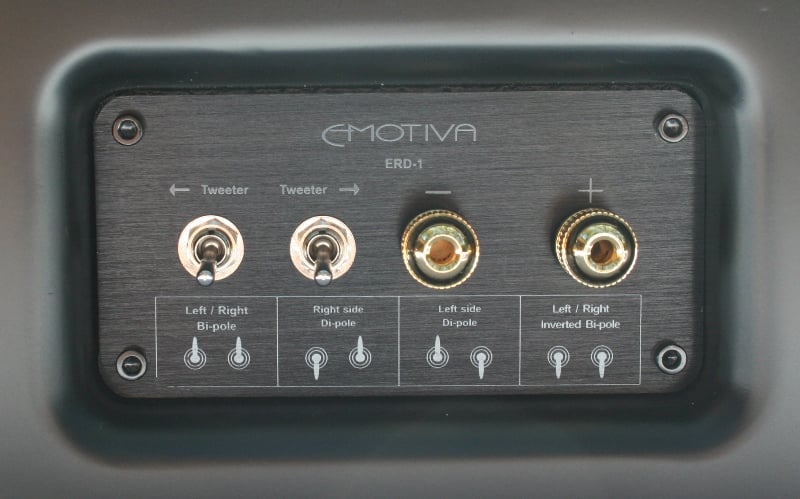
the switch settings without any test equipment. The ERDs had two switches as
well to orient the speaker for left or right dipole or bipole configuration.
The speakers all utilize a sealed design meaning no ports. The five way binding
posts on the ERMs were large,
well spaced, and easy to access. The binding posts on the ERDs however were
small, tight, and couldn't really accept 12 gauge wire. It was possible to get
12 gauge in them securely while the speaker was on a flat surface, but while
standing on the arm of my couch and balancing the speaker on one arm while
trying to insert the wire with the other… well, I had problems. I think that 14
gauge is probably the largest wire these binding posts can accommodate. Since
12 gauge is the standard recommendation we make for wire run to the back of
your room, I'd like to see the binding posts accommodate. I suppose if you
don't mind cutting out a larger hole behind the backbox you could use banana
plugs.
While the drivers on all the
speakers are identical, the ERMs have two of
the 5.25" composite cone woofers while the ERDs have only one. The woofer
on the ERDs are pointed straight out while the two 25mm tweeters are on either
of the angled sides. The rear of the ERMs have dual
binding posts and a large gold jumper between the two. You also have a two
position switch for Boundary Compensation (on or off) and a three position
switch for Tweeter adjustment (0, -2dB, +2dB). While I've come across many a
piece of AV equipment with buttons, switches, and menu items that seems to be
more decorative than functional, it was easy to hear a difference between all
the switch settings without any test equipment. The ERDs had two switches as
well to orient the speaker for left or right dipole or bipole configuration.
The speakers all utilize a sealed design meaning no ports. The five way binding
posts on the ERMs were large,
well spaced, and easy to access. The binding posts on the ERDs however were
small, tight, and couldn't really accept 12 gauge wire. It was possible to get
12 gauge in them securely while the speaker was on a flat surface, but while
standing on the arm of my couch and balancing the speaker on one arm while
trying to insert the wire with the other… well, I had problems. I think that 14
gauge is probably the largest wire these binding posts can accommodate. Since
12 gauge is the standard recommendation we make for wire run to the back of
your room, I'd like to see the binding posts accommodate. I suppose if you
don't mind cutting out a larger hole behind the backbox you could use banana
plugs.
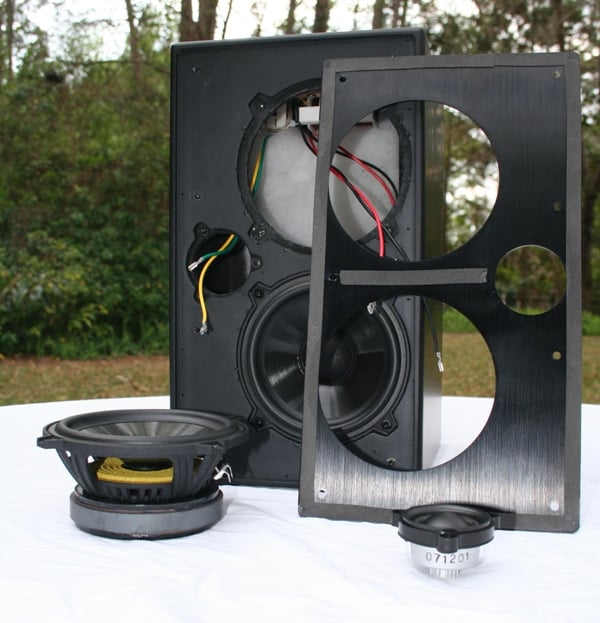
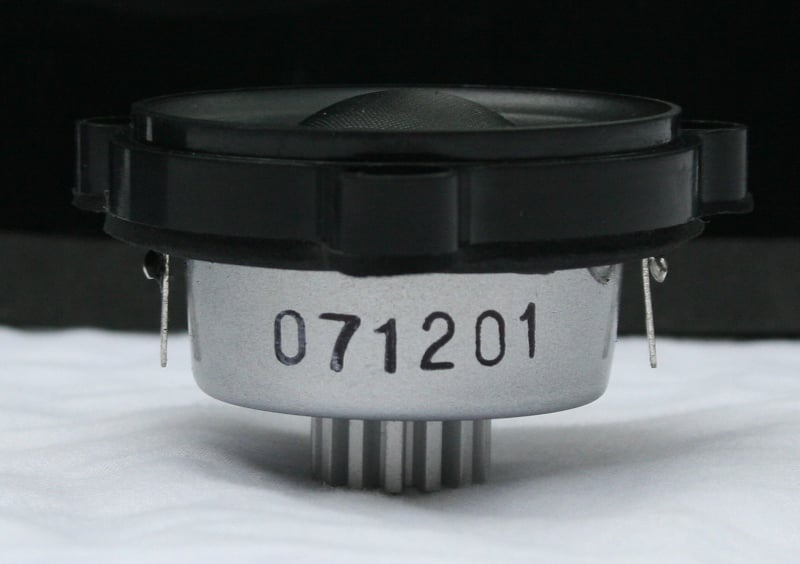 Taking the speakers apart, I
immediately noticed that Emotiva used all threaded inserts. I also noticed a number
of really high quality components. First, the Ferro-fluid cooled 25mm tweeter has its own heat sink mounted on the neodymium
magnet which is essential for such small motor structures for realizing
uncompromised performance at high power levels. The basket on the woofer is
cast rather than stamped typically found in speakers of this price class. The
cabinet is well dampened with a ton of polyfill shoved in the back half of the
enclosure. And by "ton" I mean a whole lot. I'd venture to say there
was as much if not more polyfill in the ERM-1 as in most
of the tower speakers I've reviewed! There is only one area of bracing in the
ERM and it runs the circumference of the
speaker from top to bottom. It's sort of hard to describe. Basically it is
midway between the front and back of the speaker all the way around the
circumference but it just along the walls and not all the way through the
center. There is also additional bracing around the extremely large crossover
and backplate. Needless to say these speakers are well braced and you get a
deadening thud when wrapping on the side of the cabinet.
Taking the speakers apart, I
immediately noticed that Emotiva used all threaded inserts. I also noticed a number
of really high quality components. First, the Ferro-fluid cooled 25mm tweeter has its own heat sink mounted on the neodymium
magnet which is essential for such small motor structures for realizing
uncompromised performance at high power levels. The basket on the woofer is
cast rather than stamped typically found in speakers of this price class. The
cabinet is well dampened with a ton of polyfill shoved in the back half of the
enclosure. And by "ton" I mean a whole lot. I'd venture to say there
was as much if not more polyfill in the ERM-1 as in most
of the tower speakers I've reviewed! There is only one area of bracing in the
ERM and it runs the circumference of the
speaker from top to bottom. It's sort of hard to describe. Basically it is
midway between the front and back of the speaker all the way around the
circumference but it just along the walls and not all the way through the
center. There is also additional bracing around the extremely large crossover
and backplate. Needless to say these speakers are well braced and you get a
deadening thud when wrapping on the side of the cabinet.
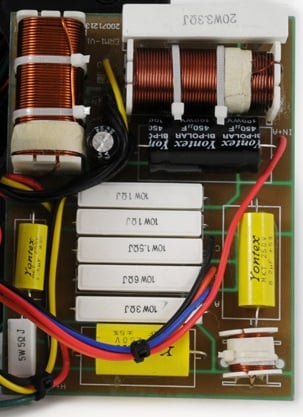 The
enclosure is constructed out of 5/8" MDF and the 6mm
aluminum face and backplates are countersunk so that they are flush. The
crossover is an asymmetrical 4th order Linkwitz Riley design utilizing precision
metal film capacitors and low DCR air core inductors. Since the speakers were
designed with THX specs in mind, they roll off at 80Hz and no impedance dips
below 3.2 ohms. This also explains some of the dispersion characteristics I
noticed later in my listening tests (specifically the off-axis response). With
all the attention to detail that I'm seeing here and the adherence to THX specs, I wouldn't be surprised to see a future
iteration of these speakers with THX certification.
The
enclosure is constructed out of 5/8" MDF and the 6mm
aluminum face and backplates are countersunk so that they are flush. The
crossover is an asymmetrical 4th order Linkwitz Riley design utilizing precision
metal film capacitors and low DCR air core inductors. Since the speakers were
designed with THX specs in mind, they roll off at 80Hz and no impedance dips
below 3.2 ohms. This also explains some of the dispersion characteristics I
noticed later in my listening tests (specifically the off-axis response). With
all the attention to detail that I'm seeing here and the adherence to THX specs, I wouldn't be surprised to see a future
iteration of these speakers with THX certification.
Emotiva ER Measurements
Using the Sencore SP395A FFT Audio Analyzer, we measured the ERM-1 in room on and off axis frequency response with 1/12th octave resolution.
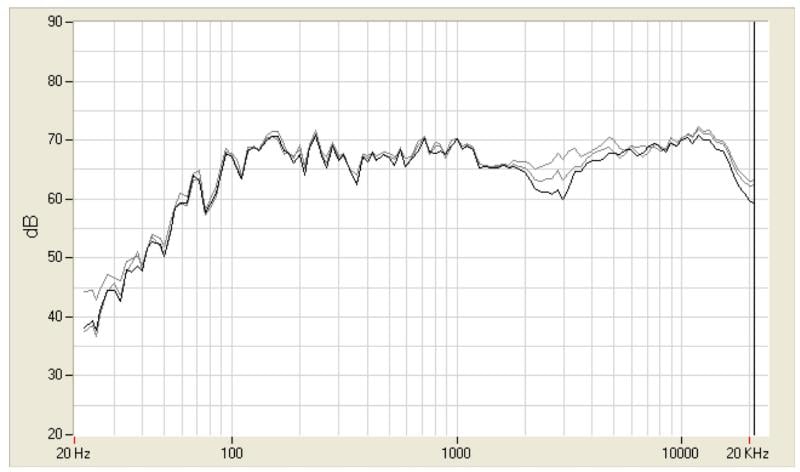
ERM-1 ½ Meter Frequency Response (1/12th octave)
The ERM-1 was such an easy speaker to measure since it was a sealed design that naturally rolls off below 80Hz and the close spacing of the drivers allows the system to converge into a point source at roughly ½ meter. The on/off axis response of the ERM-1 proved to be very linear and smooth. These are definitely not ear bleeders are obviously voiced to sound very natural and non-fatiguing.
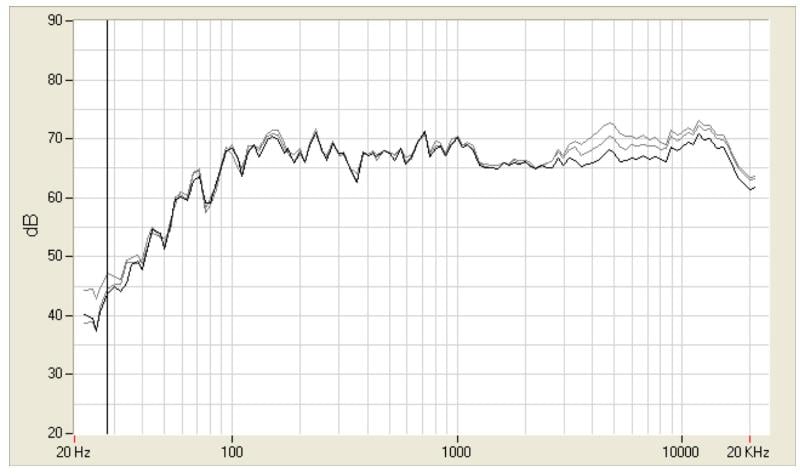
ERM-1 ½ Meter Frequency Response (1/12th octave) Various Tweeter Settings
If you want to customize your sound, Emotiva lets you with the inclusion of a tweeter switch which has 3 positions (+2dB, 0dB, -2dB). The proper setting depends on your room acoustics and listening preferences. The switch worked as promised providing a +-2dB level adjustment above the systems crossover point which appears to be in the 2.5kHz region.
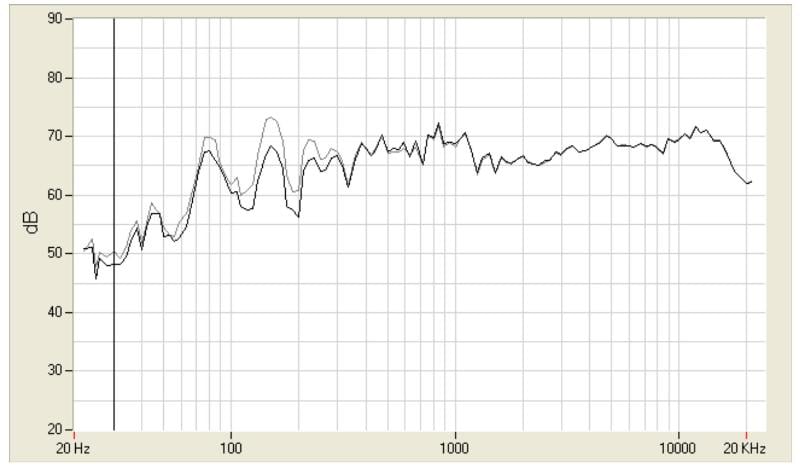
ERM-1 ½ Meter Frequency Response (1/12th octave) Various Boundary Settings
The ERM-1’s inclusion of the boundary switch is very useful for those placing these speakers in close proximity to a wall or in an entertainment center. It essentially compensates for the natural boost a speaker gets at lower frequencies when loaded into a 2pi space environment. The switch appeared to take in effect below 300Hz by knocking off up to 6dB of bass and restoring the proper balance to the speaker while it was placed against the wall.
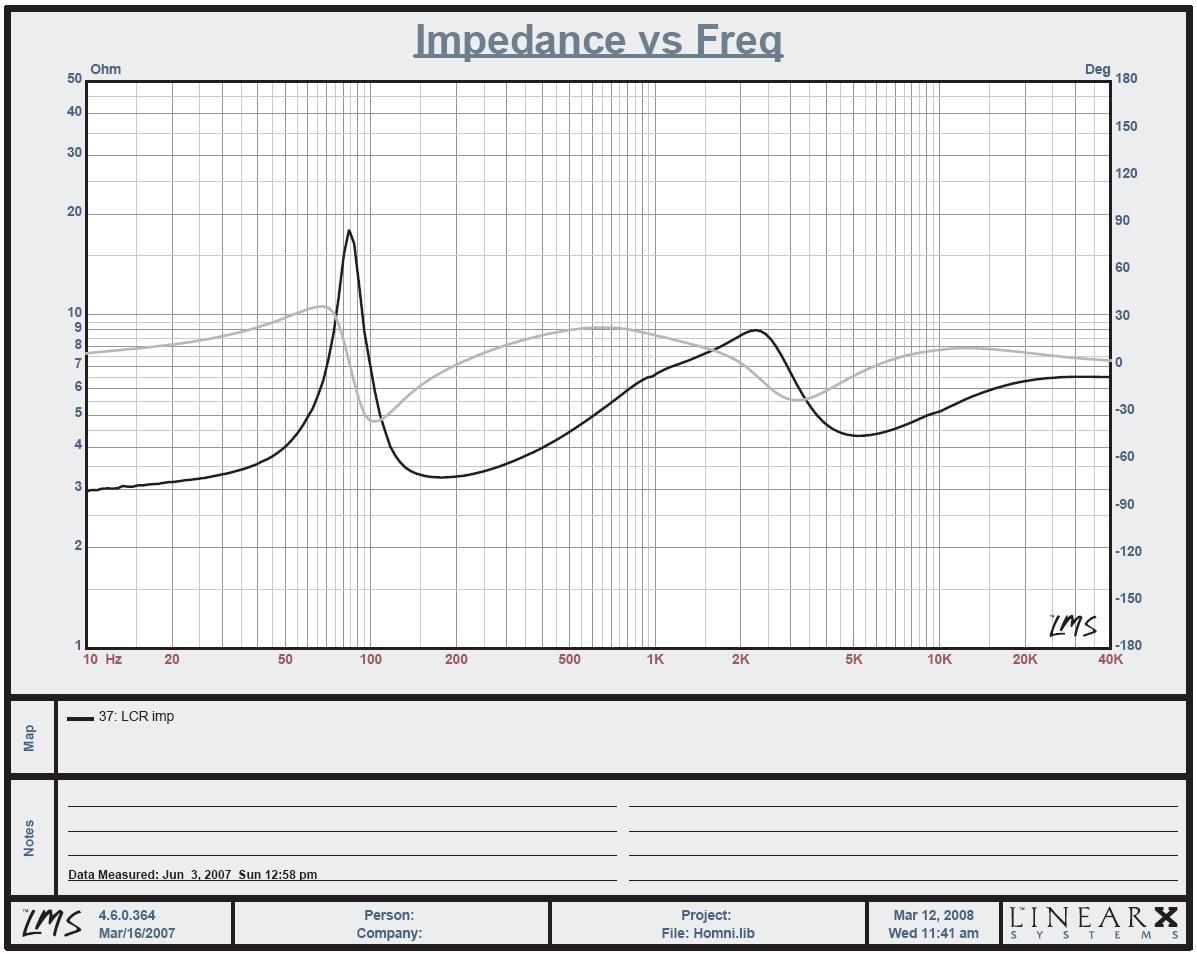
ERM-1 Impedance & Phase Plot
The ERM-1 is a well oiled machine with a carefully executed crossover design to keep the phase response within a +-30deg window throughout the entire audio band and an impedance profile that never dips below 3.2 ohms (per THX recommendation).
Overall Observations
With such a relatively benign impedance profile, natural roll off below 80Hz and relatively high efficiency, excellent on/off axis dispersion characteristics, this speaker has all of the hallmarks of a well executed THX design at an unheard of price class. It has the potential of sounding great in virtually any environment utilizing a wide variety of amplifiers and receivers. Don’t be afraid to feed these babies a lot of power as they won’t bottom out and thanks to the excellent driver’s utilized and 4th order Linkwitz Riley crossover implementation they won’t scoff at the juice.
Editorial Note on 4th Order Networks
There are many advantages to the crossover topology Emotiva employed in this design with one being able to produce a maximally flat amplitude response. With a 24 dB/octave slope it provides the best isolation between drivers resulting in the least modulation distortion and has a 360 degree phase shift which results in "in-phase" response and promotes minimal or no lobing or tilt in the coverage pattern. It is also the least sensitive to driver misalignment. The disadvantage is crossover component complexity and cost and increased insertion loss because of inductor DCR.
This is one of the most well executed loudspeaker system designs of come across in years regardless of their asking price. It is an obvious asset that Emotiva has chosen to employ one of the great loudspeaker engineers in the industry (Vance Dickason) to engineer this system.
Emotiva ER Setup and Listening
 If you don't have wires
run to the back of your room and if you have an attic, Clint and I made a
video about it that might help. The Emotiva bookshelf ERM-1s
can be used standing up as you would expect but also on their side with no
further adjustment to the speaker or crossover. You just lie is down and you're
good to go. Based on Emotiva's recommendations, I set the ERM
tweeters on the outside of the woofers from my listening position and the
center channel's tweeter at the top of the baffle. I was actually surprised at
this configuration (not the center) because most of the manufacturers I've
dealt with have always suggested putting the tweeter on the inside. This is
because the woofers and tweeters are all run in phase. There is no dedicated
left and right speaker so one speaker's terminals and switches will be upside down
- not a problem unless you like to adjust those switches in the dark.
If you don't have wires
run to the back of your room and if you have an attic, Clint and I made a
video about it that might help. The Emotiva bookshelf ERM-1s
can be used standing up as you would expect but also on their side with no
further adjustment to the speaker or crossover. You just lie is down and you're
good to go. Based on Emotiva's recommendations, I set the ERM
tweeters on the outside of the woofers from my listening position and the
center channel's tweeter at the top of the baffle. I was actually surprised at
this configuration (not the center) because most of the manufacturers I've
dealt with have always suggested putting the tweeter on the inside. This is
because the woofers and tweeters are all run in phase. There is no dedicated
left and right speaker so one speaker's terminals and switches will be upside down
- not a problem unless you like to adjust those switches in the dark.
The entire system was wired with Blue Jeans Cable's Canare 4S11 terminated with banana plugs for the front three channels and Belden 5000 series for the rear channels using a bare wire connection. The speakers were driven by a Denon 2307CI and paired with an Axiom EP500 subwoofer. In the interests of full disclosure, I recalibrated the system fully using the Velodyne SMS-1 Subwoofer Parametric EQ System. Generally I wouldn't do that except that I had moved the furniture and some of the absorptive panels around a bit and felt it might have changed the room acoustics. When I was done, I ended up with a flatter response than I had ever experienced before.
There were no provided feet of any kind with the ERM-1 speakers which I feel should be remedied before the speakers are shipped to normal customers. While I didn't need them on the main channels because the Studio Tech Ultra US-30 stands have rubber pads on the top but the center really needed something. Some sort of rubber pad that can be added to the bottom or sticky feet would help in isolating it from the shelf. As it was, I placed the center in the Diamond Case TT-400 component cabinet. It fit but the height of the bookshelf on its side was taller than most center channels and the width was a bit shorter. According to Emotiva, the side orientation shouldn't affect the sound quality. Since there was definite boundary reinforcement going on, I switched on the Boundary Reinforcement for the center channel only.
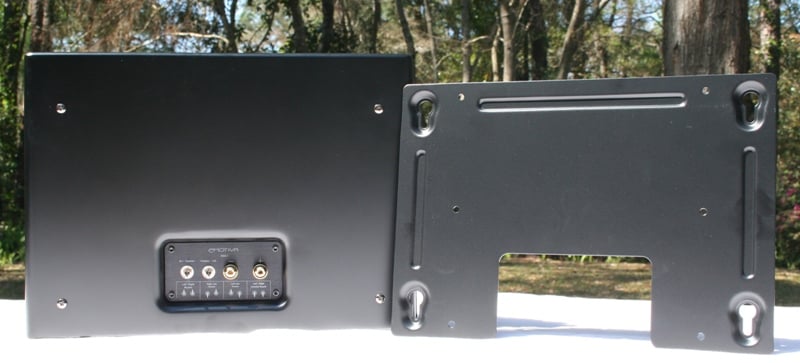 In an unusual move for
me, I actually mounted ERD-1 speakers. I have a lot of reasons for doing this
but mostly because I wanted to see how well the brackets worked. The ERDs have four
screws already installed on the back of the speakers. The large bracket has
keyhole slots for each to slide in to. There is a cutout at the bottom for the
wires to run through. Otherwise it is just one large, rectangular piece of
metal with six holes for securing to the wall (three running down each side).
There was no included hardware for mounting the plate (which isn't really a
problem in my eyes) but let me say, unequivocally, I LOVE this mounting system.
LOVE IT. Why? The plate is just a bit smaller than the actual speaker and
completely outlines it. When you place it up on the wall, you are getting a
very good approximation of what you speaker will look like up there. It not
only mounts the speaker but gives you an easy way to make know exactly how much
wall space the speaker will take up. If you are working with tight tolerances,
this is a big headache saver. Not to mention that it is its own template. You
just hold it up there, level it, and mark your holes.
In an unusual move for
me, I actually mounted ERD-1 speakers. I have a lot of reasons for doing this
but mostly because I wanted to see how well the brackets worked. The ERDs have four
screws already installed on the back of the speakers. The large bracket has
keyhole slots for each to slide in to. There is a cutout at the bottom for the
wires to run through. Otherwise it is just one large, rectangular piece of
metal with six holes for securing to the wall (three running down each side).
There was no included hardware for mounting the plate (which isn't really a
problem in my eyes) but let me say, unequivocally, I LOVE this mounting system.
LOVE IT. Why? The plate is just a bit smaller than the actual speaker and
completely outlines it. When you place it up on the wall, you are getting a
very good approximation of what you speaker will look like up there. It not
only mounts the speaker but gives you an easy way to make know exactly how much
wall space the speaker will take up. If you are working with tight tolerances,
this is a big headache saver. Not to mention that it is its own template. You
just hold it up there, level it, and mark your holes.
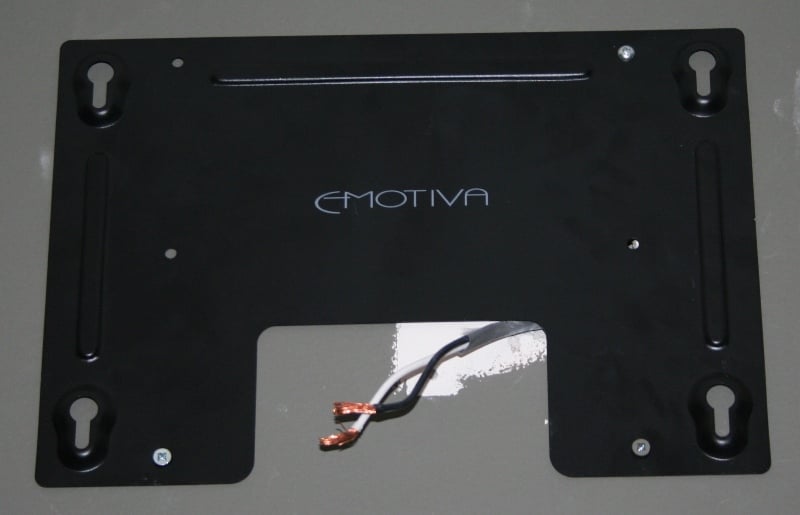 The best way to go is to
place the speaker face down and install the mount on the back. Tighten the
screws down until they are very snug and then back them off a half turn. You
want the screws to be tight enough so that when you mount the speaker it is
held tight but not so tight that you fall off the ladder trying to get it in.
If it is too loose, you run the risk of the speaker vibrating in the mount. Be
careful to not knock the grill off while you mount the speaker. You could mount
it without the grills and place them on later but I felt like I needed any
protection I could just in case the speaker slipped and I needed to catch it. I
cringe at the idea of accidentally sticking my finger through the tweeter. As I
mentioned, the binding post holes barely accept 12 gauge so make sure you prep
your wires thoroughly before you get up there with speaker in hand.
The best way to go is to
place the speaker face down and install the mount on the back. Tighten the
screws down until they are very snug and then back them off a half turn. You
want the screws to be tight enough so that when you mount the speaker it is
held tight but not so tight that you fall off the ladder trying to get it in.
If it is too loose, you run the risk of the speaker vibrating in the mount. Be
careful to not knock the grill off while you mount the speaker. You could mount
it without the grills and place them on later but I felt like I needed any
protection I could just in case the speaker slipped and I needed to catch it. I
cringe at the idea of accidentally sticking my finger through the tweeter. As I
mentioned, the binding post holes barely accept 12 gauge so make sure you prep
your wires thoroughly before you get up there with speaker in hand.
Listening Evaluation
 As is my custom, the
first thing I wanted to do was to get an idea of how the ERM
speakers sounded in comparison to my reference RBH TK-5CTs.
Generally, I would use the Emotiva RSP-1/RPA-1 combo to do this
comparison but the ERM-1 speakers are designed
along the lines of THX guidelines with a fairly steep drop off below 80Hz. In a
face to face comparison, the added bass from the TK's side-firing 8"
woofer and larger enclosure would have seriously hampered my ability to compare
the two fairly. Instead, I used my Denon 2307CI for the comparison without the
Axiom EP500 sub. Both sets of speakers were crossed over at 80Hz. This ensured
that I was only comparing the usable range of the ERM-1
speakers. This may have given a slight advantage to the RBHs near the 80Hz
point but that couldn't be helped.
As is my custom, the
first thing I wanted to do was to get an idea of how the ERM
speakers sounded in comparison to my reference RBH TK-5CTs.
Generally, I would use the Emotiva RSP-1/RPA-1 combo to do this
comparison but the ERM-1 speakers are designed
along the lines of THX guidelines with a fairly steep drop off below 80Hz. In a
face to face comparison, the added bass from the TK's side-firing 8"
woofer and larger enclosure would have seriously hampered my ability to compare
the two fairly. Instead, I used my Denon 2307CI for the comparison without the
Axiom EP500 sub. Both sets of speakers were crossed over at 80Hz. This ensured
that I was only comparing the usable range of the ERM-1
speakers. This may have given a slight advantage to the RBHs near the 80Hz
point but that couldn't be helped.
I generally notice the most about a new set of speakers within the first few moment of listening to them and during direct A/B comparisons. Sometimes those initial impressions are born out through the A/B testing and sometimes they aren't. In this case, the latter was definitely true. As soon as I hooked up the ERM-1s I knew I had a special sounding speaker on my hands. Detailed and articulate, even HDTV viewing sounded great. The speakers struck me as very responsive and "quick". It was if there were more quiet passages during the music than I was used to hearing.
When comparing the RBH TK-5CTs to the ERM-1s, the differences were minor. I've noted in the past that the TKs have a very detailed high end and the ERMs had no problem keeping up. As I switched between the two, I might say that at times the ERM-1s seemed a little less punctuated. The overall tone of the ERMs struck me as very rich and full while the RBH's seemed very articulate and expansive. The differences? Minor. If I had to pick the largest difference between the two, I'd say that the responsiveness of the ERMs sometimes made it seems as if the RBHs were a little noisy. Of course, had I factored in a full range signal, the RBH's would have destroyed the ERMs overall.
CD: Bang &
Olufsen Vol. XIII – The Sound of Perfection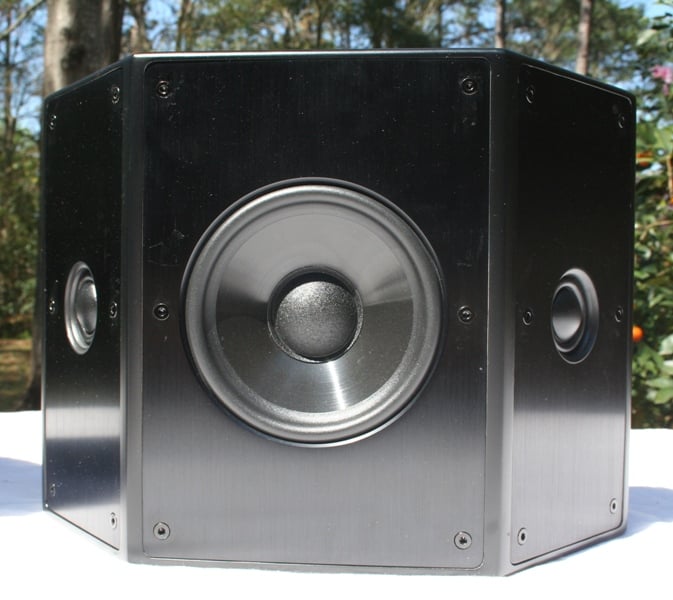 I've used this album
on a number of reviews and it’s a shame that I don't know where to tell you to
buy it (I suppose you could contact B&O and see if you can get a copy). In
all honesty only about 5 songs are worth a damn on the album but those five
songs give me more information about a stereo set of speakers than any 5 albums
I own combined. It just has a little of everything. The first thing I wanted to
test was imaging. I was surprised to find that the ERM-1
speakers presented a very wide and deep soundstage regardless of toe-in. I've
only experienced this phenomenon once before when I was at Clint's house
listening to the Atlantic
Technology 4200e speaker system. The off-axis response of these speakers
seemed remarkable. The ability to place the speakers facing out instead of
having to toe them in also had an aesthetic value that my wife appreciated. I enjoyed the wide sweet spot that this sort of
off-axis response affords. Since
these speakers were designed by Vance Dickason who is a famous loudspeaker
designer and who has done design work for Atlantic Technology, Artison, M&K,
Snell, Niles, coNEXTion, Microsoft, Samsung and others this isn't all that
surprising of a finding.
I've used this album
on a number of reviews and it’s a shame that I don't know where to tell you to
buy it (I suppose you could contact B&O and see if you can get a copy). In
all honesty only about 5 songs are worth a damn on the album but those five
songs give me more information about a stereo set of speakers than any 5 albums
I own combined. It just has a little of everything. The first thing I wanted to
test was imaging. I was surprised to find that the ERM-1
speakers presented a very wide and deep soundstage regardless of toe-in. I've
only experienced this phenomenon once before when I was at Clint's house
listening to the Atlantic
Technology 4200e speaker system. The off-axis response of these speakers
seemed remarkable. The ability to place the speakers facing out instead of
having to toe them in also had an aesthetic value that my wife appreciated. I enjoyed the wide sweet spot that this sort of
off-axis response affords. Since
these speakers were designed by Vance Dickason who is a famous loudspeaker
designer and who has done design work for Atlantic Technology, Artison, M&K,
Snell, Niles, coNEXTion, Microsoft, Samsung and others this isn't all that
surprising of a finding.
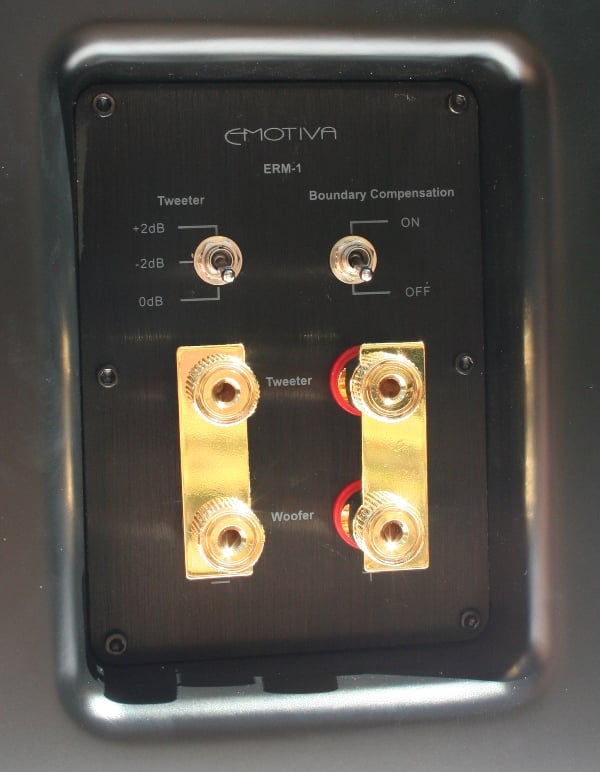 The Tweeter adjustment
switch was actually more useful than I thought. As someone with experience with
a lot of different speakers, I can only come to one conclusion - people have
different tastes when it comes to speakers. The Tweeter adjustment lets you
play around with some of the ways different speakers sound. I noticed that then
I put the speaker in the +2dB configuration, it sounded a lot like all those
brighter speakers I've tested and with the -2dB like the more laid back
speakers. I personally prefer the flat tweeter setting. You'll need to test
this out for yourself. If you have an overly bright room, the -2dB setting
might be for you. If you prefer a brighter speaker (or if you have some hearing
degradation in that range), the +2 might be for you. Listening for yourself is
the only way to be sure.
The Tweeter adjustment
switch was actually more useful than I thought. As someone with experience with
a lot of different speakers, I can only come to one conclusion - people have
different tastes when it comes to speakers. The Tweeter adjustment lets you
play around with some of the ways different speakers sound. I noticed that then
I put the speaker in the +2dB configuration, it sounded a lot like all those
brighter speakers I've tested and with the -2dB like the more laid back
speakers. I personally prefer the flat tweeter setting. You'll need to test
this out for yourself. If you have an overly bright room, the -2dB setting
might be for you. If you prefer a brighter speaker (or if you have some hearing
degradation in that range), the +2 might be for you. Listening for yourself is
the only way to be sure.
ER Multichannel Listening and Conclusion
The ER speakers aren't just a stereo pair, but a full system. The remainder of my listening tests were done in a full surround environment which added the Axiom EP500 to fill in the low end.
DVD-A: Blue
Man Group: The Complex f I had to pick just
one album to bring with me to a listening test, this one would be at the top of
the list. Tons of surround effects, low bass, dynamic range… this album has it
all. After seeing them live in Vegas during the last CES, I can't help but be
more impressed with the mixing of this album. It sounds very much like the live
show. The ER speakers did a phenomenal job with this recording. In the opening
track, Above, the hammer dulcimer
starts off nearly all alone. The sound is vaguely reminiscent of a xylophone.
The ER speakers did an amazing job with this opening sequence. It was well
defined, crisp, and well presented. Once the rest of the instruments came in, I
was again impressed with the dynamic responsiveness of the speakers. There
seemed to be no hold over of any notes. Loud and soft passages were crisply
delineated.
f I had to pick just
one album to bring with me to a listening test, this one would be at the top of
the list. Tons of surround effects, low bass, dynamic range… this album has it
all. After seeing them live in Vegas during the last CES, I can't help but be
more impressed with the mixing of this album. It sounds very much like the live
show. The ER speakers did a phenomenal job with this recording. In the opening
track, Above, the hammer dulcimer
starts off nearly all alone. The sound is vaguely reminiscent of a xylophone.
The ER speakers did an amazing job with this opening sequence. It was well
defined, crisp, and well presented. Once the rest of the instruments came in, I
was again impressed with the dynamic responsiveness of the speakers. There
seemed to be no hold over of any notes. Loud and soft passages were crisply
delineated.
The depth of the soundstage was also remarkable. If you've ever heard (or I guess seen) the Blue Man Group, you know there is just a ton of instruments and sound effects going on. I can literally listen to the same song ten times in a row and focus on a different sound or effect each time and still have some left over. The Emotiva ER speakers presented each of these sounds clearly and articulately. It was very easy to drill down into the music and hear anything I wanted too.
DVD-A: Porcupine
Tree: Deadwing Right from the
beginning, I suspected that Emotiva had something special with their ERD-1
dipole speakers. The Axiom QS8's are a very highly regarded rear
"quad" pole speaker (a top and bottom woofer and two side angled tweeters
- one on each side all firing in phase). I was surprised to find that the
ERD-1s bested the Axioms on almost every metric I could come up with. The
opening sequence of the first and title track features a keyboard bouncing
around the rears and what sounds to be a train pulling into a station. The ERDs
really performed well not only during the quiet section at the very beginning
but also in remaining articulate during the louder sections. At no point did I
think the ERDs were being overpowered or drowned out. At the same time, they
blended well with the rest of the system. Basically, when I wanted to hear them
I could, when I didn't, they just disappeared. While some might say that a
bipole configuration would be best for multichannel music, I found the dipole
setting to create a nice diffuse sound that still performed well for point-source
effects. As always, we encourage you to experiment for yourself and see what
you prefer. Just make sure to check your levels as you switch between the
settings as the levels are likely to change. While I've always found the Axioms
to be a fine surround speaker, the ERDs are in an entirely different class.
Right from the
beginning, I suspected that Emotiva had something special with their ERD-1
dipole speakers. The Axiom QS8's are a very highly regarded rear
"quad" pole speaker (a top and bottom woofer and two side angled tweeters
- one on each side all firing in phase). I was surprised to find that the
ERD-1s bested the Axioms on almost every metric I could come up with. The
opening sequence of the first and title track features a keyboard bouncing
around the rears and what sounds to be a train pulling into a station. The ERDs
really performed well not only during the quiet section at the very beginning
but also in remaining articulate during the louder sections. At no point did I
think the ERDs were being overpowered or drowned out. At the same time, they
blended well with the rest of the system. Basically, when I wanted to hear them
I could, when I didn't, they just disappeared. While some might say that a
bipole configuration would be best for multichannel music, I found the dipole
setting to create a nice diffuse sound that still performed well for point-source
effects. As always, we encourage you to experiment for yourself and see what
you prefer. Just make sure to check your levels as you switch between the
settings as the levels are likely to change. While I've always found the Axioms
to be a fine surround speaker, the ERDs are in an entirely different class.
DVD: Spiderman 2 Generally I use this
album for surround effects but this time I found it playing a different roll. I
watch this movie mostly for testing but also because it is just so darn good.
In my opinion, it is probably the best superhero movie ever made. Since the
center channel (an ERM-1 lying on its side)
was inside a cabinet, I noticed that the vocals sounded a little boxy and
reverberant. I quickly switched on the boundary compensation. This helped a
bit, but not enough. Lastly, I added a bit of padding between the ERM-1
and the cabinet which helped with some vibrations I think I was hearing as well
as tilted the speaker up just a tad. This helped as well. While overall I felt
it was performing well, I couldn't shake the feeling that the ERM-1
needed a little more room to breath. Unfortunately, like many others, I don't
have the luxury of setting up a center in the middle of my room and am forced
with this arrangement. I urge Emotiva to develop some sort of felt feet that
can be placed on the bottom of these speakers especially if they can be
adjusted to modify the tilt angle.
Generally I use this
album for surround effects but this time I found it playing a different roll. I
watch this movie mostly for testing but also because it is just so darn good.
In my opinion, it is probably the best superhero movie ever made. Since the
center channel (an ERM-1 lying on its side)
was inside a cabinet, I noticed that the vocals sounded a little boxy and
reverberant. I quickly switched on the boundary compensation. This helped a
bit, but not enough. Lastly, I added a bit of padding between the ERM-1
and the cabinet which helped with some vibrations I think I was hearing as well
as tilted the speaker up just a tad. This helped as well. While overall I felt
it was performing well, I couldn't shake the feeling that the ERM-1
needed a little more room to breath. Unfortunately, like many others, I don't
have the luxury of setting up a center in the middle of my room and am forced
with this arrangement. I urge Emotiva to develop some sort of felt feet that
can be placed on the bottom of these speakers especially if they can be
adjusted to modify the tilt angle.
DVD: 30 Days of Night While I understand
that this movie followed the comic pretty well, I found it to be a mediocre and
mostly confusing vampire flick. We're never really sure the vampire's
motivation or reasons (other than the obvious). Perhaps that was part of the
writer/directors intent but it bugged me. In a horror movie, point-source effects
are extremely important and 30 Days of Night was no different. As you'd expect
from a dipole speaker that already impressed with music, the ERD-1s were spectacular
with movies. Ambient music was diffuse and enveloping and point-source effects
were easily localized and convincing. The ERD-1's ability with movies was at
least as good as with music and probably better. I can easily imagine two pairs
of these being used in a 7.1 configuration with the back pair being set to
bipole and the side pair on dipole. The joy is that you don't have to decide
when you purchase - just buy two pairs and try them out. That kind of
flexibility is very rare in a speaker these days.
While I understand
that this movie followed the comic pretty well, I found it to be a mediocre and
mostly confusing vampire flick. We're never really sure the vampire's
motivation or reasons (other than the obvious). Perhaps that was part of the
writer/directors intent but it bugged me. In a horror movie, point-source effects
are extremely important and 30 Days of Night was no different. As you'd expect
from a dipole speaker that already impressed with music, the ERD-1s were spectacular
with movies. Ambient music was diffuse and enveloping and point-source effects
were easily localized and convincing. The ERD-1's ability with movies was at
least as good as with music and probably better. I can easily imagine two pairs
of these being used in a 7.1 configuration with the back pair being set to
bipole and the side pair on dipole. The joy is that you don't have to decide
when you purchase - just buy two pairs and try them out. That kind of
flexibility is very rare in a speaker these days.
HD DVD: Harry Potter and the
Order of the Phoenix One thing I found in
all my listening tests but was accentuated with the below average recreation of
J.K. Rowling's book was that the ER speakers could definitely use some better
amplification than the Denon 2307CI. While I really like this receiver, and the
amp section kept up admirably, I definitely felt that I was having to push the Denon
harder than I did with many of the other speakers I've reviewed. This is
probably partially due to the fact that the speakers were so clean and
responsive that I could play them louder without them sounding pushed. Where I
generally have movie night at between -20 and -10 on the dial, the ERs required
more like -15 to -5. While this
isn't a huge change, it is something. With some external amplification (or a
receiver with a beefier amp section) and a sub or two, I expect these speakers
to easily fill a medium to large sized room. The fact that they are bookshelves
means that they also will do well in a smaller room with a more reasonably-sized sub.
One thing I found in
all my listening tests but was accentuated with the below average recreation of
J.K. Rowling's book was that the ER speakers could definitely use some better
amplification than the Denon 2307CI. While I really like this receiver, and the
amp section kept up admirably, I definitely felt that I was having to push the Denon
harder than I did with many of the other speakers I've reviewed. This is
probably partially due to the fact that the speakers were so clean and
responsive that I could play them louder without them sounding pushed. Where I
generally have movie night at between -20 and -10 on the dial, the ERs required
more like -15 to -5. While this
isn't a huge change, it is something. With some external amplification (or a
receiver with a beefier amp section) and a sub or two, I expect these speakers
to easily fill a medium to large sized room. The fact that they are bookshelves
means that they also will do well in a smaller room with a more reasonably-sized sub.
Conclusion
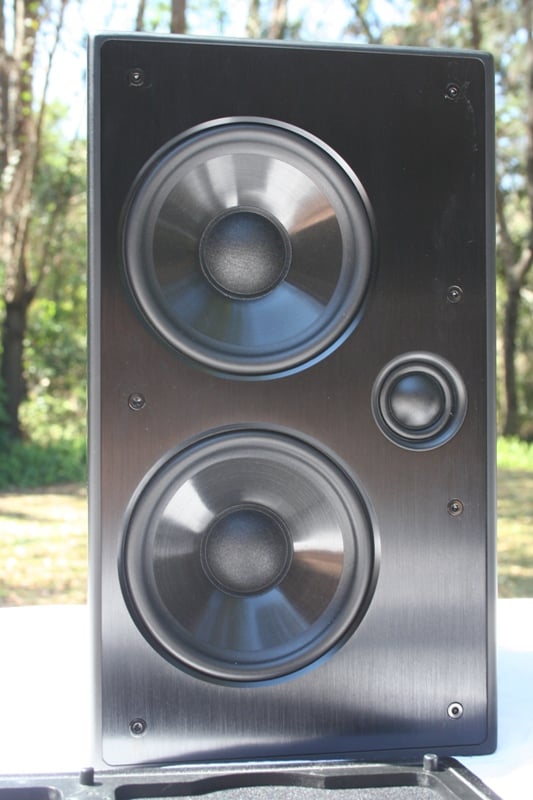 It's not hard to gather that I am impressed with these speakers
- especially from a performance perspective. They seem to try to be all things to
all listeners. With the Tweeter adjustment, Boundary compensation, and dipole/bipole
options, there is nary a room that these speakers wouldn't blend in to.
Flexible, crisp, articulate… I could come up with a hundred positive adjectives
to describe the ER speaker from Emotiva… except pretty. If performance is what
you are after, the Emotivas have it in spades. I for one never would have
expected an amp and processor company to come out with such a great performing
speaker.
It's not hard to gather that I am impressed with these speakers
- especially from a performance perspective. They seem to try to be all things to
all listeners. With the Tweeter adjustment, Boundary compensation, and dipole/bipole
options, there is nary a room that these speakers wouldn't blend in to.
Flexible, crisp, articulate… I could come up with a hundred positive adjectives
to describe the ER speaker from Emotiva… except pretty. If performance is what
you are after, the Emotivas have it in spades. I for one never would have
expected an amp and processor company to come out with such a great performing
speaker.
I'm happy to say that I was proven wrong.
Emotiva ER 5.0 Speaker System
$1246
Emotiva Audio
106 Mission
Court
Suite
101
Franklin,
TN 37067
615-771-1224
877-EMO-TECH
www.emotiva.com
About Emotiva
Audio
Emotiva
engineers believe that the experience of enjoying home audio and home theater
components begins with thoughtful design, robust engineering, superior quality
materials and a deep understanding of what the audio/video enthusiast wants and
needs. It occurs all too often; designers and manufacturers consider technology
and ease of use to be mutually exclusive qualities in a product. Emotiva
engineers think differently. Technologically superior and user friendly
products are paramount to the Emotiva design philosophy and are qualities that
allow Emotiva users to appreciate their purchase in the future as much as they
do today. We utilize only premium components with proven, critically evaluated
circuitry in the audio and video paths to preserve the original quality of the
sound and vision experience. Emotiva products compliment the entertainment
experience and bring it up to a level rarely experienced with other mass produced
products.
The Score Card
The scoring below is based on each piece of equipment doing the duty it is designed for. The numbers are weighed heavily with respect to the individual cost of each unit, thus giving a rating roughly equal to:
Performance × Price Factor/Value = Rating
Audioholics.com note: The ratings indicated below are based on subjective listening and objective testing of the product in question. The rating scale is based on performance/value ratio. If you notice better performing products in future reviews that have lower numbers in certain areas, be aware that the value factor is most likely the culprit. Other Audioholics reviewers may rate products solely based on performance, and each reviewer has his/her own system for ratings.
Audioholics Rating Scale
 — Excellent
- — Very Good
- — Good
- — Fair
- — Poor
| Metric | Rating |
|---|---|
| Build Quality | |
| Appearance | |
| Treble Extension | |
| Treble Smoothness | |
| Midrange Accuracy | |
| Bass Extension | |
| Bass Accuracy | |
| Imaging | |
| Soundstage | |
| Dynamic Range | |
| Fit and Finish | |
| Performance | |
| Value |  |
As Associate Editor at Audioholics, Tom promises to the best of his ability to give each review the same amount of attention, consideration, and thoughtfulness as possible and keep his writings free from undue bias and preconceptions. Any indication, either internally or from another, that bias has entered into his review will be immediately investigated. Substantiation of mistakes or bias will be immediately corrected regardless of personal stake, feelings, or ego.
View full profile Subscribe to our newsletter