


Ascend Acoustics Sierra-1 Bookshelf Speaker Review
Ascend Acoustics Sierra-1
- Product Name: Sierra-1
- Manufacturer: Ascend Acoustics
- Performance Rating:


- Value Rating:
- Review Date: August 07, 2007 20:00
Typical In-Room Frequency Response: 39Hz - 22kHz ± 3dB
In-Room Sensitivity: 87dB @ 1 watt / 1 meter
Frequency Response (Anechoic): 44Hz - 22kHz ± 3dB
Sensitivity (Anechoic): 86.5dB @ 1 watt / 1 meter
Average Impedance: 8 ohms
Minimum Recommended Power: 45 watts
Maximum Continuous Power*: 200 watts
Maximum Short Term Peak Power*: 400 watts
Cabinet: Exclusive V-LAM™ construction featuring vertically laminated bamboo. Bass reflex via flared rear port tube
Dimensions H x W x D**: 14.25" x 7.5" x 10.5"
Weight (each): 20 lbs each
Shipping Weight (pair): 43 lbs per pair
Tweeter: (1) 26mm high-definition soft dome tweeter w/integrated elastomer wave guide, wide surround, low-viscosity magnetic fluid cooling, pole-piece damping chamber. Fully manufactured by SEAS of Norway
Woofer: (1) proprietary 5.25” long throw mineral-filled polypropylene cone, non-resonant cast aluminum frame, copper shorting rings, low-inductance motor assembly, vented pole-piece and vented spider.
Connectors: (2) gold plated all metal 5 way binding posts.
Inserts: (1) ¼” x 20 inserts for mounting to stands
Warranty: 7 year parts and labor
*Unclipped peaks
**Grille Off
Pros
- Imaging
- Bass response
- Treble extension
- Two beautiful finish options
- 7 year warrantee
Cons
- A tad bass heavy? (is this really a con?!?)
Ascend Sierra-1 Build Quality
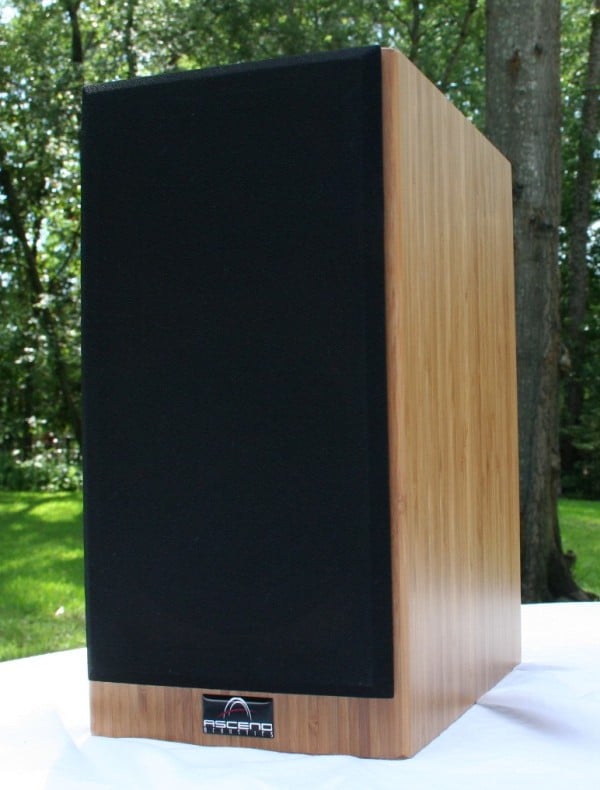 If I had to
describe it in a word, that word would be "pandemonium." That was
what seemed to be happening in the audiophile community as Ascend Acoustics
announced their new "reference" bookshelf speakers, the Sierra-1's.
Long time lovers of the brand were putting their beloved speakers up for sale
with the Sierra-1's on pre-order. Threads in various forums sprang up with
titles as confusing as "Sierra-1's or New Car?" or "I've got 10
grand to spend, Sierra-1's?" Um… what? Sight unseen, ear unheard, the
Sierra's were being compared and debated against speakers many times their
price. Fanaticism? Rabid consumerism? Prescience? I just didn’t know what to
think.
If I had to
describe it in a word, that word would be "pandemonium." That was
what seemed to be happening in the audiophile community as Ascend Acoustics
announced their new "reference" bookshelf speakers, the Sierra-1's.
Long time lovers of the brand were putting their beloved speakers up for sale
with the Sierra-1's on pre-order. Threads in various forums sprang up with
titles as confusing as "Sierra-1's or New Car?" or "I've got 10
grand to spend, Sierra-1's?" Um… what? Sight unseen, ear unheard, the
Sierra's were being compared and debated against speakers many times their
price. Fanaticism? Rabid consumerism? Prescience? I just didn’t know what to
think.
What I did know was that we had been trying to get a pair of Ascend anything to review. For whatever reason, we hadn't secured a review sample in a while and our adoring fans (well, readers and sometimes I'm not sure exactly how adoring they are) had been clamoring for one. Well, serendipity played her hand as the moon eclipsed the sun, the stars aligned, and somewhere an alien with three eyes but only one eyebrow looked at the heavens, confused. We had finally secured a review, but not just any review, a review of these highly anticipated speakers.
Build Quality
The Ascend
Acoustics Sierra-1s arrived well packaged, double boxed and protected by huge
foam endcaps. The thin layer of foam fabric (for lack of a better term)
shredded as soon as I touched it so it won't be able to be reused for the
return trip. The box had a few dings on it but the speakers were completely
undamaged. It is becoming more and more important as shipping companies in
price wars hire more people with fewer and fewer fingers to handle your
products carefully. I've literally had boxes falling apart from the abuse
they've taken at the hands of these so called shipping
"professionals." It is to the point now that I wouldn't trust most of
them to deliver a piece of adamantium undamaged.
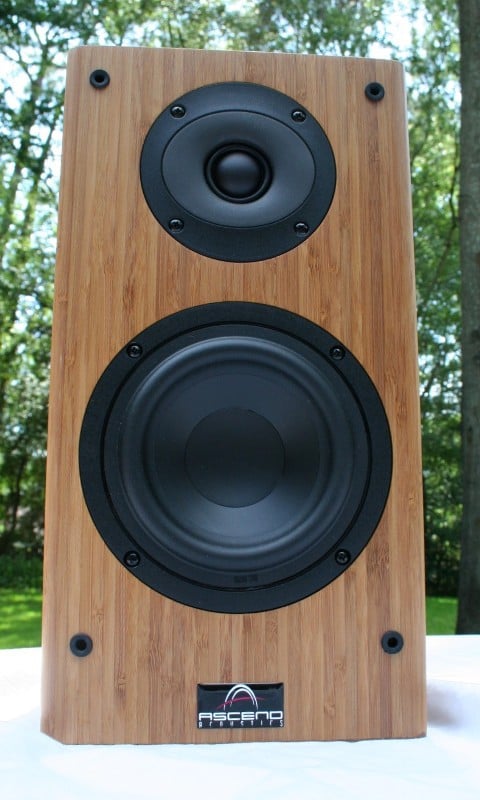
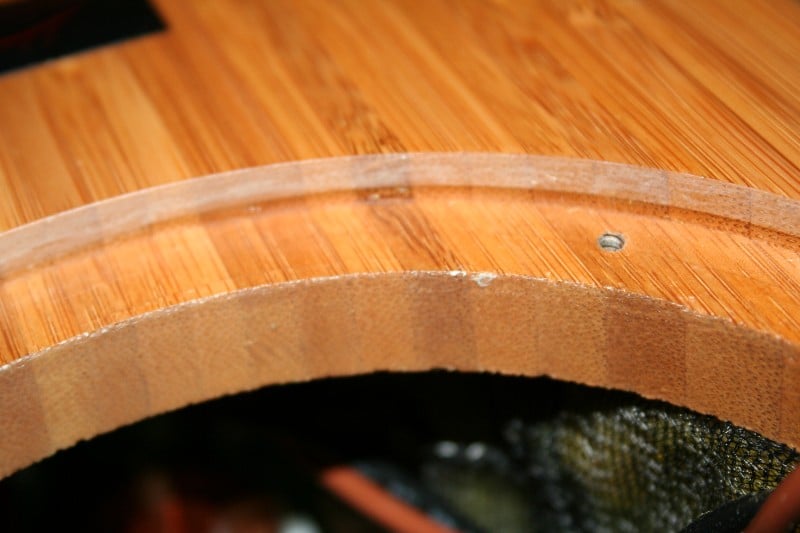 Bamboo. For those of you that don't know, bamboo is
one of the few truly renewable "wood" resources out there. It is
basically a grass and grows like crazy. It is both hard and flexible and can be
fashioned into any number of items including floors, fences, bridges, toilets, drinkware, furniture, and apparently speakers. When I read
that Ascend Acoustics had constructed the Sierra-1's out of bamboo, I thought,
"Surely they mean that they have bamboo veneer." Well, no, they are solid bamboo, a choice that Ascend
made to reduce cabinet resonances despite how hard it is to work with the
material. Well, I don’t know anything about that but I will say that the look of bamboo is one of my favorites. The
review sample I got was in the natural finish (I would have requested natural
had I had the option) and was stunning. From a distance, it just looks like a
strange wood grain but from up close, you can clearly see all the different
little strips of bamboo that have been glued together in order to create the
boards large enough to turn into furniture and speakers. Plus, it's renewable! You can go to bed feeling
good that you saved a tree or something.
Bamboo. For those of you that don't know, bamboo is
one of the few truly renewable "wood" resources out there. It is
basically a grass and grows like crazy. It is both hard and flexible and can be
fashioned into any number of items including floors, fences, bridges, toilets, drinkware, furniture, and apparently speakers. When I read
that Ascend Acoustics had constructed the Sierra-1's out of bamboo, I thought,
"Surely they mean that they have bamboo veneer." Well, no, they are solid bamboo, a choice that Ascend
made to reduce cabinet resonances despite how hard it is to work with the
material. Well, I don’t know anything about that but I will say that the look of bamboo is one of my favorites. The
review sample I got was in the natural finish (I would have requested natural
had I had the option) and was stunning. From a distance, it just looks like a
strange wood grain but from up close, you can clearly see all the different
little strips of bamboo that have been glued together in order to create the
boards large enough to turn into furniture and speakers. Plus, it's renewable! You can go to bed feeling
good that you saved a tree or something.
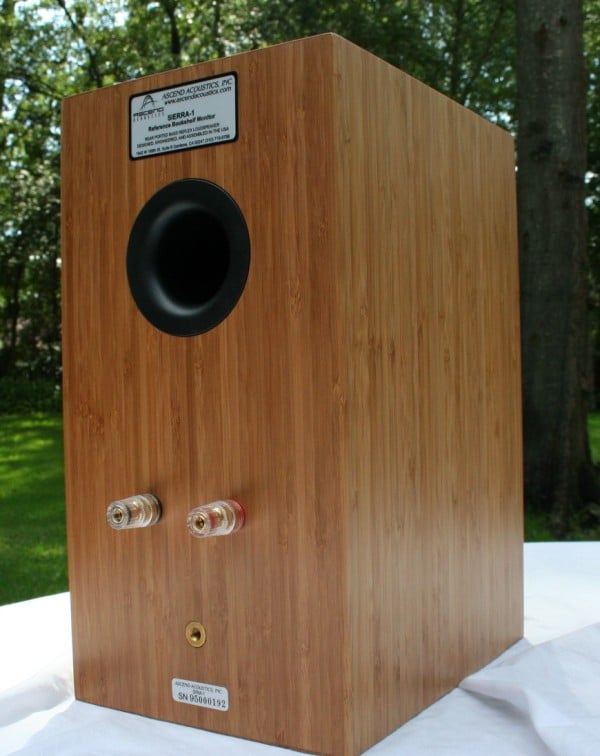 Taking a
closer look at the speaker, you'll notice a few things. First, there isn't the
normal "plastic binding plate" that you see on so many speakers. The
high quality 5 way binding posts are mounted directly to the cabinet. Just
below them there is a brass threaded insert presumably for wall or stand
mounting. The rear port dictates that you give the speaker a little room
between the wall and the back baffle. The binding posts make this not only a
suggestion but a necessity. You just aren't going to get the back of this
speaker that close to something especially if you use banana plugs like I do.
There are no provisions for feet or included sticky rubber pads for the bottom
of the speaker. The sturdy grill is held tightly on four little plastic nubs.
While you can install it either way, only one is the right way. Just look at
the label on the bottom, it'll tell you whether you have it on correctly or
not.
Taking a
closer look at the speaker, you'll notice a few things. First, there isn't the
normal "plastic binding plate" that you see on so many speakers. The
high quality 5 way binding posts are mounted directly to the cabinet. Just
below them there is a brass threaded insert presumably for wall or stand
mounting. The rear port dictates that you give the speaker a little room
between the wall and the back baffle. The binding posts make this not only a
suggestion but a necessity. You just aren't going to get the back of this
speaker that close to something especially if you use banana plugs like I do.
There are no provisions for feet or included sticky rubber pads for the bottom
of the speaker. The sturdy grill is held tightly on four little plastic nubs.
While you can install it either way, only one is the right way. Just look at
the label on the bottom, it'll tell you whether you have it on correctly or
not.
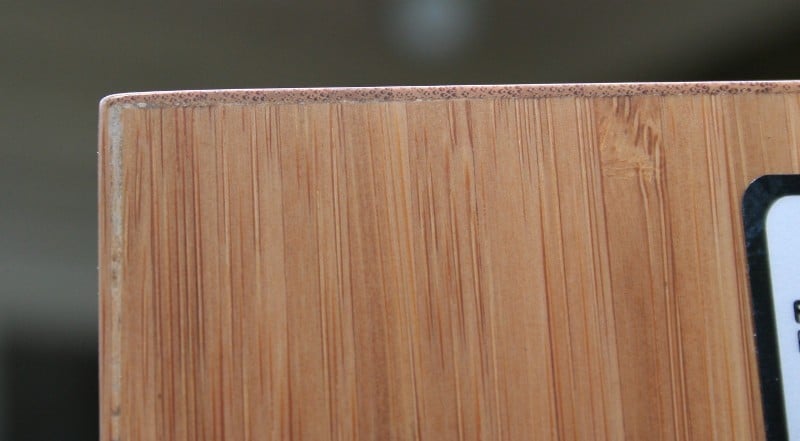
Taking an even closer look at the speaker, the vertical sides of the front of the speaker are rounded but all the other edges are sharp. It seems that bamboo might be a little susceptible to wear as I noticed a few of the edges already dulled (straight out of the box). You can also see the interior grain of the bamboo where the edges don't exactly match up. This was only present on one of the speakers. With the piano black finish, you are unlikely to ever see such imperfections. Bamboo just has such a detailed grain that any little misstep in construction is likely to be noticeable. Ascend Acoustics assures me that the pair of naturals I received were amongst the very first off our production line. They are carefully inspecting each natural pair of cabinets for these types of defects and are actually matching pairs by hand. An similar defects found will be labeled as "B-Stock" and sold at a discount. To my mind (and wallet), this is just the sort of "defect" that's I'd be willing to accept.

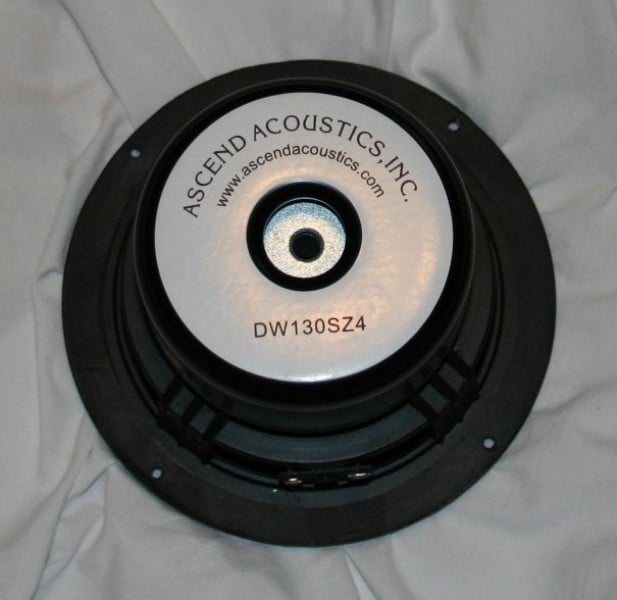
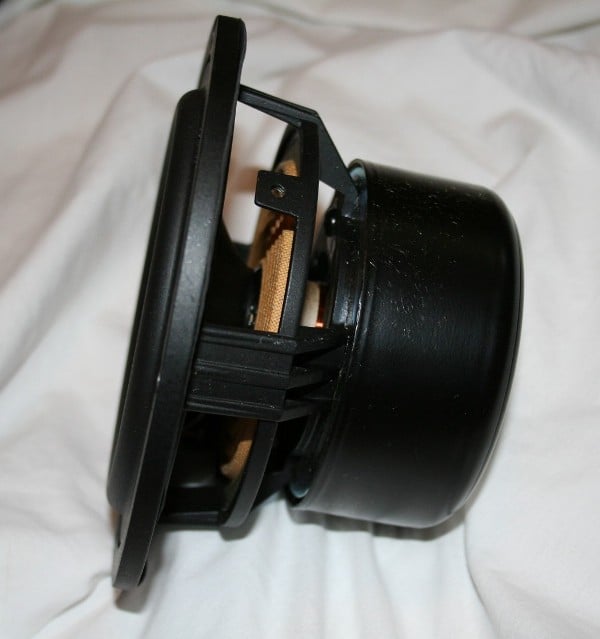
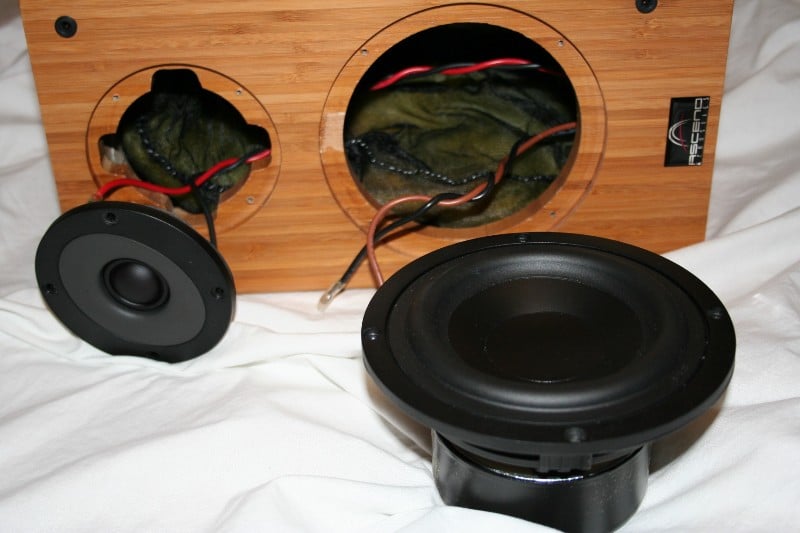 Opening up
the speakers, I was pleased to see a cast rather than a stamped basket on the
woofer. While the review sample wasn't shielded, the shielding option is
something that I would suggest that everyone think hard about. For about 5% of
the cost of the speaker, you won't have to worry about the magnets interfering
with your display or (more importantly) anything with a hard drive near it. As
HTPCs and music servers get more and more common, this is an issue that people
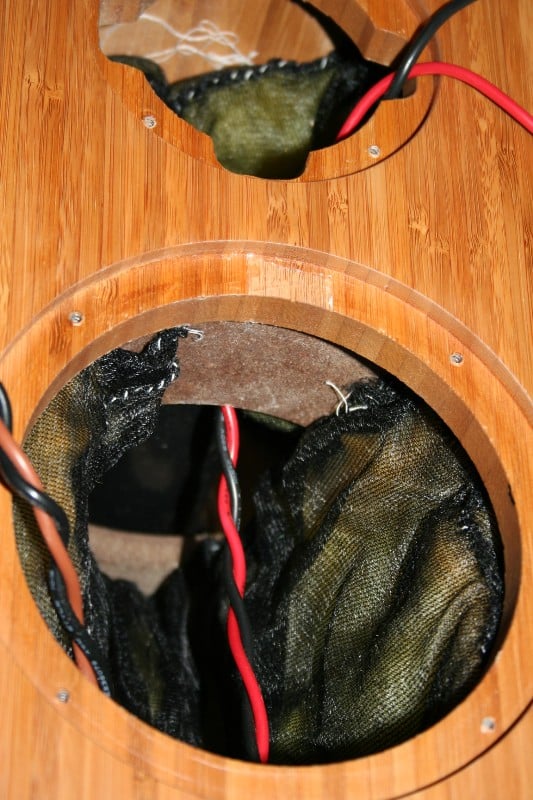
should get more worried about. The cabinet was well braced (obscenely well
braced actually) with a central brace between the woofer and the tweeter and
corner braces at each of the corners. Match that with the 3/4" bamboo
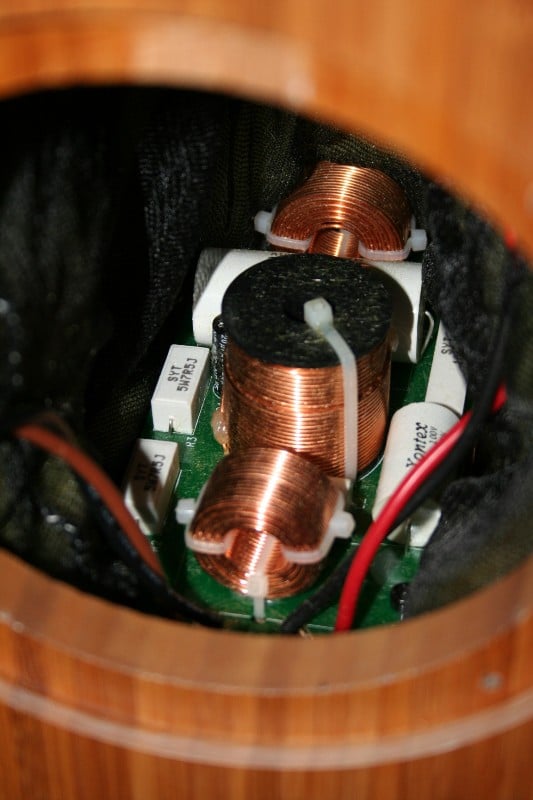
cabinet and you have an extremely inert box. The crossover was attached firmly
to the bottom of the cabinet and appeared to be constructed of high quality
components as expected for a speaker of this caliber. The interior was lined
with what looked to be shredded fiberglass board in a mesh bag. It was nice in
that it kept the entire interior really organized and neat.
Opening up
the speakers, I was pleased to see a cast rather than a stamped basket on the
woofer. While the review sample wasn't shielded, the shielding option is
something that I would suggest that everyone think hard about. For about 5% of
the cost of the speaker, you won't have to worry about the magnets interfering
with your display or (more importantly) anything with a hard drive near it. As
HTPCs and music servers get more and more common, this is an issue that people
should get more worried about. The cabinet was well braced (obscenely well
braced actually) with a central brace between the woofer and the tweeter and
corner braces at each of the corners. Match that with the 3/4" bamboo
cabinet and you have an extremely inert box. The crossover was attached firmly
to the bottom of the cabinet and appeared to be constructed of high quality
components as expected for a speaker of this caliber. The interior was lined
with what looked to be shredded fiberglass board in a mesh bag. It was nice in
that it kept the entire interior really organized and neat.
Sierra-1 Setup and Listening Tests
 When setting up speakers, placement is always an
important consideration. I set the speakers up about 7 1/2 feet from each other
and each was about 7 1/2 feet from me. Neither of the speakers was closer than
1 1/2 feet from either a side or back wall. From here I played with the toe-in
and decided that I preferred them toed-in just a hair. With the Sierra's
pointed directly at me, I felt like they were way too forward and "in your
face". You're going to have to play with the speakers in your room to see
what you like best.
When setting up speakers, placement is always an
important consideration. I set the speakers up about 7 1/2 feet from each other
and each was about 7 1/2 feet from me. Neither of the speakers was closer than
1 1/2 feet from either a side or back wall. From here I played with the toe-in
and decided that I preferred them toed-in just a hair. With the Sierra's
pointed directly at me, I felt like they were way too forward and "in your
face". You're going to have to play with the speakers in your room to see
what you like best.
When ordering the Sierra-1's, you have the option of full shielding or not. This is usually associated with center channels which tend to live very close to displays. CRTs in particular are susceptible to magnetic interference from unshielded drivers. But the Sierra-1 isn't a center channel… or is it? If you'd like to use a Sierra-1 as a center channel, Ascend Acoustics will reorient the tweeter and provide a larger grill so that you can lay the speaker down on its side for easier placement near a display.
Listening Tests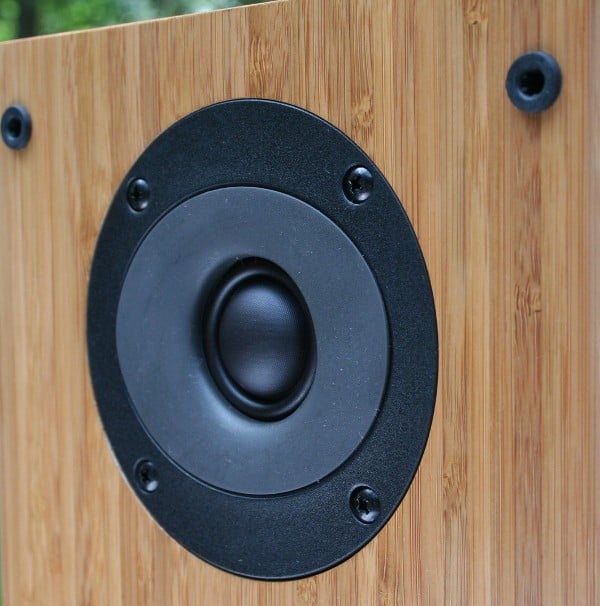 While you
can look forward to reading about the Ascend Acoustics Sierra-1 in our forthcoming
bookshelf speaker shootout, for now you'll have to do with my observations and
a few comparisons to the speakers I had on hand. The Usher Audio S-520's
impressed me more than most any speaker has on an initial listen - especially
at their price point. At $400 a pair (fully shielded and piano black) we are looking at a speaker that costs less than
half as much as the Ascend Sierra's. They are just over half the size of the
Sierra's as well. Regardless, it is important to remember that these comparisons
were done sighted, by me, in my room. Many factors unrelated to the speakers in
question could affect my perceptions. As always, you'll want to hear each of
these speakers yourself before buying. I powered the Sierra-1's with Emotiva
Audio's reference stereo combo the RSP-1 and the RPA-1 fed by a Denon DVD-3910
in pure direct mode.
While you
can look forward to reading about the Ascend Acoustics Sierra-1 in our forthcoming
bookshelf speaker shootout, for now you'll have to do with my observations and
a few comparisons to the speakers I had on hand. The Usher Audio S-520's
impressed me more than most any speaker has on an initial listen - especially
at their price point. At $400 a pair (fully shielded and piano black) we are looking at a speaker that costs less than
half as much as the Ascend Sierra's. They are just over half the size of the
Sierra's as well. Regardless, it is important to remember that these comparisons
were done sighted, by me, in my room. Many factors unrelated to the speakers in
question could affect my perceptions. As always, you'll want to hear each of
these speakers yourself before buying. I powered the Sierra-1's with Emotiva
Audio's reference stereo combo the RSP-1 and the RPA-1 fed by a Denon DVD-3910
in pure direct mode.
One note; Ascend provides with each matched pair of speakers a chart of the frequency response of each speaker. These speakers are matched by hand to within +/-1dB of each other! The frequency response graph is actually from the production line measurements. Much like your first child's hand prints, proud owners can frame these and put them next to each speaker or mount on a wall for envious friends to see.
CD: Yello
– the eye Imaging. If you don't know what it is, you need new
speakers. And if you want to know what it is, pick up a pair of Sierra-1's. The
Sierra-1's really surprised me in their ability to image well. I placed the
Sierra's in a variety of orientations - pointed straight forward, straight at
me, and at a variety of toe-in angles. In every position, they imaged
spectacularly. The soundstage was rock solid with vocals and instruments well
placed and located. During this part of the testing, I did notice a little port
noise as I was moving the speakers but I NEVER heard it from the listening
position at ANY volume.
Imaging. If you don't know what it is, you need new
speakers. And if you want to know what it is, pick up a pair of Sierra-1's. The
Sierra-1's really surprised me in their ability to image well. I placed the
Sierra's in a variety of orientations - pointed straight forward, straight at
me, and at a variety of toe-in angles. In every position, they imaged
spectacularly. The soundstage was rock solid with vocals and instruments well
placed and located. During this part of the testing, I did notice a little port
noise as I was moving the speakers but I NEVER heard it from the listening
position at ANY volume.
The only real "problem" I had with the Sierra's was a bit too much bass. That sounds weird in a bookshelf speaker review, but the Sierra's had such a strong bass response that I occasionally noticed a bit too much hold over on some notes and the midrange seemed a tad ill defined. In this case, this isn't such a bad tradeoff. For the most detailed midrange response, Ascend recommends using a subwoofer and crossover the speaker over at 60Hz. There was little music that I threw at the Sierra's that I felt was in need of a sub. The bass extension was even enough for the dreaded "Track 6" test that I put most speakers through. Will the Sierra's benefit from a sub, sure, but only to fill out the bottom end of the kick drum and for the occasional challenging track. Oh, and movies. You'll definitely need it for movies. But I didn’t need to tell you that did I?
CD: Bang & Olufsen Vol. XIII –
The Sound of Perfection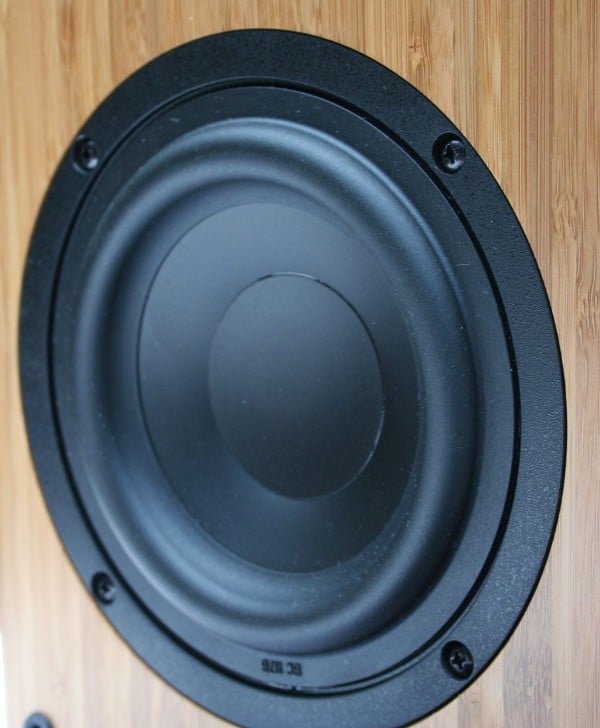 It is hard for me to get away from this CD for
reviews. There is just so much here to listen too. Just when I think I've
exhausted every track, every nuance, I hear something else. I used this album a
lot for the comparison of the speaker pairs I had on hand. One thing I was
really interested in was treble extension. Once you get past your bass
addiction (you can always tell a noobie as that's all they care about) you'll
learn that treble is just as important. The Sierra's tweeter performed remarkably
well easily out extending the Usher's. High hat's, cymbals, and more were
easily reproduced. There were a couple of cases where I was hearing things with the
Sierra's that I wasn't hearing at all with other speakers. The Sierra's were
less fatiguing and mostly held together even at higher volumes. Overall, the
Sierra's provided an excellent listening experience.
It is hard for me to get away from this CD for
reviews. There is just so much here to listen too. Just when I think I've
exhausted every track, every nuance, I hear something else. I used this album a
lot for the comparison of the speaker pairs I had on hand. One thing I was
really interested in was treble extension. Once you get past your bass
addiction (you can always tell a noobie as that's all they care about) you'll
learn that treble is just as important. The Sierra's tweeter performed remarkably
well easily out extending the Usher's. High hat's, cymbals, and more were
easily reproduced. There were a couple of cases where I was hearing things with the
Sierra's that I wasn't hearing at all with other speakers. The Sierra's were
less fatiguing and mostly held together even at higher volumes. Overall, the
Sierra's provided an excellent listening experience.
CD: Various - Jazz at the Pawnshop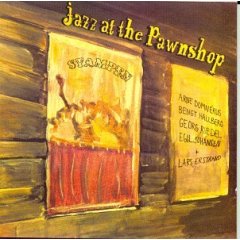 Like many of you reading this, I
used to keep close track of the albums used for reviews and would occasionally
pick one up. Jazz at the Pawnshop was just such an album. With lots of fast
percussion, clarinet, sax, and xylophone, it is chock full of sounds that are
both easily recognizable and hard on speakers. With the Sierra-1's I found
myself enjoying this album as if it were the first time I'd ever listened to
it. As a former bass guitarist in a jazz band, this album has a sort of
nostalgia that makes me want to pick up the bass again. The imaging with the
Sierra's was so good, it made be feel like I was actually sitting directly
behind the band at a little night club (it's the clapping that ruins the
"front row center" feeling). The bass did muddy up a bit during some of the more complex and
challenging sections but overall the presentation was very good. The clarinet
sounded very lifelike and realistic, the cymbals and snare were tight and
present, and the bass guitar was sufficiently throaty and reverberant. There
was definitely some information on the low end that was missing from the drum
solos but the depth that the Ascend Sierra-1's reached was pretty staggering.
Like many of you reading this, I
used to keep close track of the albums used for reviews and would occasionally
pick one up. Jazz at the Pawnshop was just such an album. With lots of fast
percussion, clarinet, sax, and xylophone, it is chock full of sounds that are
both easily recognizable and hard on speakers. With the Sierra-1's I found
myself enjoying this album as if it were the first time I'd ever listened to
it. As a former bass guitarist in a jazz band, this album has a sort of
nostalgia that makes me want to pick up the bass again. The imaging with the
Sierra's was so good, it made be feel like I was actually sitting directly
behind the band at a little night club (it's the clapping that ruins the
"front row center" feeling). The bass did muddy up a bit during some of the more complex and
challenging sections but overall the presentation was very good. The clarinet
sounded very lifelike and realistic, the cymbals and snare were tight and
present, and the bass guitar was sufficiently throaty and reverberant. There
was definitely some information on the low end that was missing from the drum
solos but the depth that the Ascend Sierra-1's reached was pretty staggering.
One thing that really struck me as I was listening to this album was how well the Sierra's provided an accurate and lifelike presentation of the music without being overly bright or "in your face." You hear terms like "laid back" and "warm" bandied about forums and audio discussions all the time and for each the connotations of those words is different. Let's just say this, I found the Sierra's to be very engaging - and that is a very good quality in a speaker.
Sierra-1 Measurements and Conclusion
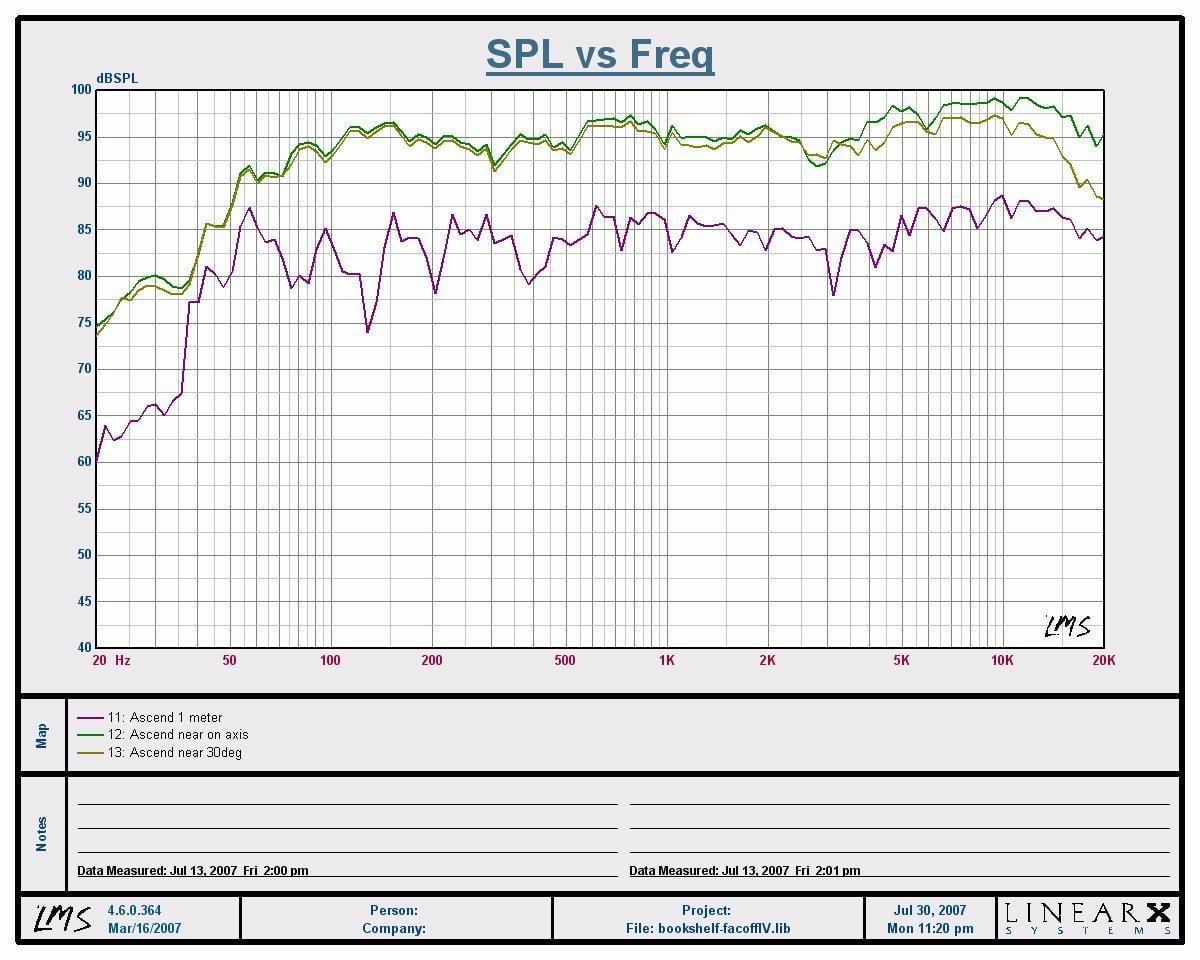
To get a better idea of what was going on, we pulled a few measurements of the Sierra 1’s. There is a slight dip in the 1kHz to 4kHz range both at 1 meter and via nearfield measurements on/off axis. Or, another way to look at it is there is a slight elevated response in the 5kHz to 10kHz region. This may explain why Tom felt the midrange was a bit recessed in his listening sessions. Bass is definitely a strong point for these speakers with a 3dB point in the upper 40Hz region. Though don’t expect to get high SPL’s at these frequencies as you are limited by the cone excursion of such a small woofer. We still recommend crossing these speakers over at 80Hz and letting a good sub or two handle the bass duties below that region.
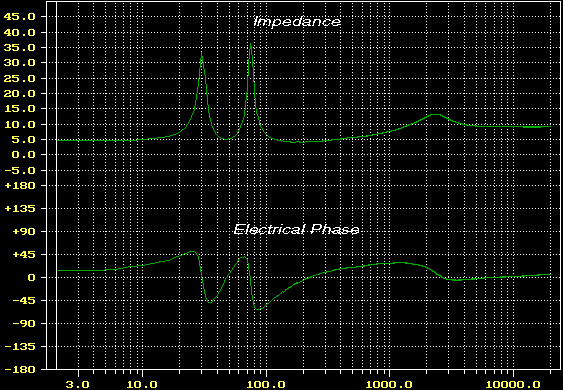
Impedance / Phase Ascend Sierra 1 (from manufacturer)
Though we didn’t measure impedance/ phase, judging by the manufacturers measurements the +-45deg phase shift and relatively moderate sensitivity and 5 ohm impedance magnitude in the lower frequency band suggests usage of quality amplification from the likes of Emotiva, B&K, etc is advised. We measured an average sensitivity of 86dB at 1 watt so don’t be alarmed that these speakers will need quite a powerful amplifier (recommended 100+ watts) to play loudly in large rooms.
Conclusion
 Full bamboo construction, solid build materials, stunning sound… what's
not to like about the Ascend Sierra-1's? Very little I tell you… very little at
all. As bookshelf speakers go, they aren't the cheapest but this is definitely
a case of "you get what you pay for." And you're getting a lot. The
bass and treble extension seems out of place in the same box. Usually you hope
for one or the other. In this case, you get both and in a bookshelf package.
Quite a deal if I do say so myself.
Full bamboo construction, solid build materials, stunning sound… what's
not to like about the Ascend Sierra-1's? Very little I tell you… very little at
all. As bookshelf speakers go, they aren't the cheapest but this is definitely
a case of "you get what you pay for." And you're getting a lot. The
bass and treble extension seems out of place in the same box. Usually you hope
for one or the other. In this case, you get both and in a bookshelf package.
Quite a deal if I do say so myself.
About Ascend Acoustics
Our pledge at Ascend Acoustics is to
create the highest quality and most affordable loudspeakers available
today. Ascend will bridge the gap between value brands and overpriced
high-end brands. We will bring, and continue to bring, the high-end audio
experience previously not affordable to most consumers, into the homes of our
loyal and future customers.
The Score Card
The scoring below is based on each piece of equipment doing the duty it is designed for. The numbers are weighed heavily with respect to the individual cost of each unit, thus giving a rating roughly equal to:
Performance × Price Factor/Value = Rating
Audioholics.com note: The ratings indicated below are based on subjective listening and objective testing of the product in question. The rating scale is based on performance/value ratio. If you notice better performing products in future reviews that have lower numbers in certain areas, be aware that the value factor is most likely the culprit. Other Audioholics reviewers may rate products solely based on performance, and each reviewer has his/her own system for ratings.
Audioholics Rating Scale
 — Excellent
- — Very Good
- — Good
- — Fair
- — Poor
| Metric | Rating |
|---|---|
| Build Quality | |
| Appearance | |
| Treble Extension | |
| Treble Smoothness | |
| Midrange Accuracy | |
| Bass Extension | |
| Bass Accuracy | |
| Imaging | |
| Soundstage | |
| Dynamic Range | |
| Fit and Finish | |
| Performance |  |
| Value | |
As Associate Editor at Audioholics, Tom promises to the best of his ability to give each review the same amount of attention, consideration, and thoughtfulness as possible and keep his writings free from undue bias and preconceptions. Any indication, either internally or from another, that bias has entered into his review will be immediately investigated. Substantiation of mistakes or bias will be immediately corrected regardless of personal stake, feelings, or ego.
View full profile Subscribe to our newsletter