


Pioneer Elite SC-07 A/V Receiver Review
Pioneer Elite SC-07 A/V Receiver
- Product Name: Pioneer Elite SC-07
- Manufacturer: Pioneer
- Performance Rating:

- Value Rating:
- Review Date: December 16, 2008 16:20
- MSRP: $ 2,200
- 140W x 7 Class D ICE Amplifier (20Hz - 20kHz, .09% THD@ 8ohms, All Channels Driven)
- Digital Engine: Freescale x 2
- Air Studios Tuning
- Room Calibration: Advanced MCACC 9 Band EQ with Phase & Standing Wave Control
- Advanced MCACC Graphic PC Output
- Advanced Surround Modes: (13+1) Modes
- THX Ultra 2 Plus
- Dolby True HD / DTS HD Master Audio / DD Plus / DTS HD
- HDMI SACD & DVD-A Support
- HDMI Jitter Reduction Plus (with compatible Pioneer BD player)
- HDMI Video Up-Scaling: Faroudja DCDi
- Digital Video Converter - HDMI
- Video Parameter Adjustment
- HDMI 1080p Video Transfer
- 4 HDMI Inputs / 2 Simultaneous HDMI Outputs
- 2 Component Video Outputs (Main/Zone 2)
- 3 Multi Room / Source Outputs with Amplifier assignability (bi-amp, zone 2)
- XM /Sirius Capable
- Home Media Gallery with FLAC support
- 7.1 Multi-channel Pre-out and Inputs
- 2 Year Elite Warranty
- Dimensions: 16.54" x 7.87" x 18.09" (WxHxD)
- Weight: 40 lbs, 13 oz
Pros
- Ease of setup
- Decodes all the latest formats
- Flexible auto setup and editing
Cons
- Design compromises of ICE amplifier may cause difficulties driving 4 ohm speaker loads
- No HDMI video processing
Pioneer SC-07 Introduction
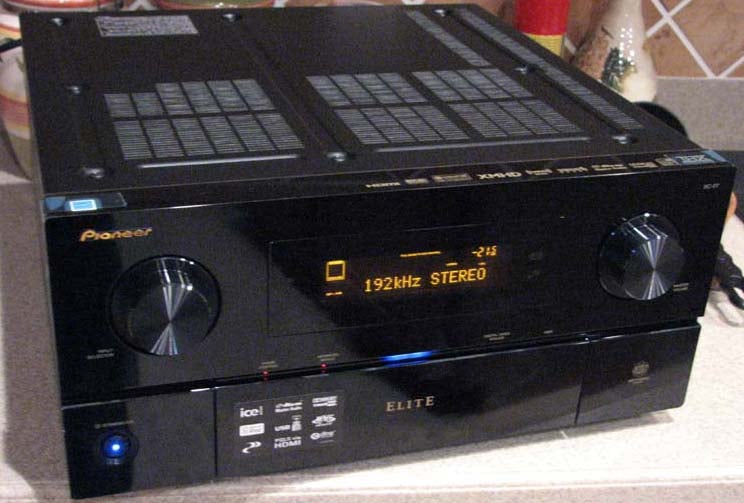 Someday they're going to have the technology to build a fully functional A/V receiver on a single chip the size of your thumb that will run on solar power. If you believe that, then you probably think we will also be traveling at warp speed and fighting Klingons in a few hundred years. Pioneer, on the other hand, is attempting to take the next evolutionary step in A/V receivers by employing Class D amplifier technology which not only runs more efficiently (> 90% vs 50% of classic linear AB designs), but can also deliver more available power to your loudspeakers. The question remains, however: Can it do it with the same level of finesses and poise as yesterday's amplifiers? Read on to find out.
Pioneer SC-07 Overview & Set-Up
 The SC-07 is the second in line from flagship status for Pioneer Elite and decodes virtually every known audio format in existence. This 40lbs metal beast houses a highly efficient Class D power amplifier that is rated for 140wpc x 7. Video processing and scaling is accomplished by Faroudja DCDi, proving 1080p support and analog to HDMI video upconversion. There's also the new Precision Quartz Lock System (PQLS) which, according to Pioneer, re-clocks 2-CH PCM CD audio from the HDMI digital output of a compatible Pioneer Blu-ray disc player to reduce jitter and improve fidelity. Since I didn't have a Pioneer Blu-ray player on hand, I was unable to confirm this feature's benefit.
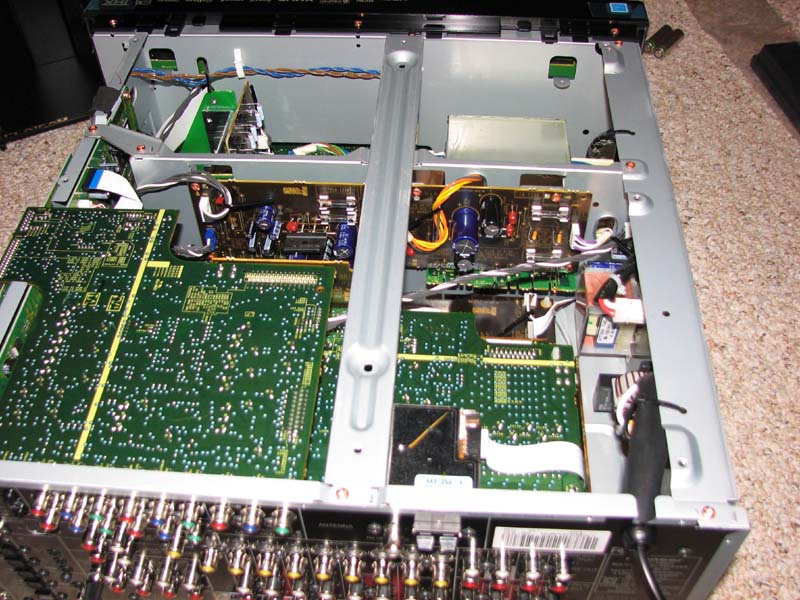 The Pioneer SC-07 build quality is typical of what I've seen in past Elite products: a nice glossy faceplate, big chassis to house all of the electronics, and a clean and simple front panel as far as the bridge of a Starship goes. Seriously, could they or any other Japanese receiver company figure out how to squeeze more poorly marked buttons on a front panel of a receiver? Removing the top panel was no small task and Pioneer would surely win the award for "most screws in a single chassis" (count 'em, there's 22).
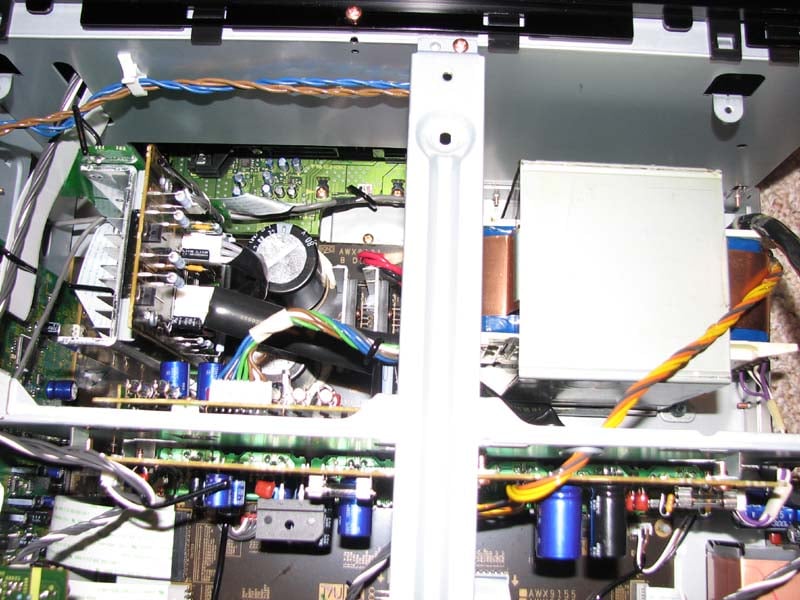
The SC-07 is missing one key element bestowed upon its predecessors: a large heatsink on which to mount the power devices. Instead, the ICE amplifier module is located in an isolated compartment on the bottom of the receiver which I was unable to get to for photos. I was a bit perplexed as to why they located the parts that generate the most heat towards the bottom of the receiver but it seemed to be more a real estate issue than one of preference. Make no mistake, despite this is a highly efficient Class D amplifier, the module gets hot to the touch when this amp is running at high levels for long periods of time. This is a fact that I learned after my multi-channel listening test was done and I was packing it back in the box. The top of the chassis is cross beam braced for increased rigidity and reduction of mechanical vibration. This is a welcome feature I am seeing offered on the latest flagship receivers from other brands as well.
Where's the beef?
Although the SC-07 contains an ICE amplifier module, Pioneer chose to stick with a linear power supply, which in my opinion was a good call on their part. SMPS (Switch Mode Power Supply) , although more compact and efficient, can be more costly to design properly and still result in less overall headroom and higher power supply ripple during heavy demands. This can lead to power sag and sonic nasties. The E-core power transformer utilized in the SC-07 was a bit small for a receiver in this price class, about 10-15% smaller than what I observed in the Yamaha RX-Z7 which I also had under review at the same time. What was even more surprising to me was the meager 2 x 10,000uF power supply capacitors. I've reviewed $400 Yamaha and $850 Denon receivers with more juice than this. I also noticed that they employed 80V capacitors, which is a way larger Vrating than is needed for the 140wpc rating on this receiver. I started to suspect that maybe Pioneer was using a lower current high voltage power transformer to yield more impressive dynamic power measurements at the expense of sustained low impedance continuous power delivery. I would confirm this later on the bench.
System Setup & Configuration
I set up the SC-07 for 5.1 but biamped my front channels full range which consisted of RBH Sound T-30LSE towers that dip into the 3-ohm range to really give the ICE amplifier modules a workout. I used the matching RBH T-1SE/R center channel and MC-6C bookshelfs on stands for the rears and one of my Velodyne DD-15's for the subwoofer channel. The transports were the Denon DVD-5910, Toshiba HD-A2 HD DVD player (yea I know, dead format) and the Yamaha MusicCAST MCX-2000. All of my cables were Sonicwave by Impact Acoustics / Cables to Go with the exception of my front speakers which were wired with Rivercable Starflex.
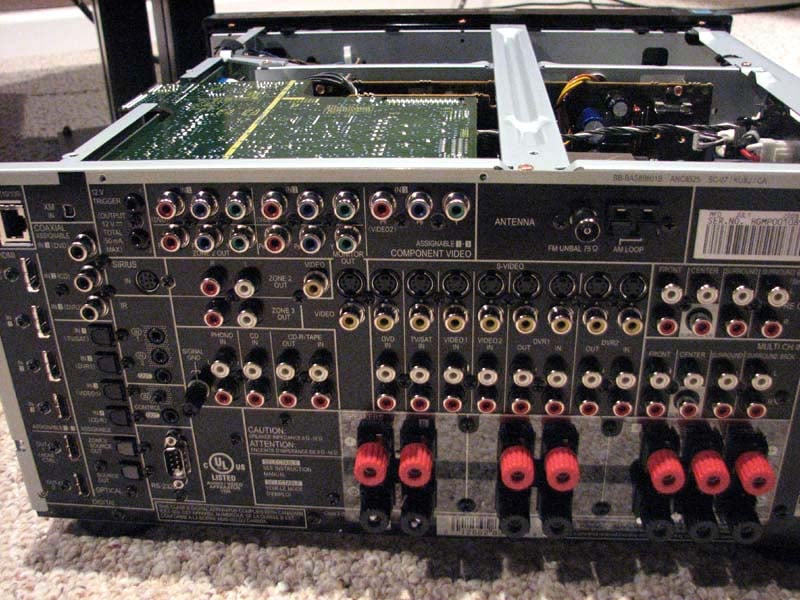
Back Panel View of the Pioneer SC-07
The back panel of the SC-07 is a bit crowded like all other receivers in this price range. There are seven speaker connections where two of them can either be used as Speaker B, Surround Backs, Zone2 or Biamp depending on how you assign them in the OSD. There are 4 HDMI inputs and 2 outputs, 3 component inputs and 2 outputs (1 for Zone2), 4 TOSlink ins / 2 outs, and 3 coax inputs. The power cord is not detachable which is disappointing at this price, and there are no provisions for switched or unswitched outlets.
Choosing the Speaker Impedance?
Um, well not really. In fact, this is the first UL rated receiver that has no impedance markings on the back panel or the user manual. Pioneer gives zilch as far as recommending a minimum impedance speaker to use with this receiver sans the small blip on page 64 of the user manual about recommending 6 ohm yo 16 ohm speakers when using the Speaker B amp configuration. Instead of a silk screen with impedance markings, my unit had a removable thin film plastic faceplate over the speaker terminals. I have no idea what that was for. As far as I know, Pioneer has no issue connecting up a fork on the outputs, but I wouldn't recommend it.
Auto Setup Via MCACC (Multi-channel Acoustic Calibration)
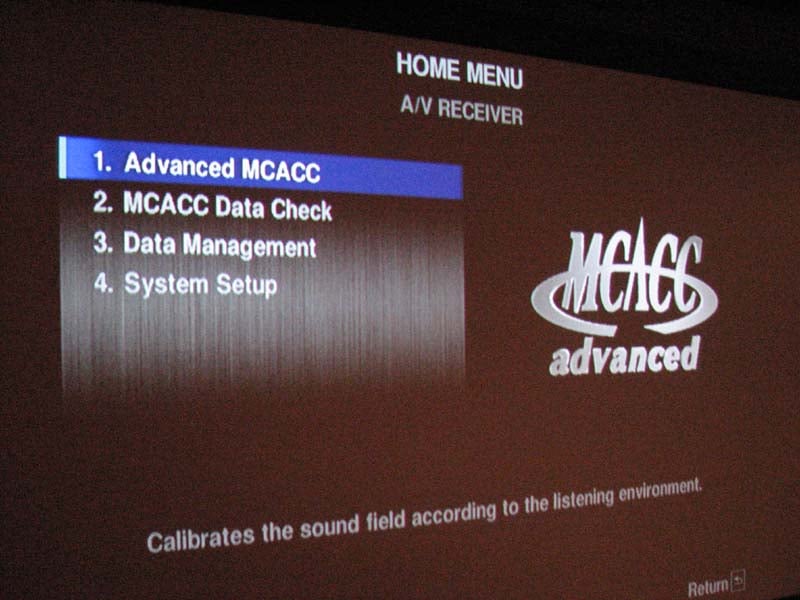
MCACC is the acronym Pioneer uses to denote their automation room setup and correction system. Similar to its competitors like YPAO and Audyssey, it uses a microphone to check and configure the following:
- Speaker Setting
- Distance
- Equalization
- Channel Level
- Standing waves
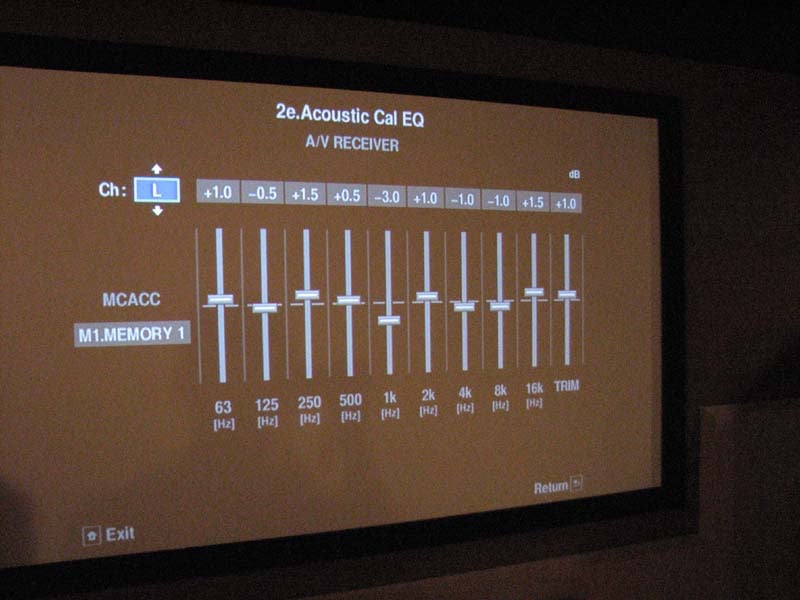 MCACC differs than the others in that it only
calibrates for one position and uses a 9 band octave graphic equalizer approach
instead of an arguably more advanced parametric one found on Yamaha's YPAO or the
even more savvy FIR filter method of Audyssey.
There are 6 MCACC user settings should you wish to calibrate for more
than one seat, but I'd prefer Pioneer look into a spatial averaging approach so
accommodate multi seats without having to select a different memory setting
when moving around the room.
MCACC differs than the others in that it only
calibrates for one position and uses a 9 band octave graphic equalizer approach
instead of an arguably more advanced parametric one found on Yamaha's YPAO or the
even more savvy FIR filter method of Audyssey.
There are 6 MCACC user settings should you wish to calibrate for more
than one seat, but I'd prefer Pioneer look into a spatial averaging approach so
accommodate multi seats without having to select a different memory setting
when moving around the room.
MCACC starts out by checking ambient room noise and also identifies the speakers connected to the system via a series of calibration sounds that sound like the old car driving games from Atari. It then uses test tones to set channel level and 'popping' sounds to calculate speaker distances. It then proceeds to acoustical calibration via equalizing and correcting for group delay and phase via a series of chirp sounds familiar with other room correction systems we've reviewed. You can also download the results via a PC interface to further refine the calibration for greater accuracy and control.
For more details on how MCACC works, check out:
http://www.pioneer.no/files/eur/MCACC/index.html
MCACC Calibration Results
As I found with other room correction systems, the end results were a mixed bag. MCACC correctly identified distances of all my speakers, including the subwoofer which only Audyssey has consistently done in my setups in the past. It was also pretty spot-on with level at least for the 5 main channels. The subwoofer was overly boosted which oddly wasn't the case when MCACC was engaged. It incorrectly set my rear bookshelf speakers to Large so I went in and adjusted them to Small.
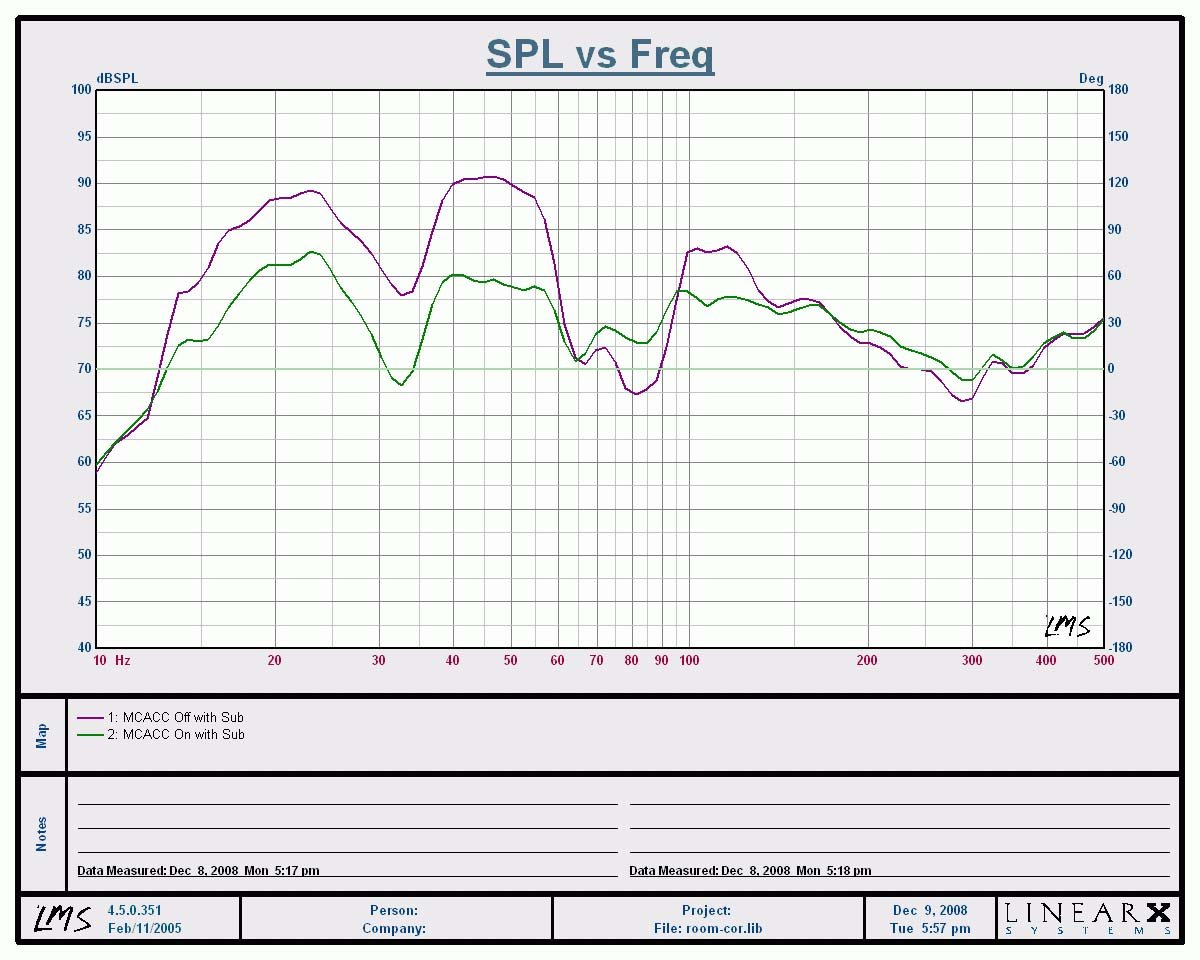
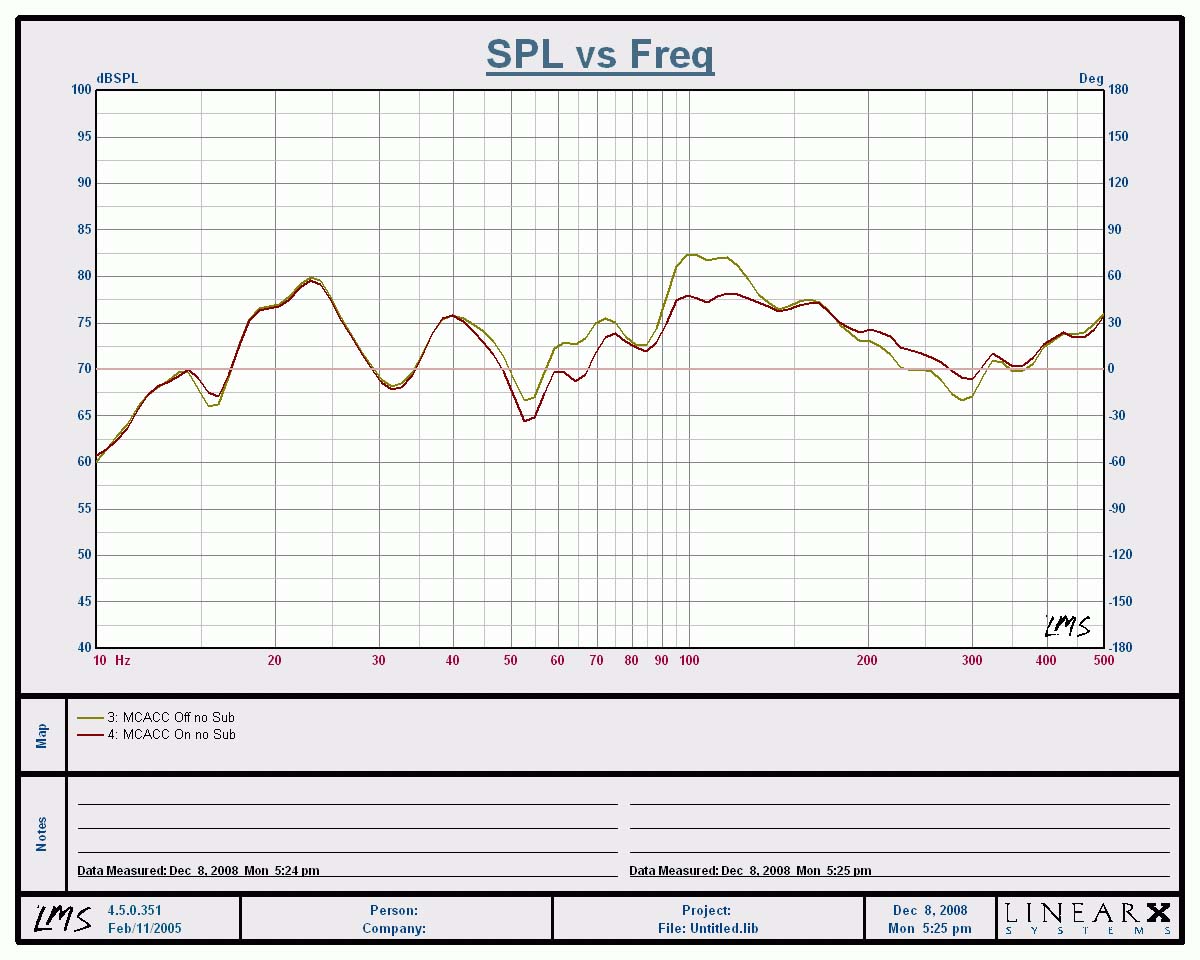
MCACC On/Off Mains + Sub (left) Mains Only (right) 1/12th Octave Frequency Response
Configuration Note: The Sub was set to "plus" so it would output bass to the subwoofer with the mains set to "Large" for 2-channel sources.
Upon first listen of my post-MCACC calibration, I noted the overpowering bass as soon as I switched off the MCACC. At first glance I thought it was actually doing an excellent job of balancing out the system's bass response and reducing room modes. That was until I pulled a couple of measurements to understand what was really going on. The left graph above shows the frequency response differences of the main channels with the sub in the main seated position with MCACC on (green trace) and off (purple trace). The shape of the curves are virtually identical except the MCACC curve was 10dB lower below 60Hz. MCACC did seem to smooth out and raise a null between 60-90Hz a bit as well. I decided to switch off the subwoofer and re-test for just the main channels (above right graph) to get a closer look. This time the curves were virtually identical with MCACC slightly reducing 60-90Hz and 100-150Hz. It seems MCACC was marginally fixing the bass response, but more importantly, it was honing in on the correct level to better blend the mains with the subwoofer. I am sure with manual intervention, and tweaking, I could have probably improved upon this further.
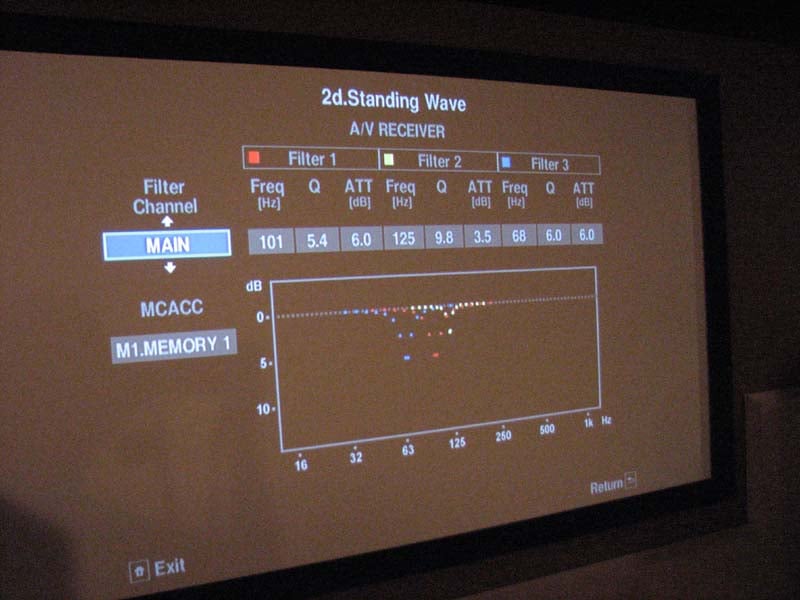
MCACC Standing Wave Correction
The Standing Wave Correction plot provided in the MCACC setup does show some of the problem areas at my listening seat that it was attempting to flatten out, namely the 63Hz and 125Hz regions. With manual tweaking, this could be a very useful tool for smoothing out bass response.
The graphical
readout of MCACC calibration results was a welcomed feature and useful for
understanding to what extent correction has been made. As you can see in the results of the
calibration to my front speakers, very little EQ'ing was performed by MCACC, a
tribute to well-designed reference speakers in an acoustically controlled
listening space.
I did some spot listening tests and found MCACC offered mixed results in my setup - no different than any other room correction system I have worked with. With it engaged, it seemed to anchor the vocals at the expense of collapsing the width and depth of the soundstage. This was most notable in two-channel sources. I did prefer the more natural and tighter bass MCACC offered but I could achieve most of this by simply lowering the sub an additional 8-10dB. Most of my listening tests were conducted with MCACC Off as I ultimately preferred it that way after extensive two-channel comparisons.
 In closing,
MCACC is a useful tool that should, at the very minimum, be used for proper
speaker distance and level setting. Personally
I would like to see Pioneer offer a better quality microphone on near-flagship
models such as the SC-07. An
omnidirectional mic with a long nose and not a flat flimsy hockey puck included
with this receiver would likely yield more accurate calibration results. More advanced users would be wise to tap
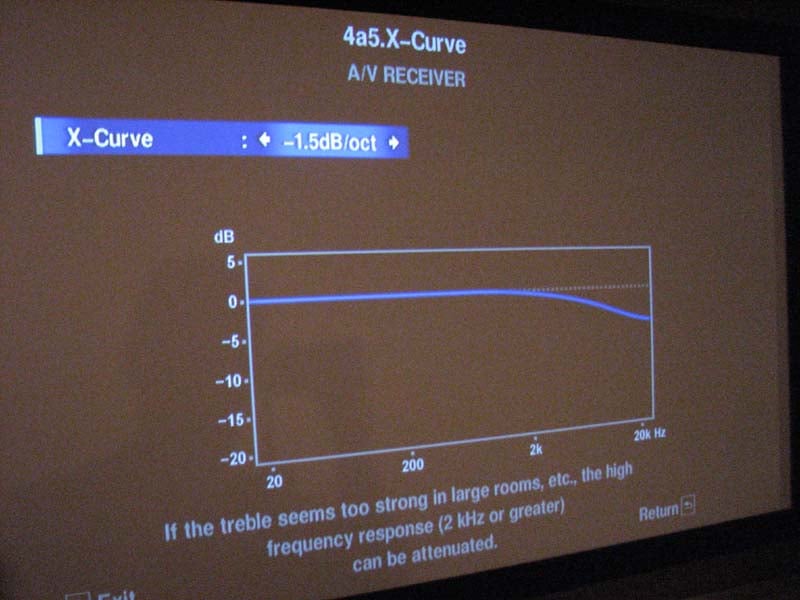
into some of the more advanced settings for tonal adjustments as needed. I particularly really enjoyed the X-Curve
feature that allows you to adjust roll off from 2kHz to 20kHz at a slope
between -0.5dB to – 3dB. This is a
useful tool for DVD mixes that are
too bright that you may wish to tame to reduce listening fatigue.
In closing,
MCACC is a useful tool that should, at the very minimum, be used for proper
speaker distance and level setting. Personally
I would like to see Pioneer offer a better quality microphone on near-flagship
models such as the SC-07. An
omnidirectional mic with a long nose and not a flat flimsy hockey puck included
with this receiver would likely yield more accurate calibration results. More advanced users would be wise to tap
into some of the more advanced settings for tonal adjustments as needed. I particularly really enjoyed the X-Curve
feature that allows you to adjust roll off from 2kHz to 20kHz at a slope
between -0.5dB to – 3dB. This is a
useful tool for DVD mixes that are
too bright that you may wish to tame to reduce listening fatigue.
Bass Management
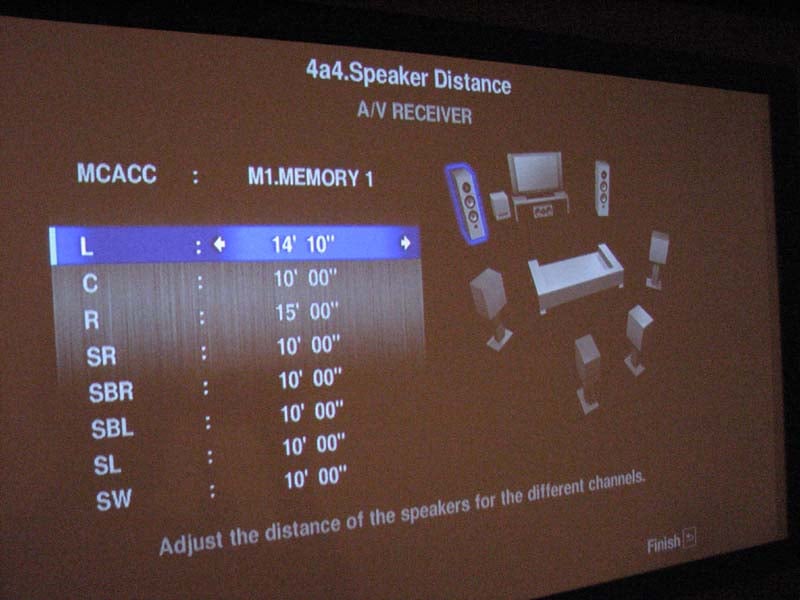 As with most modern A/V receivers and processors, the Pioneer SC-07 comes with an array of speaker configuration options. The SC-07 was a bit limited in crossover options with the following increments: 50, 80, 100, 150, 200Hz. Personally I'd like to see 60Hz thrown in there as well but 80Hz will work just fine for the majority of setups. I was pleased to see Pioneer offer a "+10dB bass boost" via the External multi-channel inputs. To my knowledge Denon was the only one offering this type of feature and more companies should pay attention and follow suit.
Editorial Note: Reason for Optional Bass Boost via External Multi-channel Analog Inputs:
The suibwoofer channel in Blu-ray discs is encoded 10 db lower than the other channels. If the codecs are decoded by the receiver, the LFE automatically boosts 10 db to compensate for this. If the codec is decoded in a Blu-ray player and then sent via analog cables to the receiver, it is not boosted by the player. Most players have no method of raising the LFE to a level to match the other channels.
Channel trim adjustments were offered in 0.5dB increments and delay adjustment precision was within 1-inch increments which is a rare but welcomed precision offering. The crossovers worked as expected for a THX Ultra2 certified receiver as indicated by the 12dB/oct High Pass Filter (HPF) slopes on speakers set small and 24dB/oct Low Pass Filter (LPF) slopes on the subwoofer output which I measured with my Audio Precision SYS 2722 Audio Analyzer.
Video Set-Up
 As previously mentioned, the SC-07 sports Faroudja DCDi video processing for deinterlacing and scaling of incoming analog video signals to HDMI. It wasn't clear in the manual if the SC-07 supports 1080p analog video so I tested it with my Xbox 360 via component video at 1080p resolution and was unable to get a picture via HDMI until I lowered the resolution to 1080i. Thus I would take that as a "no" for 1080p analog video upconversion. As far as I know the video processing for this receiver is only applicable for analog video sources which is a limitation some of Pioneer's competitors (whom have more advanced video processing) doesn't share. In fact, had I not opened the manual, I would have never known this receiver had video processing for analog video sources since these options weren't available on the main OSD page and would only show up if you hit "Video Parameter" on the remote when playing an analog video source. Once you access this page, you can adjust Brightness, Contrast, Hue, Chroma and Resolution.
Unfortunately the OSD doesn't overlay over the video signal like some of Pioneer's competitors. To make matters worse, when you enter the OSD, it kills the audio signal until you exit. This was acceptable 2 years ago, but Pioneer seems to have fallen a bit behind here. Overall, the OSD was basic and easy to navigate through except for the video processing issue I previously mentioned.
Multi-Zone / Multi-Source Audio & Power Amp Assignability
The Pioneer SC-07 is capable of reassigning two of its amplifiers to Zone 2 as well as one of its component video outputs to another zone 2. There is no video support for zone 3 or digital audio support for either zones. The multi zone functionality of this receiver was very basic when compared to the Yamaha RX-Z7 in that the Yamaha had better and more flexible amplifier assignability (up to 4 of its amplifiers could be reassigned for multi zones 2 or 3), tone controls, and more video features as well as a 4th zone for audio all of which could be activated simultaneously to play in a "party" mode. Pioneer could definitely take a few lessons from Yamaha here.
Remote Control
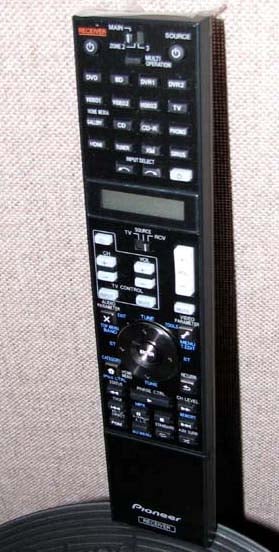 I didn't get too involved with the remote control Pioneer supplied with this receiver. It is similarly bad to other brands I've tested with receivers in that it has limited backlighting and a cluttered faceplate with too many button options - most of which are useless in the dark. I was a bit perplexed as to why I couldn't access all of the receiver setup options via the "home menu" button and had to also use two additional buttons "audio parameter" and "video parameter" to make additional adjustments and configurations. Lose the remote, and you lose the ability to make these adjustments.
Pioneer does not include a multi-zone remote which is surprising to me as I find that to be a useful feature for basic multi-zone control from another room if the receiver is line of sight.
Pioneer SC-07 Listening Tests
I've been waiting to sink my ears into a new ICE enabled Pioneer receiver so, as you could imagine, I was more than eager to partake in detailed listening tests. Unless otherwise stated, all listening tests were conducted with MCACC turned Off and with my main speakers bi-amped and the receiver configured for 5.1 audio. For two-channel listening, I disabled the sub as I wanted to hear just how well the Pioneer could render complex bass passages with my speakers running full range.
Two-channel Music Listening (Bi-amp Mode)
I selected highly dynamic and bass intensive musical content to ensure I was giving the amp section of the SC-07 a good workout. I started out with Dianne Reeves Never too Far and worked through a collection of music on my Yamaha MusicCAST server.
CD: Dianne Reeves - Never Too Far
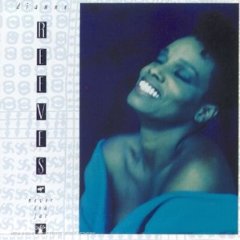 The bass in Track #2 "Never Too Far" will sound muddy on an improperly set up or mediocre system. With the SC-07 in bi-amp mode powering my T-30LSE system, I found it to sound incredibly snappy and articulate in the upper bass region. Stereo separation was good, but not quite as distinct as I heard when directly comparing against the Yamaha RX-Z7. While both receivers were doing a bang up job powering my reference speakers, I felt the Pioneer had a slight edge in bass reproduction, especially in slam, but the Yamaha sounded more effortless, particularly in the upper frequency range. Dianne's voice had less of a sting to it on the Yamaha. At lower listening levels, I felt the SC-07 was a tad more laid back in the vocals than the Yamaha, but I preferred the more in-your-face sound that the Yamaha was rendering.
I decided to compare the sound of the SC-07 with and without MCACC engaged. With it engaged, the vocals seemed incredibly focused, almost too much so in that Dianne's voice seemed to penetrate into my skull. The penalty of course was a slight collapse in width and depth of soundstage. It almost felt like I was experiencing a pseudo headphone effect with MCACC engaged. Depending on your listening preferences this can be a desirable attribute. I personally preferred the more natural sound I heard with MCACC disengaged.
I threw on some Fourplay, and Ann Hampton and found similar results each time. Both receivers sounded excellent, actually better than I expected, but with a slight edge in low end for the Pioneer and a cleaner more natural midrange and high end for the Yamaha. As the volume level increased, the Yamaha seemed more composed in the upper harmonics.
Multi-channel Music and Home Theater
HD DVD: Pat Metheny - The Way Up
 I know HD DVD is dead, but my love [CD1] of Pat Metheny isn't, so I still use this disc and keep my obsolete Toshiba HD-A2 player on hand for this very reason. Listening to the opening track is very moving. Between Pat's guitar solos and Antonio's amazing drumming, it's sonic heaven for the musically literate who prefer lumps in their jazz. The SC-07 did a wonderful job and providing me with the surround envelopment I am so used to hearing in my reference system when playing this disc. The receiver was dead quiet when it should be and loud and dynamic when called upon. Unfortunately, this recording is a bit lower in level than most DVD's I've listened to. I found a point where I was pushing the volume level up and it simply wouldn't go any louder. Granted it was balls to the walls loud, but I craved a bit more volume that I was used to hearing from my Denon reference gear. The SC-07 simply couldn't do it and I found the receiver adding an edginess to the sound quality that I never heard on my reference gear when playing this disc. Granted, my Denon separates combo is nearly seven times the price of this receiver, it's still important to note, you get what you pay for. Considering my room is nearly 6,000 ft^3, it was proving a bit too much for this receiver on my mostly 4-ohm speaker system.
I toggled MCACC On/Off and really didn't hear a night and day difference. I have noticed that the negatives of most room correction system calibration results are somewhat washed away when listening to multi-channel sources. At times, I thought I preferred MCACC On as I felt it provided a more seamless blend of my speakers which enhanced the envelopment effect.
DVD: Genesis - When in Rome
 It was like a dream come true. After a 15 year sabbatical one of progressive rock legends, Genesis, came back in full force, well sans Gabriel/Hackett, to perform one last time on the big stage. Although this is a standard DVD, video and DTS audio quality is quite good. The concert was recorded in Rome to an audience of 500k people and shot with HD cameras. I started out with "Dukes Intro". What a powerful song and the SC-07 seemed to enjoy filling my theater room with the wonderful medley of a true classic. Next up was "In the Cage". Mind you these are all +10 minute songs I was listening to, but the time just seemed to fly by. Bass was very well rendered and I felt like I was front row engulfed by Chester's drum kit at times. The SC-07 didn't run out of gas on this disc but instead did a nice job of rendering its dynamics to my liking.
HD DVD: Polar Express
 An appropriate movie for this time of year, Polar Express always seems to get you in that Christmas mood. The scene where Tom Hanks does the hot chocolate chant with the children on the train was nothing short of a surround sound marvel. The amount of detail and precision panning throughout all of the channels really makes you appreciate the high definition formats not just for their video, but for their superior audio quality thanks to Dolby Digital Plus, Dolby TrueHD and DTS-HD Master audio. This disc was recorded in DD+ but it still put on a great demonstration of how good surround sound can get when it isn't compressed to the nth degree.
I also popped in Phantom of the Opera on HD DVD which is recorded in Dolby TrueHD and simply sounds amazing. The power of the organs during the theme song was moving and it had me recalling the live Broadway play of this production I went to a few weeks ago at the Tampa Bay Performing Arts center. Although, the live production wasn't even close to the fidelity I was hearing in my theater room. The SC-07 was filling my room to near concert levels and doing a commendable job of it as well. I did feel, however, that my reference gear reproduced the same passages with more finesse and composure, but again we aren't comparing products at even close to the same price points.
Suggestions for Improvement
The Pioneer SC-07 has quite an impressive array of features, including the ability to decode all of the latest surround formats. I did however, find it lacking in some areas when directly compared to its competition that I'd like to see improved upon in their next generation product.
- Better parts usage on reconstruction filter for ICE amplifier module (see measurements notes)
- Beefier power supply capacitors and larger transformer to ensure it can better handle sustained 4-ohm loads
- HDMI video processing
- OSD overlay with uninterrupted audio
- More comprehensive OSD menu that includes access to video processing features
- Better quality microphone for MCACC setup
- Bass management for multi-channel inputs
- Multi-Zone remote should be included
- Please have a detachable power cord for easier installation flexibility (plus this will appease tweakers that like to add their own esoteric power cables to bring out the chocolate in their midrange)
Pioneer SC-07 Measurements and Analysis
Measuring a Class D amplifier is tricky. Class D amps use a switching process that adds fast-rising edges at the switching frequency to the audio output signal, presenting a difficult signal for audio analysis. Without a separate power filter for the Audio Analyzer to precondition the measurement device, you cannot get reliable FFT distortion analysis or SNR info. Since I don't have this filter for my Audio Precision System 2722, I conducted only the tests I was able to run.
Preamp Section
I measured about 10dB of preamplifier gain which is considerably lower (ideally 13dB or more) than I'd like to see from a preamplifier but figured it must have been deliberately done for proper volume scaling of all of the post processing such as THX, MCACC and TrueHD / DTS-HD decoding. This could present a problem of achieving full power when listening to low level sources and using external amplifiers with relatively low voltage gain structures. I was unable to find a way to increase input trim level to boost the gain like I have seen on other brands in the past.
The SC-07 was able to produce 3Vrms unclipped via the multi-channel analog outputs which is plenty of signal to drive any amplifier into clipping. I was unable to sweep beyond 40kHz without the preamp shutting off because of the overshoot caused by the reconstruction filter (typical of Class D designs). But the frequency response from 20Hz to 20kHz was ruler flat with a gradual rise up to 40kHz.
Bass management was NOT active for the multi-channel inputs so if you're using a Blu-ray player to do the decoding, make sure you enable the player's bass management controls.
Power Amp Section
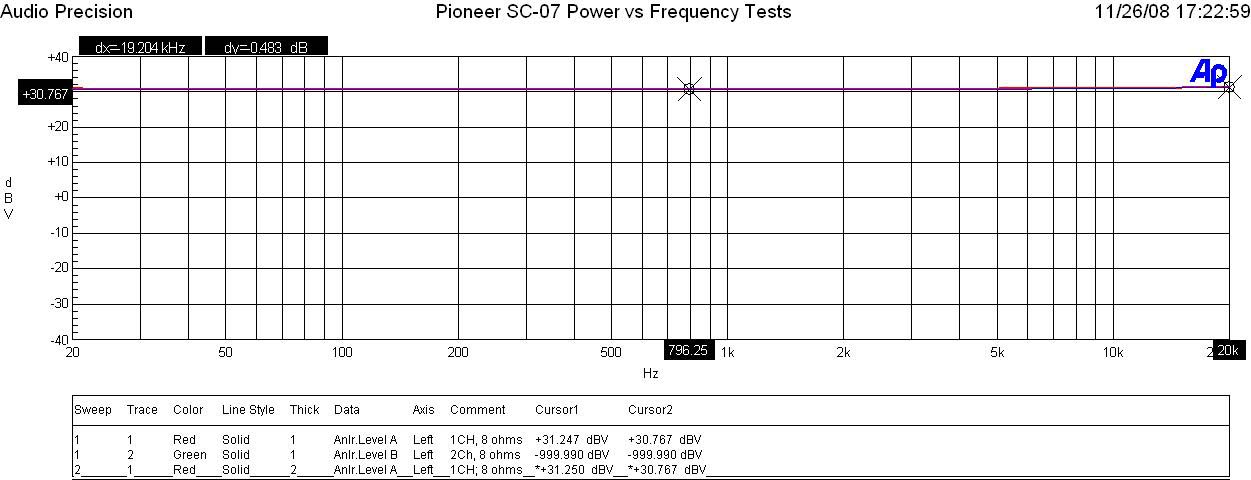
Pioneer SC-07 Power Bandwidth Measurement
When driving an 8-ohm load, the SC-07 did very well in exceeding its stated 140wpc rating. Because of the higher efficiency of the amplifier design, 1CH and 2CH measurements were virtually identical since the power demand from the wall outlet was less, resulting in no appreciable line sag.
Driving 4-ohm loads was an entirely different story. The SC-07 simply fell apart when running full bandwidth (20Hz to 20kHz) continuous power measurements. As I tested at frequencies above 5kHz with only 1 channel driven, the internal cooling fan would instantly come on right before the receiver would go into gross distortion and shut down at levels above 100 watts. With two-channels driven, I was able to squeeze out a clean 150wpc at less than 0.5% THD. Anything higher would again run the amps into gross distortion and shut off the receiver. I was a bit perplexed in how the receiver managed to better cope with 2 channels driven over 1 and could only surmise that it had something to do with symmetrical load balancing on the power supply. How this receiver was awarded the THX Ultra2 rating was a bit perplexing to me.
Power output: <0.1% THD + N
- 1CH, 8-ohms: 150wpc
- 2CH, 8-ohms: 150wpc
- 1CH, 4-ohms: 290wpc (1kHz, conditionally)
- 2CH, 4-ohms: 280wpc (1kHz, conditionally)
Keep in mind most review publications don't do full bandwidth continuous power measurements and they usually publish power measurements into clipping at 1% THD + N at 1kHz. I've seen this receiver reviewed in other home theater publications where they raved about its power capability and it is clearly obvious to me that they didn't actually run full bandwidth continuous sweeps into 4-ohm loads. This is something I do of all receivers regardless of price.
For more info on amplifier measurements, see: The All Channels Driven (ACD) Test
I believe there are several reasons why this problem occurred with the SC-07 when driving 4-ohm loads:
- Smallish power supply – remember the 10,000uF caps and skimpy power transformer I previously noted?
- Inductor saturation in reconstruction filter
- Intentional current limiting to protect the amplifiers
Editorial Note about Class D Amplifier Design Considerations
What's important to note is it can be MORE expensive to properly design a Class D amplifier than a conventional linear one. You still need a good, high current power supply in both designs, but the Class D requires costly power inductors for the reconstruction filters and fast switchers being clocked at high frequency to handle the high current demand and also keep the harmonic content pristine within the audio band. The ICE module as a whole is actually quite a good Class D amplifier, but for space and cost reasons, its obvious Pioneer had to make design compromises when implementing it into this receiver.
Amplifier Efficiency
I measured an efficiency of around 75% which is much better than linear amp designs but not up to the theoretical limit of this type of topology. The SC-07 consumes about 82 watts in idle which definitely hinders the overall efficiency.
Amplifier Output Impedance & Damping Factor
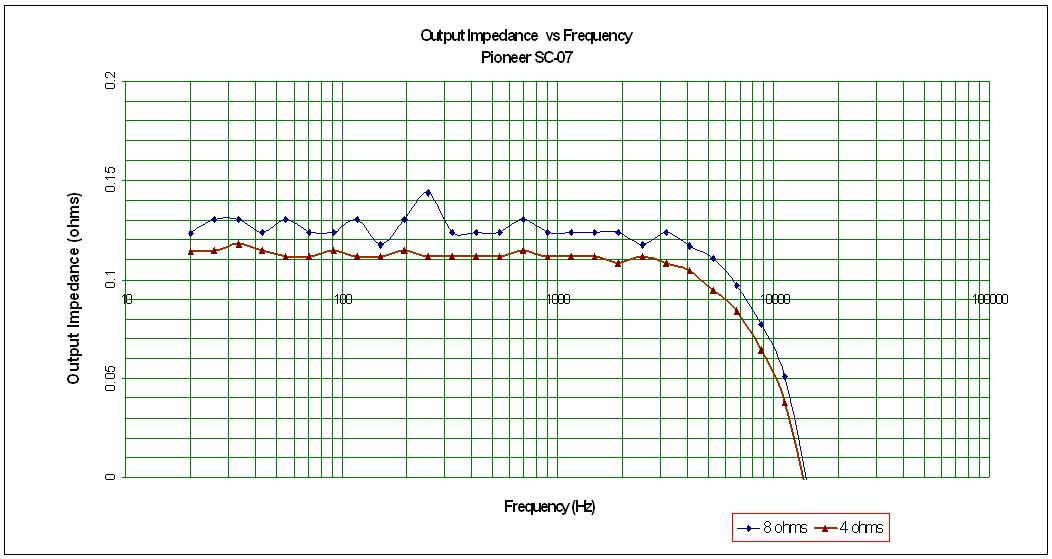
Pioneer SC-07 Amplifier Output Impedance
Typically Class D amps have higher output impedance due to the inductors of the reconstruction filters after the output stage. The ICE module did a great job keeping that in check with a good amount of post filter feedback. The SC-07 maintained a uniform output impedance under 150 mohms driving 8- or 4-ohm loads, which should allow for more consistency in sound quality driving a variety of different types of loudspeakers. The sharp reduction in output impedance above 10kHz is a result of increased power response caused by overshoot in the output inductor coils when driving a resistive load.
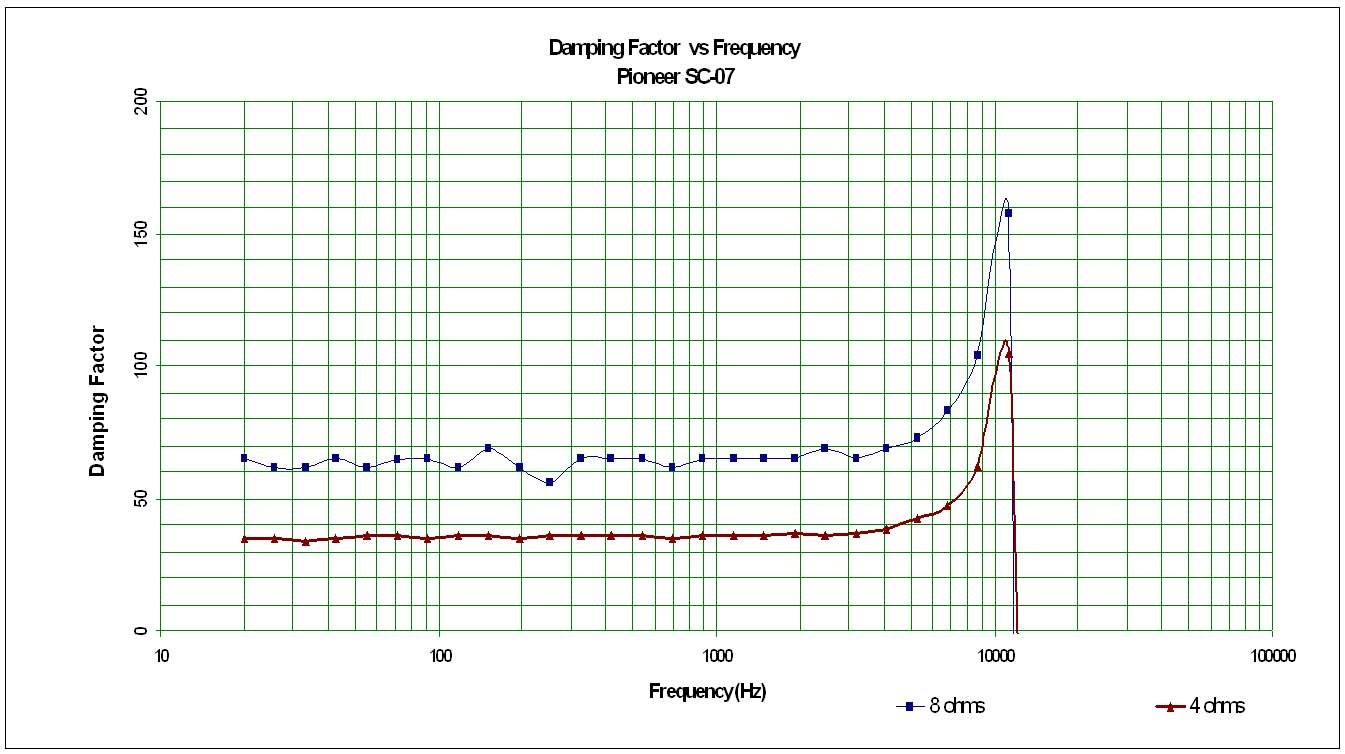
Pioneer SC-07 Amplifier Damping Factor under various loading conditions
The amplifier damping factor is about what I expected based on the measured output impedance. It is uniformly good across the entire audio frequency range at around the 60 mark (50 is a minimum we like to see in all amplifiers of uncompromising design) when driving an 8-ohm loads. Into 4-ohm loads the Damping factor is roughly 1/2 the 8-ohm value as expected.
Crosstalk
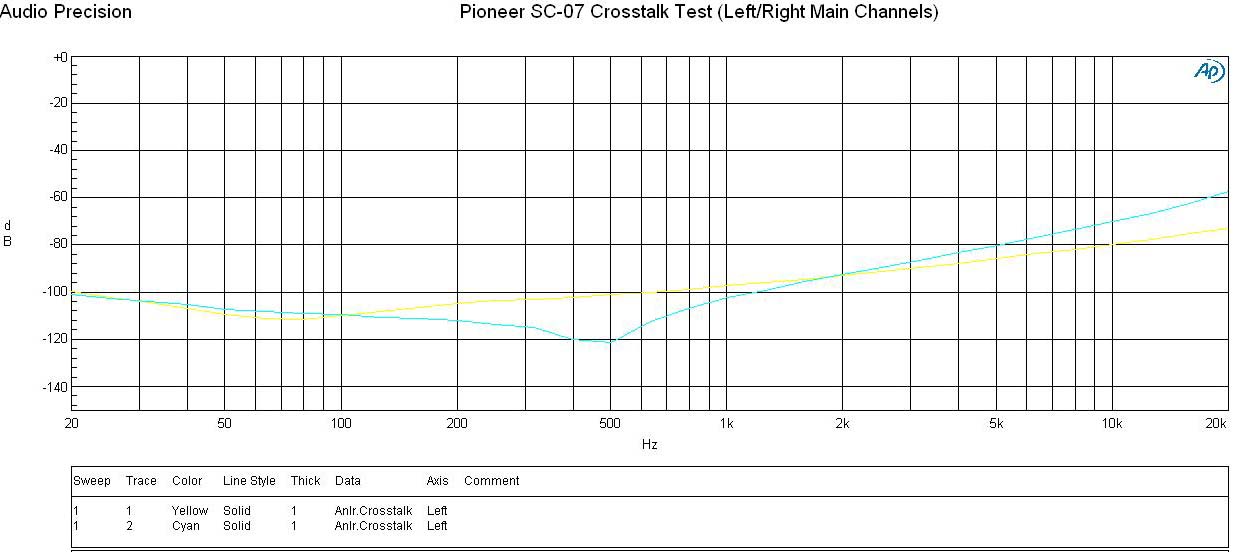
Pioneer SC-07 Crosstalk Measurement at Full Rated Power vs Frequency
Running a full range frequency sweep from the preamp all the way through the power amp at full rated power (140wpc @ 8-ohms), I measured channel to channel crosstalk on two adjacent channels where one channel was the disturber and the other was the Device Under Test (DUT). The Audio Precision plotted crosstalk of both channels over frequency by varying the Distruber/DUT channels. You can see the SC-07 produced great crosstalk measurements (100dB at 1kHz) but a bit higher than expected at the high frequencies (60dB @ 20kHz) which is likely a capacitive coupling between adjacent output filters. This is still a good measurement nonetheless, especially for a multi-channel receiver.
Pioneer SC-07 Conclusion & Overall Perceptions
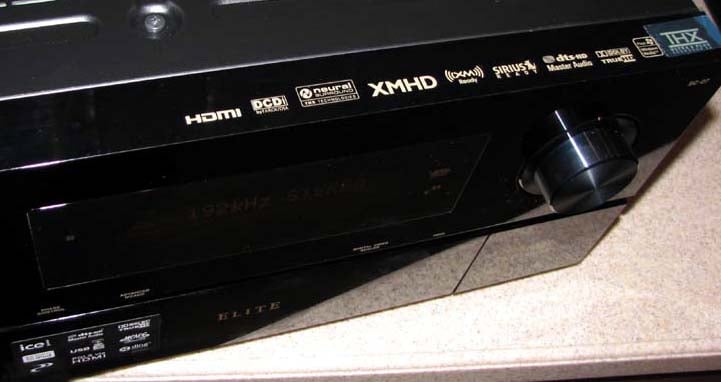 The Pioneer SC-07 A/V receiver is armed with all of the latest decoding and processing, making it a capable product for next generation high definition audio and video. As you can see in the right pic, if Pioneer adds any more audio features on the front face plate silk screen, they will quickly run out of real estate.
The SC-07 has DLNA media client with FLAC support for those wishing to stream music from a PC or other Internet source. Combine that with the other two audio zones and you're good to go in setting up whole house audio for partying and social gatherings.
I do, however, feel the SC-07 was lacking in several areas when directly compared against some of its rivals. For one, its multi-zone facilities are somewhat limited and I felt it was just missing stuff I am typically accustomed to when dealing with products at this price point. The OSD is a bit bland and although easy for system setup, lacks the comprehensive structure to do all of your adjustments from one local entry point.
Although the SC-07 didn't fare well on the bench when tested with 4-ohm loads, it proved to hold up quite well on real world 4-ohm speaker systems driving musical content instead of continuous test tones and only gave up some of its composure as the volume levels were increased. As a result, I'd cautiously recommend using this receiver with highly efficient 4-ohm speakers. With some component tweaks and upgrades, I believe the ICE module could be a worthy contender against traditional linear amplifiers implemented in similarly priced receivers and could also be advantageous in higher power delivery due to its greater efficiency. However, as implemented in this design, it's not quite there yet.
I did find MCACC quite a useful tool, especially if used to customize your sound and not just accept the initial calibration results. Ease of setup and operation of the SC-07 is another strong point in a sea of overly complex receivers that my dad says "requires a college degree to operate".
If you're a Pioneer fan, you will probably be quite satisfied with this receiver from a performance and operational standpoint. Although it isn't class leading, it can serve well in an upscale home theater system if used within its design limits.
Pioneer Electronics
Pioneer SC-07 A/V Receiver Review
MSRP: $2,200
The Score Card
The scoring below is based on each piece of equipment doing the duty it is designed for. The numbers are weighed heavily with respect to the individual cost of each unit, thus giving a rating roughly equal to:
Performance × Price Factor/Value = Rating
Audioholics.com note: The ratings indicated below are based on subjective listening and objective testing of the product in question. The rating scale is based on performance/value ratio. If you notice better performing products in future reviews that have lower numbers in certain areas, be aware that the value factor is most likely the culprit. Other Audioholics reviewers may rate products solely based on performance, and each reviewer has his/her own system for ratings.
Audioholics Rating Scale
 — Excellent
- — Very Good
- — Good
- — Fair
- — Poor
| Metric | Rating |
|---|---|
| Frequency Response Linearity | |
| Output Impedance | |
| Measured Power (8-ohms) | |
| Measured Power (4-ohms) | |
| Multi-channel Audio Performance | |
| Two-channel Audio Performance | |
| Network Features | |
| Video Processing | |
| Bass Management | |
| Build Quality | |
| Fit and Finish | |
| Ergonomics & Usability | |
| Ease of Setup | |
| Features | |
| Remote Control | |
| Performance | |
| Value | |
Gene manages this organization, establishes relations with manufacturers and keeps Audioholics a well oiled machine. His goal is to educate about home theater and develop more standards in the industry to eliminate consumer confusion clouded by industry snake oil.
View full profile Subscribe to our newsletter