


Speaker Cable Reviews - Faceoff 2
After almost two years of objectively writing about speaker cables for A/V applications and dispelling a majority of the myths surrounding them we have come to find an audience appreciative of our efforts with enthusiastic desire for us to measure just about every cable on the market. While we would love to accommodate such requests, this would certainly be a daunting task, one which would require a full time staff. To be more practical we have come up with a Speaker Cable Face Off series of articles in which we feature a handful of popular cables currently being sold in the consumer marketplace. What makes this face off extra special is we carefully chose cables on both ends of the spectrum in terms on design philosophies, alleged marketing claims and actual performance metrics (something rarely discussed in other audio publications). While many other audio publications rely on their "ears" for judging cables, we desire a more scientific and generalizable approach to reviewing cables.
In our first Speaker Cable Face Off we compared mostly moderately priced exotic cables to common 12AWG Zip Cord and discovered that higher price doesn't necessarily mean higher performance. Due to that article's popularity and the enormous amount of requests we received from fellow Audioholics to cover a wider gamut of exotic cables, we contacted several cable vendors in efforts to acquire samples for our analysis.
|
Cable Vendor |
Requested Speaker Cable |
Terminations |
Status |
|
Acoustic Research |
Master Series 10AWG |
Banana |
Submitted |
|
Audience |
Maestro |
Banana |
Submitted |
|
Audioquest |
Any |
NA |
Declined |
|
AVIC |
SC1100 |
Banana |
Submitted |
|
AV Cable |
10AWG |
Banana |
Submitted |
|
Axiom Audio |
Speaker Wire |
Spade |
Submitted |
|
Cardas |
Crosslink 1S |
Banana |
Submitted |
|
Cardas |
SE 9 |
Banana |
Submitted |
|
Empirical Audio |
Clarity 7 |
Spades |
Submitted |
|
Goertz |
MI-2 Veracity |
Banana |
Submitted |
|
River Cable |
Flexygy |
Compression Banana |
Submitted |
|
River Cable |
Starflex |
Compression Banana |
Submitted |
|
Transparent Audio |
Any |
NA |
Declined |
|
Tributaries |
11AWG |
Compression Banana |
Submitted |
|
Zu Cables |
Any |
NA |
Declined |
It is of no surprise that Audioquest and Transparent Cable and Zu Cables declined our review request since these companies appear to sell the most pricey cable products in the industry, and also make the most questionable claims (ie. skin effect, diode rectification, break-in, audiogenic distortion) about said products and offer no measurable proofs or objective facts.
Audience - Maestro Loudspeaker Cables
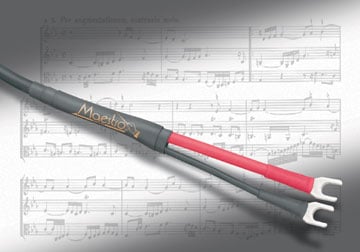 Electrical Data:
DC Resistance: 15m ?/M
Eddy Current Resistance: 30 micro ?/M
Inductance: 0.05 microH/M
Capacitance: 550pF/M
Characteristic Impedance: 16?
Audience Au24 RCA Connectors Gold plated beryllium copper
Physical Data:
Outside Diameter: 8mm
Insulation: XLPE (Cross-linked polyethylene)
Outside Jacket: Soft PVC
|
Meters |
0.5 |
1 |
1.5 |
2 |
2.5 |
3 |
4 |
5 |
6 |
7 |
8 |
|
Feet |
1.6 |
3.3 |
4.9 |
6.6 |
8.2 |
9.8 |
13 |
16 |
20 |
23 |
26 |
|
$/Pair |
$210 |
$249 |
$289 |
$328 |
$367 |
$406 |
$485 |
$564 |
$642 |
$721 |
$799 |
The Maestro speaker cables represent the middle of the road (at least in price) for Audience.
The Audience Maestro speaker cables appear to be well crafted and the banana plug terminations are equally impressive. I did have issues with making good contact on certain binding posts since the cable was so stiff. The buyer may alternatively elect to purchase these cables with speaker side spade terminations and amp side banana plug terminations. I chose banana terminations on both sides since I wanted to see how these cables functioned with amplifiers and receivers. Very few receivers can accommodate spade lugs.
Excerpt Reprinted from Audience Maestro Marketing Literature
The Maestro loudspeaker cables are placed in the middle of the Audience cable lineup between the technically advanced Au24 cables and the high performance /price ratio Conductor cables. Like all cables by Audience the Maestro loudspeaker cables are designed for low eddy-current resistance. We have found low eddy-current resistance to be the most important quality in high-resolution audio and video cables. The Maestro loudspeaker cables are of rugged construction, suitable for demanding professional environments. To achieve greater sonic purity the physical design leans towards simplicity. Subjectively, a natural musical timbre is realized. There is a strong similarity to the Au24 cables but perhaps without the ultimate degree of resolution achieved by the Au24. Still, the similarities far outweigh the differences.The Maestro loudspeaker cables are an excellent choice when high resolution combined with rugged construction and moderate price are called for.
Pursuing the Truth…
Audience claims their cables are optimized to minimize "Eddy Current Resistance" from impeding signal flow resulting in unwanted losses. Eddy currents are mostly a term associated with closed loop E & M conductors such as in transformers and magnetics, NOT speaker wire. Eddy currents are induced into the core of a transformer, so cores for low frequencies are laminated, and ferrites or powdered iron ceramics are used for high frequency applications. Claims of eddy currents in speaker cables are bogus. There has to be a concentrated magnetic coupling between wire and magnetic material. Eddy currents *can* be a problem in superconductors, but they are uncommon in audio applications.
In any event, this was the only marketing claim against these cables that I found questionable. Their construction, fit and finish were top notch and their asking price based on performance and cosmetics was not unreasonable as far as esoteric cables go. Audience Maestro speaker cables and mostly snake oil free, but I caution against their component video cables which utilize Spiral Shields .
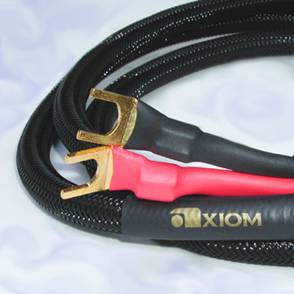
Axiom Audio Speaker Cables
 Axiom
Audio is traditionally known as a speaker company with uncommon value.
Much of this value comes from their direct-to-consumer sales model
which cuts out the retailer and results in a cost savings to the end
user. It also helps that their company President Ian Calquhoun is an
active participant of the NRC (National Research Council) in Canada for
the division of loudspeaker measurements and research.
Axiom
Audio is traditionally known as a speaker company with uncommon value.
Much of this value comes from their direct-to-consumer sales model
which cuts out the retailer and results in a cost savings to the end
user. It also helps that their company President Ian Calquhoun is an
active participant of the NRC (National Research Council) in Canada for
the division of loudspeaker measurements and research.
| Meters |
1.8 |
2.7 |
3.7 |
5.5 |
7.6 |
10.7 |
15.2 |
22.9 |
30.5 |
| Feet |
6 |
9 |
12 |
18 |
25 |
35 |
50 |
75 |
100 |
| $/pr |
$52 |
$59 |
$65 |
$79 |
$94 |
$116 |
$149 |
$205 |
$260 |
They have recently added to their product roadmap a series of cost effective Axiom branded interconnects and speaker cables . Their speaker cables are also nicely crafted and reasonably cost effective compared to more expensive exotics. They have no bogus cable theories to rationalize their products, which is very refreshing and saves me a lot of unnecessary writing. My major complaint however resides in the fact that they currently offer only 1/4" and 3/8" spade type terminations. In my opinion, this is a major oversight and alienates much of their customer base (the majority, perhaps) that uses their speaker products with receivers. However, Axiom claims they will be offering banana termination options on their speaker cables soon.
Unlike many exotic cable vendors, Axiom provides real world measurements of their cables and don't make any claims that cable metrics aren't the most important specs in identifying cable performance, nor do they promote unproven claims to justify their product performance or price.
When I interviewed Axiom Audio President and Founder Ian Colquhoun about the topic of cables he offered me a perspective I hadn't thought of before:
"You know there is a big factor in all this that we are forgetting, which is that every speaker made was designed with some sort of cable running to the speaker. In fact, a different cable was probably used to measure the speaker as opposed to listening to it during the design phase. We know that normal lengths of cable of a reasonable gauge (certainly up to 25 ft. of 14 gauge) are not going to have any effect on the speaker's performance. But for someone who believed that it did make a difference, then technically he should not be purchasing the so-called "best" cable but rather the exact cable used by the speaker designer (assuming that the person is using speakers they consider of great design). All that being said, I think the real question is at what combination of gauge/length does the cable actually affect the speaker performance?"
Note: Measurements were taken of the entire line of AXIOM speaker cables. The measurement unit is an INTEK, LCR - 819. Measurements were taken at 100 KHz, 1 VRMS for Inductance and Capacitance.Close to DCR values were obtained by using 12 Hz, 1 VRMS for the wire resistance measurements. Low speed test, 0.05% Accuracy.
One comment I have on the above measured metrics is that Axiom measured Inductance (Ls) at 100kHz as opposed to an in band audio measurement. This result will be slightly lower then at audio frequencies since at 100 kHz, skin effect will cause a reduction of internal inductance as the AC resistance increases. Note that Axiom publishes their average R, L, C values which is a very conservative specification and a noble engineering practice.
Speaker Cable Faceoff 2 - Empirical Audio and Goertz
Empirical Audio Clarity 7 Speaker Cables
DC Resistance: 3.1 mohms/ft
Characteristic Impedance: 11-ohms
3dB bandwidth: 1MHz
|
Frequency |
Ls |
Cp |
|
|
100 Hz |
.033 uH/ft |
117 pF/ft |
|
|
1 kHz |
.034 uH/ft |
118 pF/ft |
|
|
10 kHz |
.033 uH/ft |
118 pF/ft |
|
|
100 kHz |
.031 uH/ft |
117 pF/ft |
|
Empirical Audio Marketing Literature Excerpts
Bare Wire Technology
Unlike other designs, Empirical Audio cables utilize Bare Wire Technology (BWT) . BWT is a result of ten years of developing methods to process and suspend bare wires. Bare wires significantly reduce signal dispersion (smearing). Signal dispersion is caused by the dielectric absorption of solid insulating materials that are used in conventional cables, such as Teflon or PVC. Dispersion can cause:
- Haze and lack of image focus
- Bloated bass, not "tight"
- Not enough impact from kickdrum and Bass
- Lack of soundstage width and depth
- Poor dialogue and lyric intelligibility
- Acoustics, particularly guitar, harp and mandolin just don't sound live
If your audio system is suffering from the above symptoms, Empirical Audio is your solution. Our cable designs combine optimized electrical characteristics with BWT and smart metallurgy to bring you dynamics, inner detail and soundstaging beyond anything you have experienced.
Pursuing the Truth…
Of course most of these claims are purely subjective and cannot be backed up or verified, nor is it likely that the manufacturer can furnish any peer reviewed repeatable or measurable proofs to validate this. However, unlike many other exotic cable vendors, Empirical Audio at least makes an attempt to measure and simulate the benefits of their cables over ordinary 11 AWG Zip Cord. Of course, most of the illustrated benefits are either not based on the limitations of human hearing and resolution of audio equipment (particularly loudspeakers and the rooms they interact with), or taken out of context.
Their analysis starts out comparing bandwidth of 16 feet of 11AWG Zip Cord to the Clarity 7. They show that the 11AWG Zip Cord has a 3dB point of around 238kHz (over ten times past the limits of human hearing!) while the Clarity 7 has a 3dB point of 1MHz. Not sure what the advantage here is, especially when we have already proven in the original Speaker Cable Face Off that a 10 foot length of 12AWG Zip Cord is less than 0.1dB down at 20kHz into a 4 ohm load. In reality, most speakers have higher impedance at high frequencies due to increased tweeter inductance making this loss nearly vanish beyond measurable, let alone audible, limits. In addition, 11AWG wire has lower resistance and inductance and will likely attribute to even less losses. If anyone tells you that a normal human can discern a 0.1dB attenuation or associated phase change at 20kHz, beware - they may also have invaluable information on purchasing some Enron stock as well.
The manufacturer also fails to mention the inclusion of brickwall filters in digital playback devices limit frequency response extension past 20kHz to nothingness. In addition, no loudspeaker has any reasonable controlled dispersion past 20-30kHz, not to mention the limit of audibility for most non super humans is about 20kHz (again human brickwall filter). The 10kHz time domain measurements that Empirical Audio uses sells an interesting story. They tout that their cable introduces less high frequency noise because it is more damped. Yes this may be true, but again at frequencies decades past human audibility. If one wanted to achieve this with Zip Cord, it is an easy task with the addition of a Zobel termination RC network at the speaker end (see Figure 1 & 9). As we have seen in our simulations, this also restores the 10kHz square wave response to match the Clarity 7. Next Empirical Audio illustrates their cables have better phase response then 11AWG Zip Cord. They compare a 5 degree phase (or 694 nsec) shift at 20kHz to a 1.3 degree phase shift (or 181 nsec) to their Clarity 7 and imply that this is actually audible. Note that at 20 kHz, a phase shift of 36 degrees represents 5 microseconds, this delay being considered as close to the limit of human directionality perception. In addition, a slight turn of ones head or back and forth movement would yield a far greater change in phase than what a piece of speaker wire will ever do. More information on phase comparisons of the Clarity 7 vs the others in this review will be presented in the Analytical section of this article.
Empirical Audio illustrates the Clarity 7 cable as having a more damped resonance signature than normal Zip Cord. Again frequencies well beyond the unity gain crossing of most audio amplifiers and decades past the human hearing range and something again that can be resolved if need be by a simple insertion of a Zobel Network (see Figure 1 & 9) at the speaker side of the audio cable.
Rather than re-inventing the wheel, I have asked Rod Elliot permission to reprint an excerpt from his article about Zobel compensation and cable characteristic impedance, particularly on his analysis of 12AWG Zip Cord and the Goertz MI-2 Veracity cables featured in this review.
Excerpt from Rod Elliot Article on Loudspeaker Cable Characteristic Impedance
http://sound.westhost.com/cable-z.htm3.2 12 Gauge "Zip" Cable
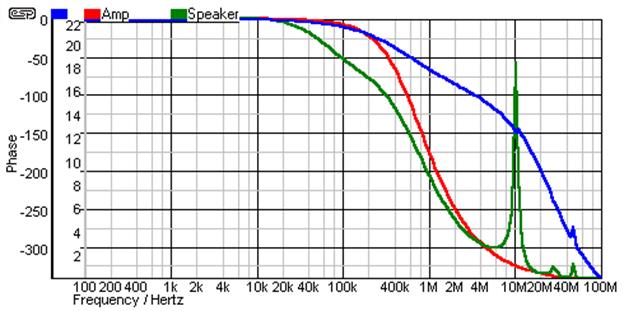
This seems to be the standard against which all other cables are judged, so it is next on the list. As you can see, there is a pronounced reflection at almost exactly the same frequency as before. This must be, since the cable (transmission line) is the same length, and the first reflection will occur at the same frequency. Small variations do occur, and are the result of differing velocity factors. Velocity factor refers to the speed at which an electrical signal passes through a cable. Typically, this is between 0.6 and 0.8 of the speed of light (3 x 10 8 metres per second.)
Figure 8 - 12 AWG Zip Cord, No Termination at Speaker LoadThe response is relatively benign, despite the quite large peak at 10MHz. The reflection spike causes no change to the amplifier's phase response until it is above 40MHz and will have no effect. There is a very slight reduction of level at 100kHz (and down to 20kHz), but this is measured in fractions of a dB, so can safely be ignored. A greater disturbance to the in-room response will be experienced by moving the listening chair or a nearby coffee table.
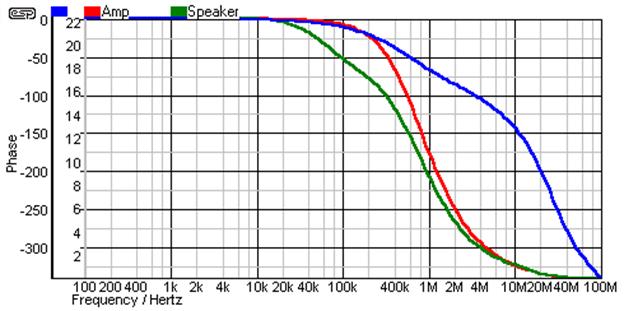
Figure 9 - 12 AWG Zip Cord, Far End Terminated (100 ohms)
This is a perfect result. There are no spikes, no response anomalies, and the amp's phase margin is unchanged. For the cost of a 100 ohm resistor (close enough) and a 100nF ceramic capacitor, the cable is nicely terminated, and although virtually any amplifier will drive this cable with no ill effects even when unterminated, there is the potential to reduce RF pickup.
Another issue I have with Emperical Audio is their view on Skin Effect Relevance in speaker cables at audio frequencies.
Excerpt from Emperical Audio White Paper:
The effect is that the impedance (primarily inductance and capacitance) is different for low frequencies than high frequencies. This difference in impedance can cause attenuation and phase shifts in high-frequency passages relative to low-frequency passages, causing a smearing effect to the music. If a sufficiently small gauge is chosen for the conductors, all frequencies are "forced" to flow more uniformly in the conductors, effective eliminating skin-effect. Skin-effect is also a function of conductor material.
Pursuing the Truth
Many of the statements here are simply unfounded, at least by any objective provable science. Skin effect will not cause any measurable let alone audible phase shifts in audio frequencies for conventional speaker cables. In fact, we have already proven that Skin Effect will cause a slight decrease in inductance (minimization of internal inductance) with increasing frequency and an increase in AC resistance. However, this doesn't become significant until almost a decade past human hearing capabilities.
To further this point, let's take a look at the AC resistance of the Empirical Audio Clarity 7 and compare it to Zip Cord (which according to Empirical Audio suffers from problems with Skin Effect).
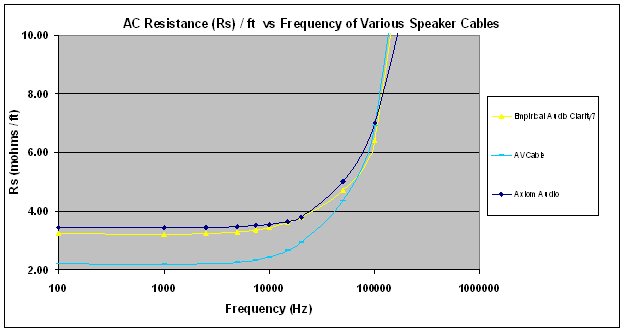
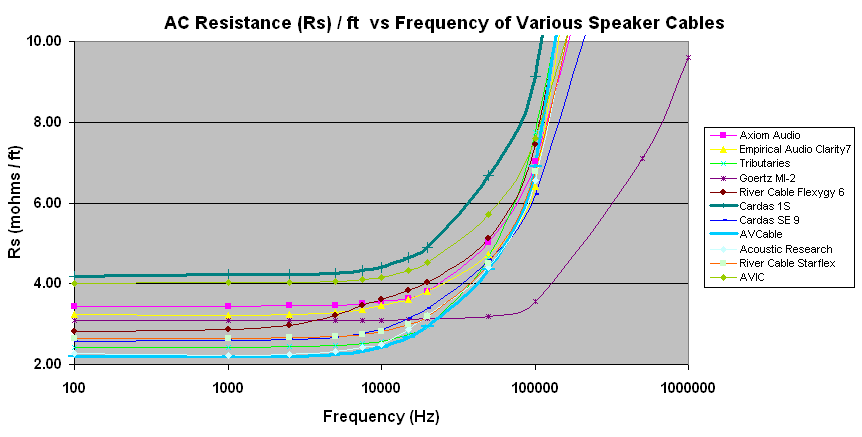
Right off the bat it is obvious of that the 10AWG Zip Cord from AV Cable has lower DC resistance which is a significant advantage in long cable runs or terminations into low impedance speaker loads. What is interesting is both cables have about the same breaking point (about 100kHz) where skin effect causes a noticeable rise in AC resistance. As you can see the Empirical Audio cable has no advantage of resolving skin effect when compared to ordinary Zip cord and is in fact at a disadvantage with one of the primary concerns with speaker cables - DC resistance. The Clarity 7 is about on par with respect to DC and AC resistance as the much less expensive Axiom Audio cables.
In all fairness to Emperical Audio, much of their PSPICE analysis about cables is valid, though in my opinion, mostly inconsequential at audio frequencies for typical cable lengths that most consumers deal with. I found their established criteria on their website for defining maximum cable lengths for speaker wire and interconnects to be somewhat useful as well as their placement tips for loudspeakers. Most of the claims they make are based on opinion as seen in their verbiage in the above example with "can" as well the following example below:
Another possible benefit of biwiring is that the cable natural resonances will change and the reflections and standing waves seen by the amplifier may be reduced.
Goertz MI-2 Veracity
 High Purity
 - Oxygen Free Copper
- .750 x .010"
- 10 AWG 0.0022 ohms/ft
- 0.95nF/ft
- 6nH/ft
- ~ 2.5 ohms Teflon/ Polyester Terepthalate/
- Polycarbonate
- 0.8 x 0.04"
Click Here for Detailed Pricing
10ft pair with Banana Plugs: $255
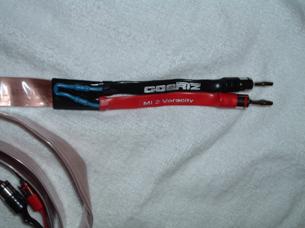
The Goertz cables stand out as a unique design in this face off. What makes them "different" is their geometry. Instead of a classic round conductor stranded or solid variant, they are a flat rectangular design. The advantage to this design is extremely low inductance due to the close proximity of the conductors. However, there is a price - ultra high capacitance. So high, in fact, that as the cable length increases, stability problems can arise, especially for esoteric tube amp designs with higher output impedance and lower unity gain crossing. It is possible for high capacitive loads of a cable to cause two related effects due to loss of the power amp gain and phase margin. Firstly, in the frequency domain, very significant gain peaking can occur. Secondly, in the time domain, the step response may have a much higher overshoot, and exhibit excessive ringing (at about the unity gain frequency) due to loss of power amp phase margin. However Goertz attempts to mitigate this problem by terminating the cable at the speaker side with a Zobel network. Their Zobel uses two 5.1 ohm resistors in series with a 0.1uF capacitor.
Speaker Cable Faceoff 2 - Zobel Networks
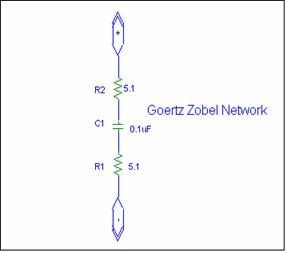 This RC network in more commonly referred to as a Zobel network. Usually this compensation is applied directly at the source (output of the amplifier). However, in this case, Goertz has implemented this network at the speaker side of their high capacitance low inductance speaker cables. Though the Zobel network is a good idea to minimize amplifier stability issues for high capacitance cables, Goertz chose non ideal values to resolve this potentially devastating issue.
Excerpt from Article on Loudspeaker Cable Characteristic Impedance
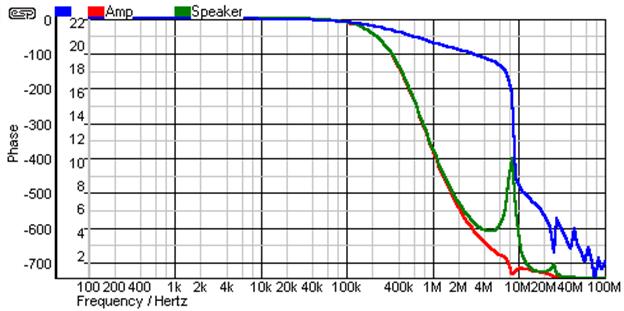
I selected this for the first simulation, as it is the most likely to cause amplifier instability with no termination zobel. Although the radical changes in phase are quite visible, it is a little difficult to see the effect on the amplifier. It transpires that this cable produces an output phase on the amplifier of that is well outside its phase margin, at around 192°.
Figure 5 - Cable 3, No Far End TerminationAs you can see, the cable has a large peak in the response at a little under 10MHz, and the phase response is savage. Each kink or discontinuity in the plot indicates a reflection, and note the phase angle - it shows 700° of phase shift at 100MHz!
Figure 6 - Cable 3, Far End Terminated (4.7 Ohms)Adding the far end zobel network, as you can see here the cable's response decay is perfectly smooth with an 8 ohm resistor. This is the optimum match, and is the value that should be used - not 10 ohms as supplied by Goertz (see below).
Figure 7 - Cable 3, Far End Terminated (10 Ohms)Even 100nF in series with 10 ohms restores the amplifier phase margin to normal (150°). As seen above, 8 ohms is preferable, but the phase margin is barely affected.
The speaker end response has a small "lump" with 10 ohms, and phase goes "wobbly" at above 20MHz. This is probably not a concern, and you will almost certainly get away with it. It is very evident that this particular cable should never be used without a zobel at the speaker end, and it is equally obvious that the vendor does not really understand transmission line theory, since the zobels supplied with the cable (and you have to ask for them!) are incorrect. This is not difficult to get right, and if they are off base with something a simple as a resistor value, I would be disinclined to believe their other material.
While the results aren't actually appalling, it is quite obvious that the performance is not as good as with the correct termination resistance. At this level (and since the impedance of the cable is quoted on the web site), I find it difficult to understand how they could have made such an error. Not that this manufacturer is alone by any means - "experts" will emerge from the woodwork, suggesting that 10 ohm, 100nF zobel is the panacea. It is - but only for 10 ohm cables!
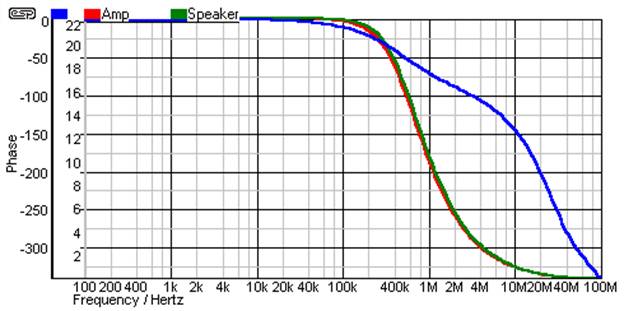
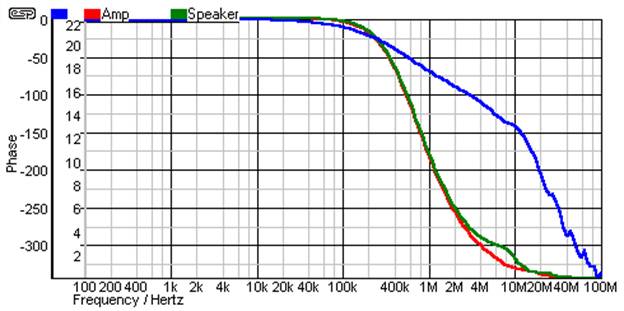
To view Rod's article in its entirety, visit http://sound.westhost.com//cable-z.htm
(Note the characteristic impedance of the cable quoted on Goertz site does not match what it should be based on our measurements. Using classic SQRT(L/C) (which isn't exactly correct, but this topic goes beyond the scope of this article) we calculate about 8 ohms while Goertz calculated about 2.51 ohms.
Goertz claim to fame in their low inductance cable is an associated low characteristic impedance to better match the application of amplifier to loudspeaker connection. While characteristic impedance matching is essential for transmission lines (usually at RF frequencies), it is a lofty goal for this application given the frequencies in question and the fact that we are interfacing a low impedance source with a complex load impedance. Goertz also mentions that their cable is better at dealing with Skin Effect. In this case they actually have a point as illustrated in the graph below - but again, at frequencies far exceeding the audio bandwidth in question.
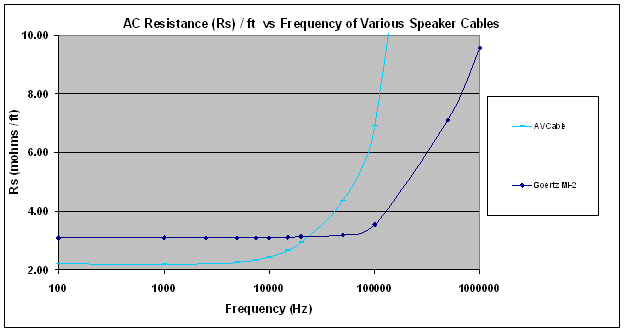
While the 10AWG cable does have lower DC resistance and AC resistance up until about 20kHz, the Goertz AC resistance is ruler flat up until about 100kHz whereas the AV Cable AC resistance is almost 2x that of the Goertz. Again this is academic considering the intended use of the cable and bandwidth in question.
Speaker Cable Faceoff 2 - River Cable Cardas
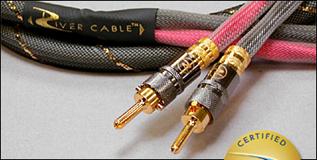
River Cable Flexygy
River Cable is a relative newcomer to the exotic cable industry. Their approach is also refreshingly new as their products appear to be snake oil free. I liked the Birth Certificate that they furnished with the products as it demonstrates objective measurements and quality control were applied to these products prior to shipping to the customer. Just like Cobalt Cable and Axiom Audio, River Cable uses no pseudo-sciences to sell their products. I found their article at the engineer's corner to be both refreshing and informative.
My only beef with them is their published specifications on their birth certificates are actually too conservative as you will later see in my measurements.
Check out our review of the River Cable Flexygy 6 for more info.
|
Inductance: .200uH/ft Capacitance: 41 pF/ft DC Loop Resistance: 3 mohms/ft Velocity Factor: 0.87 |
|
|
1 meter pair |
$235 |
|
2 meter pair |
$255 |
|
3 meter pair |
$275 |
|
4 meter pair |
$295 |
|
5 meter pair |
$315 |
|
12 meter pair |
$455 |
|
15 meter pair |
$515 |
River Cable Starflex
|
|||||||||||||||
Cardas Crosslink 1S
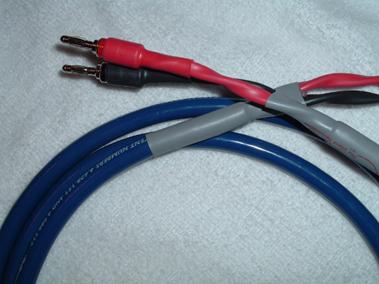
Cardas 1S speaker cables are part of their entry level design (at least as far as esoteric cables go). They utilize the same banana termination found on the Goertz MI2 Veracity cable.
Unfortunately Cardas is not snake oil free. They also promote many of the common cable myths popularized by esoteric cable vendors and cable forum cult hobbyists such as Cable Break In. Thankfully we know better that Cable Break In is nothing more than a baseless myth, and a poor one that that.
Cardas also promotes big sonic differences in biwiring and changing out jumpers on your speaker terminals but provide no rhyme or reasons behind the logistics of such claims. Again, it appears they are merely stating opinion rather than fact.
Cardas SE 9
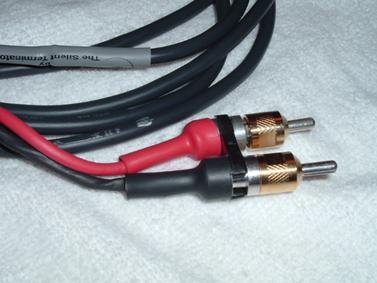
Cardas promotes optimizing the "Q" of the cable for specific type of speaker loads and amplifiers.
SE cables are optimized for single ended amplifiers and high efficiency loud speakers. They are Golden Ratio, concentric, asymmetrical, coaxial cables. The smallest gauge size the speaker will permit should be used. SE cables do not have a high "Q" like conventional cables, because efficient speakers do not demand it. They have dramatically low energy storage for their size, which makes them ideally suited for horns and other highly efficient speakers.
We will revisit this in our Analysis section to be posted shortly.
I am not sure who or what the "Silent Terminators" are. Is it that the wire techs at Cardas must maintain absolute silence while performing the sacred act of terminating their cables? Or maybe the methodology of termination they use is so unique or innovative that they can't talk about it? Nah, it's probably just a fancy marketing term to increase product appeal. In any event, all Cardas cable samples in this review were terminated by the "Silent Terminators".
The Cardas SE 9 use the same terminations as the Audience Maestro, but with an annoying plastic mount across the lugs to make it nearly impossible to connect to your loudspeakers or amplifier. Since the conductor spacing is limited by the plastic clamp which is too narrow to be accommodate any equipment I tried it with, I had no choice but to remove them. Removing them wasn't easy and required a cutting tool since I could not manually remove them with my hands. I don't know what those "Silent Terminators" were thinking, but I would personally like to see them not include these on future cables.
It's sad (but not surprising) to see another exotic cable vendor who touts resolving "Skin Effect" problems with their cable do no better with the alleged problem than ordinary 10AWG Zip Cord. As you can see the AV Cable has the lowest DC resistance in this comparison and similar breaking points as the costly SE 9 and significantly lower AC resistance than the Cardas 1S. Grant it neither of these cables have an issue with skin effect at audio frequencies to cause any real world audible problems. However I am at a loss for understanding why cable vendors tout this in their marketing literature, especially when they are at a disadvantage.
Speaker Cable Faceoff 2 - AV Cable, Acoustic Research, Tributaries
AV Cable 10AWG Speaker Cable
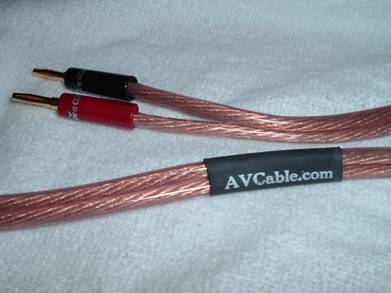
What's there to say about Zip Cord that hasn't already been covered on this site? 10AWG Zip Cord is the very basic speaker cable in which all exotic speaker cables must be judged against. Sadly most costlier exotic cables simply don't measure up as can be seen in the tabulated measurements and analysis section to come. AVCable makes no snake oil claims so my write up here on their product is short. They utilize the same banana terminations as Cobalt Cable. This is a decent banana plug, but tends to stick out a tad too far when connected to equipment. While I would have liked to see compression banana plugs terminating this cable, I realize it would have been far too cost prohibitive for such a high value, quality speaker cable.
Acoustic Research Master Series 10AWG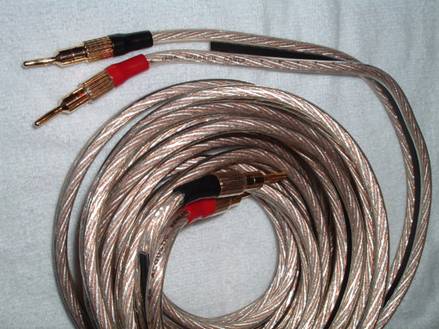
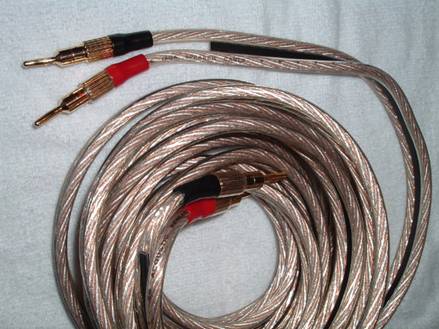
The Acoustic Research (AR) Master Series Silver Copper 10AWG cables represents AR's top of the line offering.
When I first glanced at this cable I remember thinking to myself, what a nice looking, but so poorly designed zip cord cable. Poorly designed? Yes! The reason being is the intentional spacer that insert between the conductors for which they make the following claim:
6mm cable signal separator: Controls magnetic fields, allowing accurate sound reproduction
The problem with spacing conductors out like this is you lose the benefit of mutual inductance to lower the overall effective inductance of the cable. Inductance of a cable is based on the spacing of the conductors. The closer the conductors the lower the effective inductance, the farther apart, the higher the effective inductance. For more information on this check out our article Calculating Inductance of Twin Feeder Cables. I am not sure I understand their alleged benefit of allowing for more accurate sound by "controlling" magnetic fields, but the engineers at Acoustic Research may wish to reconsider this if they would prefer to design a more accurate, less "tone control" type speaker cable. This cable measured the highest inductance (no surprise) out of all of the cables in this review. The banana plug termination was adequate, but subject to easy bending if too much force is exerted on it. The tip was also a bit too long like the AV Cable, making it stick out of the banana receptacles of the connecting equipment more that I would have liked to see.
AVIC Speaker Cable 11
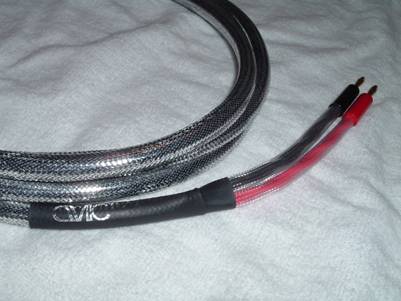 AVIC is a relative newcomer and until we received their email we
weren't even aware of their existence. When they heard about this
review via gossip in the forums, they asked to be part of it and we
happily accepted. We wish more cable companies would be this proactive
in having their cables objectively reviewed as it does a great service
to them since many cable vendors and other audio publications lack the
precision test gear to adequately test their designs. It also does a
great value to the consumer in that they know exactly what they are
getting. When I initially peered at the specifications of this cable on
their website, the inductance to capacitance ratio didn't seem quite
right. Not surprising, when I actually measured the cables I found the
inductance to be about 14 times higher than their spec (a measurement
which was still incredibly low) and the capacitance to be about 3 times
higher than their specification. I was glad to see them update their
website with the correct specifications based on my measurements. It is
not atypical for cable vendors cable specifications to be inaccurate
for the reasons previously mentioned. In fact I have found a great bulk
of the cable vendors in this review to be a bit off on their cables,
but most of the cables still measured extremely well and this was only
mentioned for academic purposes. In any event , the AVIC cable is
certainly an interesting one. Its shiny silver wrapping reminds me of a
disco-tech style look from "Saturday Night Fever" or the evil Cylons
from Battlestar Galactica. They were cool looking and could certainly
dress up any high end system quite nicely.
AVIC is a relative newcomer and until we received their email we
weren't even aware of their existence. When they heard about this
review via gossip in the forums, they asked to be part of it and we
happily accepted. We wish more cable companies would be this proactive
in having their cables objectively reviewed as it does a great service
to them since many cable vendors and other audio publications lack the
precision test gear to adequately test their designs. It also does a
great value to the consumer in that they know exactly what they are
getting. When I initially peered at the specifications of this cable on
their website, the inductance to capacitance ratio didn't seem quite
right. Not surprising, when I actually measured the cables I found the
inductance to be about 14 times higher than their spec (a measurement
which was still incredibly low) and the capacitance to be about 3 times
higher than their specification. I was glad to see them update their
website with the correct specifications based on my measurements. It is
not atypical for cable vendors cable specifications to be inaccurate
for the reasons previously mentioned. In fact I have found a great bulk
of the cable vendors in this review to be a bit off on their cables,
but most of the cables still measured extremely well and this was only
mentioned for academic purposes. In any event , the AVIC cable is
certainly an interesting one. Its shiny silver wrapping reminds me of a
disco-tech style look from "Saturday Night Fever" or the evil Cylons
from Battlestar Galactica. They were cool looking and could certainly
dress up any high end system quite nicely.
|
Description |
Price |
|
1M Banana-Banana |
$99.95 |
|
1M Banana-Spade |
$99.95 |
|
1M Spade-Spade |
$99.95 |
|
2M Banana-Banana |
$129.95 |
|
2M Banana-Spade |
$129.95 |
|
2M Spade-Spade |
$129.95 |
|
3M Banana-Banana |
$169.95 |
|
3M Banana-Spade |
$169.95 |
|
3M Spade-Spade |
$169.95 |
|
4M Banana-Banana |
$199.95 |
|
4M Banana-Spade |
$199.95 |
|
4M Spade-Spade |
$199.95 |
|
5M Banana-Banana |
$239.95 |
|
5M Banana-Spade |
$239.95 |
|
5M Spade-Spade |
$239.95 |
|
8M Banana-Banana |
$279.95 |
|
8M Banana-Spade |
$279.95 |
|
8M Spade-Spade |
$279.95 |
A few excerpts from their marketing literature that I found interesting:
The Invisible Cable
We start with four of our ChonoSync™ conductors, each protected by AViC Involution™ shielding. The conductors are helically wound end to end, resulting in a cable that has incredibly low inductance, resistance and capacitance. To put it in other words, the cable is "invisible", as if the signal travels directly from the amplifier to the speaker. You will hear everything you should, and nothing you shouldn't.
I certainly cannot argue with these statements since I did not rip apart the cables to examine the shielding, but based on my measurements, they truly were a low inductance cable as they claimed while the capacitance was also equally low and impressive. Usually, low inductance cables tend to be high in capacitance based on the conductor spacing ratios. This cable reminds me of a Star Quad configuration which is popularized by many DIY gurus. It is certainly a valid method for producing a cable with reasonably low inductance and capacitance and reduced RF immunity ( not typically a real world problem for most environments).
Connect your speakers with a set of AViC SC1100 speaker cables for 45 days, and if you do not like what you hear, return the cables for a full refund.
It is refreshing to see a cable company offer its consumers a 45 day trial period without luring one into believing the "Break In" fallacy to persuade the consumer into keeping it beyond the return policy or motivation for the consumer to actually bring it back.
With characteristics that eliminate any perceptible colorations or distortions, the AViC SC1100 lets your speakers play pristine full-range audio that will tantalize your ears and have them begging for more.
While I can certainly see how a cable may "colorize" a signal acting like a tone control or filter, AVIC is lightly treading on the dangerous grounds of injecting the word "distortion" to discuss cables. While this is obviously a subjective statement on their part, I felt it appropriate to note the term distortion in their statement should either be eliminated or clarified as to what type of distortion they are referring too.
As previously mentioned, cables DO NOT introduce non linear distortion. Be very wary of any cable vendor, audio publication or cable forum cult hobbyist that claims otherwise. Be equally wary of a cable vendor that slaps batteries on their cables to allegedly minimize this fictitious problem.
The AVIC speaker cables utilize the same banana terminations as the Cobalt and AV Cables and unfortunately have the same limitations as I previously mentioned. Perhaps AVIC would consider offering a compression banana plug in their future cables for a minimal cost addition. This cable is certainly worthy of a top notch termination.
Tributaries
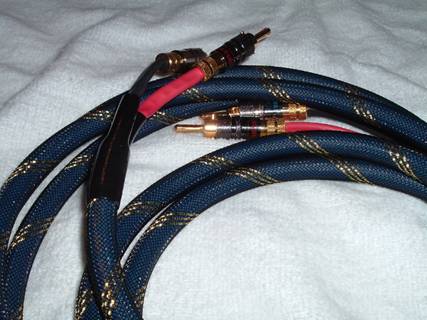 This is a brand new cable from Tributaries. Little info is available on their website and I am not certain if they are being sold through retail at this time. We asked Tributaries to send us their cream of the crop, and this is what was delivered. Ordinarily this cable is sold as a biwire cable with the high frequency section of 14AWG and the low frequency section of 12AWG. Since we are not big believers of biwiring, and in order to make measurements easier, we asked Tributaries to terminate the cable with one set of banana plugs on each side. The effective gauge (14AWG in parallel with 12AWG) works out to about 10AWG. Be cautioned however that biwiring and/or paralleling twin feeder cables does double the pair to pair capacitance. If the cable capacitance is excessively high to begin with ( > 100pf/ft) we advise against this practice.
Tributaries makes few (if any) questionable product claims on their site. All I can discuss about this cable is it has the same superb compression banana plugs found on the River Cable Starflex and Flexygy 6 speaker cables. I have come to find all Tributaries cables I have had the pleasure of inspecting incorporate some of the best terminations and workmanship in the industry. Many years ago we did a Component Video Cable article that highlighted their termination as a benchmark method for all manufacturers to be judged by and these speaker cables are no exception. The outer sleeving of this cable is quite attractive and can certainly stand toe to toe cosmetically with any exotic cable at considerably higher cost. Tributaries did not furnish any cable specifications so I had nothing to validate other than the cable itself.
Speaker Cable Faceoff 2 - Measurements Part 1
As we indicated in Part 1 of our Speaker Cable Face-Off series, speaker cables have become one of the least quantified and objectively measured/analyzed audio products in the audio marketplace. Many cable vendors and forum cult hobbyists insist on the abandonment of measurements and engineering truths in favor of subjective listening tests in hopes that the listener will think they hear a difference, even if none exists, to justify their unproven claims and sometimes extravagant prices. The belief set forth by these "cable soothsayers" that "you can't measure it" leaves open the avenue of convincing prospective buyers of the differences in product by pseudo-science, clever marketing ploys, and sometimes, just blind faith. Audioholics on the other hand is not a faith-based website, nor are we "cable soothsayers". We believe and cherish objective measurements and feel they are the first step in developing and/or analyzing a high fidelity product. If a product measures well, and the measurements are applicable to its corresponding fidelity, it will usually sound good, however the converse is usually not true unless one seeks inaccurate audio reproduction of music. With that in mind, we have analyzed twelve (12) more brands/models of speaker cables ranging from as little as $0.46 / ft to $500 / ft. Don't let prices fool you however, as in many cases, cables especially, price doesn't always dictate quality.
|
Brand |
|
Goertz |
|
|
Cardas |
|
|
Cardas |
|
|
Model |
|
MI-2 Veracity |
|
|
CrossLink |
|
|
SE 9 |
|
|
Frequency |
Ls |
Rs |
Cp |
Ls |
Rs |
Cp |
Ls |
Rs |
Cp |
|
(Hz) |
(uH) |
(mohms) |
(pF) |
(uH) |
(mohms) |
(pF) |
(uH) |
(mohms) |
(pF) |
|
100 |
0.014 |
3.08 |
328 |
0.128 |
4.19 |
36 |
0.039 |
2.58 |
278 |
|
1000 |
0.021 |
3.08 |
327 |
0.118 |
4.22 |
32 |
0.050 |
2.59 |
283 |
|
2500 |
0.021 |
3.08 |
327 |
0.118 |
4.23 |
31 |
0.050 |
2.61 |
285 |
|
5000 |
0.021 |
3.09 |
327 |
0.118 |
4.25 |
30 |
0.049 |
2.67 |
285 |
|
7500 |
0.021 |
3.09 |
327 |
0.117 |
4.33 |
30 |
0.048 |
2.77 |
285 |
|
10000 |
0.021 |
3.10 |
327 |
0.117 |
4.40 |
30 |
0.048 |
2.87 |
285 |
|
15000 |
0.021 |
3.12 |
327 |
0.115 |
4.64 |
30 |
0.046 |
3.13 |
285 |
|
20000 |
0.021 |
3.13 |
327 |
0.114 |
4.91 |
29 |
0.045 |
3.38 |
285 |
|
50000 |
0.021 |
3.20 |
327 |
0.110 |
6.67 |
29 |
0.040 |
4.57 |
285 |
|
100000 |
0.020 |
3.55 |
328 |
0.105 |
9.13 |
29 |
0.036 |
6.20 |
285 |
|
500000 |
0.019 |
7.1 |
333 |
0.099 |
28.0 |
28 |
0.033 |
15.7 |
285 |
|
1000000 |
0.018 |
9.6 |
381 |
0.095 |
41.5 |
28 |
0.031 |
24.4 |
296 |
|
DCR (RT) |
|
3.05 |
|
|
4.07 |
|
|
2.70 |
|
|
Brand |
|
Audience |
|
|
Axiom Audio |
|
|
Empirical Audio |
|
|
Tributaries |
|
|
Model |
|
Maestro |
|
|
Speaker Cable |
|
|
Clarity 7 |
|
|
11AWG |
|
|
Frequency |
Ls |
Rs |
Cp |
Ls |
Rs |
Cp |
Ls |
Rs |
Cp |
Ls |
Rs |
Cp |
|
(Hz) |
(uH) |
(mohms) |
(pF) |
(uH) |
(mohms) |
(pF) |
(uH) |
(mohms) |
(pF) |
(uH) |
(mohms) |
(pF) |
|
100 |
0.055 |
4.25 |
146.0 |
0.1 |
3.44 |
38.9 |
0.049 |
3.24 |
98.0 |
0.128 |
2.43 |
79.2 |
|
1000 |
0.055 |
4.26 |
146.2 |
0.098 |
3.43 |
38.7 |
0.062 |
3.21 |
97.6 |
0.127 |
2.43 |
74.3 |
|
2500 |
0.055 |
4.26 |
146.6 |
0.098 |
3.45 |
38.6 |
0.062 |
3.24 |
97.6 |
0.127 |
2.44 |
71.9 |
|
5000 |
0.055 |
4.28 |
146.6 |
0.098 |
3.47 |
38.5 |
0.062 |
3.28 |
97.4 |
0.126 |
2.48 |
69.6 |
|
7500 |
0.055 |
4.32 |
146.5 |
0.098 |
3.51 |
38.3 |
0.061 |
3.36 |
97.4 |
0.125 |
2.53 |
68.2 |
|
10000 |
0.055 |
4.35 |
146.3 |
0.098 |
3.55 |
38.3 |
0.060 |
3.45 |
97.3 |
0.125 |
2.58 |
67.1 |
|
15000 |
0.055 |
4.46 |
146.4 |
0.097 |
3.64 |
38.2 |
0.059 |
3.61 |
97.3 |
0.125 |
2.74 |
65.6 |
|
20000 |
0.054 |
4.57 |
146.5 |
0.096 |
3.81 |
38.2 |
0.058 |
3.80 |
97.2 |
0.124 |
2.93 |
64.6 |
|
50000 |
0.049 |
4.46 |
146.5 |
0.093 |
5.02 |
37.9 |
0.055 |
4.72 |
97.1 |
0.122 |
4.64 |
60.8 |
|
100000 |
0.049 |
4.38 |
146.5 |
0.090 |
7.03 |
37.7 |
0.053 |
6.40 |
96.9 |
0.117 |
7.74 |
58.1 |
|
500000 |
0.049 |
10.97 |
146.5 |
0.084 |
17.7 |
37.5 |
0.052 |
27.2 |
96.8 |
0.108 |
22.5 |
52.6 |
|
1000000 |
0.047 |
17.8 |
149.4 |
0.080 |
26.7 |
37.1 |
0.049 |
50.6 |
96.6 |
0.106 |
36.0 |
50.7 |
|
DCR (RT) |
|
4.3 |
|
|
3.46 |
|
|
3.20 |
|
|
2.65 |
|
|
Brand |
|
AVCable |
|
|
Acoustic Research |
|
|
River Cable |
|
|
River Cable |
|
|
Model |
|
10AWG |
|
|
Speaker |
|
|
Starflex |
|
|
Flexygy 6 |
|
|
Frequency |
Ls |
Rs |
Cp |
Ls |
Rs |
Cp |
Ls |
Rs |
Cp |
Ls |
Rs |
Cp |
|
(Hz) |
(uH) |
(mohms) |
(pF) |
(uH) |
(mohms) |
(pF) |
(uH) |
(mohms) |
(pF) |
(uH) |
(mohms) |
(pF) |
|
100 |
0.194 |
2.20 |
20.0 |
0.2773 |
2.27 |
7.5 |
0.096 |
2.65 |
41.9 |
0.172 |
2.83 |
41.5 |
|
1000 |
0.195 |
2.19 |
18.7 |
0.297 |
2.23 |
7.1 |
0.113 |
2.65 |
39.3 |
0.178 |
2.86 |
38.5 |
|
2500 |
0.195 |
2.20 |
18.3 |
0.299 |
2.26 |
6.9 |
0.113 |
2.66 |
38.9 |
0.174 |
2.97 |
36.9 |
|
5000 |
0.195 |
2.25 |
17.9 |
0.297 |
2.33 |
6.7 |
0.113 |
2.69 |
38.5 |
0.168 |
3.22 |
35.8 |
|
7500 |
0.194 |
2.33 |
17.6 |
0.298 |
2.42 |
6.6 |
0.112 |
2.75 |
38.4 |
0.163 |
3.45 |
35.1 |
|
10000 |
0.194 |
2.43 |
17.4 |
0.295 |
2.51 |
6.6 |
0.111 |
2.81 |
39.3 |
0.159 |
3.60 |
34.5 |
|
15000 |
0.193 |
2.67 |
17.2 |
0.296 |
2.87 |
6.5 |
0.111 |
2.99 |
38.1 |
0.156 |
3.84 |
33.8 |
|
20000 |
0.191 |
2.93 |
16.9 |
0.293 |
3.21 |
6.4 |
0.111 |
3.19 |
38.0 |
0.154 |
4.02 |
33.2 |
|
50000 |
0.187 |
4.35 |
16.2 |
0.282 |
4.40 |
6.2 |
0.107 |
4.50 |
37.7 |
0.151 |
5.11 |
31.3 |
|
100000 |
0.184 |
6.90 |
15.6 |
0.279 |
6.56 |
6.0 |
0.103 |
6.78 |
37.5 |
0.148 |
7.46 |
30.0 |
|
500000 |
0.174 |
27.50 |
14.3 |
0.271 |
19.7 |
5.6 |
0.096 |
18.6 |
36.9 |
0.142 |
24.8 |
27.3 |
|
1000000 |
0.172 |
48.5 |
13.6 |
0.269 |
26.0 |
5.4 |
0.095 |
22.7 |
36.5 |
0.138 |
49.5 |
26.8 |
|
DCR (RT) |
|
2.3 |
|
|
3.06 |
|
|
2.71 |
|
|
2.79 |
|
|
Brand |
|
AViC |
|
|
Model |
|
SC1100 |
|
|
Frequency |
Ls |
Rs |
Cp |
|
(Hz) |
(uH) |
(mohms) |
(pF) |
|
100 |
0.091 |
4.02 |
44.7 |
|
1000 |
0.099 |
4.03 |
41.7 |
|
2500 |
0.100 |
4.03 |
41.0 |
|
5000 |
0.100 |
4.05 |
40.4 |
|
7500 |
0.100 |
4.10 |
40.2 |
|
10000 |
0.100 |
4.15 |
40.0 |
|
15000 |
0.099 |
4.33 |
39.8 |
|
20000 |
0.099 |
4.52 |
39.7 |
|
50000 |
0.094 |
5.70 |
39.3 |
|
100000 |
0.091 |
7.60 |
39.1 |
|
500000 |
0.085 |
17.2 |
38.5 |
|
1000000 |
0.084 |
25.3 |
38.2 |
|
DCR (RT) |
|
4.2 |
|
Note: The bright yellow highlights represent the frequency range at which skin effect is responsible for at least a 40% increase in AC resistance.
Cable Measurement Test Set-Up Notes
All measurements were conducted using a properly calibrated WAYNE KERR Precision Magnetics Analyzer
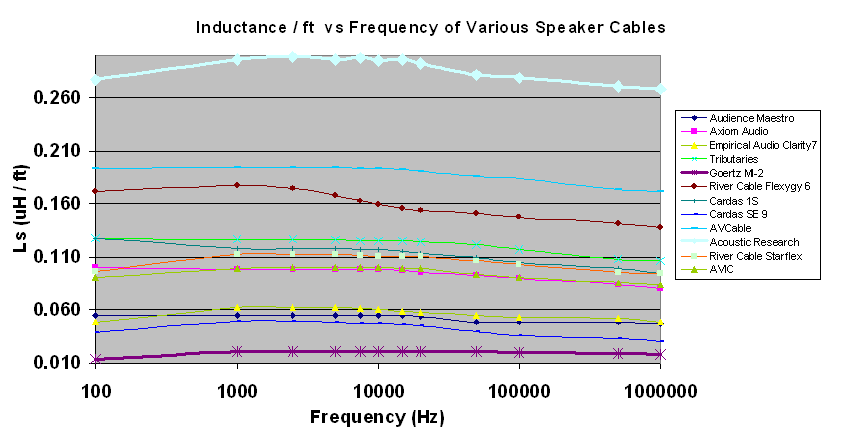
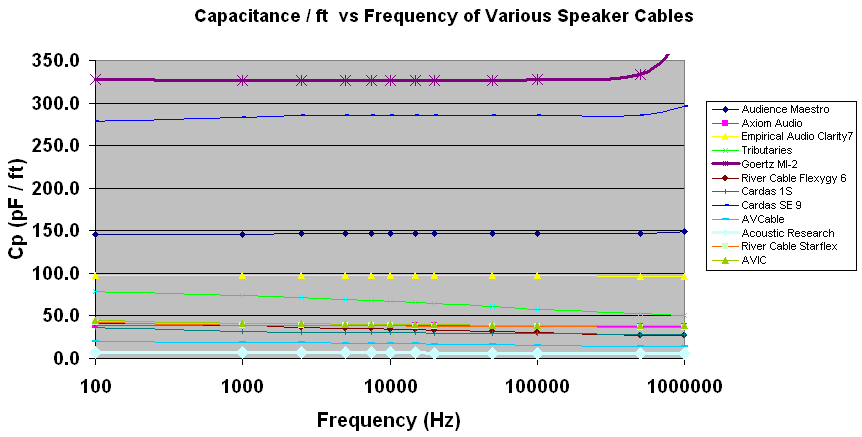
All of the above measurements were completed on a fully calibrated and certifiedModel# 3260B. The 3260B was calibrated for full bandwidth. The measurements and calibration process were repeated twice for consistency. All cable lengths were between 10 to 20 feet and divided by their length for a normalized per foot measurement. Special care was taken to ensure solid contact was made with these cables when all Rs and Ls measurements were taken by using compression.
At low frequencies the results illustrate Rs being lower than Rdc, which is inaccurate, as Rs tends towards Rdc as frequency approaches zero or DC. The LCR measurement derives Rs from signal phase and amplitude, while a DC meter measures exactly what it is looking for, thus this discrepancy is likely due to a meter resolution issue, as the meter in AC mode does not sport the high accuracy it would in DC mode. The cable should ideally be modeled as multiple parallel resistors, and those resistors treated as a lumped element in series with an ideal inductor. Each resistor is a frequency dependent element, and the inner ones fall out as the frequency increases. It is important to note the difference in measuring techniques, and caution the reader not to attempt to derive any relationships with the two numbers, as the absolute accuracy between the methods has not been established. However, the rising trend of Rs vs frequency is indicative of increased Rac due to skin effect and should also be noted.
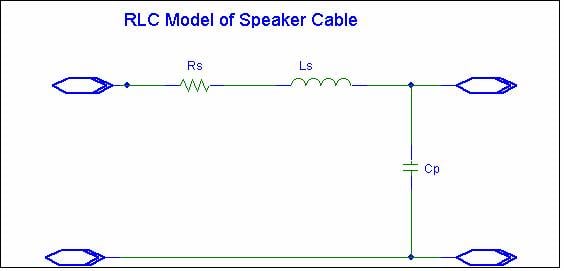
Note: Skin effect, cable dielectrics are not shown in this model but have been accounted for in the Rs,Ls and Cp measurements.
- CLICK ON THE GRAPHS BELOW FOR LARGER VERSIONS -
AC Resistance (Rs) / ft vs. Frequency of Various Speaker Cables
Inductance / ft. vs. Frequency of Various Speaker Cables
Capacitance / ft. vs. Frequency of Various Speaker Cables
Speaker Cable Faceoff 2 - Measurements - Part 2
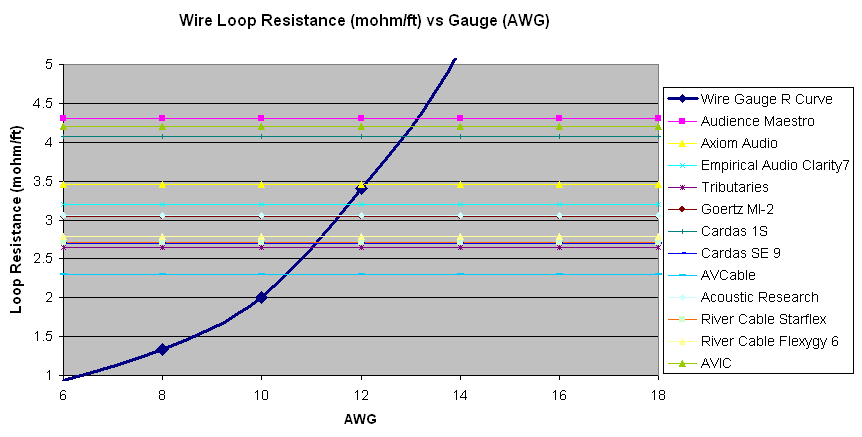
Wire Loop Resistance (mohm/ft.) vs. Gauge (AWG)
Comparison of Audioholics vs Manufacturers Published Cable Measurements
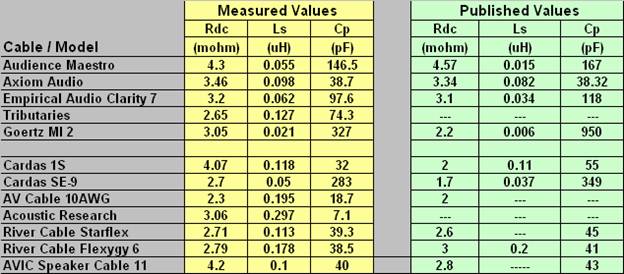
It appears that our measurements of the Axiom Audio, River Cable Starflex and River Cable Flexygy 6, are in agreement with those of the manufacturers. River Cable originally published aggregate gauge of their cables until I pointed it out to them. They have since then included both resistive specifications. Our measurements of the Audience Maestro were in close agreement with the manufacturer for everything except inductance. They specified their cable metrics in per meter length and I note that their inductance spec is 5nH/meter, which is about what I measured per foot. It is possible they made an error in their literature since their resistance and capacitance is in agreement with our measurements after converted to 'per foot' equivalents.
The Empirical Audio Clarity 7 measured about 80% higher than published. However, the measured cable inductance was still among the lowest in this face off and is only an academic concern. Goertz measurements were in disagreement with ours for all metrics. Their claimed cable inductance was about 3.5 times higher than we measured. However this again is an academic concern, especially since their cable was the lowest inductance in the comparison. Their claim to fame is the lowest inductance cable in the business and based on my measurements I would have to say they have achieved that goal. I could only assume the reason for our capacitance measurement disparity was perhaps a result of them measuring the cable with the Zobel termination in place. This is not the proper way to specify a cable since the cable capacitance per foot will vary greatly for different lengths of cables with the same value zobel termination. It is more accurate to measure the cable with no termination, then calculate the cable characterstic impedance and design a Zobel network to properly terminate it (if needed).
Cardas does not specify cable resistance, but they do specify gauge. Thus the DC resistance of their cables is based on our DC resistance curve (derived from the American Wire Gauge (AWG) tables). As you can see, the Cardas 1S measured almost double the resistance indicating it was more likely a 13AWG cable not 10AWG as the manufacturer specified. One can only assume their 10AWG specification is based on aggregate gauge not effective gauge. In other words the parallel equivalent resistance of the conductors (plus and minus) rather than series or loop resistance. In reality the Cardas 1S is more likely a 13AWG speaker cable. Their inductance measurement closely matched ours and their capacitance measurement came in about 44% higher than ours. It's nice to see they conservatively rated the capacitance of their cable. The Cardas SE-9 measured at an equivalent gauge of about 11AWG. Again they likely published aggregate gauge when they stated 9.5AWG. Their inductance measurement came out about 35% lower than ours. This was one of the lowest inductance cables in the comparison, so again the measurement difference was of academic concern. Their published capacitance was about 23% higher than our measurement again indicating their conservative capacitance estimate of the cable. AVIC cable initially had incorrect published specifications for inductance and capacitance, but they have since then corrected (at least capacitance) in their literature. In any event the inductance and capacitance of these cables is still very low and in fact among the best in this comparison.
Note: At the time of the writing of this article. Not all cable manufacturers' pricing was available. We will update the article as more information is made available to us.
Stay tuned for our detailed analysis, conclusions and recommendations...
Speaker Cable Faceoff 2 - Manufacturer's Feedback on Cable Measurements
Empirical Audio
Gene
- great study, thanks. I will remeasure my inductance,
but I think it is correct. I think that the discrepency
is that my inductance measurements were made before
adding my "anti-resonance" ferrite beads.
This will definitely add inductance that is not part
of the cable. The termination acts much as a zobel,
but I believe it's better, since it source-terminates
the cable, eliminating high-frequency transmission-line
effects. As with your statements about the Zobel network
and the Goertz cable, the EA cable should have been
measured without the Ferrite terminations. This did
not occur to me when I sent the cables, or I would have
removed one of the spade-lugs to allow removal of the
ferrites.
If
you would consider a more interesting metric: the product
of L*C or R*L*C for those cables with the lowest inductance,
you will find that the EA Clarity 7 has the lowest product.
This is interesting because low resistance, low inductance
AND low capacitance are all important for speaker cables,
with R and L being most important. It is easy to get
low inductance, but not without getting high capacitance
in the bargain. The Clarity7 accomplishes this:
Inductance (uH/ft) Product L*C (uH*pF/ft^2)
- Audience - .055 8.05
- Goertz - .021 6.86
- Cardas SE-9 - .05 14.5
- EA
Clarity 7 .062
6.05
If you take my measurements:
- EA
Clarity 7 .034
3.32
If you examine all three metrics together, L, R, C by looking at the L*C product or the R*L*C product, the Clarity7 comes out on top.
This is why I believe that the Clarity 7 is one of the best performing speaker cables on the market. It is no coincidence that the cables above are among the most popular cables with savvy audiophiles.
If
you would introduce this metric, I think it would be
instructive and beneficial to more easily analyze the
results.
Best Regards,
Steve
Nugent
Empirical
Audio
Audioholics Response
Good point about the ferrite and I do agree that is a sound idea to have it included since you cable is a bit higher in capacitance than the norm. While I understand your comment about RC products, I don't see its relevancy since the product of the two is a meaningless metric. Yes you are correct many low L cables have higher C than yours, but from a performance standpoint I am not sure how your RC product would factor in per se.
I think the commentary on your website about skin effect should be updated since we clearly demonstrated that none of the cables in our review suffer ill effects for their intent and purposes. In fact, your cable is about on par with ordinary zip cord in that respect.
For additional commentary with Steve Nugent peruse our dedicated forum for Speaker Cable Face Off II.
Axiom
Audio
Thanks
for the inclusion in the article - looking forward to
the conclusion! We did release banana plugs last month
- have you seen them? We're very happy with the quality of them, and the
locking features. Is that what you meant, or were you
thinking of something different?
Best,
Amie Colquhoun
Audioholics Response
Thanks for the update. While your banana plugs do appear to be of good quality and value, we really dig the compression style ones currently used by River Cable, Tributaries and a few other manufacturers. These banana connectors slide into the receptacles and then you can screw the outer connector shield down which drives a pin into the center of the banana connection, splitting the tines open and locking the connection tight.
Note the spring-loaded cross-bar which drives the pin forward, opening the tines (spreading open the banana plug) as it is pushed down.
It is truly a remarkable connector and one of the best we've seen. Everyone should use these as far as we’re concerned. They lock the connector in tight and can be removed with ease once manually loosened.
Gene manages this organization, establishes relations with manufacturers and keeps Audioholics a well oiled machine. His goal is to educate about home theater and develop more standards in the industry to eliminate consumer confusion clouded by industry snake oil.
View full profile Subscribe to our newsletter