


Emotiva XPA-2 Two Channel Amplifier Review
Emotiva XPA-2 Stereo Amplifier
- Product Name: Emotiva XPA-2 Stereo Amplifier
- Manufacturer: Emotiva
- Performance Rating:

- Value Rating:
- Review Date: October 15, 2008 18:25
- MSRP: $ 799
-
Number of channels: 2
-
Amplifier Class: Short signal path A/B
-
Output design: Triple Darlington with ON semiconductor output stages
-
Differential Drive: Dual Differential input
-
Types of inputs: Both Balanced (XLR) and Un-balanced (RCA)
-
Type of outputs: 5 way binding post
-
Display type: Digital VU meters
-
Metering: 14) Blue LEDS and 1) red per channel
-
Power output: 250 watts RMS/ channel into 8 ohms, 500 watts RMS/ channel into 4 ohms and 1,000 watts RMS bridged.
-
THD+N at rated power output: 0.007%
-
S/N ratio: >100db
-
Frequency response: 10 to 120Khz (-3db) and 20 to 20 (with less than .15db deviation)
-
Gain structure: 32db
-
Transformer size: 1600va mounted in a super structure
-
Secondary capacitance: 120,000uF
-
Massive aluminum heat sinks running the length of the amp ensure cool operation and amp longevity
-
Weight: Approximately 75 pounds
-
Retail price: $799.00
-
17” W x 7.75” H x 19” D
Pros
- Ungodly power reserves (beats published specs)
- Bridgeable at this price?
- Runs extremely cool
- Superb value
Cons
- Retro 1980’s Era LED’s
- Makes it hard to justify more expensive amplifier purchases
 Emotiva XPA-2 Introduction
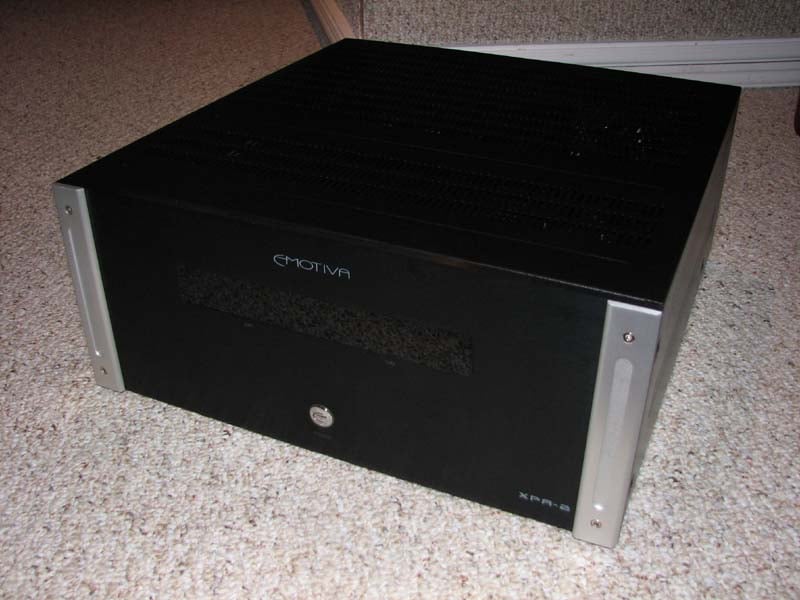
A little over a year ago I spoke to the Dan Laufman, President of Emotiva, about making a balls to the walls two channel power amplifier for under $1k that would utilize a single massive power supply instead of mono block construction like the RPA-1. His reply was “no I can’t do it for $1k, but I can do it for around $800.” I dared him to make it happen and thus the XPA-2 was born.
When the preliminary specs were leaked to me, I scratched my head in wonder of how they could make such a high power amplifier that bellies its asking price. If this thing measured well, it would redefine the budget amplifier market and bruise the ego of pricey and more prestigious brands. When the 80+ lb XPA-2 arrived at my door, I was eager to hoist it up the flight of steps in my reference room, despite a battered back with five bulging discs. The show must go on, no matter the personal sacrifice, as my curiosity far outweighed my common sense of asking for assistance. I was determined to find out what level of quality one could expect from this monster budget amplifier. But, if you wanna know the scoop, you’re gonna have to read the entire review. No instant gratification will be awarded in a one sentence summary here.
Set-Up
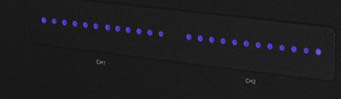 The XPA-2 is one hefty amplifier to lug around. When moving it between my rack and test gear,
I found it easier to turn it upside down and slide it across my carpet for which
my back thanked me. The ergonomics
of this amp is quite excellent. The
front panel has the classic Emotiva illuminating power switch which glows amber
when in standby mode and blue once powered on.
The power LED’s illuminate blue when the channels are on and the power
meter illuminates blue up until the last couple of dots which illuminate red
indicating possible amplifier clipping.
The built in fault projection, designed for short circuit conditions or
amplifier overload will make all of the LED’s of the respected fault channel
blink red which can be reset by simply power cycling the front power
button. I only ran into this situation
on the bench and NEVER during real world listening tests.
The XPA-2 is one hefty amplifier to lug around. When moving it between my rack and test gear,
I found it easier to turn it upside down and slide it across my carpet for which
my back thanked me. The ergonomics
of this amp is quite excellent. The
front panel has the classic Emotiva illuminating power switch which glows amber
when in standby mode and blue once powered on.
The power LED’s illuminate blue when the channels are on and the power
meter illuminates blue up until the last couple of dots which illuminate red
indicating possible amplifier clipping.
The built in fault projection, designed for short circuit conditions or
amplifier overload will make all of the LED’s of the respected fault channel
blink red which can be reset by simply power cycling the front power
button. I only ran into this situation
on the bench and NEVER during real world listening tests.
Everything on the back panel was clearly labeled, especially with respect on how to bridge the amplifier. The bridged input and + and – speaker terminals were clearly labeled, a lesson Denon could learn in their POA-A1HDCI 10CH amplifier. There is a 5-12V trigger and toggle switches to turn on/off the LED indicators and power meters as well as switching between bridged and balanced XLR and unbalanced RCA input connections.
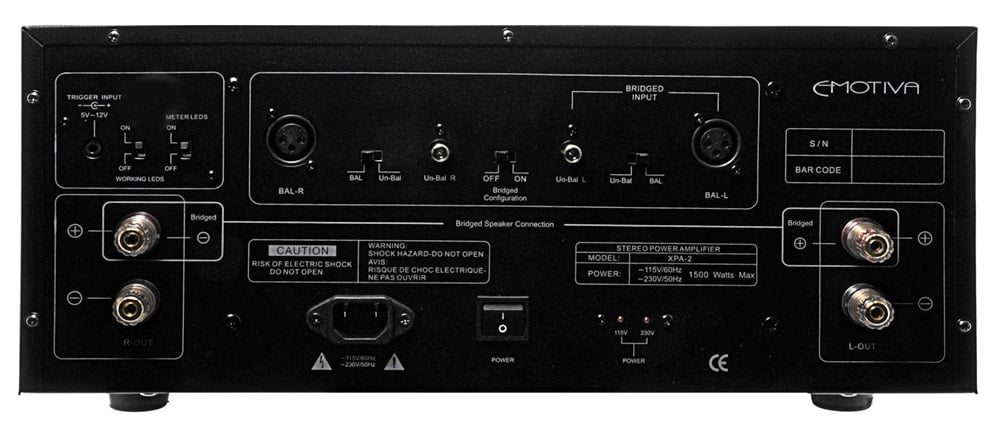
XPA-2 back panel view
Emotiva XPA-2 Design Overview
 The XPA-2 is a
traditional class A/B design whereas the RPA-1 and MPS-1
are multi-rail class G design schemes. Both
are sound designs whereas the A/B’s tend to be a tad more linear at the expense
of efficiency. Despite the fact that
Class G designs have come a long way, virtually eliminating diode rectification
issues thanks to the usage of Schottky diodes with lower forward voltage drops,
Audiophiles still prefer traditional class A and class A/B designs. I can
understand Emotiva’s move back to the class A/B design in this capacity and, as
you will later discover in this review, they took care in squeezing out as much
efficiency as possible while also ensuring the amplifier runs cool during large
power emands.
The XPA-2 is a
traditional class A/B design whereas the RPA-1 and MPS-1
are multi-rail class G design schemes. Both
are sound designs whereas the A/B’s tend to be a tad more linear at the expense
of efficiency. Despite the fact that
Class G designs have come a long way, virtually eliminating diode rectification
issues thanks to the usage of Schottky diodes with lower forward voltage drops,
Audiophiles still prefer traditional class A and class A/B designs. I can
understand Emotiva’s move back to the class A/B design in this capacity and, as
you will later discover in this review, they took care in squeezing out as much
efficiency as possible while also ensuring the amplifier runs cool during large
power emands.
Unlike past Emotiva amps which have traditionally been mono block constructions with independent power supplies for each channel, Emotiva instead employed one large central power supply for all channels. This design philosophy is carried through for all XPA series amps such as the 3 channel XPA-3 and 5 channel XPA-5. While the advantage of truly mono block designs often is superior channel to channel isolation, you can achieve very good, and often nearly equal results having a single centralized power supply but with one huge advantage - more headroom available to any single channel since each channel now has the ability to tap from one larger supply. This is the methodology I usually prefer as I am all about headroom in amplifiers.
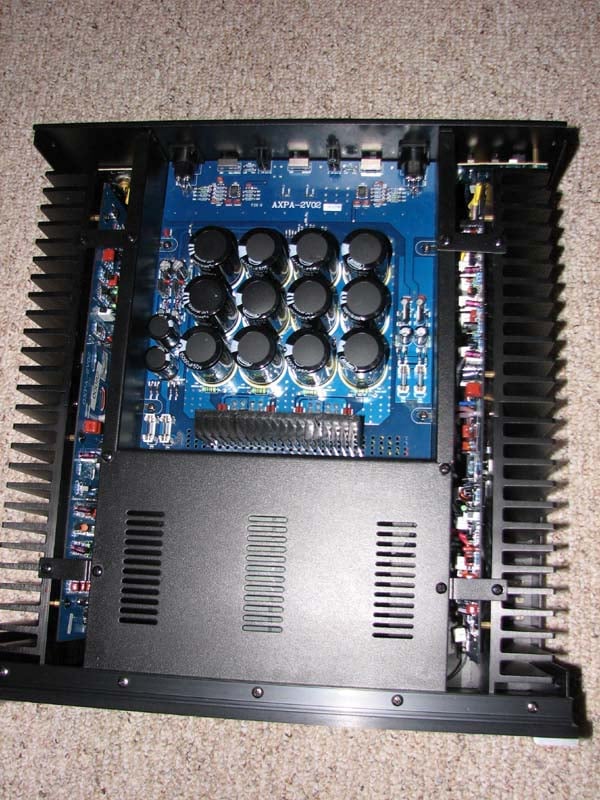
Emotiva claims the XPA-2 has a total of 120,000uF of power supply capacitance. Even if all 12 of these 50V 15,000uF capacitors were wired in parallel, it would add up to 180,000uF, NOT 120,000uF so I am not sure where they got this figure from. What Emotiva isn’t telling you, is that these caps are NOT all wired in parallel like most amplifiers. They can’t be parallel connected because this amplifier is rated at 250wpc into 8 ohms requiring at least 71V caps to achieve this power rating. Instead, Emotiva is wiring them in a series-parallel combination so that the total effective power supply capacitance is ¼ what it would be if they were all wired in parallel, but provides a potential of 100V storage to drive the rail voltage up high enough to meet their power goal. Thus this amplifier really has an effective storage capacitance of 45,000uF, NOT 120,000uF which is still very adequate for this amplifier. According to their website, the power transformer is rated for 1.6kVA while their user manual states 1.2kVA. Considering the max power consumption is 1500 watts, I’d tend to think the 1.2kVA rating is the correct one yielding a power factor of around .8. This is quite a massive power supply for a multi-channel amp, let alone a 2 channel amp costing well under $1k. I’d call shenanigans on their specifications, but considering what this amplifier offers for the money, I’d instead chalk it up as typos on their website which they can now go back and review.
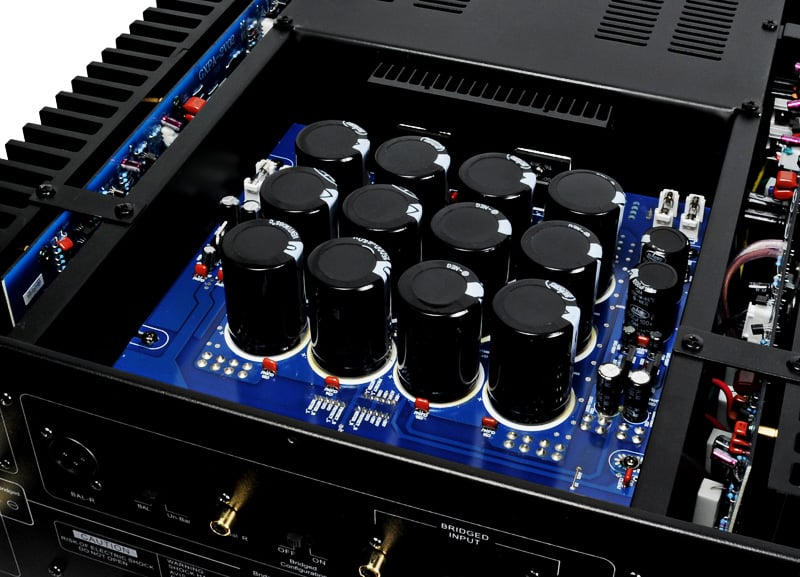 A peek under the
hood reveals why this amplifier is so heavy.
It’s got a lot of metal, heatsink area that is. Coupled with 12 output devices per channel
and the aforementioned power supply, this is a solid receipt for stable high
power delivery. I was simply amazed by the
construction quality and that it utilized such massive tapered heat
sinking. This is not something you find
in amps at double the price demonstrating Emotiva has really put together a
fine wine on beer budget pricing.
A peek under the
hood reveals why this amplifier is so heavy.
It’s got a lot of metal, heatsink area that is. Coupled with 12 output devices per channel
and the aforementioned power supply, this is a solid receipt for stable high
power delivery. I was simply amazed by the
construction quality and that it utilized such massive tapered heat
sinking. This is not something you find
in amps at double the price demonstrating Emotiva has really put together a
fine wine on beer budget pricing.
If for some reason you can’t get enough juice to your speakers with this amp, it is also bridgeable. The XPA-2 is rated to 1kwatt when bridged into an 8 ohm load but the manual clearly states to NOT bridge this amp when driving 4 ohm speakers. For those power hungry nuts driving inefficient 4 ohm speakers, you may want to consider stepping up to a pair of XPA-1’s which are fully balanced and differential from input to output and have nearly 3 times the power reserve (10 x 12,000uF parallel topology) of an XPA-2. Note in most cases you’d probably be ok running this amp in bridged mode for a 4 ohm speaker, but I respect Emotiva offering a word of caution for those tempted to hook up even lower impedance speakers in this configuration mode.
Bridge Mode: This connection allows you to use two amplifier channels to output opposite phase signals generated from one input signal. When you bridge an amplifier, you effectively double the output voltage witch can yield up to 4 times the rated output power assuming the power supply can deliver that much current. This is a good idea for applications that require lots of power to reach high SPL’s but its important to note that each amplifier effectively sees ½ the rated impedance of the loudspeaker so if your speaker system is rated nominally at 4-ohms, be sure the amplifier is stable for two ohm loads before bridging it. Never bridge an amplifier that isn’t designed to do so!
About the only criticism I could make on the cosmetics of this amp are the cheesy LED power meters which I thought died away in the late 80s. Apparently Emotiva isn’t always up with the latest trends but at least they made them defeatable. Personally I’d love to see the LED meters replaced with big analog glass VU meters and have them charge an extra $100 for this feature.
Emotiva XPA-2 Listening Tests
All listening tests on the XPA-2 were conducted in 2-channel mode using the RCA level connections between it and my reference receiver, the Denon AVR-5805mkii. The transport was my Sony CDP-CA8ES CH changer and my reference speakers were the RBH T-30LSE towers. All of the cables were furnished by Impact Acoustics Sonicwave series digital interconnects and 10AWG speaker cables. Whenever relevant, I did my best to directly compare the fidelity of the XPA-2 to my Denon AVR-5805 receiver which to date is the best receiver I’ve ever tested and listened too. The comparison wasn’t instantaneous since I had to first adjust the volume level down almost 4dB due to the unusually high gain structure of the XPA-2 when switching between the AVR-5805 and XPA-2 amplifiers.
CD: Fourplay – The Best Of Fourplay
 What good
is a listening test without throwing in a little Fourplay to warm things
up? Track #5 “The Chant” is a song I often use to separate the men from the boys
in loudspeakers. The bass energy of the
kick drums will either reward you with an adrenaline surge or have you covering
your ears from the horrible sound of woofer bottoming right before it plays for
the very last time. Of course this isn’t
a problem for my reference speakers but I wanted to see just how well the XPA-2
could deliver the juice to get the 4 10” subwoofer drivers in my T-30LSEs
moving. Needless to say, the XPA-2
delivered the goods. I heard excellent
sustain and decay of the kick drums at all power levels. When I pushed the
power meters to the red, the XPA-2 didn’t falter. Instead my lights dimmed in and out with each
bass transient since I initially didn’t have the XPA-2 plugged into one of my
dedicated 20A lines. Make no mistake,
the XPA-2 is ready to play hard if you are.
What good
is a listening test without throwing in a little Fourplay to warm things
up? Track #5 “The Chant” is a song I often use to separate the men from the boys
in loudspeakers. The bass energy of the
kick drums will either reward you with an adrenaline surge or have you covering
your ears from the horrible sound of woofer bottoming right before it plays for
the very last time. Of course this isn’t
a problem for my reference speakers but I wanted to see just how well the XPA-2
could deliver the juice to get the 4 10” subwoofer drivers in my T-30LSEs
moving. Needless to say, the XPA-2
delivered the goods. I heard excellent
sustain and decay of the kick drums at all power levels. When I pushed the
power meters to the red, the XPA-2 didn’t falter. Instead my lights dimmed in and out with each
bass transient since I initially didn’t have the XPA-2 plugged into one of my
dedicated 20A lines. Make no mistake,
the XPA-2 is ready to play hard if you are.
 CD: Ann Hampton –
Callaway
CD: Ann Hampton –
Callaway
This is another CD I brushed the cobwebs off and was rewarded yet again with a great sounding recording. Track #1 “Time After Time” got me in touch with the seductive voice of Ann Hampton and how she could transform a Cindy Lauper classic by adding a distinct and classy jazzy feel to it. Track #4 “Old Devil Moon” revealed a tightly focused piano with lifelike dynamics and realism. I felt as if I was transported into a piano bar making me appreciate just how well a 2-channel recording could sound when played back on excellent loudspeakers and amplification. I typically don’t sit through this entire CD as it’s a bit too laid back and relaxed for my often fast paced schedule during the day, but I found myself lured into its sonic excellence which the XPA-2 did a bang up job of captivating.
C D:
Sting - Soul Cages
D:
Sting - Soul Cages

Although this is a rather old CD, I recently rediscovered how superior the fidelity is on it. It’s a fully digital (DDD) recording. Unlike most CD’s today, it actually has great dynamic range with an immensely wide soundstage thanks to some special processing mixed into the recording. On Track #1 “Island of Souls”, the triangle sound panning from left to right was intoxicating. The bass was very crisp and tight on the XPA-2. In fact, I subjectively felt the XPA-2 delivered a bit more slam and presence in the bass department than the amps in my AVR-5805 receiver. The guitar of the far left seemed to extend beyond the plane of the speaker and the cymbals had a very airy feeling to them. Sting’s vocals were anchored dead center and everything just sounded terrific. I subjectively felt the AVR-5805 was a bit warmer in the presentation but the XPA-2 sounded a bit bolder and more in your face.
In track #3 “Mad about You”, the acoustical guitar was crystal clean and it was obvious to me that the XPA-2 was right at home playing this track at low and high listening levels. Track #6 “Saint Agnes And The Burning Train” proved that the Emotiva amp was right at home delivering the sonic nuances of every pluck of the acoustical guitars. This song was a real pleasure to listen to and I just lost myself in the moment forgetting I was trying to do a critical listening test for a review. It was hard for me to decide if I preferred the sound of my AVR-5805 amps or the XPA-2s. Both sounded similarly good with a slight edge to smoothness and finesse going to the AVR-5805 but boldness and dynamic punch going to the XPA-2. Considering the AVR-5805 is a nearly a 100lb, $6k receiver, I consider this a rather flattering testament to the design of the XPA-2.
XPA-2 or RPA-2? Which One is Right for You?
At the Audioholics Forum Get-Together last summer, Emotiva showed up with an array of new loudspeakers and electronics. I had a brief chance to directly compare the two in a not so ideal listening environment on their new tower speakers. The sonic differences were subtle (as is the case with all well designed amplifiers operating within their linear region) but interesting to note nonetheless. Overall I found both amplifiers excelled sonically, but felt the XPA-2 was simply more lively and bold while the RPA-2 favored a more delicate presentation with less graininess at low power levels. Either amplifier will serve a two channel system quite well and it’s really a matter of taste and application to determine which amplifier is right for you. If you favor home theater and sustained loud listening levels, than the XPA-2 is probably more your bag, while if you favor sipping a brandy listening to an old Michael Franks record, I’d lean towards an RPA-2.
Emotiva XPA-2 Measurements and Analysis
I did some quick spot-checking on the XPA-2 amplifier gain structure to ensure it could be properly driven with a wide assortment of preamps or receivers. My personal criteria for amplifier gain structure is that it should be able to hit full power when driven with 2Vrms. The XPA-2 blew this notion out of the water with an unusually high voltage gain of 32dB (un-bridged) and 38dB (bridged). After confirming this twice via my measurements, I pinged Emotiva technical support and they informed me this was purposely done for end users using a budget receiver many of which tend to clip above 1Vrms output. I can certainly appreciate this as I have found this to be the case with many receivers even in the $1k price range. The XPA-2 reached its full power with only 1.2Vrms. Although the penalty of having such high gain is also higher noise, the XPA-2 remained very quite and yielded a SNR of 105dB at 319 watts (unweighted) which translates down to about 80dB at 1 watt. Emotiva informed me that part of the reason for such good SNR measurements is that all of the voltage and current gain is done in last stage of the amplifier.
I also suspect Emotiva boosted the gain to make their amplifiers sound more impressive (remember the predilection for people to associate louder with better) when a newbie hooks up their amplifier for the first time. Personally, I’d prefer to see a +3, 0, -3dB toggle switch on the backpanel for those who have preamps with plenty of drive to further lower the noise floor.
Frequency Response
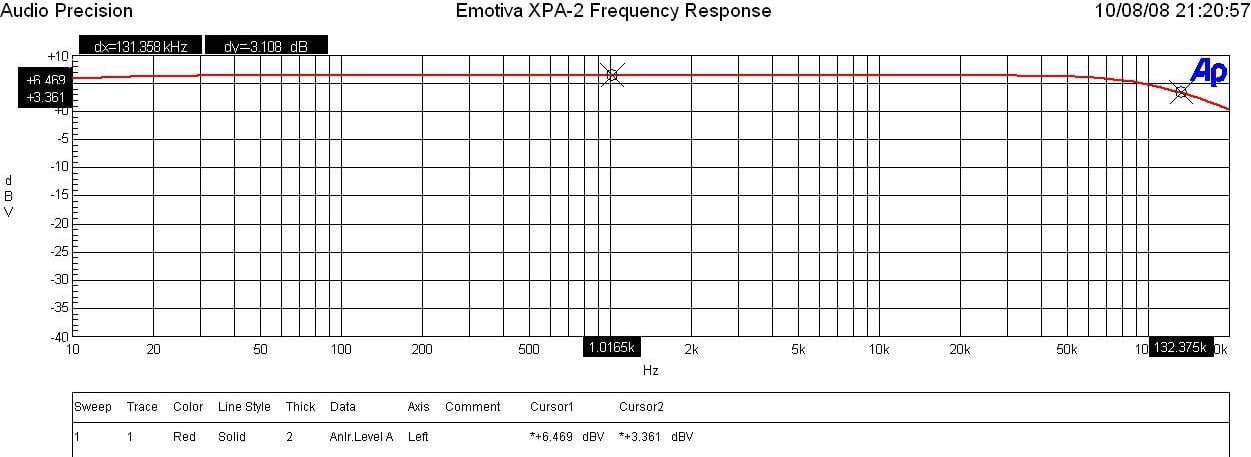
Figure 1. XPA-2 Frequency Response
The frequency response was very linear and extended to a -3dB point of about 130kHz. In fact at full power the response was still ruler flat validating their claim of +- 0.15dB from 20Hz to 20kHz at all power levels.
Power Bandwidth vs Distortion
I experienced a rather odd test glitch when running power tests on the XPA-2. Anytime I swept 20kHz to 20Hz, the amp would instantly shut off if I drove it to more than 100 watts. I later discovered that sweeping from 20Hz to 20kHz eliminated this problem. Upon further investigation it turned out that the power protection circuitry built into the XPA-2 was being tripped by my test gear when it ramped up to high frequency testing. This is NOT a real world scenario, NOR did this ever occur in my listening tests. In fact, it has taught me a lesson to always sweep low to high despite the fact that my test scripts default the other way around.
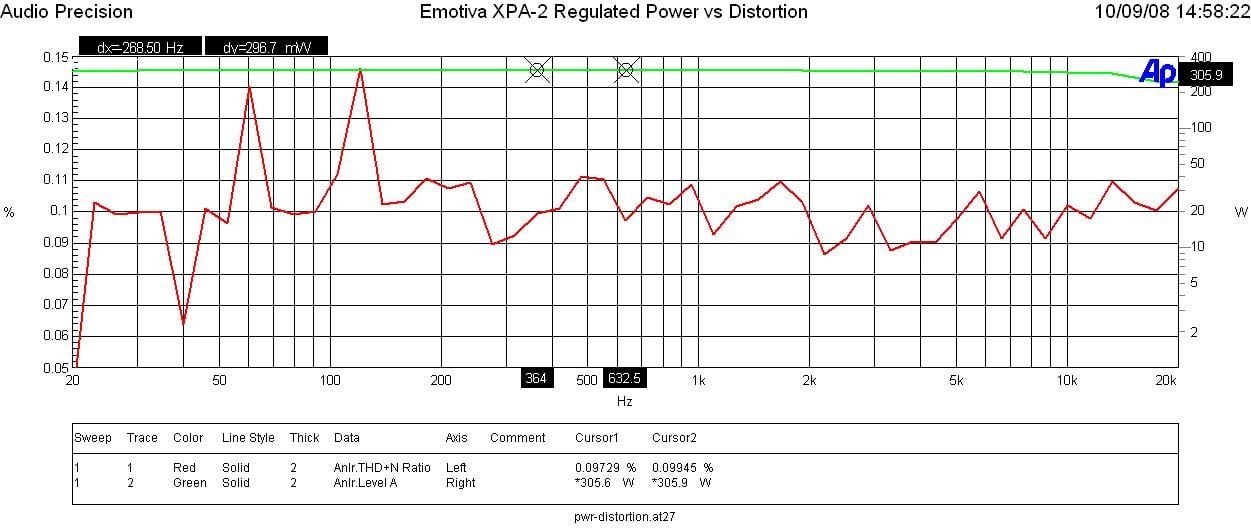
Figure 2. XPA-2 Power Bandwidth vs Distortion
Amplifier Power & Efficiency
Using a full power (0.1% THD + N) continuous power test at 1kHz, I measured about 65% efficiency which is about the best you can get from a linear amplifier design. The idle power of this amplifier was around 45 watts and at no point during my strenuous power tests did I find the XPA-2 to heat up to any degree other than a slight warming which didn’t prompt me to pull my hand away from if as I plopped it down directly on the top of the chassis. You can thank the generously massive heatsink area for this amps cool running characteristic.
| # of CH | Configuration | Power Out XPA-2 | Power Out RPA-1 | Load |
| 1 | 2CH mode | 312 watts | 210 watts | 8 ohms |
| 2 | 2CH mode | 265 watts | ** | 8 ohms |
| 1 | 2CH mode | 515 watts | 320 watts | 4 ohms |
| 2 | 2CH mode | 410 watts | ** | 4 ohms |
| 1 | Bridged | 860 watts | ** | 8 ohms |
Full Bandwidth (20Hz to 20kHz) Power Measurements at 0.1% THD + N
** not tested during review
Editorial Note from Emotiva on Power Measurements
According to Lonnie at Emotiva, they achieved the following power measurements on an XPA-2 in their test lab with has a dedicated 20A line of less than 20 ft running to their mains (much shorter than my power feed from the mains). It is possible that under their testing scenario, they achieved less line sag than I did which explains their higher power measurements.
Stereo 4 ohm load, both channel driven, 0.1THD: 500.1 WRMS.
Stereo 4 ohm load, both channels driven, 1.0% THD: 527.0 WRMS.
Bridged 8 ohm load, 0.1%THD: 1.04 KWRMS
Bridged 8 ohm load, 1.0%THD: 1.105KWRMS
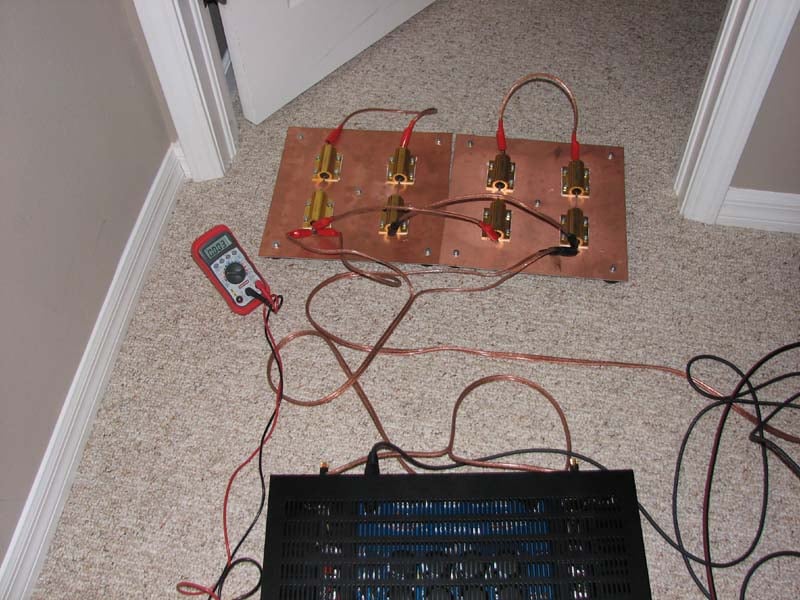 Not only did the XPA-2 stomp the RPA-1 in terms of
sheer output power, but it also bested my $7k 10 channel Denon POA-A1HDCI by a
considerable margin. For example, with 1
CH driven into 8 ohms the XPA-2 delivered a whopping 312 watts while the
POA-A1HDCI delivered around 185 watts.
In 4 ohm loads, the XPA-2 delivered 515 watts while the POA-A1HDCI
delivered 300 watts. In bridged mode it
was especially interesting how the XPA-2 delivered nearly 2X the power of the
POA-A1HDCI belting out 860 watts and sagging my 20A line from 119Vrms to
116Vrms in the process. This amplifier
was so powerful that I had to create an elaborate series-parallel wiring scheme
for my power resistors to avoid them turning into a grilled cheese
sandwich. I was unable to achieve the 1
kwatt power that the XPA-2 is speced for in bridged mode but I am sure its
achievable (at least momentarily) into hard clipping when using a variac to
keep the line voltage at a constant 120Vrms.
This is NOT a real world test scenario and one I don’t subscribe to when
doing power tests.
Not only did the XPA-2 stomp the RPA-1 in terms of
sheer output power, but it also bested my $7k 10 channel Denon POA-A1HDCI by a
considerable margin. For example, with 1
CH driven into 8 ohms the XPA-2 delivered a whopping 312 watts while the
POA-A1HDCI delivered around 185 watts.
In 4 ohm loads, the XPA-2 delivered 515 watts while the POA-A1HDCI
delivered 300 watts. In bridged mode it
was especially interesting how the XPA-2 delivered nearly 2X the power of the
POA-A1HDCI belting out 860 watts and sagging my 20A line from 119Vrms to
116Vrms in the process. This amplifier
was so powerful that I had to create an elaborate series-parallel wiring scheme
for my power resistors to avoid them turning into a grilled cheese
sandwich. I was unable to achieve the 1
kwatt power that the XPA-2 is speced for in bridged mode but I am sure its
achievable (at least momentarily) into hard clipping when using a variac to
keep the line voltage at a constant 120Vrms.
This is NOT a real world test scenario and one I don’t subscribe to when
doing power tests.
I didn’t test the XPA-2 into a 4 ohm load bridged since Emotiva didn’t spec this, and I noted the power line sag was becoming quite a factor due to the sheer power of this amp. But, I would suspect based on the 1.2kVa transformer and the 65% measured efficiency that this amp would likely deliver around 900 watts or so into a 4 ohm load.
Keep in mind most review publications test at clipping and don’t do continuous power measurements so our power numbers are usually a lot more conservative than what you typically find from other reviewers.
For more info, see: The All Channels Driven (ACD) Test
That being said, the XPA-2 exceeded its power specifications by considerable margins. Into 8 ohms it was rated to 250 watts at 1% THD , yet I measured 312 watts at 0.1% THD. Into 4 ohm loads it was rated to 500 watts at 1% THD while again my measurements exceeded this rating producing 512 watts at 0.1% THD. Make no mistake folks this is one POWERFUL amplifier and most definitely the most power for the money amplifier that has ever come across my test bench since I launched Audioholics nearly 10 years ago!
FFT Distortion Analysis
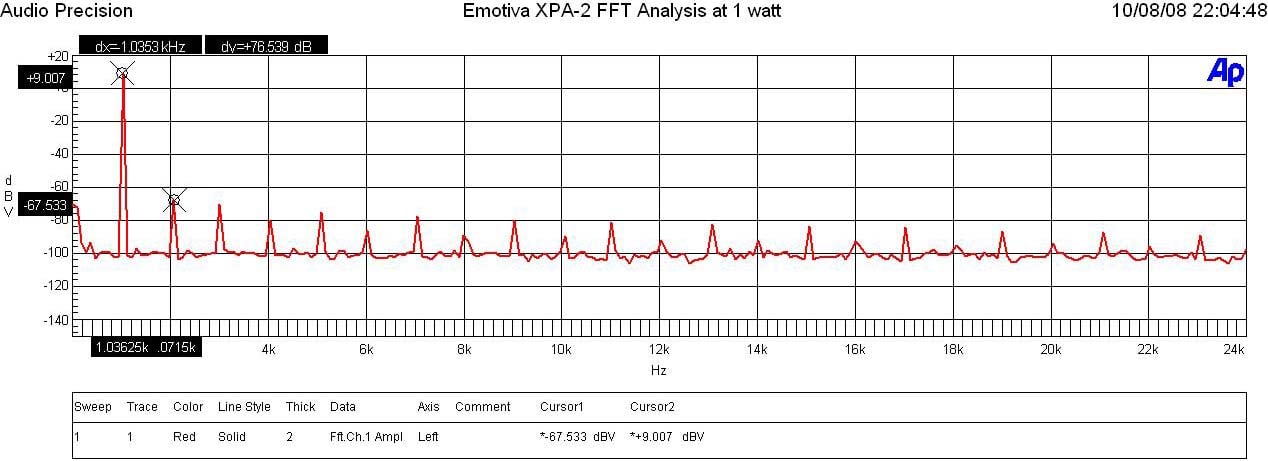
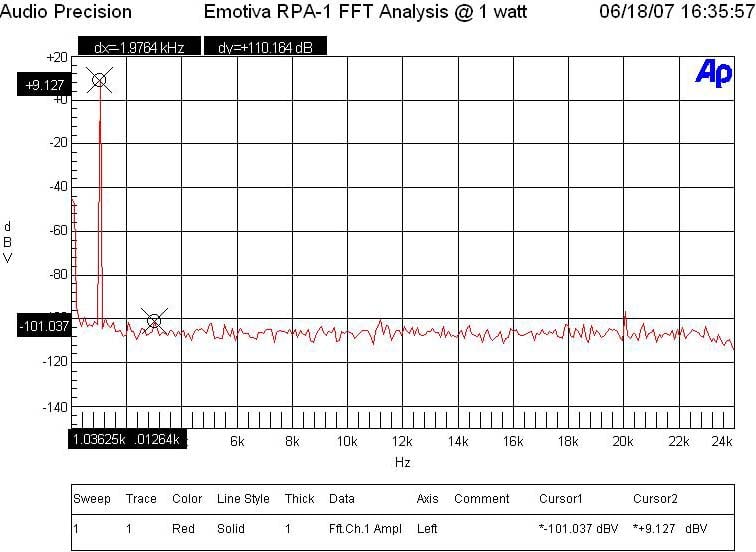
Figure 3. XPA-2 FFT Distortion Analysis at 1 watt (XPA-2 top, RPA-1 bottom)
I ran FFT distortion plots at various power levels to determine how clean this amplifier really is. At 1 watt, the spectral distortion was good with the second order harmonic being (9.007 + 67.533)dB being 76.54dB down from the fundamental or 100*alog^-1(-76.54/20) = .015%. While this is a respectable measurement, it is no way near as pristine as what I’ve seen on their RPA-1 demonstrating a measurable trade off between higher sustained power of the XPA-2 versus measurably cleaner low power of the RPA-1. If you tend to favor low listening levels, you may opt for an RPA-1/ RPA-2 over the XPA-2.
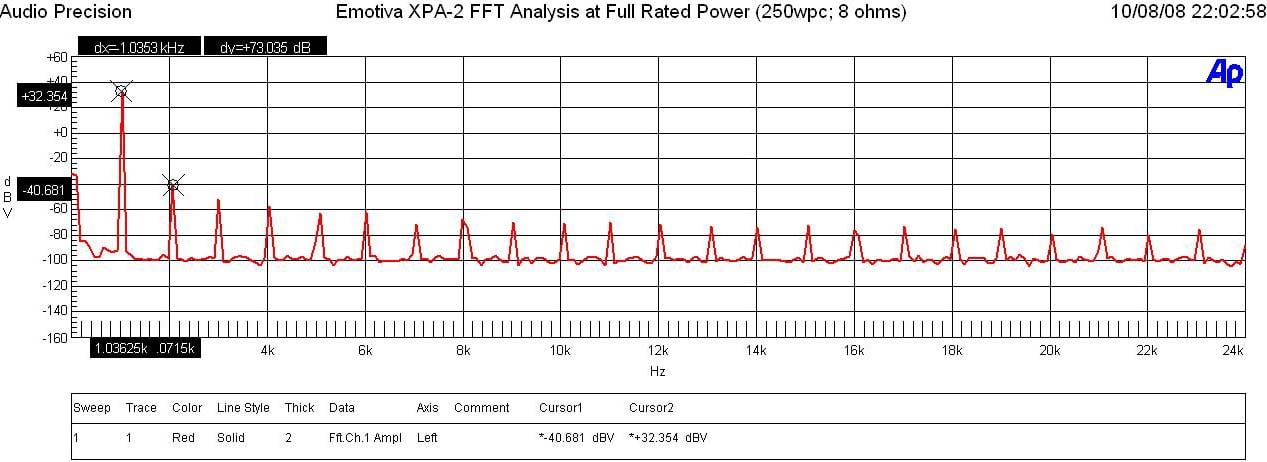
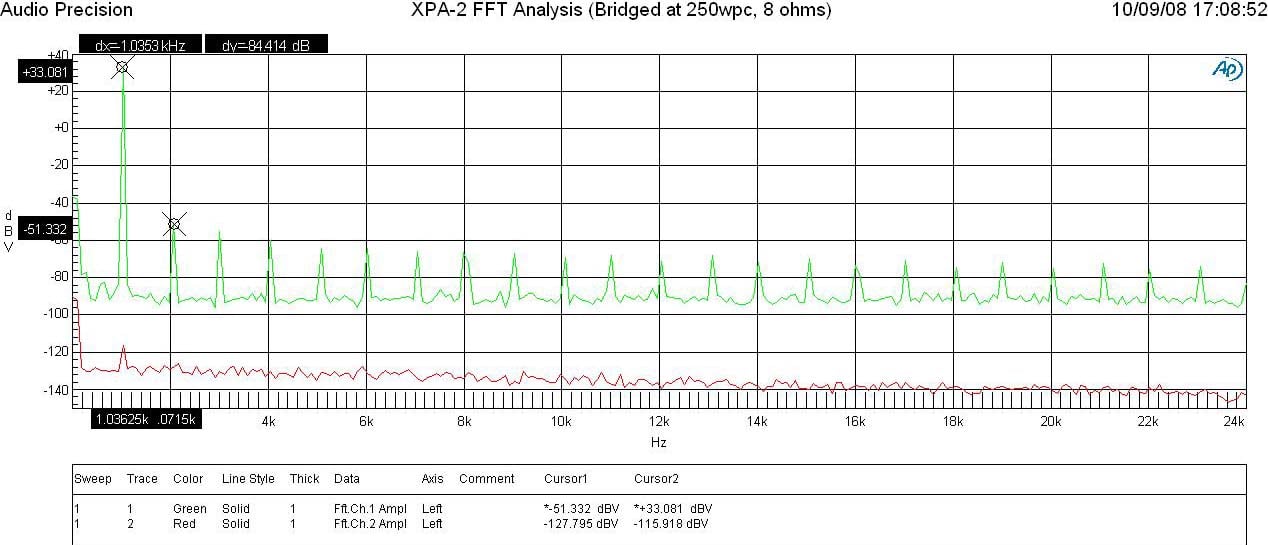
Figure 4. FFT Distortion Analysis at Rated Power (unbridged top, bridged bottom)
At near full rated power (250wpc) into 8-ohms, spectral distortion of the XPA-2 was again good but not stellar, with the second order harmonic being (32.354+40.681)dBv = 73.05dBv or 100*alog^-1(-73.05/20) = 0.02% This was not as good as I’ve seen on any other Emotiva amplifiers I’ve previously measured, none of which have come close to being the powerhouse that the XPA-2 demonstrated to be.
In bridged mode at the same power levels, the even order harmonics of the FFT spectral distortion profile appeared about 10dB better than unbridged mode, bringing it to near equal footing with the RPA-1 but able to belt out significantly higher power levels (nearly 4X the power of the RPA-1) when driven to its limits.
Crosstalk
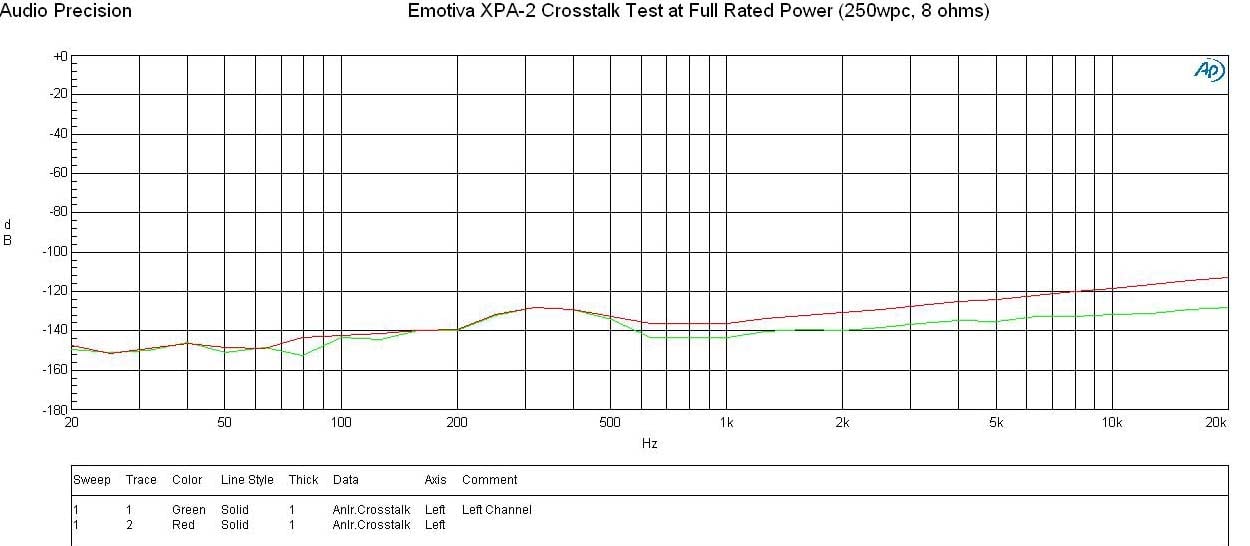
Figure 5. XPA-2 Crosstalk at Rated Power
Running a full range frequency sweep through the XPA-2 amplifier at full rated power (250wpc @ 8-ohms), I measured channel to channel crosstalk between the two channels where one was the disturber and the other was the Device Under Test (DUT). The Audio Precision plotted crosstalk of both channels over frequency by varying the Distruber/DUT channels. The XPA-2 produced surprisingly excellent crosstalk measurements (>140dB at 1kHz) with only a gradual rise with increasing frequency because of capacitive coupling. This is the best crosstalk measurement I’ve ever measured in an amplifier and despite the XPA-2 having a singular centralized power supply, the channel to channel isolation was on par with the best monoblock amplifiers I’ve ever seen!
Output Impedance and Damping Factor
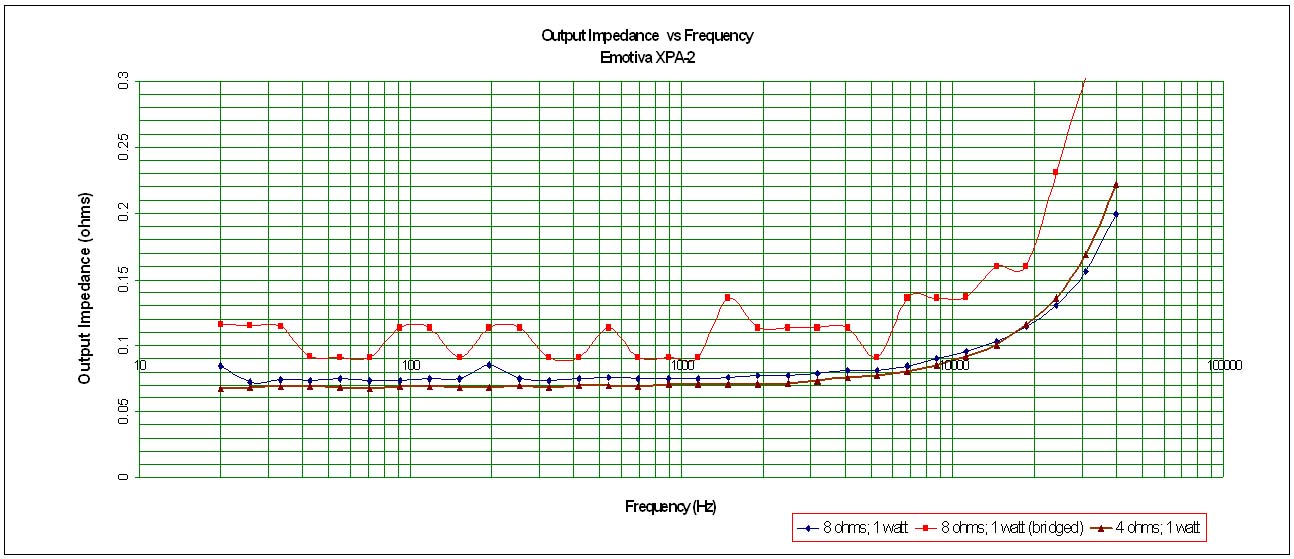
Figure 6. XPA-2 Amplifier Output Impedance vs Frequency
Amplifier output impedance when the XPA-2 was driving 8-ohm and 4-hom loads at 1 watt was within our preferred 100 mohm range for the entire audio bandwidth. We like to see amplifier maintain 150 mohm output impedance or less so that it will sound consistently good for a larger variety of speaker and cable loads with rather complex impedance profiles. This is a very good measurement and yet more confirmation that the XPA-2 amplifier design was well executed.
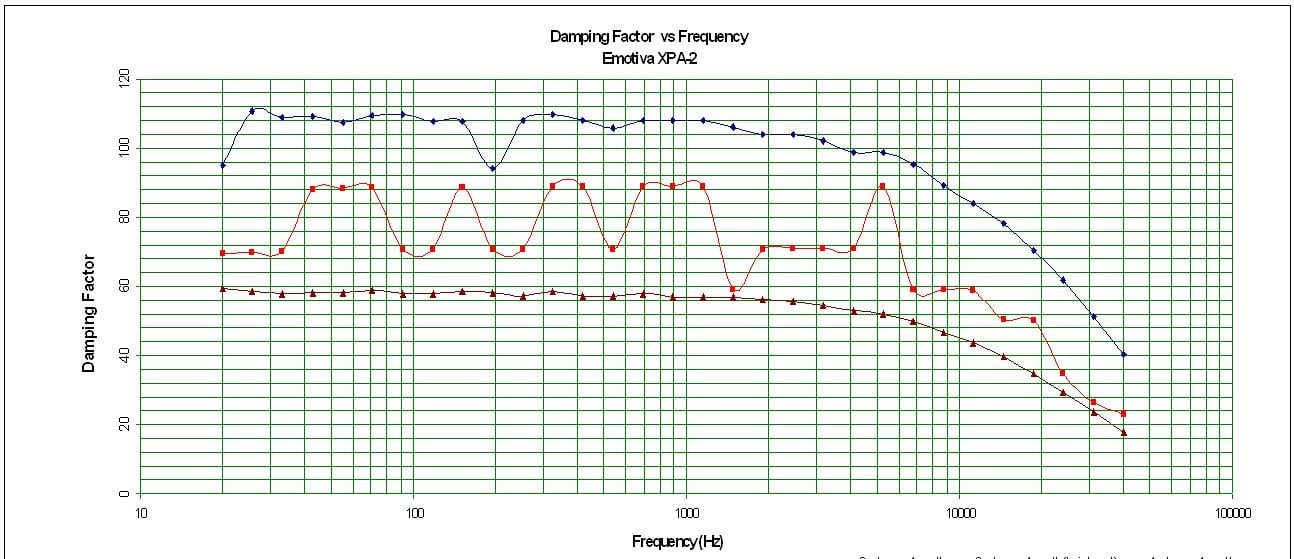
Figure 7. XPA-2 Amplifier Damping Factor vs Frequency
Again the XPA-2 did NOT disappoint. An amplifier with a low output impedance will also maintain excellent damping characteristics since these are related metrics. The XPA-2 maintained a damping factor above 100 for 8 ohm loads and ½ that as expected for 4-ohm loads. This fell right within our benchmark criteria.
Emotiva XPA-2 Conclusion
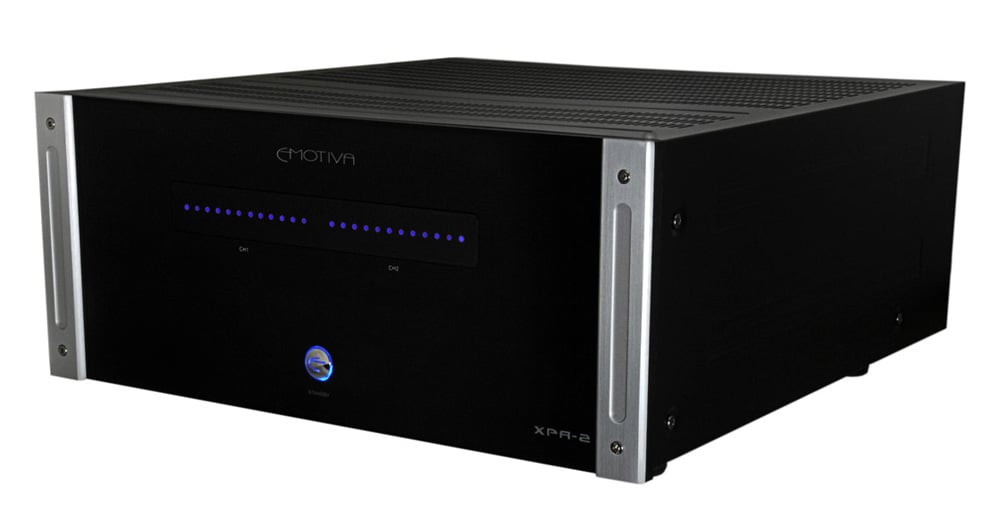 Not only
does Emotiva have a winner on their hands with the XPA-2 two channel amplifier,
but they’ve literally hit the ball out of the park with this creation rewriting
the rule book on high performance amplifiers on the cheap. The XPA-2 is not only the most powerful
amplifier that has come across my test bench, but it represents the best value
in consumer two-channel amplification that I’ve ever seen. Its closest competitor is their very own
RPA-2 which cannot compete dynamically to this amplifier nor does it offer the
bridging feature capabilities of the XPA-2.
Quite frankly, when I think about it, the XPA-2 is a lone wolf in a
pasture of sheepish amplifiers. The
XPA-2 can pump out ungodly power without ever breaking a sweat and its also
very friendly installable, thanks to its cool running operation. My only caution is to make sure you feed this
baby plenty of juice. Emotiva recommends
at least 10A of reserve on your 120V line so don’t go plugging this into the
same outlet you’re running your lights and hair dryer on. In fact, I always recommend 1 or 2 dedicated
20A lines run specifically for you’re A/V gear.
Not only
does Emotiva have a winner on their hands with the XPA-2 two channel amplifier,
but they’ve literally hit the ball out of the park with this creation rewriting
the rule book on high performance amplifiers on the cheap. The XPA-2 is not only the most powerful
amplifier that has come across my test bench, but it represents the best value
in consumer two-channel amplification that I’ve ever seen. Its closest competitor is their very own
RPA-2 which cannot compete dynamically to this amplifier nor does it offer the
bridging feature capabilities of the XPA-2.
Quite frankly, when I think about it, the XPA-2 is a lone wolf in a
pasture of sheepish amplifiers. The
XPA-2 can pump out ungodly power without ever breaking a sweat and its also
very friendly installable, thanks to its cool running operation. My only caution is to make sure you feed this
baby plenty of juice. Emotiva recommends
at least 10A of reserve on your 120V line so don’t go plugging this into the
same outlet you’re running your lights and hair dryer on. In fact, I always recommend 1 or 2 dedicated
20A lines run specifically for you’re A/V gear.
No, the XPA-2 doesn’t treat my music with the kid gloves that my much more expensive $7k Denon POA-A1HDCI amplifier is able to do, but it shares many of its sonic virtues while also besting it in sheer output power. The XPA-2 is the best antidote for the common receiver which often tend to be power shy, especially when driving 4 ohm speakers. The fact that I would even compare far more expensive amplifiers in this review speaks volumes for just how good the XPA-2 really is.
Emotiva was very clever in the roadmap of their products of the XPA family of amplifiers. A typical user can purchase an XPA-2 for the front channels and an XPA-5 for the rest of their 7.1 setup, or purchase an XPA-3 for the three front channels using the internal amplifiers of their receiver for the remaining channels, ensuring clean high power amplification for their entire setup for less cost than a mid priced A/V receiver. I am fearful for the competition once Emotiva launches their highly anticipated UMC-1 pre/pro for $699 which will empower fellow Audioholics with a high performance separates solution at less than ½ the price of a flagship receiver and certainly less expensive than competitor separates solutions. The only question that remaining is, are you ready to drink some fine wine at beer prices or do you prefer to continue paying for beer at wine prices?
Emotiva Audio
Corporation
106 Mission Court
Suite 101
Franklin, TN
37067
615-771-1224
877-EMO-TECH
Fax: 615-771-1128
XPA-2 Review
MSRP: $799
Read Consumer Reviews on
The Score Card
The scoring below is based on each piece of equipment doing the duty it is designed for. The numbers are weighed heavily with respect to the individual cost of each unit, thus giving a rating roughly equal to:
Performance × Price Factor/Value = Rating
Audioholics.com note: The ratings indicated below are based on subjective listening and objective testing of the product in question. The rating scale is based on performance/value ratio. If you notice better performing products in future reviews that have lower numbers in certain areas, be aware that the value factor is most likely the culprit. Other Audioholics reviewers may rate products solely based on performance, and each reviewer has his/her own system for ratings.
Audioholics Rating Scale
 — Excellent
- — Very Good
- — Good
- — Fair
- — Poor
| Metric | Rating |
|---|---|
| Frequency Response Linearity | |
| SNR | |
| Output Impedance | |
| Measured Power (8-ohms) | |
| Measured Power (4-ohms) | |
| Multi-channel Audio Performance | |
| Build Quality | |
| Fit and Finish | |
| Ergonomics & Usability | |
| Features | |
| Performance | |
| Value | |
Gene manages this organization, establishes relations with manufacturers and keeps Audioholics a well oiled machine. His goal is to educate about home theater and develop more standards in the industry to eliminate consumer confusion clouded by industry snake oil.
View full profile Subscribe to our newsletter