


The Dumbing Down of Audio: Trading Quality for Convenience?
Originally published March 6, 2006; Updated and republished December 20, 2013
We live in an amazing time. Science is making bigger and better tomatoes, continually perfecting synthetic materials to enhance our lives, while making electronics more compact, powerful and affordable. It's amazing that you can buy a wristwatch with a more powerful computer today than the ancient computers that used to fill an entire room only 50 or so years ago. Heck, you can buy a wristwatch with more processing power than a computer had 10 years ago.
Science has also made significant advances in the home theater world. Displays are continually getting better, slimmer and cheaper. Speakers are continually getting more refined and accurate. Receivers are being packed with more powerful processing features making them a better value to the end-user and yielding higher entertainment because of their ability to be the master of so many domains.
Because of science, digital signal processing (DSP) empowers engineers to make smarter products that can work magic on your music. DSP can make it sound like you are in a live performance by enveloping you with surround sound, correct for room acoustic and non linearity anomalies of your loudspeakers, or even boil you a pot of coffee at just the right temperature.
So with all of this newfound power science has endowed us with, one would logically conclude that this has bettered our pursuit of audio nirvana... Well, not exactly. Despite our advances in science, one divine truth can always undermine us - marketing. Because of marketing, and all of the people that fall victim to it, reality TV shows, pet rocks, and low-carb diets sell. People don't need them, they don't make a whole lot of practical sense, yet the demand is created. The same rings true with audio. Trading quality for convenience is the norm where more and more people prefer portability and instant access to source material over the quality of the media in which it's being transmitted.
The De-Evolution of High Fidelity Audio?
Tabulated below are what I feel to be the major culprits of the Dumbing Down of Audio:
- Hyper compression in CDs
- Cubed speakers
- Phones, tablets and MP3 players
- Satellite radio
- Streaming services (ie. Spotify, Pandora, Slacker, etc...)
- Lack of comparative reference to unamplified live musical performances
Hyper Compression of CDs
Dynamic compression is introduced at the mixing stage by boosting the levels of quiet sounds so everything sounds loud. This is distinct from data compression which is used to make audio files smaller and can introduce different artifacts (see below).
Editorial Note on CD Sound Quality
There are many factors that influence the sound quality of source material such as:
a. How the source material was recorded (i.e. equipment, mics, etc)
b. How the recording was mastered and transferred to CD (level, compression, etc)
It is no wonder why many audiophiles prefer LP over CD. It's not that the CD format is inferior (far from the truth actually). The fact of the matter is the CD format is suffering abuses that the LP was immune to. Ramp the levels up to near clipping on an LP and you suffer unbearable distortion, noise and potential damage to your stylus. Do the same on CD and you've got one heck of a LOUD recording that sounds good when being broadcast on FM to judgmentally impaired folks suffering from "LOUDER is better" disease.
Read these articles for more on the topic:- Dynamic Comparison of LPs vs CDs - Part 4
-
Analog (Vinyl) vs Digital Audio (CD, FLAC) Sound Quality Comparison
Cubed Speakers
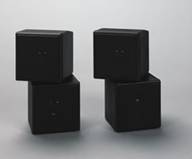 The choice speakers of most department stores. While their advantage (other than marketing and brand appeal to the unwary public) is a small footprint, this comes at a cost. These speakers suffer from a severe lack of dynamic range and frequency response linearity. The issue arises in the fact that the accompanying bass module doesn't produce much output below 60Hz. In addition, it extends too high in frequency, making it localizable and non ideal for subwoofer duties. The driver in the satellite "cube" speakers is too small to produce adequate midrange and midbass, and too large and inefficient to produce accurate and extended highs. What you wind up with is a satellite speaker with a few kilohertz range and a bass module that has to make up the difference. It's a product of boom and sizzle that sounds impressive to an untrained ear since the demo is usually done in a noisy nearfield environment where all of the speakers are just a few feet away from the listener. But take the system home and your guests wonder why all the male voices are coming out of the corner of the room where the "subwoofer" is.
For more information on the limitations of these systems, read:
Phones, Tablets & MP3 Players
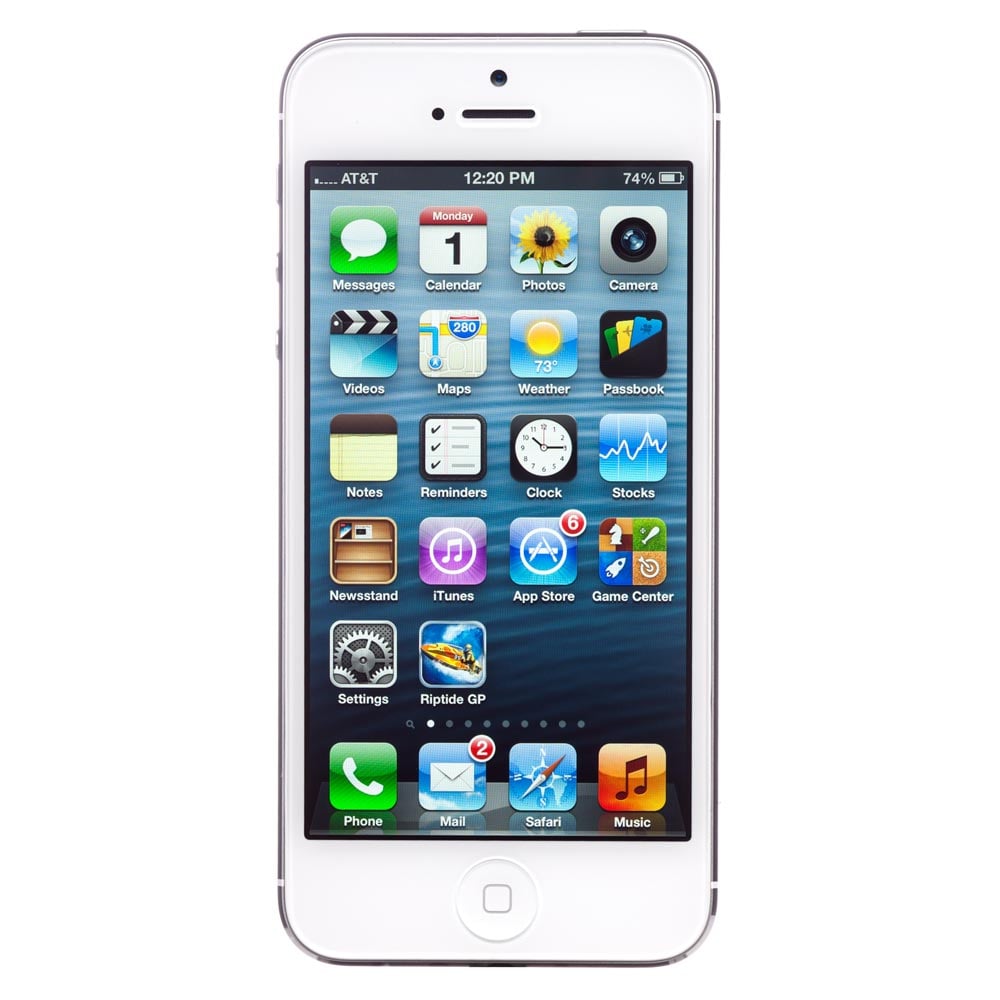 As if dynamic compression in CDs wasn't bad enough. Let's add more by converting the PCM data from your CDs into MP3s or MP4s with lossy data compression. Though you could record at the maximum rate of 320kbps, most MP3 compression still causes audible deterioration to the sound quality of your CDs. This is largely dependent on source material, the CODEC used, and the quality of the recording. I have found most MP3 compression to be unacceptable for serious jazz and classical music listening. Do any critical listening on a revealing system and you will find MP3 compression will cause loss of soundstage and stereo separation and diminished dynamics (especially for cymbal crashes or piano ballads). Most people go for maximum song storage on their mobile devices and typically encode at 96-128kbps. "It holds two thousand songs," they brag. Yeah, two thousand songs that sound like they were recorded in a coffee can. What is truly sad is that most people listening to these devices simply don't know any better. Even worse is that high-end headphone market is exploding. Walk around a college campus for a few minutes and you will see a sea of bobbing heads with $300 Beats headphones on. Their pop music is so highly compressed and distorted that to them it simply sounds loud and clear. They are loving it because they have the convenience of all of their music at their fingertips in a portable storage device. The convenience is certainly attractive, but these types of systems are starting to become the primary audio systems for a majority of consumers - and we wonder why high-resolution audio isn't taking off. Combine this with a docking station and a cubed speaker system and you are in for a delightful evening of listening to your favorite tunes in a tin can compressed to the "nth" level to the point where you won't be able to tell the difference between Britney Spears and JLO tunes. Of course, at that point, should you really care?
Satellite Radio

I had high hopes for Satellite radio, particularly XM. Back in my telecommunications days I studied the XM specifications to ensure there weren't any patent infringements against our company, which was one of the developers of QAM technology. I saw a lot of good potential for XM and welcomed it as a step above MP3 sound quality with the convenience of tons of commercial-free music at your disposal for a minimum monthly fee.
In 2006 I bought a new Acura TL with an XM radio receiver built in. The sound system in my TL was a cut above most OEM car audio systems. It featured the 5.1 DVD Audio system co-developed by Panasonic and famous recording engineer Elliot Scheiner. I was eager to finally listen to XM in all of its glory - on a respectable system no less. At first listen, it wasn't bad. It had good bass response, thanks to the sub, no static (as promised) and most importantly, no commercials or annoying DJs. I soon discovered very cool fusion jazz and progressive rock stations. Wow, I was hearing Tales of a Topographic Ocean from Yes and funky jazz tunes from Phil Collins old Jazz band Brand X. But something didn't sound quite right. I couldn't place it until I listened more intensely. After listening to more vocals, particularly female, I started to hear a metallic quality. Instead of Laura Fabien's voice, I heard Lara Fabicon. Shakira became Shakiracon. Instead of Josh Groban, I heard Josh Grobanicon. I thought I was in a bad dream stuck in a world taken over by evil Transformer robots. As a comparative exercise, I popped in the then new Peter Gabriel Up CD when the title track was being played on XM. Switching back and forth, it was easy to hear the metallic, compressed sound quality on the XM broadcast. Mr. Roboto was alive and well on satellite radio!
The CD itself is highly compressed to begin with, but the XM "flavoring" made it all more unpalatable. After a few months of enduring the so called "CD Quality" of XM radio, I canceled my subscription. Once you hear the compression, it becomes a vice (at least for me it did) that you cannot tolerate for any appreciable length of time. If I were an artist, I would be outraged by the fidelity, or lack thereof, of my music being broadcast on this service. After doing additional research I realized that, due to bandwidth restrictions and a large amount of channels, XM satellite's highest encoding bitrate is… shudder … 64kbps. Even though their aacPlus codec is better than straight MP3 at the same bitrate, it is appalling for a format claiming "CD-quality" audio.
So now we have cubed speakers, iPod / MP3 players and Satellite radio further lowering our expectations of sound quality. What's next?
Streaming services
 Streaming services, that's what's next. Just like satellite radio and CD, the potential for great audio quality exists. However, thanks to limited bandwidth we are stuck with low quality sound. Don't get me wrong, I listen to Pandora all the time and have played around with Spotify, MOG, and a number of other streaming services. Almost all of these services utilize low bitrate, highly compressed encoding schemes. Pandora streams AAC+ files at a measly 64kpbs via their web interface. That is pathetic. One saving grace is that Pandora One subscribers can enjoy up to 192kbps over the web. Spotify one ups (see what I did there?) Pandora with 160kpbs Ogg Vorbis files and up to 320kpbs for Spotify Premium subscribers. While 320kbps Ogg Vorbis is a big step up from what is found elsewhere, it's not up to snuff for critical listening. Additionally, these higher bitrates are only available for an extra fee, which is understandable, but means that the majority of users are stuck with über low quality audio.
Lack of Live Unamplified Comparative Reference
Ignorance, the great equalizer. Though not intended as an insult to people's intelligence. Simply put, fewer and fewer people are exposed to live unamplified music on a regular basis. Sure, there are plenty of concerts performed by our favorite bands, but a large majority of them (particularly rock and pop concerts) are performed in large venues with big horn-loaded speakers and kilowatt power systems. Compression and controlled dispersion are the enemies at play here and whoever plays loudest wins. This is the same mentality that plagues the recording industry and hence why most pop and rock CDs have 6dB of dynamic range or less! Meanwhile Audiophiles ponder more powerful amplifiers to power their speakers - but we will address that topic in another editorial.
This reminded me of a Yes concert I went to a little over a decade ago. It was their Talk tour with Trevor Rabin on guitars. They were showing off their surround sound broadcast system, a first and last for them if I am not mistaken. I sat to the right-front of the stage, about 30 feet or so from a wall of speakers. The sound was so blaringly loud that it was painful despite the fact I stuffed my ears with cotton and covered them with my hands during the whole show. It took me days to recuperate from this experience. Rather than enjoying a performance from one of my all time favorite rock bands, I was more concerned with protecting my ears and avoiding the pain.
In contrast, I recently went to a Mediterranean restaurant where a jazz trio: bass, drums, and trumpet were playing unamplified and literally 10 feet from our seats. What a delight to our ears. I was hearing the full decay of drums and crashes of cymbals. The trumpet had perfect pitch and timbre, and you could hear the woody sound character of the bass. This is something rarely heard on a good CD on a fine music system but truly appreciated by any music lover who also happens to be an Audioholic, though you can't throw your underwear on the stage, and I do miss that.
Closing Thoughts
 As music becomes more mainstream and bubblegum two-chord rock and mindless pop further encroaches upon our society, people seem to have embraced compression playback devices and continually distance themselves from what real music is supposed to sound like. I fear we are breeding a generation of ignorance to music and fidelity playback. In fact, we may be instilling in our youth the inability to discern what sounds good! Hey, if you eat enough filet of hoof, eventually you'll think ribeye tastes bad.
But I think a ray of hope shines through. It's not Gandalf the White arriving with the army of Rohan bright, but it's there. Websites like HDtracks and iTrax offer us access to high quality digital music. And while I think it's ironic that so many people buy nice headphones to listen to compressed music, the fact that they are shelling out the cash for nice headphones says something. Everywhere you look a new DAC or headphone amplifier is being released, and support for FLAC and WAV files has taken off. This resurgence is largely still limited to the niche audiophile market, but I hope that it will lead to big name artists pushing for higher quality records. Some already have, like Steve Wilson of Porcupine Tree and Dave Grohl of Foo Fighters. The real question is how much ground will quality gain, and will the trend continue. Maybe it will be the vinyl toting hipsters who carry the crusade for high-quality audio, just hope the crusade doesn't involve a march, because skinny jeans are made for looks, not function.
For now, we simply recommend that you attend an unamplified musical performance in order to remember, or find out for the first time, what musical instruments actually sound like. Your ears will thank you for it. Don 't get dumbed down, do this to preserve the sanctity of your own musical intelligence.
Commentary from Dan Banquer
I got to grow up in a different family than most of you have. My father is now a semi retired classical musician. A good portion of my youth was spent in his studio where he rehearsed his woodwind ensembles, and attending some of his concerts with the New Haven Symphony. I played a few different instruments in high school and later decided to attend music school, where I was a performance major. My music career ended for medical reasons, but not my love for music.
Today I hear two things, the unceasing hyper compression, and the lowering of the musical standards of pop music to its lowest common denominator. The pop music that I hear played today makes Motown of the sixties sound like sophisticated jazz. (It isn't jazz by the way, as some idiots out there might have you believe. It's R & B, which stands for Rhythm and Blues!) In my youth, and I am dating myself here, I got to hear bands like Cream and Jimi Hendrix. Both of these bands could play their instruments well and were innovators. They used a blues based format to expand there ideas, and the blues is the basis for rock and jazz.
Today I hear young people talk their way through a song. Melody, harmony, arranging, and song form, have been pretty much dispensed with. I keep waiting for some of these artists to discover the wonderful heritage of American music, but I am starting to lose faith, as the lowest common denominator keeps looking for a new low.
As the musical standards go lower so do the audio standards as there is less and less reason for fidelity. Most manufacturers are very aware of this and will not improve the technology in many areas as there is so little demand.
To all of you who read this: Go search out and hear the great musical heritage that this country has blessed you with. You won't regret it.
Commentary from Mark Sanfilipo
Date: 3/12/06
Great article that squarely nails many a lossy-codec issue right on the head.
Whether or not XM radio, mp3s or what have you works for you depends on how your priorities are arranged where it comes to what's important in your listening experience. If maximum fidelity is key, you probably won't find XM radio or mp3s entirely satisfying.
However, if portability and convenience are tops on your list of listening priorities, then compressed files, such as mp3s are a good way to go.
My oldest daughter, Sarah, is a great case in point. Sarah would marry her iPod if it could cook. If it weren't for me she'd never hear anything that wasn't squashed & compressed and run through one sort of lossy codec wringer or another.
She can hear the qualitative differences, but in her mind convenience (and the fact she can store every tune in her collection in something small enough to fit in her purse) far outweighs intrinisc quality. Dr Earl Geddes pointed out in the AES Convention Paper "Auditory Perception of Nonlinear Distortion" that mp3s can have a measured THD upwards of 50% ! For someone like Sarah - who puts convenience & portability above all else - that is simply a non-issue.
If bandwidth or storage restrictions are issues for you, then once again compression is the way to go. Typical in this instance would be the case of someone listening to an Internet-based radio station on their office PC. Sonic wallpaper, if you will.
Of course, there's the "couldn't care less crowd" and my sons are a great example of that bunch: they really don't care, so long as its loud and annoying; compressed to the eyeteeth suits them just fine.
On the other hand, my youngest daughter, JB, recognizes the difference between compressed and not compressed and definitely prefers the latter. Out of all my kids she's also the one most exposed to live music on a consistent basis.
Some of the debates going on in various formats between pro- and anti-mp3 crowds in many ways echo the debates I used to hear between the pro- and anti-8 track folks back in the '70s.
Ironic to think that as the hardware we use to listen to music has been technologically refined & improved over the years, the quality of the media played back through that hardware has, in many cases, been compromised. At least the old stuff (Beatles, Zeppelin, Yes, etc) sounds better than it did back in the day.
Gene manages this organization, establishes relations with manufacturers and keeps Audioholics a well oiled machine. His goal is to educate about home theater and develop more standards in the industry to eliminate consumer confusion clouded by industry snake oil.
View full profile Subscribe to our newsletter