Acoustics 101 Course by John Dahl of THX
John Dahl has been a volunteer instructor for CEDIA for the last 11 years. So it's a pretty good bet that virtually all of the CEDIA design and installation professionals who have passed through his classes have been taught Home Theater theory, design and calibration from the perspective of THX's recommendations. And those THX recommendations have themselves have been distilled into practical acoustical measures for the home theater which THX has championed for the several hundred commercial theater certifications worldwide.
To understand the how's and why's of THX recommendations it is first necessary to talk about the physical nature of sound, how that sound changes once it is trapped in a room, and how it can be controlled. That was the course objective. Going into this 8AM course I had told myself to not let the early hour allow me to pay less attention. Wise choice. John started right off with the "Performance Goals of Multichannel Audio Systems".
Key to all discussions of home theater is a common goal: that the audio surround system must be capable of supporting a "willing suspension of disbelief". It starts with the center channel which carries over 70% of the movie's dialogue and must transfer seamlessly to the "highly localizable" left and right channels when they are employed, for instance, in smooth pans across the front soundstage.
To the rear, the surrounds must be capable of a diffuse soundfield which can satisfy the feeling of "immersion". At the same time though, through careful use of DSP and speaker placement the entire system can be tuned and calibrated to satisfy the oft times dual roll of supporting movies or games.
Finally, John pointed to the last requirement "every seat a good seat" and I was wide awake. It sounded to me that he'd have to cover a more than the "basics" of sound to be able to satisfy so many criteria within a single room.
Most audiophiles believe "the goal" of a high performance home theater set-up is to achieve 20Hz - 20KHz bandwidth. That's easier said than done. But what if that lofty 20Hz to 20KHz capability isn't really all that necessary 99% of the time? John stated that "everyday sounds" usually fall between 40Hz and 12,000Hz. He's correct. 40 hertz is open fret on the E-string of a bass guitar. Twelve thousand hertz is roughly the third harmonic of the highest fundamental frequency on a piano which is C7 at 4186Hz. Get beyond the third harmonic to the fourth at 16,000Hz + and the level of that harmonic is now around -20dB below the 4186Hz primary frequency.
This is why, once frequencies start getting over 12KHz, reviewers start describing the sound with terms like "air around the instruments". To be sure, the difference can be heard. But it is very, very subtle and requires a listening environment with an extremely low noise floor.
Describing Sound
- Sound travels at 1130 feet per second. So an 1130Hz tone is 1 foot long (or 12 inches). Therefore a 20Hz wave is 1130/20 or 56.5 feet while a 5000Hz tone is 1130/5000 or 0.226 feet or 2.7 inches.
- An "octave" is doubling of any two frequencies but there are recognized "standard octaves" like 20Hz to 40Hz or 40Hz to 80Hz
- Pink noise is used instead of white noise because pink noise has equal energy per octave.
- 1dB was first defined as the smallest change which a person can detect but it has been found that as little as 1/4dB can be perceived if the change is over several octaves in the middle frequencies
- "Good" home systems will have a dynamic range of from 20dB to approximately 105dB for a dynamic range of 85dB. But it can be very difficult to achieve a background level of only 20dB in a home. Many homes are 30dB to 40dB ambient noise level.
- Our localization is very good for sounds in front of us and pretty good for sounds behind us but not so good for sound to our sides.
Room Reflections
Bass frequencies are generally those tones from 20Hz up to ~200Hz. Beyond 200Hz are the mid frequencies with the high frequency range beginning at 2000Hz. The distinction between the bass frequencies and the mid and high frequencies is profound because of the difference in the way each of these sets of frequencies act within the room. Those above ~200Hz are usually not long enough (5.65 feet = 200 Hz) to interact aggressively with any of the room's dimensions, a typical 8' high ceiling for instance. But they can cause havoc with blurring of images or spectral imbalances caused by comb filtering.
The comb filtering phenomena has seldom been explained with such clarity as did John Dahl.
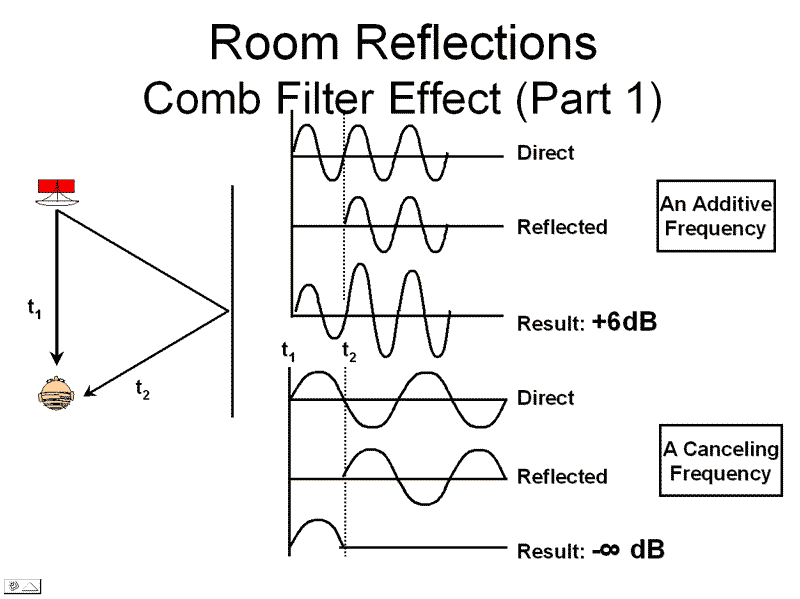
From the slide above we see the proverbial problem of the direct sound versus the indirect sound. (And remember, without room treatment and at most typical listening positions we're getting roughly the same amount, 50% direct and 50% indirect sound.)
The reflected sound is t2. Because it travels a longer distance to reach our ears its arrival is delayed by a few milliseconds. As you can see in the two charts (to the right in the slide), that particular frequency can become either additive in nature or it can exactly cancel the direct frequency. These are the two extremes. In reality the distribution of any particular frequency in time is almost always somewhere in between these purely additive or completely canceling extremes. What we get instead in those t2 frequency waves are the following series of additive and canceling effects which, as frequency increases, start to resemble the teeth of a men's comb.
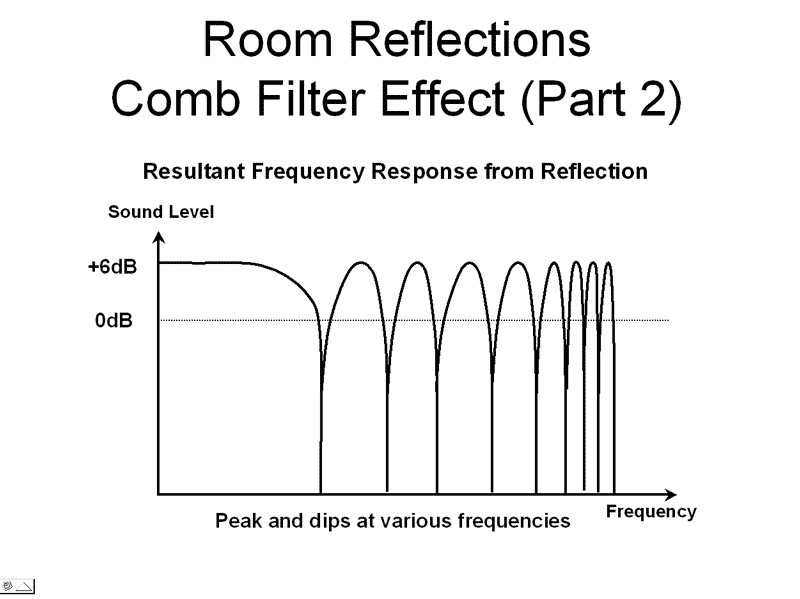
These t2 waves look quite different than the t1 sine waves which reached your ears a few milliseconds earlier. So it becomes easier to understand why, left untreated, these mid and high frequency reflections become so destructive to the primary sound.
The strongest and potentially most destructive room reflections are axial reflections. Like a pool ball caroming off a pool table's sidewall cushion, axial waves bounce or are reflected off of only one surface before they reach the listener's ear. Typically these reflections are from either of the two horizontal walls to our right and left in our theater or from the floor or ceiling.
The ceiling and floor reflections can be distracting in that we localize from up-to-down fairly well. So we may be more aware of their presence. The sidewall reflections meanwhile tend to be a bit more insidious because, as John previously pointed out, we don't localize quite as well. All four of these reflections, however, constitute one of the main challenges to achieving accurately placed images across the front soundstage.
There are a couple of ways to cope with these first axial reflections. We can either try to absorb them or diffuse them. In most cases the best approach is to try to absorb the mid and high frequencies in equal proportion to each other. What we are trying to achieve is a very broadband reduction of all frequencies above the ~150Hz level so that the spectral balance of the (hopefully) flat response speaker system you've chosen remains flat all the way to your ears at the listening position. Absorption is usually recommended over diffusion in most instances because more living room/theaters and even dedicated home theaters have too high a proportion of revererant sound in the first place. The goal is a revereration time of 0.3 seconds across the full frequency bandwidth and this is usually difficult to achieve without adding more absorption.
Slap Echoes
A variation of the axial reflection is the slap echo.
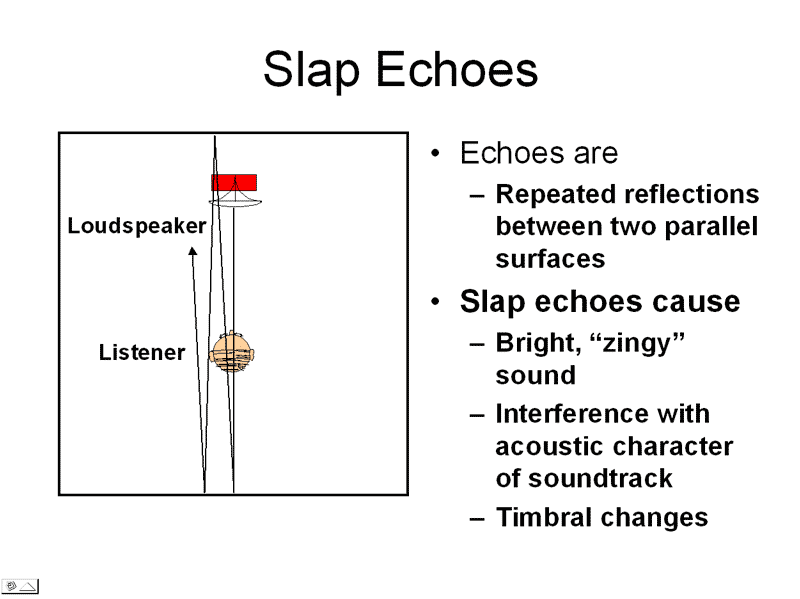
The difference here is that slap echoes occur between two parallel surfaces. This form of acoustic interference is very common in living room layouts wherein the sofa at the listening position is very close to the room's rear wall. Slap echoes need to be absorbed to avoid a bright zingy sound which interferes with the acoustic character of the soundtrack.
Common solutions covered by John Dahl were both absorptive and diffusive in nature. Plus, we learned later on that where you place the absorptive material and where (and when) you place the diffusive material is also tied in with proper placement and type of surround speakers. Thus, it became more obvious as we went along how all the speaker systems' ultimate performance where intimately tied in with the room and proper placement of absorptive and diffusive "systems" within the room.
Standing Waves (Room Modes)
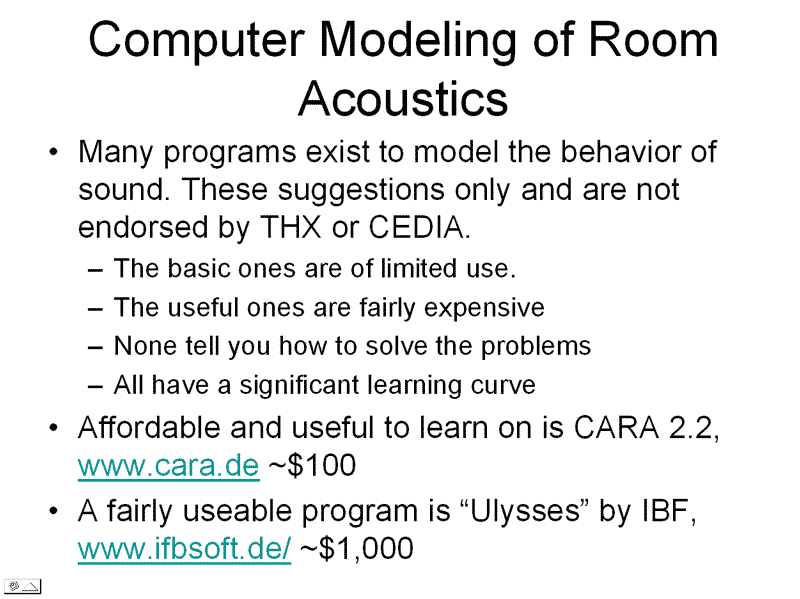
Below ~150Hz wavelengths become much longer and are thus able to interact strongly with most rooms. A 150Hz wavelength is 1130/150 = 7.53 feet so it is capable of reacting fairly strongly in a room with an 8 foot ceiling. Wavelengths below 150Hz get progressively longer and can now begin to interact with higher ceilings and other room dimensions. Potential problem frequencies within a rectangular room can be approximated by using several freeware programs which are readily available. John had suggestions for more sophisticated room modeling programs as well:
The bottom line on standing waves, though, is that they can be very difficult to get rid of. Classic solutions as outlined by John include:
- Changing one of the room dimensions
- Moving seating locations
- Moving subwoofer locations
- The use of diaphragmatic absorption, and
- Equalization ( a minimum of 1/12 octave, parametric is required; 1/3 octave EQs with fixed frequency points are virtually useless)
Rattles
One of the final steps to perform on an all-but-complete home theater install is to do the rattle check. Rattles are usually very prominent for specific low frequencies. Usually they're caused by acoustical or mechanical coupling with loose fixtures, lights, furniture and doors. Rattles can be insidious in that they can sound like a blown or distorted speaker or an amplifier that's being overdriven. So the best time to ferret them out is before you play your first movie blockbuster that evening.
Rattles can be pinpointed by a couple of methods. If you have access to an audio oscillator you can hook it up through a spare input to your pre-pro or receiver and slowly sweep from 20Hz up to 1000Hz. Another alternative is to use single test tones especially in the low frequency ranges as can be found on numerous test CDs on the market. Examples of the excellent test tone discs available are: the 5.1 Audio Tool Kit mentioned in Tony Grimani's calibration course, any of Joe Kane's Video Essentials series or the Avia software from Ovation.
In the case of my home theater/living room "rattle test" I already had the R.A.B.O.S. test tone disc that came with my Infinity Intermezzo 1.2 subwoofer. When I had used it to set up the sub I had already been pre-warned of my living room/home theater's rattles. So I set about tracking down the rattle sources and figuring out how to tame them. John recommends tightening loose fixtures or isolating them with rubber pads, caulk or insulation. I was fortunate in that there was only one extraneous rattler which had previously made its presence known.
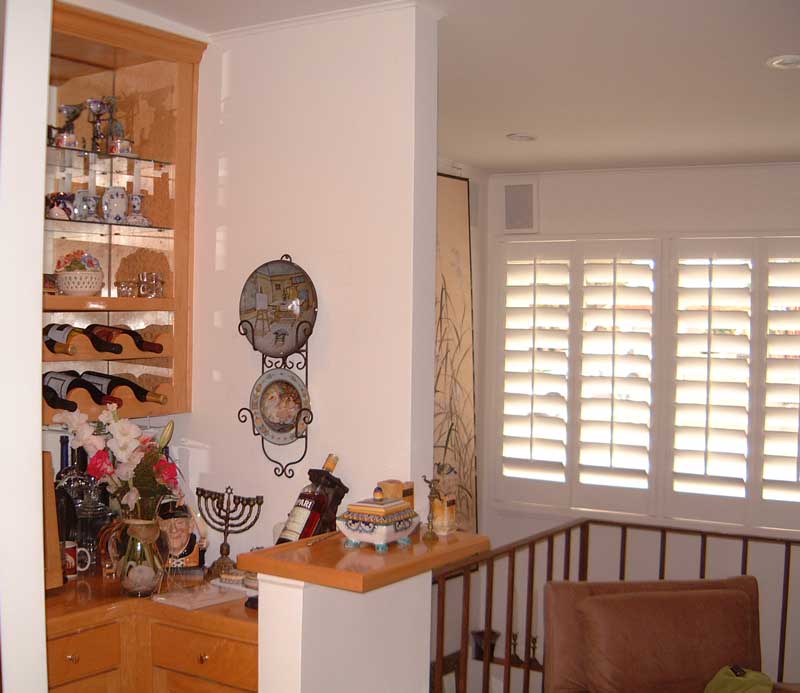
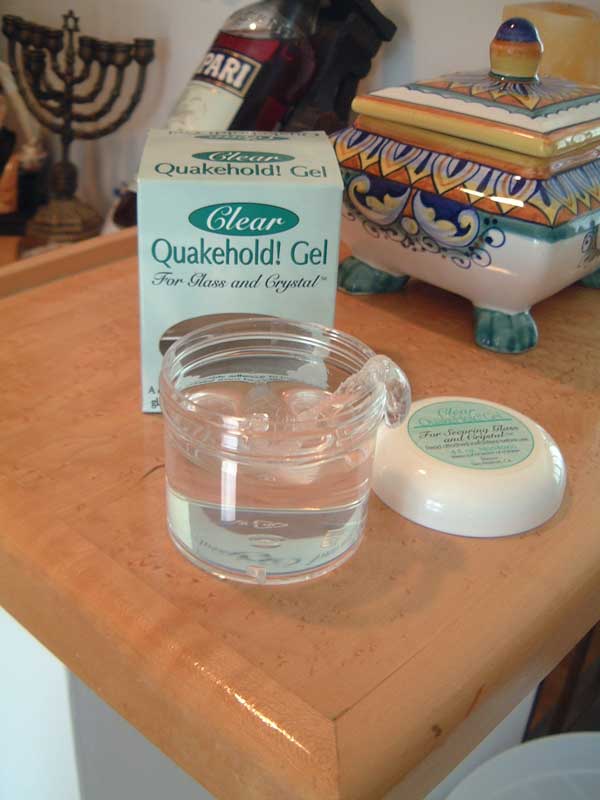
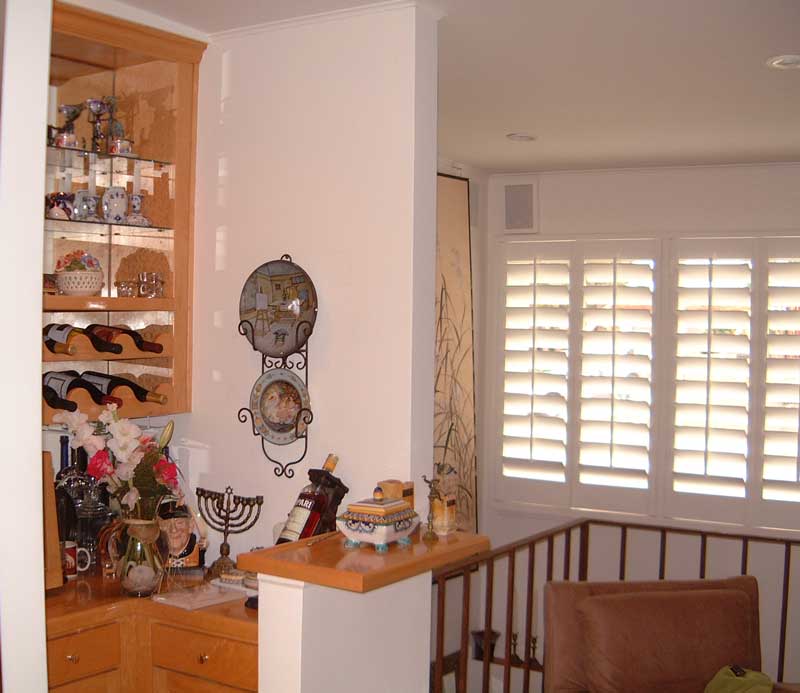
In the small bar alcove in my home listening area we have a couple of very nice display plates collected from a European vacation. We display the plates are on the bar-wall, supported by a decorative twisted wire frame. When I was calibrating the Infinity sub the first time and the CD hit the 56Hz band, those two plates started rattling like mad against the wire frame. A simple application of clear "Quakehold! Gel" at the three points where the plate touched the wire frame solved the problem. I had found this product at our local True Value hardware store. But for those of you not living in California earthquake country I can also recommend Dap Fun-Tak which is available at most Home Depots.
Noise Control
Attenuating background noise is the easiest way to increase the dynamic range capability of your system. In our increasingly noisy society many of us have become almost immune to the racket that goes on all around. Most of our vehicles, quiet though they may seem, commonly have 65 mile-per-hour "cruise" noise levels in the high 60dB to low 70dB level. Similarly, a quiet neighborhood is at best down around 40dB. So to try to get our listening environment down to a target of, say, 20dB can become a formidable task.
Background noise interferes with our perception of loudness. It masks low level signals and subtle details in music and movie soundtracks. And it makes speech intelligibility more difficult. Unlike our local movie theater whose quietness we usually take for granted, our homes are filled with all the mechanical devices we need to live comfortably; air conditioning, plumbing and refrigerators with their compressors which cycle on and off all day long. We seem not to pay attention to these devices until we've "completed" installing our home theater electronics and plopped down to watch our first movie.
Now the "second phase" of our home theater installation can begin. The thrill of getting all that cool electronic gear needs to be replaced with the reality that we don't necessarily have to buy that last 20 or 30dB of dynamic range with a more powerful amplifier. We can work for it by isolating refrigerator or air conditioning motors a bit better on their suspensions. We can also insulate doors and windows so we don't hear whistles or rattles. Lining air conditioning ductwork can also help immensely in keeping you theater cool but also quiet.
Do all these "fixes" sound like a lot less fun than buying and playing with all the cool electronics? You're right. They are less fun. But the room as was repeated by every CEDIA instructor is 50% of your home theater system. And this is the message that John Dahl and his fellow CEDIA instructors managed to drive home so convincingly.
By Patrick Hart
 Subscribe to our newsletter